
All due respect to the States, but NO ONE does Christmas better than Europe. No elves on shelves here, there’s barely any Santa, and the only reindeer you’ll see is being served on a plate with lingonberry sauce. But every December, the winding avenues and cobblestone streets of Europe drape themselves in garland and stars. The air is rich with smoked meat, spicy-sweet mulled wine, and sugar-dusted pastries fresh from the oven. Nowhere in the world feels more like Christmas than a European Christmas market.
Now no offense to the Mediterranean countries of France, Italy, and Spain, but northern Europe wins best in show for Christkindlmarkts. I think Germany’s Christmas markets are the best, but I’m biased: I was born there, I spent part of my childhood there, and my family is German. But Poland’s Christmas markets are just as magical, just as snowy, and are much more affordable.
WHAT I SAW
Krakow
If you are planning on visiting Poland, ESPECIALLY if you’re going in the winter, take my advice: skip Warsaw and go to Krakow. I don’t really know how to explain this except Warsaw is like Houston and Krakow is like Austin. Warsaw, the capital of Poland, is a big ol’ city that is mostly made up of new skyscrapers because so much of it was destroyed in WWII. Krakow is a medieval city that was once the capital, and many Polish people consider it to be the cultural center of Poland. Once Hitler smashed his way through Warsaw, he set up the Nazi General Government in Krakow as a base of operations for the eastern front. So he left a lot of Krakow untouched. Therefore, Krakow is prettier; there’s more of a sense of being lost in time.
Make Krakow your home base. From Krakow, you can reach the winter wonderland ski town of Zakopane, and you have time for a day trip to Oswiecim, the town where Auschwitz is located.
Wawel Castle
Krakow sits on a hill overlooking the Vistula River. At the top of the hill is Wawel Castle. Fun fact: Wawel Castle and Krakow Old Town are one of the first UNESCO World Heritage Sites. And here’s the even more fun legend about the castle and its city:
Once upon a time, a dragon named Smok Wawelski lived in a cave. It terrorized the nearby villagers, eating their cows, sheep, and the occasional virgin. Smok liked cows the best, and it got to the point where Smok would demand a weekly tribute of a cow, which he would swallow whole. The villagers, sick of their depleted beef supply and their dwindling count of virgins, cried out for help. Many valiant knights tried to attack and subdue the dragon. All were swallowed whole. The King of Poland offered his daughter’s hand in marriage to whoever would rid southern Poland of this irksome oversized lizard. That’s when a clever cobbler named Krakus stepped up. He slaughtered a lamb and stuffed it with sulfur, tinder, wax, pitch, and tar. Then Krakus plopped the lamb outside the cave as bait and set it on fire. Unable to resist the shawarma-like scent of the bait, the dragon gobbled the sulfur-and-lamb burrito up in one bite. Krakus ducked behind a boulder and covered his ears. And then… BOOM! A column of fire spewed out of the dragon’s throat. With no Tums or Pepto-bismol in sight, the dragon dashed to the cave, where it drank all the water in an underground lake. But nothing could stop the burning, so it keeled over and died. The villagers rejoiced, the cows and the virgins breathed a sigh of relief, and clever Krakus the cobbler married the princess and became the legendary King Krakus, the founder of Krakow. He built Wawel Castle, named after the defeated Smok Wawelski, on top of Dragon Cave, which can still be spelunked to this day.


After you visit the castle, keep your eye out for a metal sculpture of a dragon that actually spews fire. And, of course, make sure to pick up one of Krakow’s many dragon-themed souvenirs.
Old Town and St. Mary’s Basilica
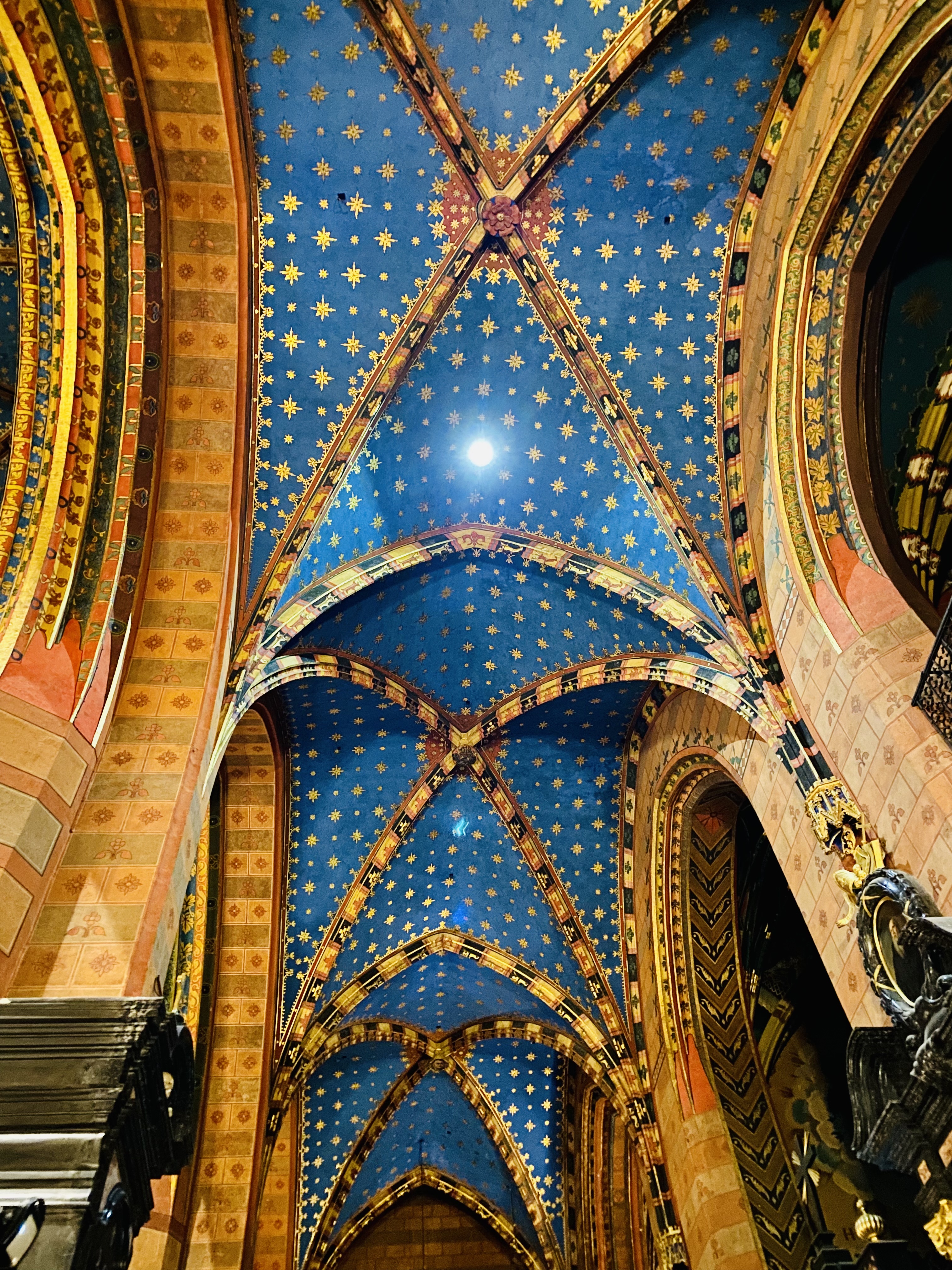
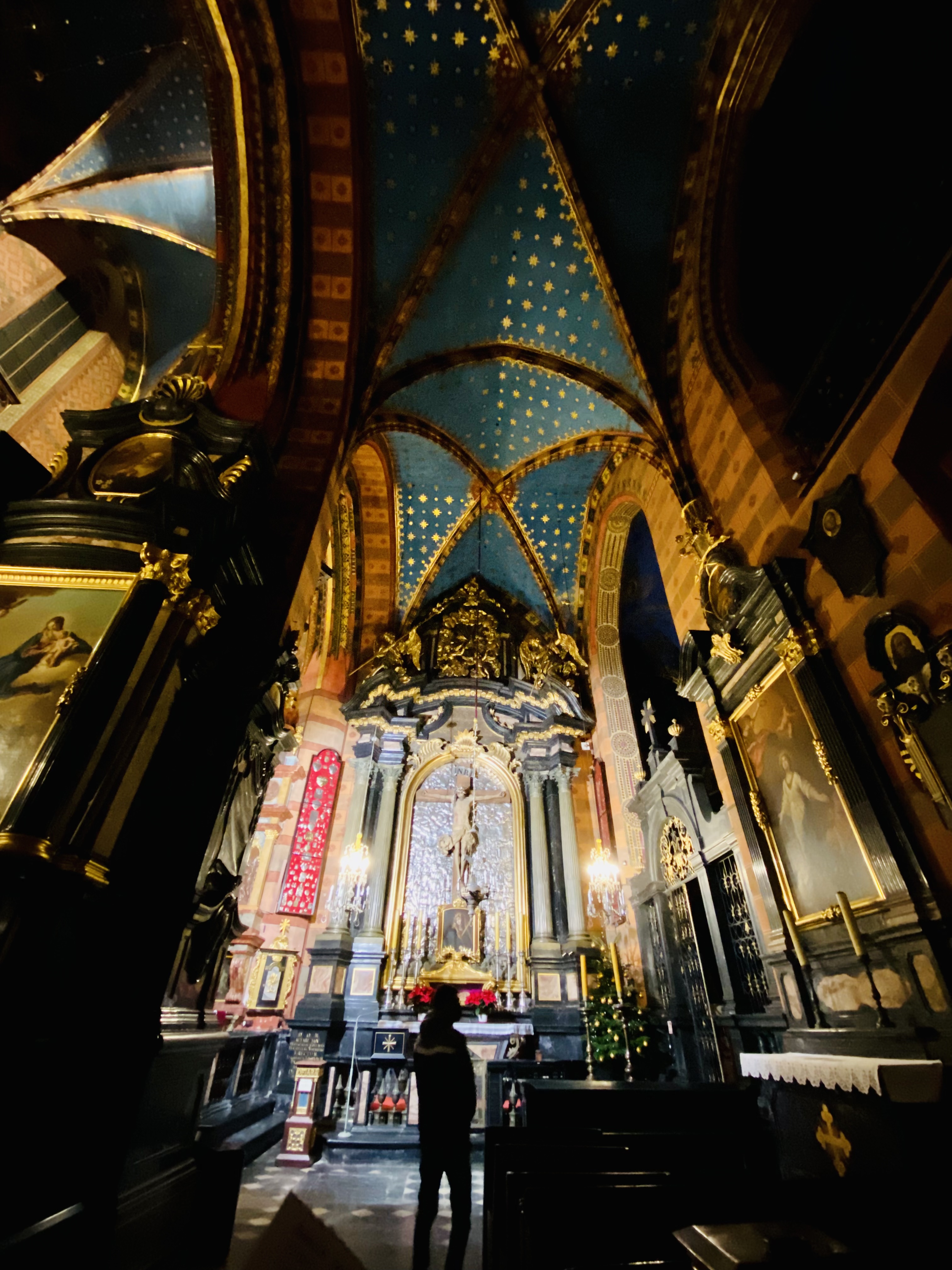
Look, if you’re in Europe, you need to see a cathedral. You don’t have to see all of them, but you need to see at least one per trip. Krakow has TONS of beautiful cathedrals. Wawel Cathedral, St. Andrew’s Church, Corpus Christi Basilica—they’re all beautifully-preserved examples of Gothic, Rococo, Romanesque, and Baroque architecture. I don’t even care if architecture isn’t your thing, go sit quietly inside a cathedral and just enjoy its magnificence. But if you only have time for one, go see St. Mary’s Basilica in the town square. It has a beautiful, beautiful blue ceiling, the stained glass is sublime, the colors are rich… while Sacre Coeur in Paris is my favorite cathedral, this one might be second.

In 1241, right after the death of Genghis Khan, Mongols invaded Poland and tried to take over Krakow. A sentry posted in the higher tower of St. Mary’s Basilica saw the oncoming Mongol troops and blew his trumpet to warn the king. Unfortunately, he was shot in the throat before he could complete the tune, which is called the Hejnał (lolol good luck pronouncing ANY of these words). To this day, a trumpeter plays the Hejnał from the tower every day, at the beginning of every hour, and cuts it off before finishing the song.
Christmas Market and Indoor Market
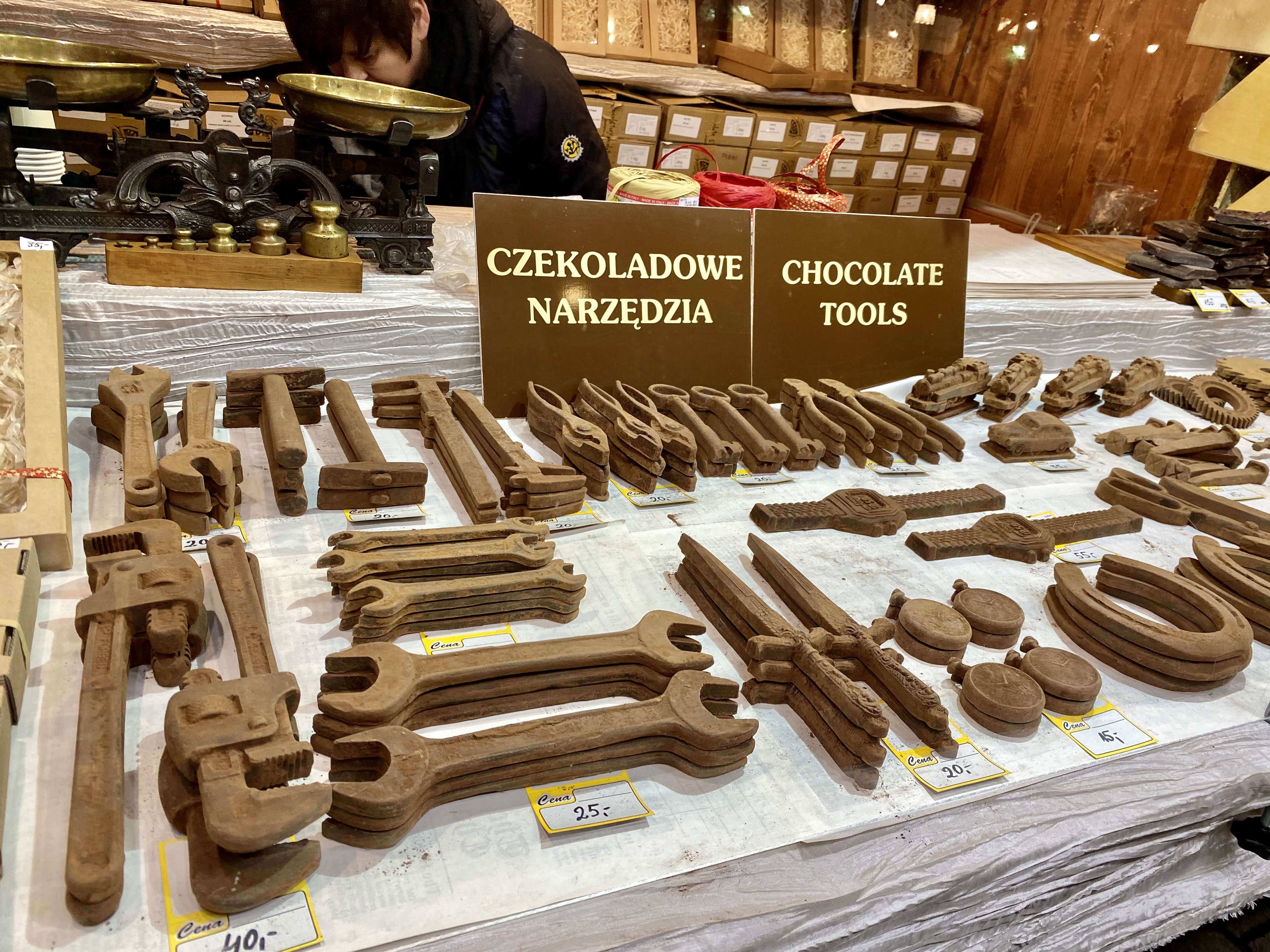
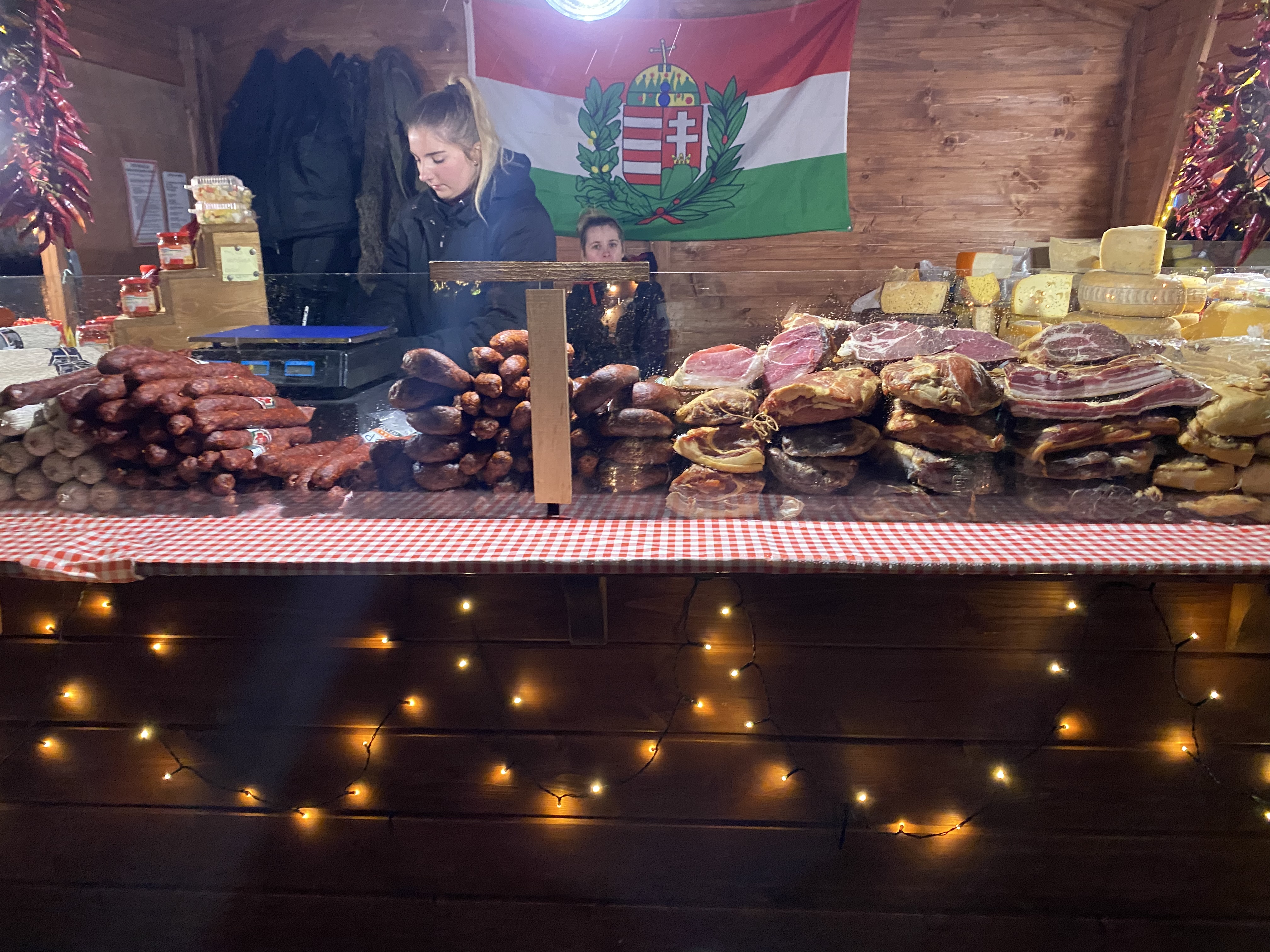
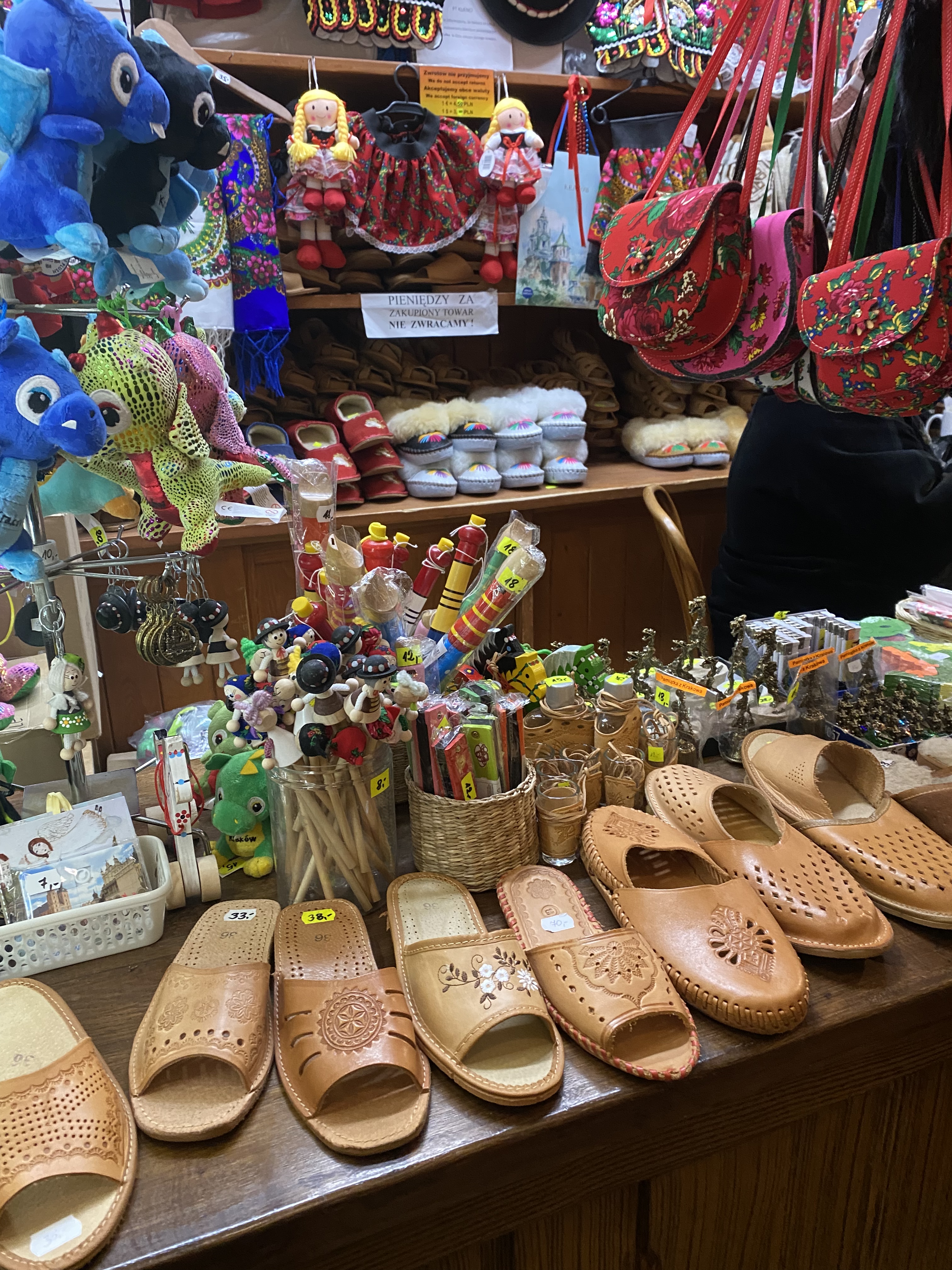
The town square is also where the Christmas market is held. I’ll talk more about some of the unique Christmas market goodies you can find in Poland and eastern Europe in a bit. There are plenty of legitimately great tchotchkes sold by local artisans within the Christmas market and indoor market, the Sukiennice. The Sukiennice (Cloth Hall) is where all the medieval trade of fine textiles, leather, wax, salt, and spices used to take place. Today, you can get excellent leather gloves, shoes, Polish keepsakes, and amber jewelry for an exquisitely low price. If you’re not visiting at Christmas, there won’t be an outdoor market, but you can always hit up the Sukiennice for all your souvenir shopping. The outdoor Christmas market will have beautiful Polish pottery, hand-painted folk-artsy ornaments, and pierniczki, heart-shaped gingerbread cookies.







Kazimierz (Jewish Quarter)
Look, there was a really, really long paragraph here about Jewish history in Eastern Europe originally. I cut most of it—I feel like you’re here because you’re more interested in the Polish pottery and gingerbread part than a huge paragraph on early Middle Eastern history, but just stick with me for a second. During the rise of Islam (remember the prophet Muhammad lived around 600 AD, so this is during the 7th century), the Jews of Israel moved west into northern Africa (Sephardic Jews), Morocco and up into Spain. (Miguel Benaroya, the hero of my novel Red Flags, is a Spanish Civil War veteran descended from Sephardic Jews.)
The Jews who move into Western Europe get persecuted and massacred, and then the Crusades happen, and the Jews left over in Jerusalem also get slaughtered. These folks have nowhere to go. So, in 1343, the Polish king Casimir the Great invites all the Jews being persecuted in Europe to Poland. He orders that the Krakow district of Kazimierz be built up for Jewish occupation.

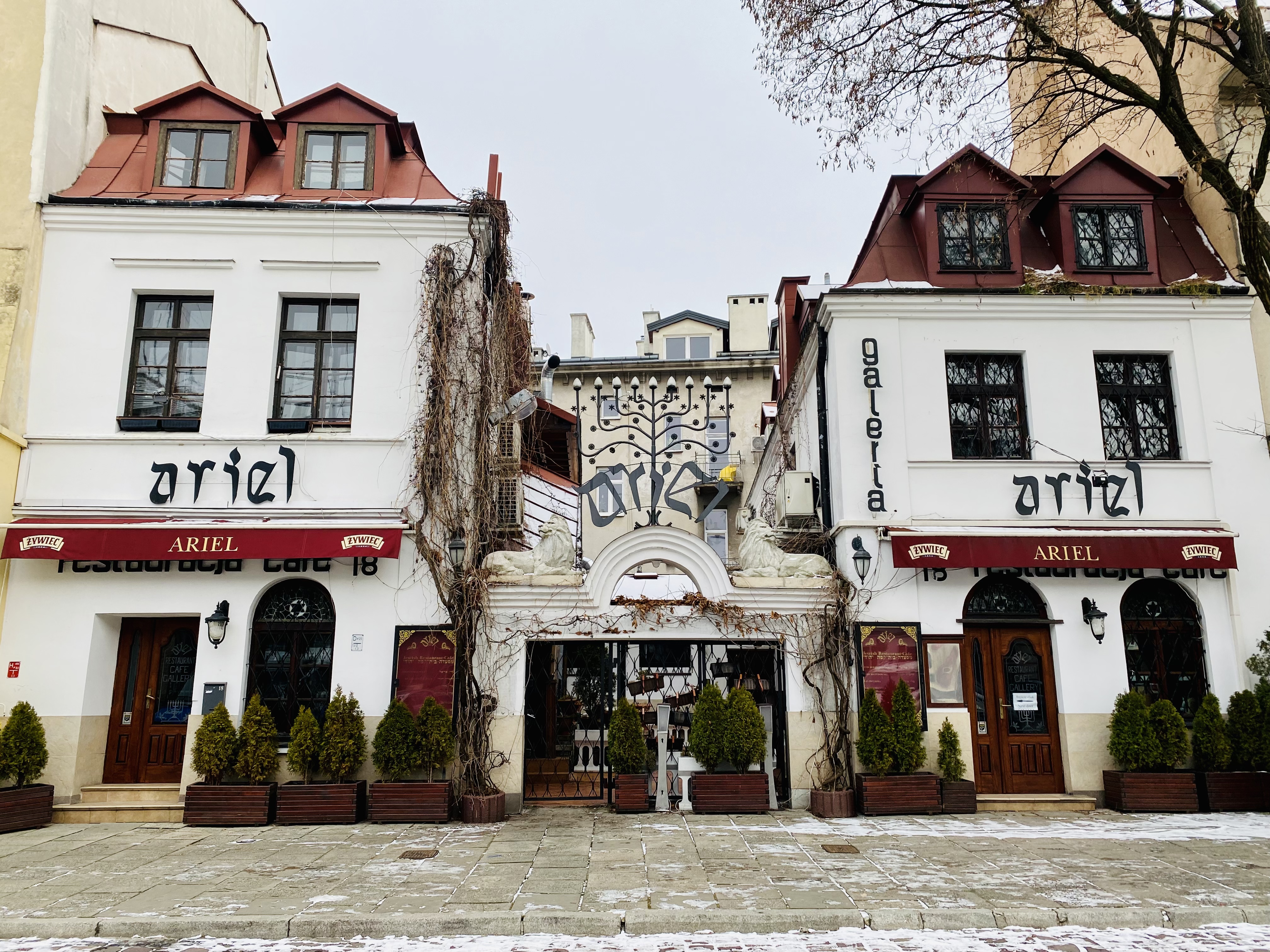
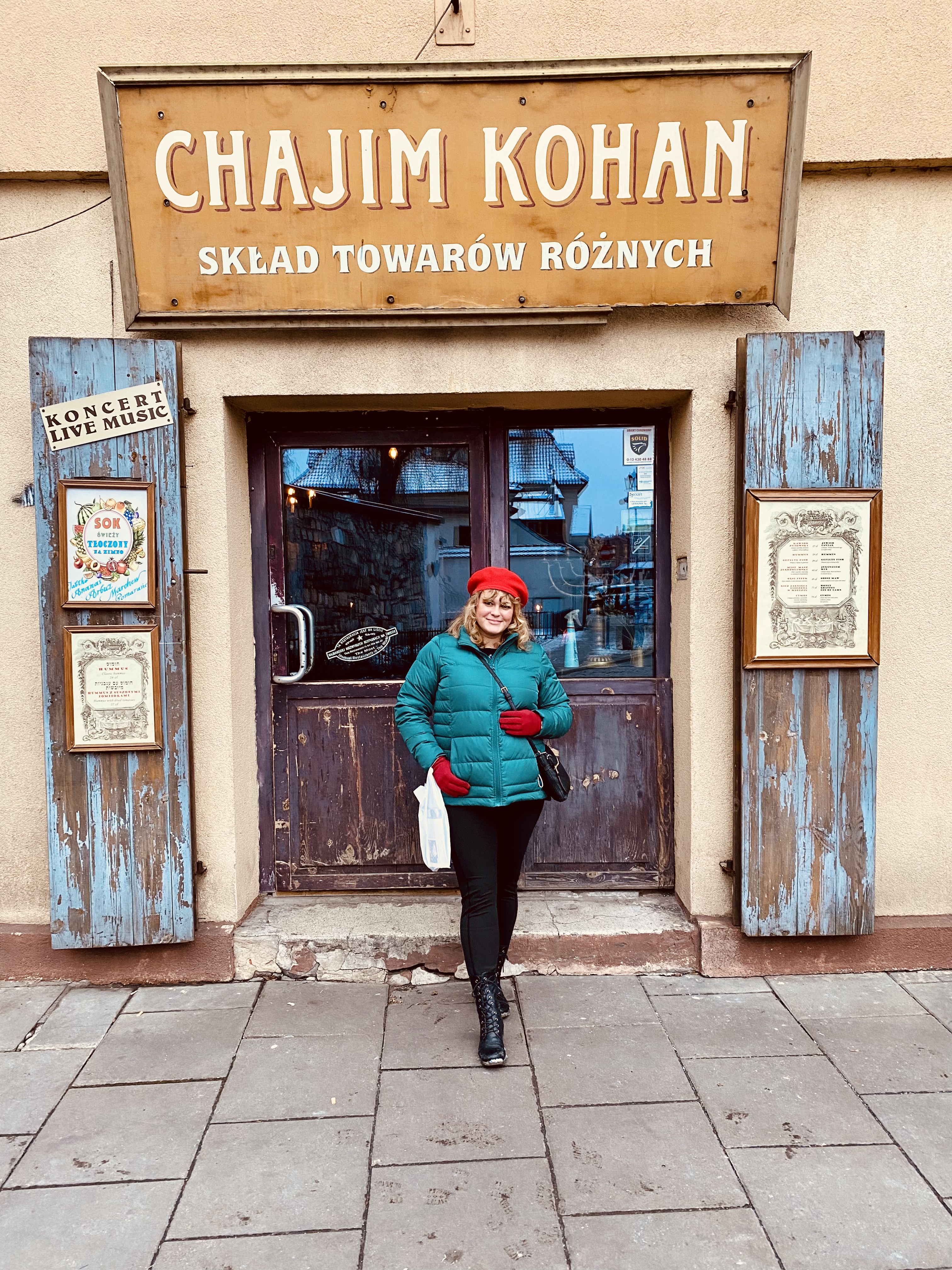
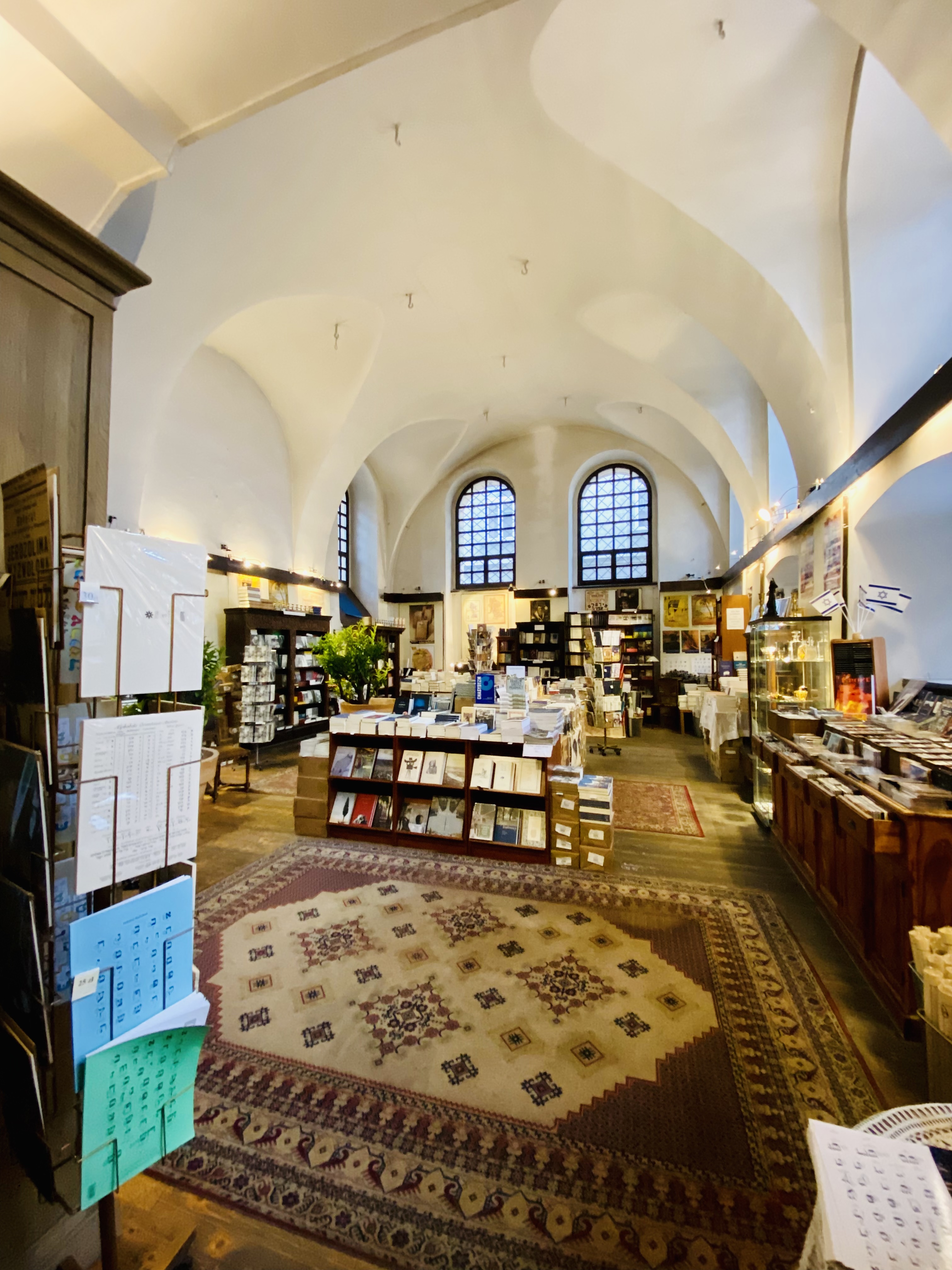
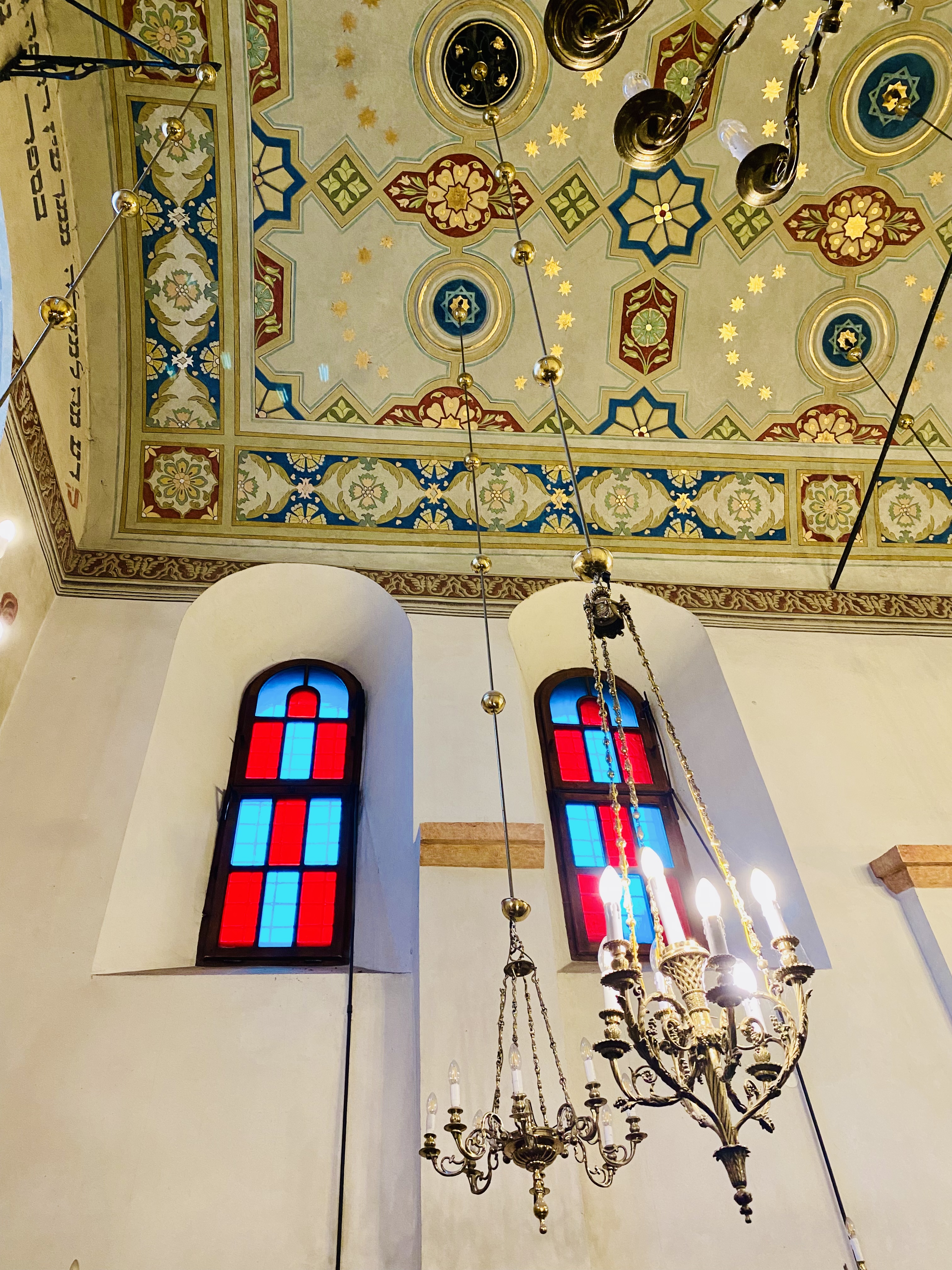


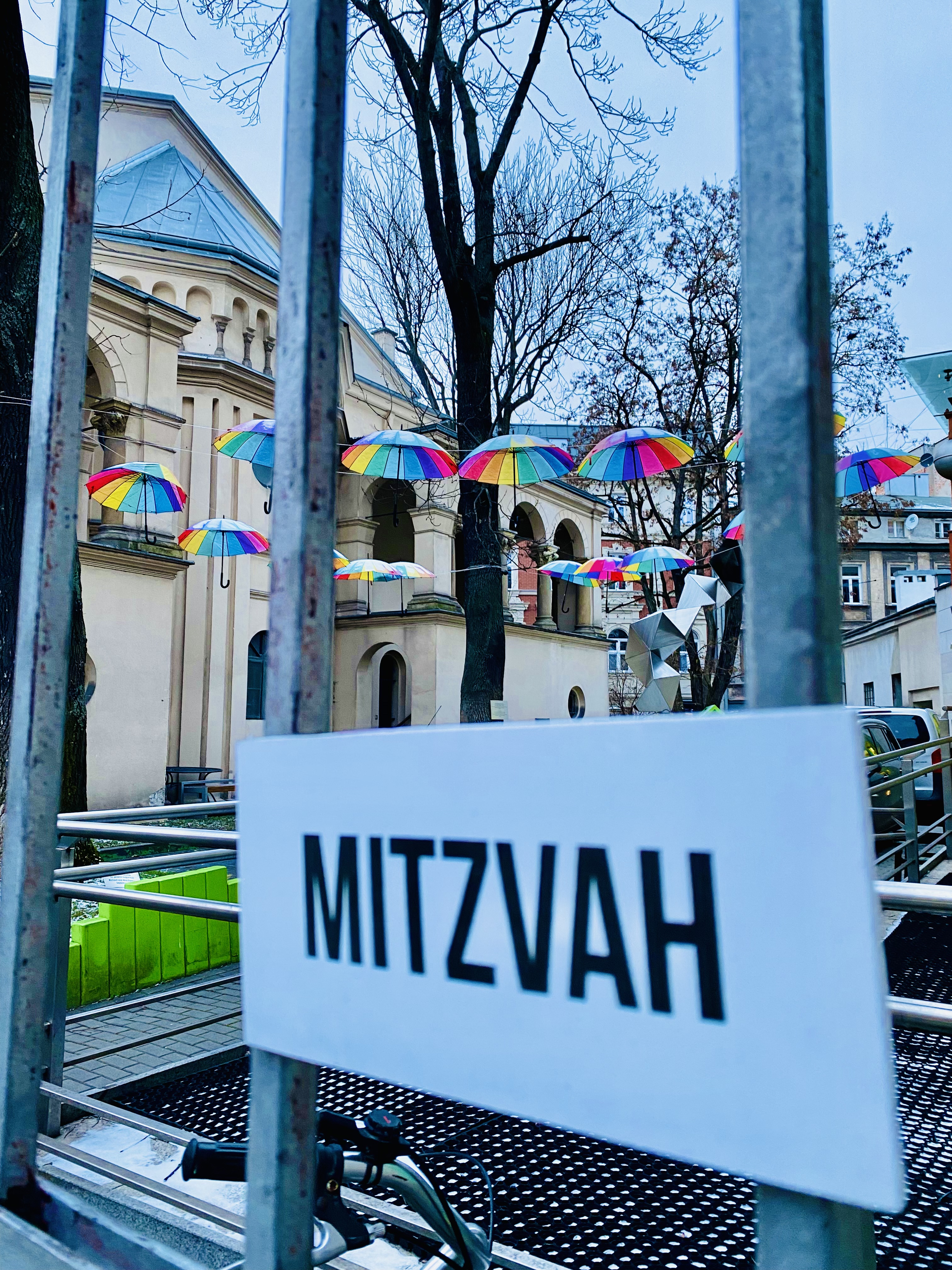
This area is so, so cool. It’s a colorful, traditional slice of Polish culture with a distinctly Jewish flair. There’s plenty to do here, definitely visit the Old Synagogue (one of the oldest Jewish buildings in Europe!), the Remah cemetery, and have lunch at Ariel, which serves Sephardic and Polish Jewish dishes. Then grab a coffee at Cytat Cafe, cozy and lined wall-to-wall with books. Kazimierz is something you could knock out in one to three hours. Kazimierz has also become a hip nightlife area. Make a reservation for a cool cocktail at Sababa, or if you’re looking for something more eclectic, try Propaganda Pub, which has memorabilia from Poland’s socialist days and plays ska, reggae, and rockabilly music.
Schindler Museum
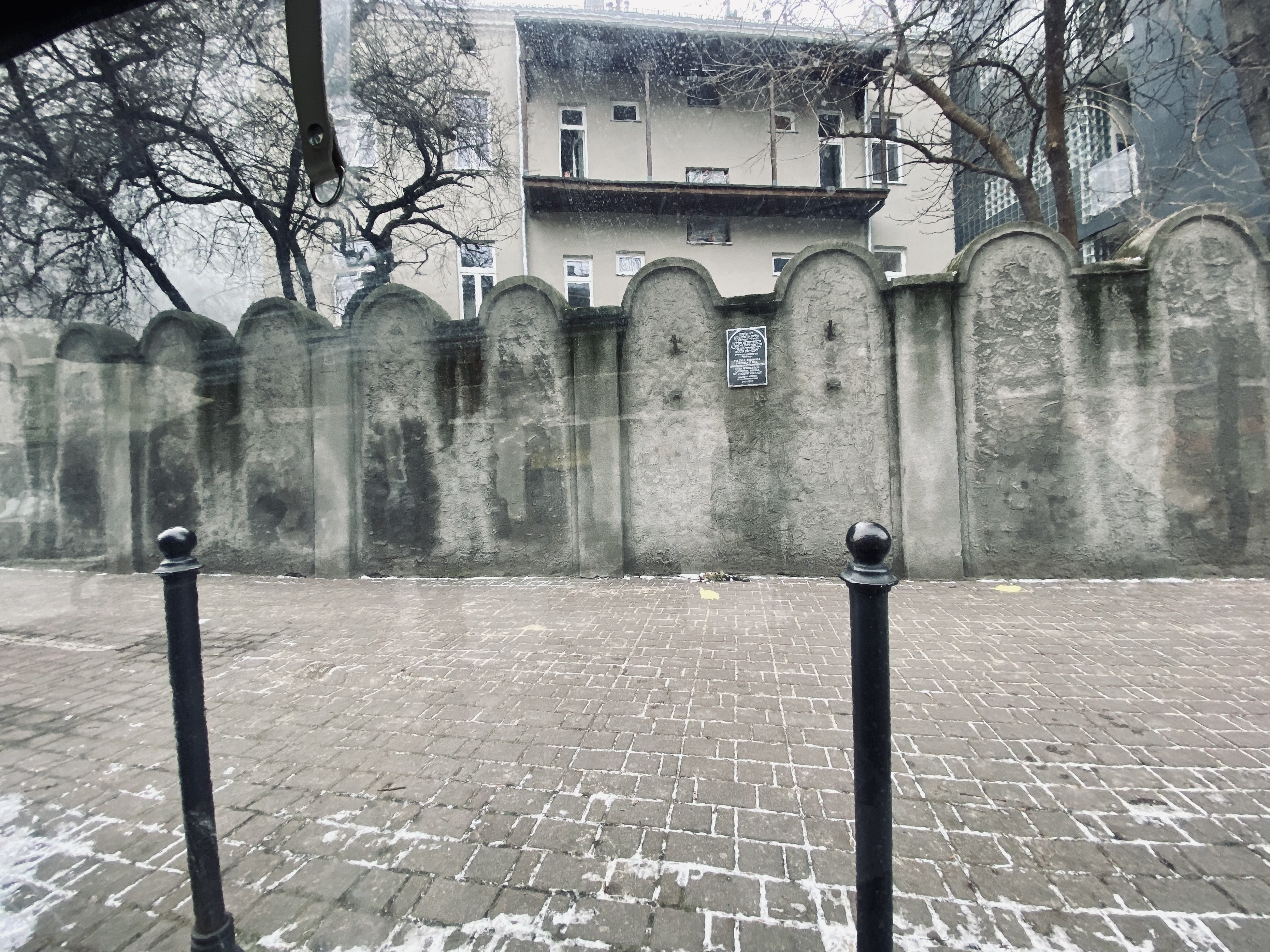
While you’re in Kazimierz, go to the Schindler Museum. Hitler chose Krakow for his home base on the eastern front not only because it’s central to all the other countries he planned on taking over, but also because so much of the world’s Jewish population already lived there. He turned Kazimierz into the Krakow Ghetto, the one that you see in Schindler’s List. During the height of the Final Solution, when the Nazis arrested and deported the Jews of Europe to nearby Auschwitz-Birkenau to murder them, the Jews stayed in the Krakow ghetto as a holding site. The concentration camp the Schindler Jews work in during a majority of the movie is mostly torn down; only a wall remains.
(Have you not seen Schindler’s List? Quick rundown: in Krakow, there was a guy named Oskar Schindler, a Nazi businessman and factory owner who—after witnessing the horrors of the nearby concentration camps—bribed Nazi officials into letting 1,200 Jews that were supposed to be sent to Auschwitz work for him in his factory, effectively saving their lives.)


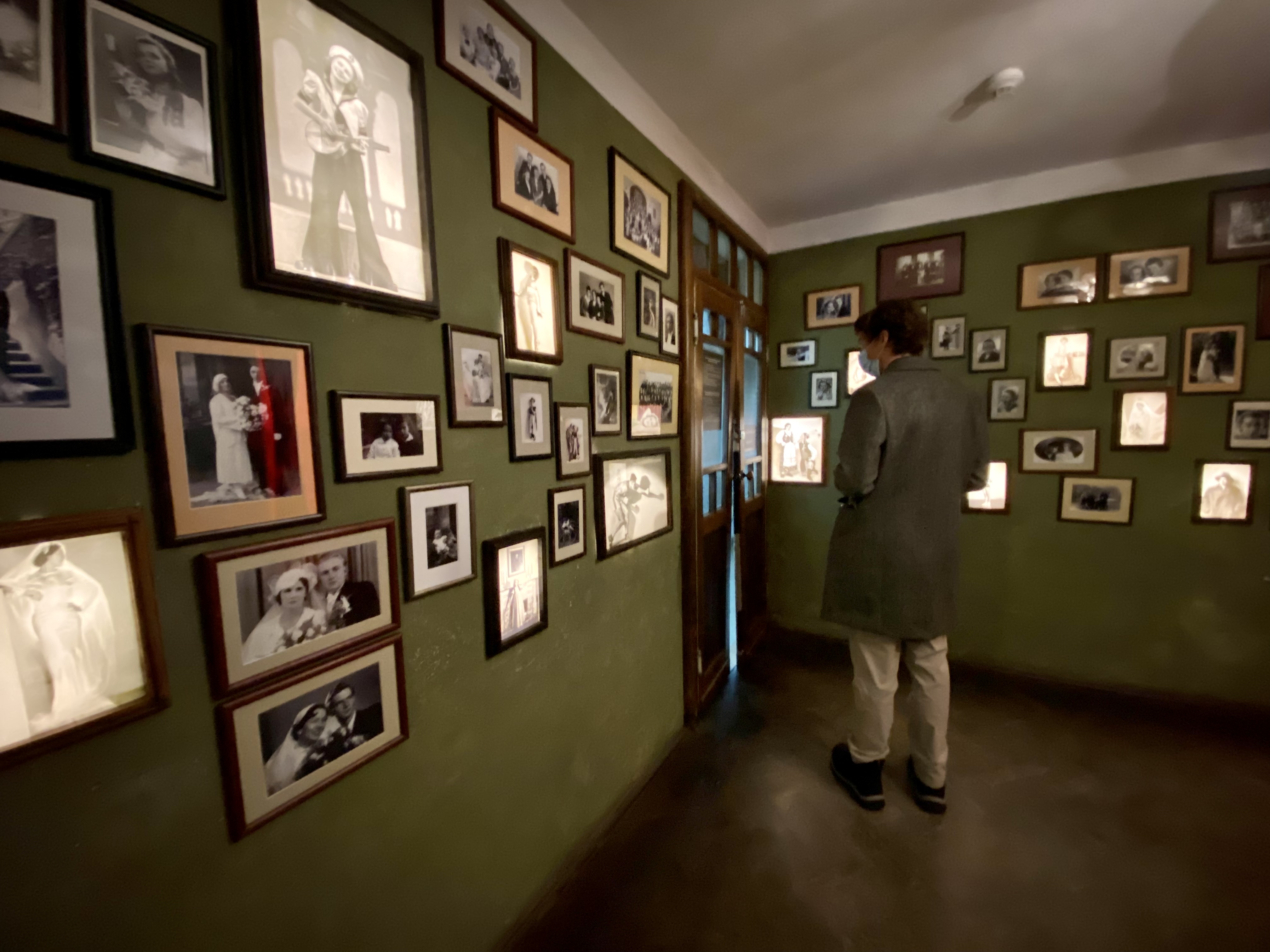


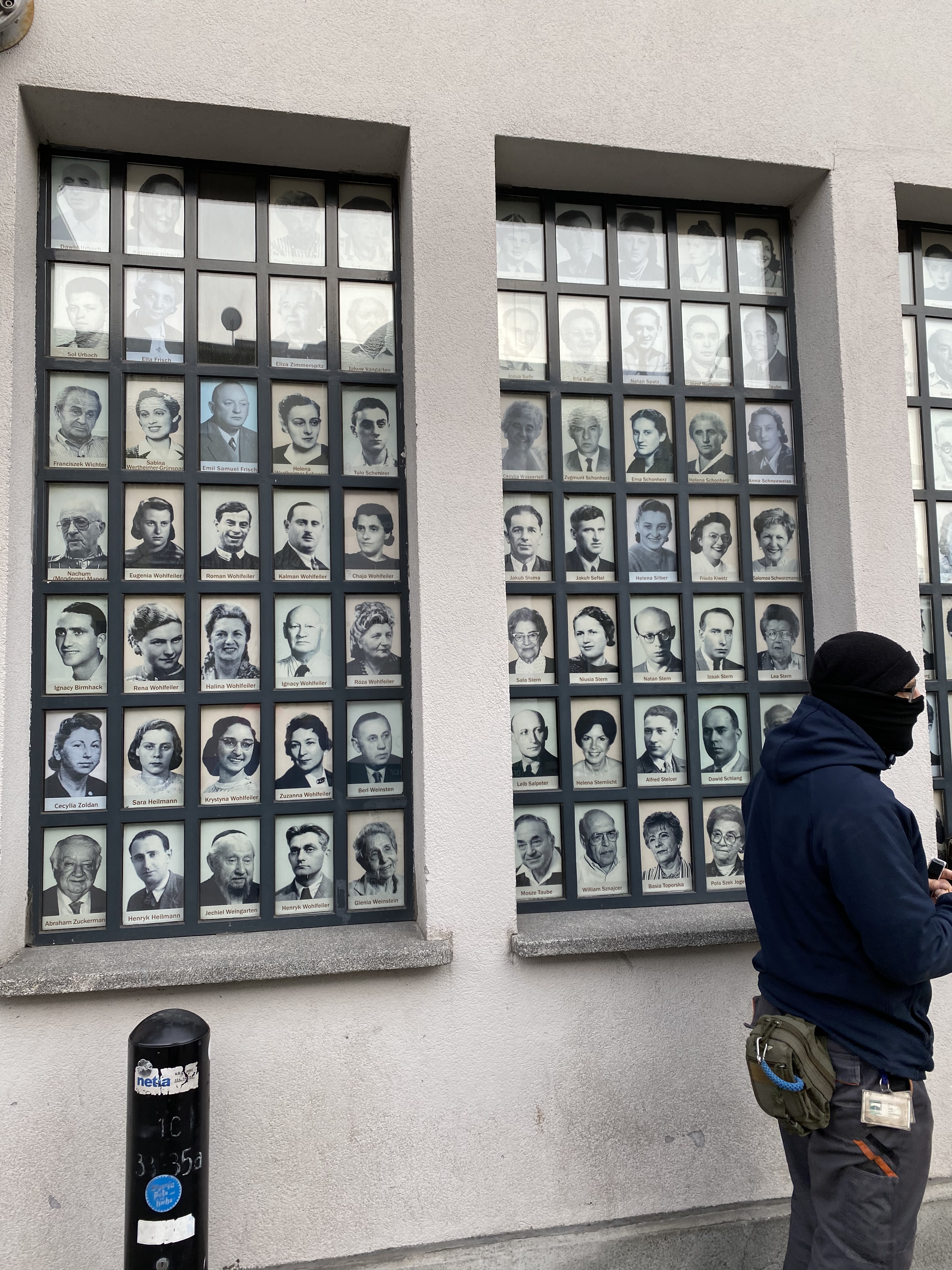

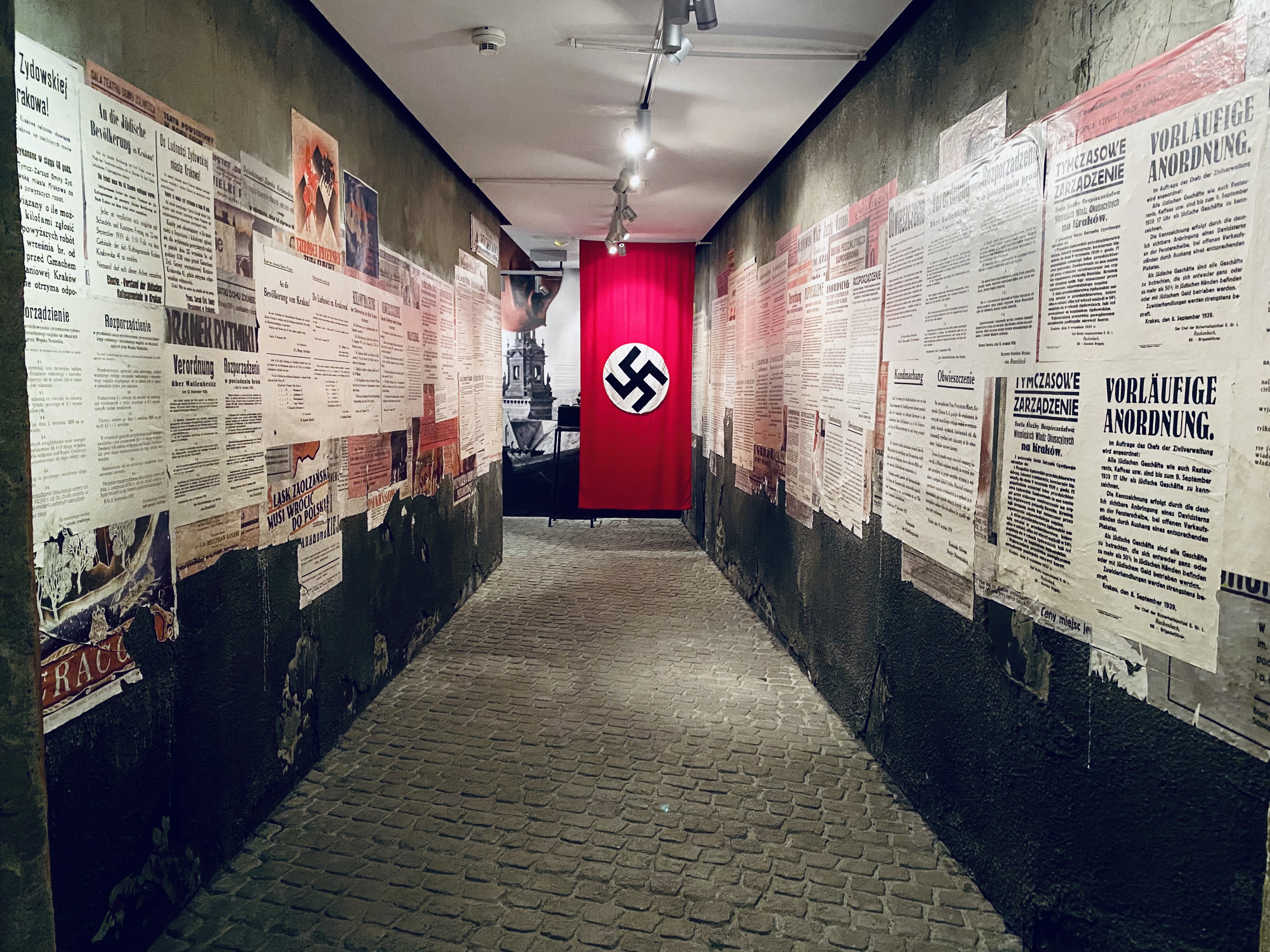
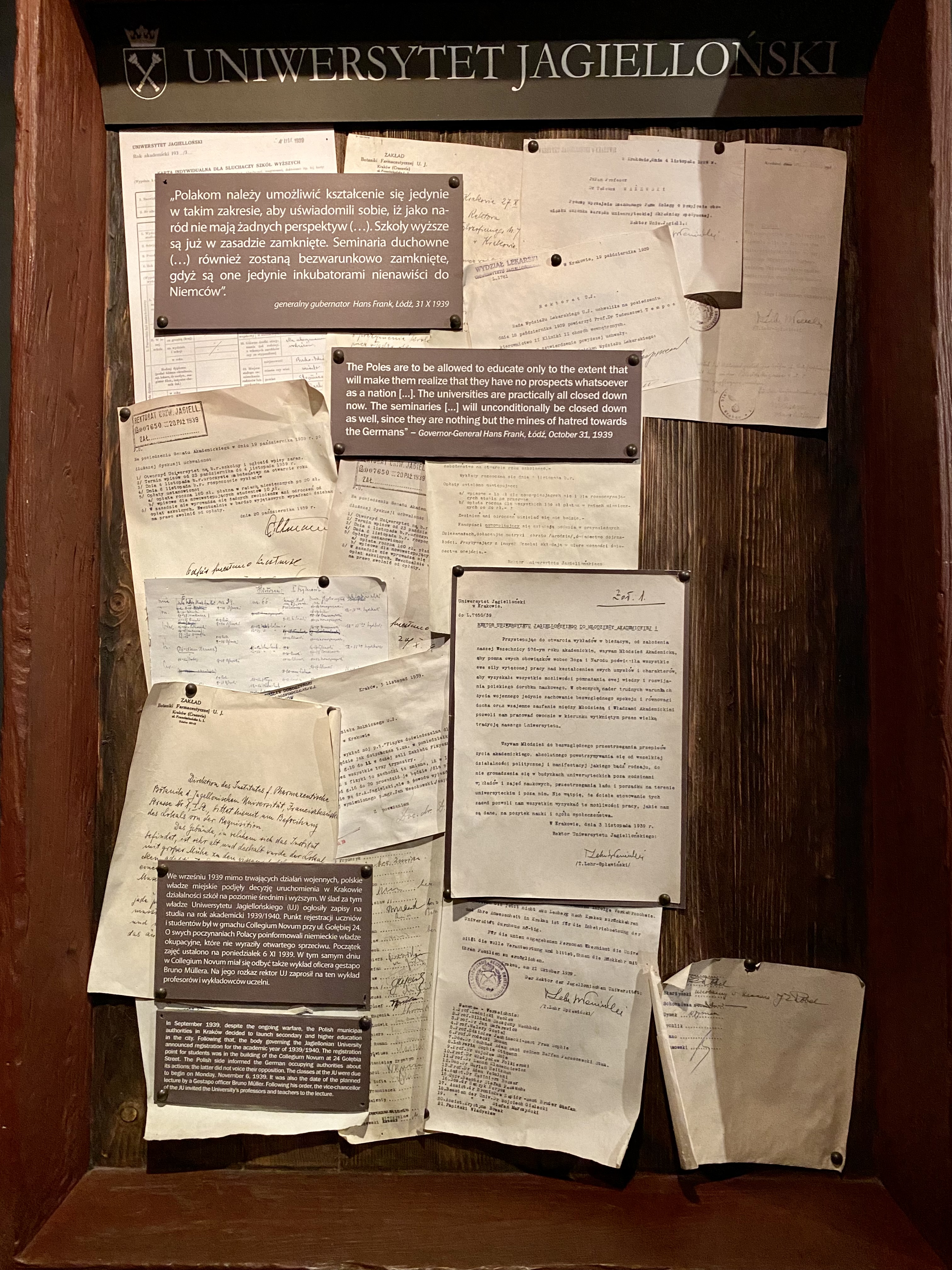

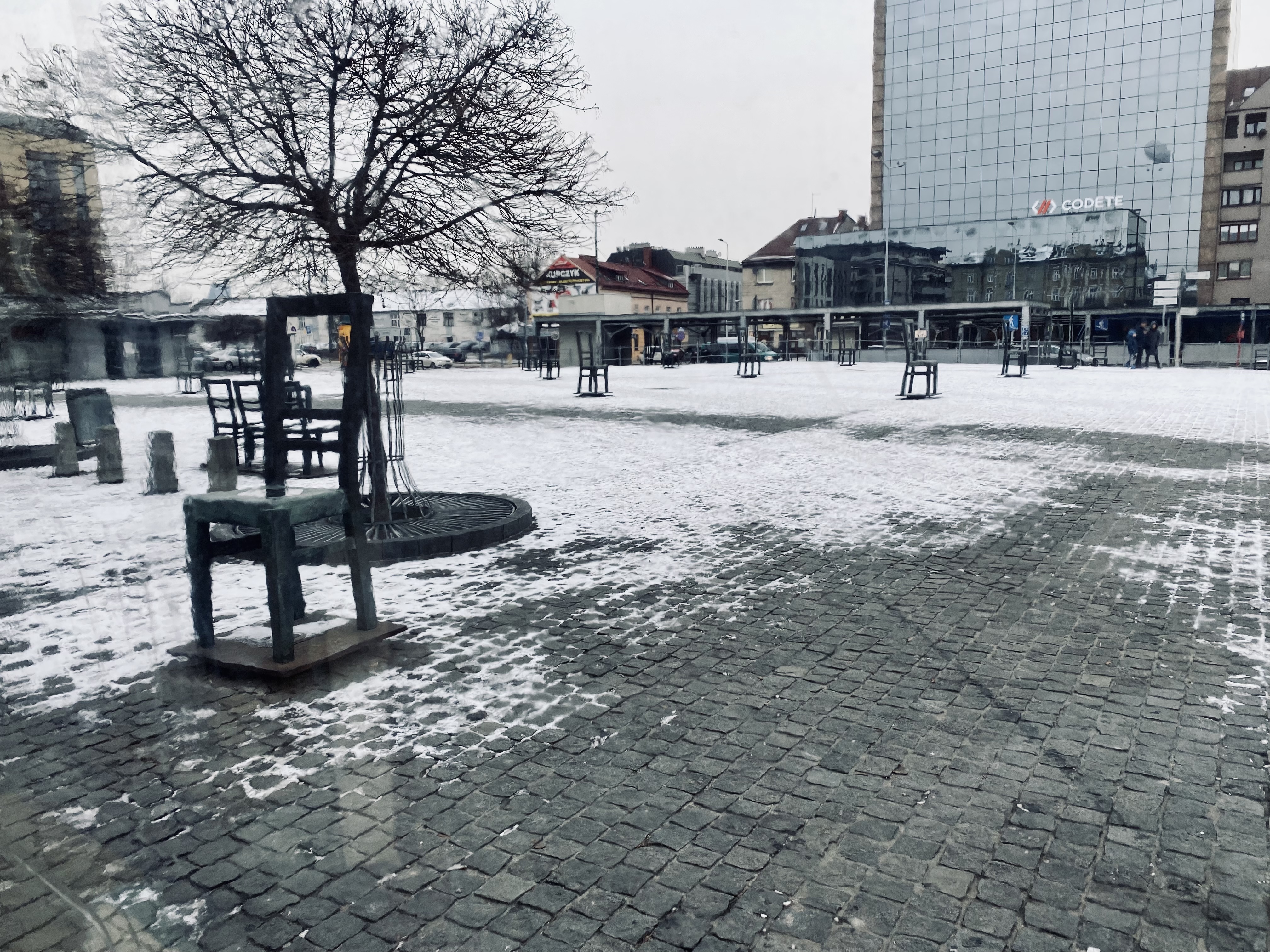
Okay. I’m assuming if you’re reading this, you’re an American. American museums are very different from European museums, especially Eastern European museums. In Eastern European museums, they just, like… have the artifacts. Whatever it is you came to see is sitting behind a glass display, and there’s a tiny paragraph of explanation that hopefully is in English. (If not, try the Lens feature on your Google Translate app.) American museums are like American movies. It’s not just about the artifacts, it’s about creating a sensory experience to allow you to step back in time and appreciate what you’re learning about. After Steven Spielberg made Schindler’s List, he used his Big-Balla-Shot-Calla-Twenty-Inch-Blades-on-the-Impala money to fund a really excellent WWII/Holocaust museum within the real Oskar Schindler’s actual factory. It’s so hard to describe how visually stunning this museum is, other than… like imagine if the guy who made the most famous movies in pop culture also made a museum about something really, really important. Don’t miss the Schindler Museum if you’re visiting Krakow!!!
Auschwitz
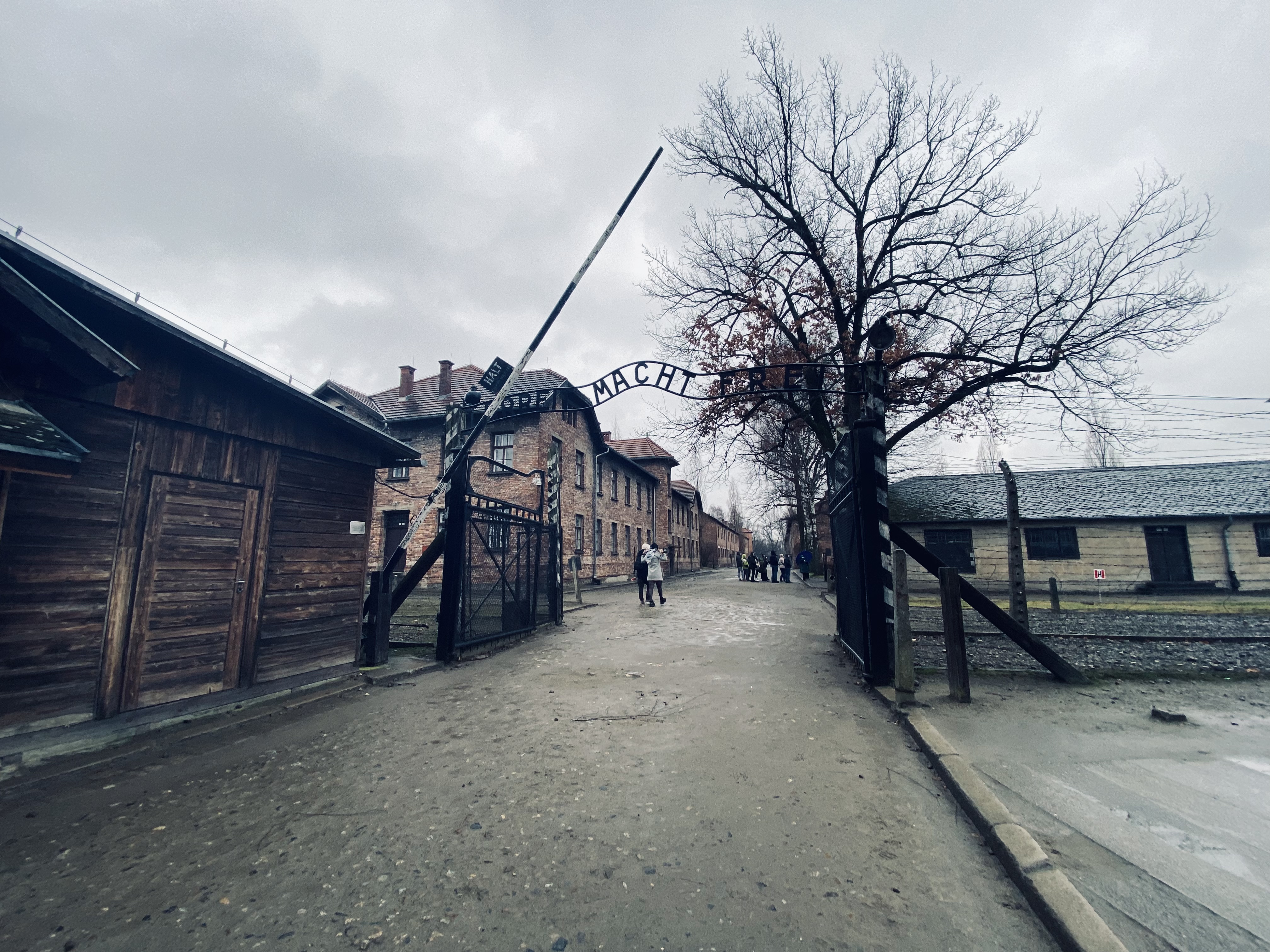
I’m not going to spend too much time on Auschwitz because 1) I could write a whole book about it (and I did) and 2) this is more about Christmas in Poland, but you really ought to go. It’s an easy train ride and, even if you want to know and see every detail of the museum, it’s a half-day visit at most. Auschwitz I (the headquarters, which started as a POW camp) is the museum, and Auschwitz-Birkenau (the largest camp which was built to house and execute millions) is a living cemetery, which is why I suggest going to the Schindler Museum if you want to learn. This is an Eastern European-style museum, which means they’re going to show you what was left over and give you the space to reflect. Everything has been left as it was when the concentration camp was liberated by the Red Army in 1945. This is a memorial to the people who lived and died there. Navigating the website to purchase tickets can be a little tricky, but I would recommend getting a private guide instead of an English-speaking tour group. There’s not that much of a price difference, and it’s better to have a tour guide to yourself to answer any questions and give you time to absorb it. Which you should.
Zakopane
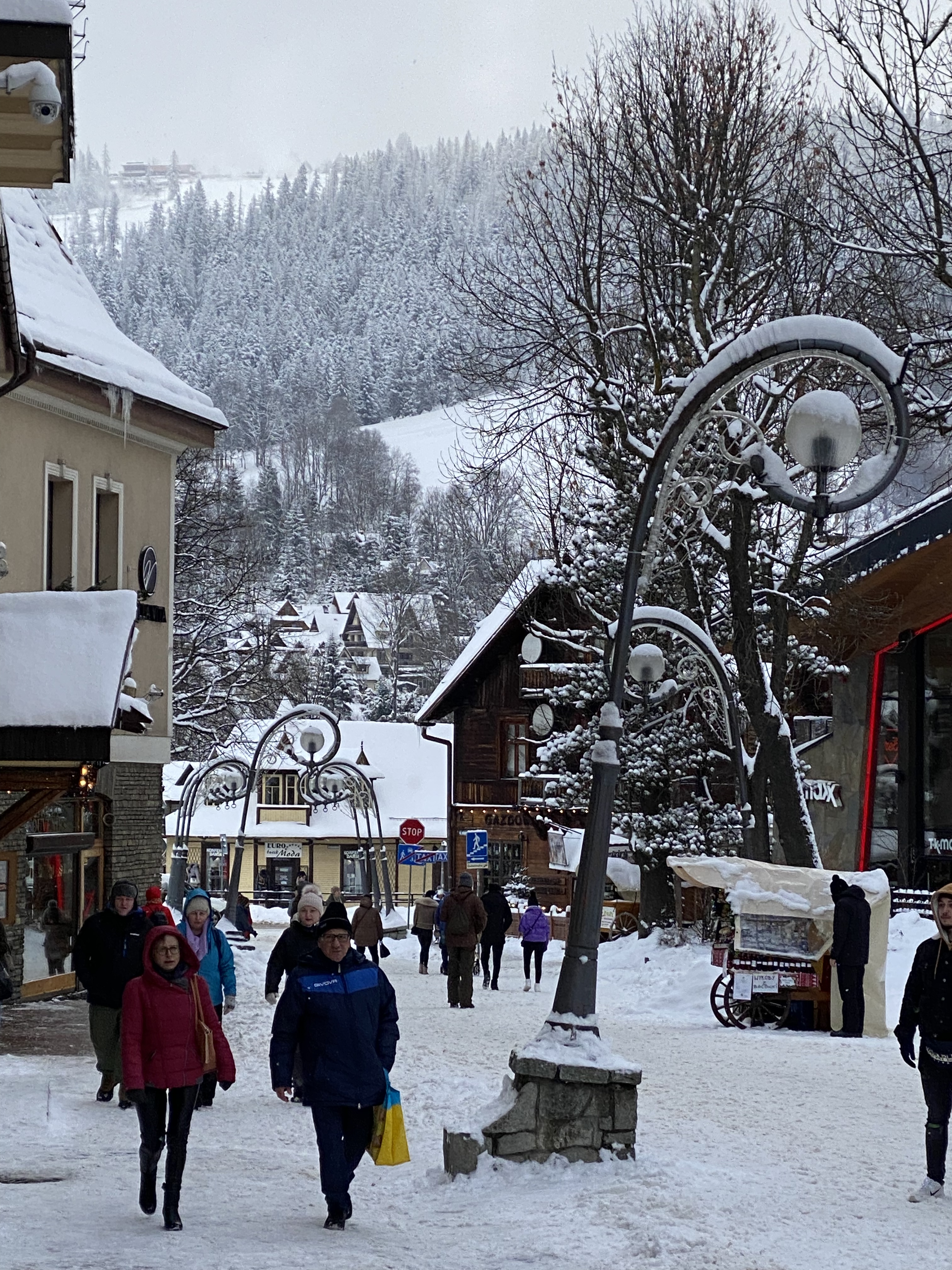
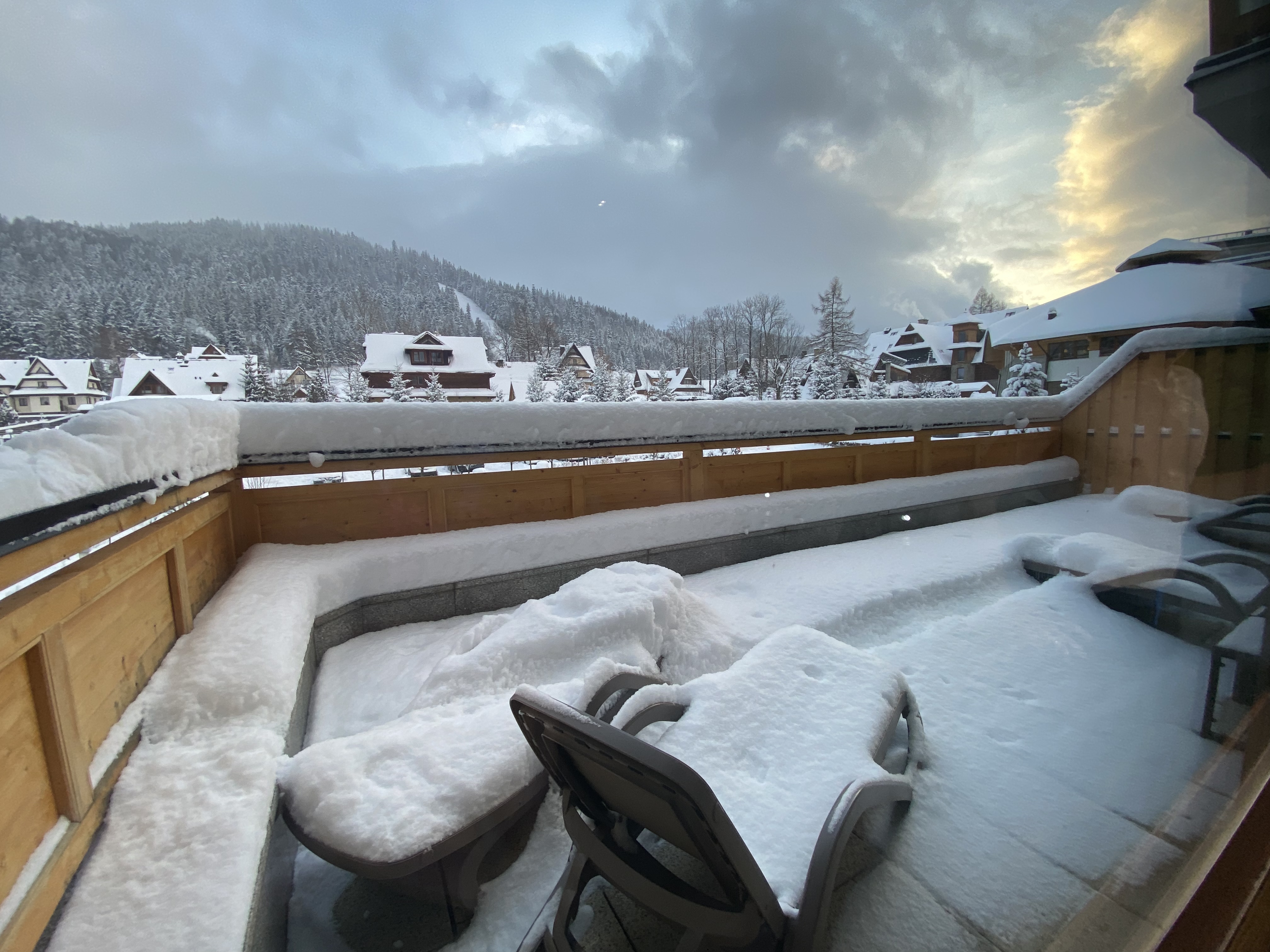
Polish people will tell you that in the summer, you should visit the colorful seaside town of Gdansk, and in the winter, you should visit the snowy gingerbread-cottage village of Zakopane. Zakopane’s main street is so cute!


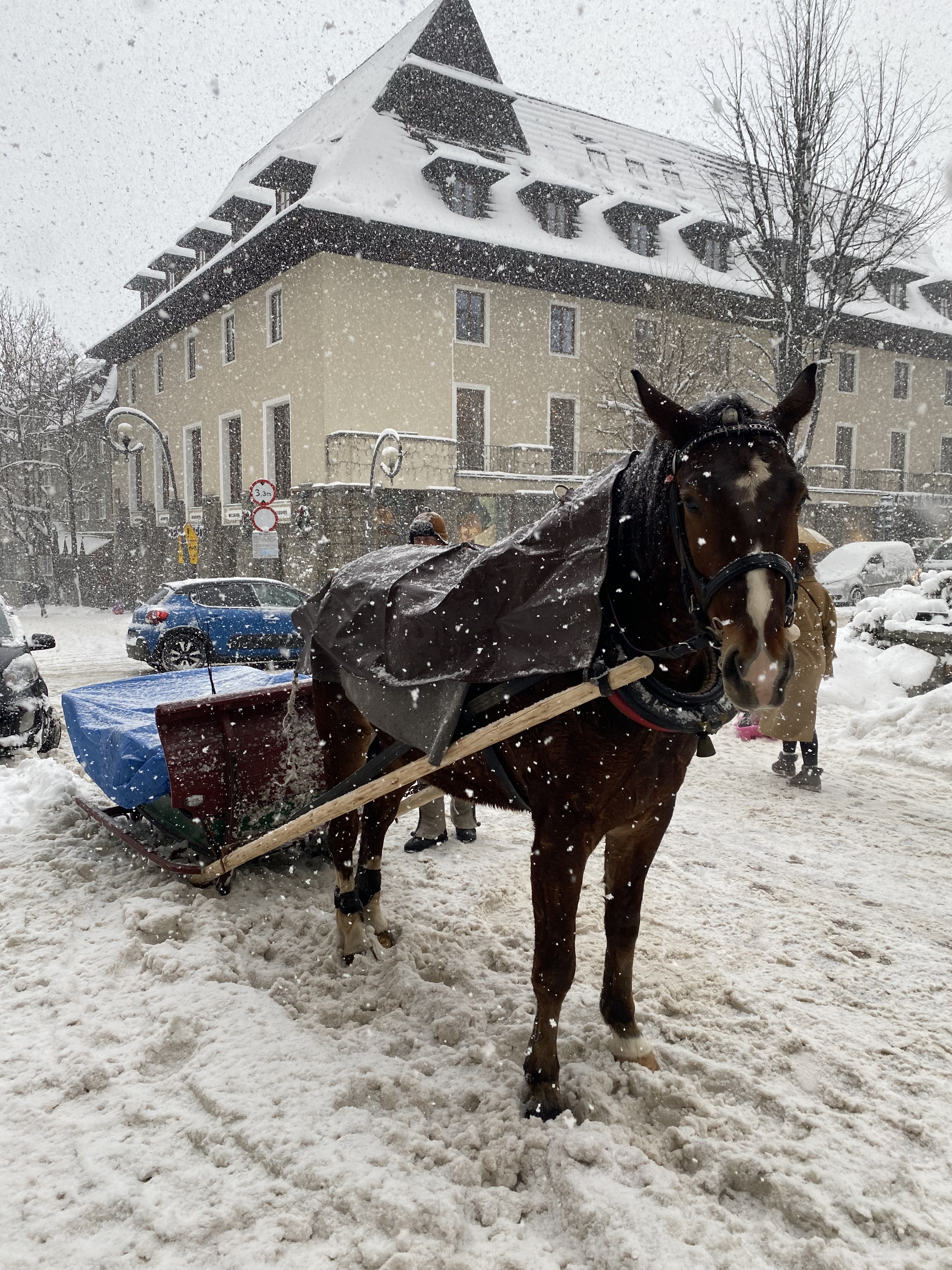


There’s pretty good skiing, too. The Carpathian Mountains are more like oversized hills, so most of your intermediate runs will be like nice, long bunny slopes. Honestly, it’s a great place to learn how to ski. There are several ski resorts in the area, but I would recommend Bialka Tatrzanska.


Kasprowy Wierch is closer and borders Slovakia, but I wouldn’t ski there unless you like intense runs and lots of cross-country skiing along ridges. If cross-country skiing is your gig and the weather’s clear, the views are supposed to be amazing. Plus it sounds cool to cross-country ski on a mountaintop along the border of two countries. If you’d like to cross the border into Slovakia but you’re not trying to ski, there’s a beautiful gondola ride that will take you to the summit of Kasprowy Wierch with a little cafe. Get some soup, see some views.
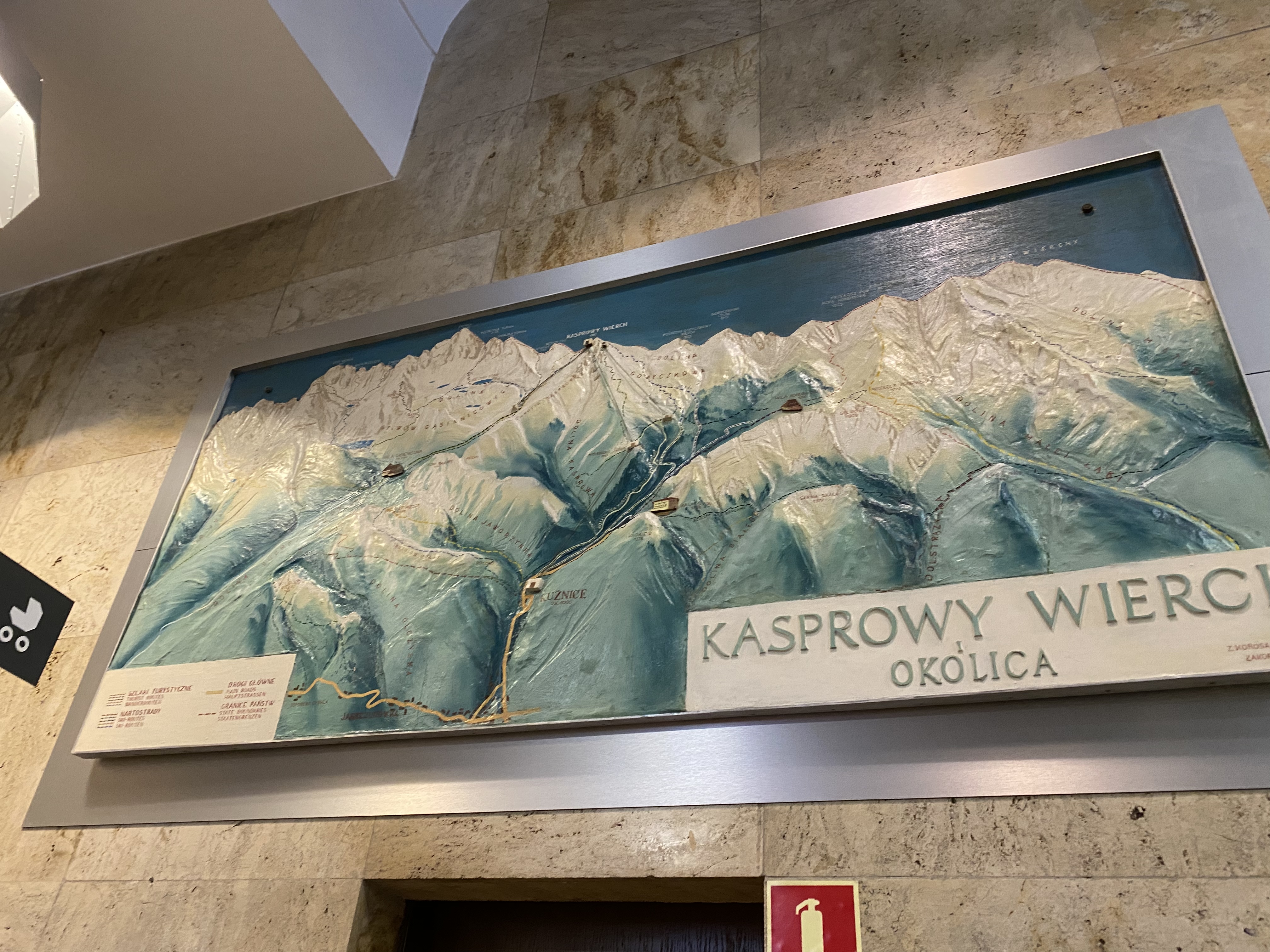


Maybe.
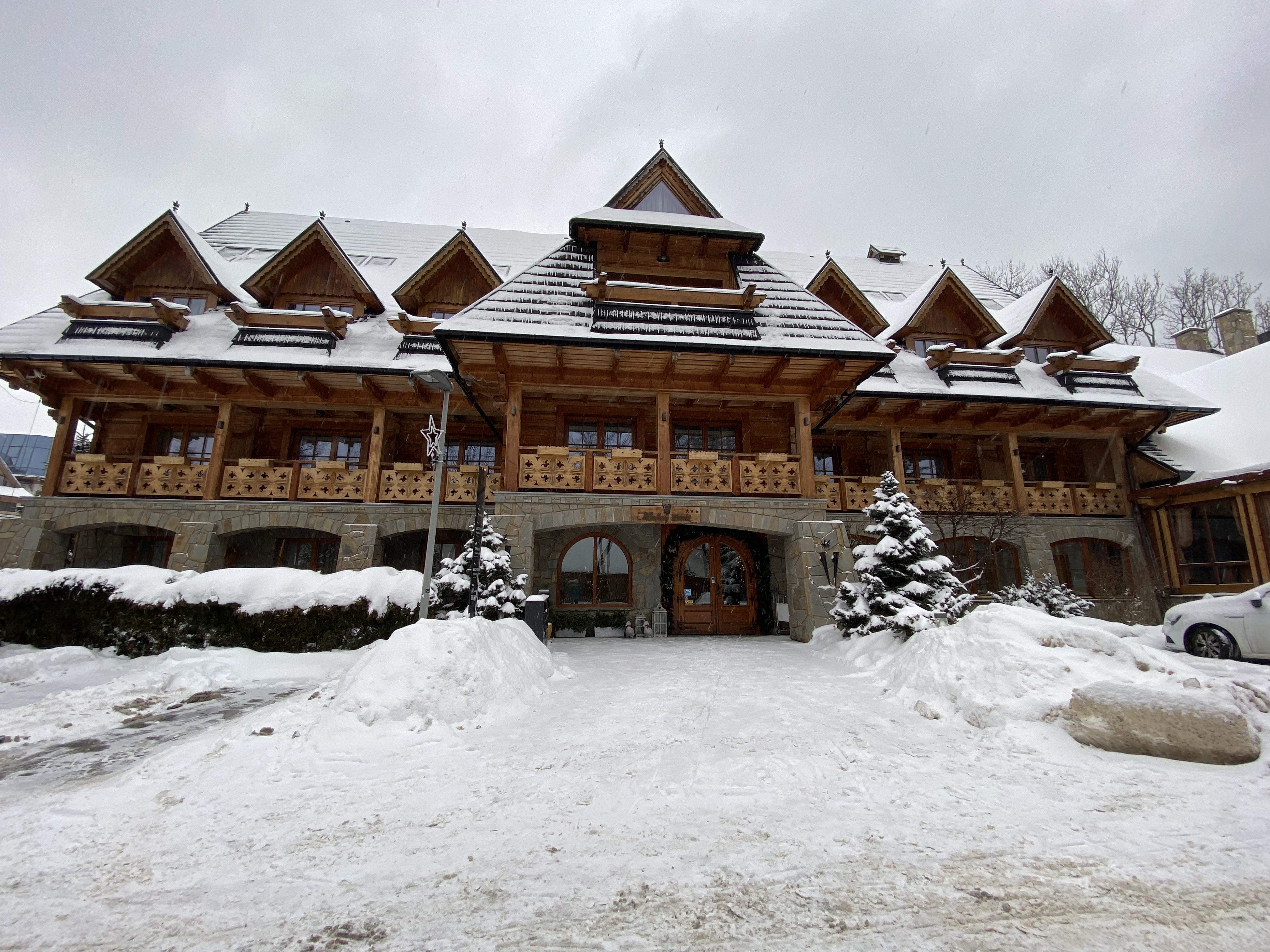
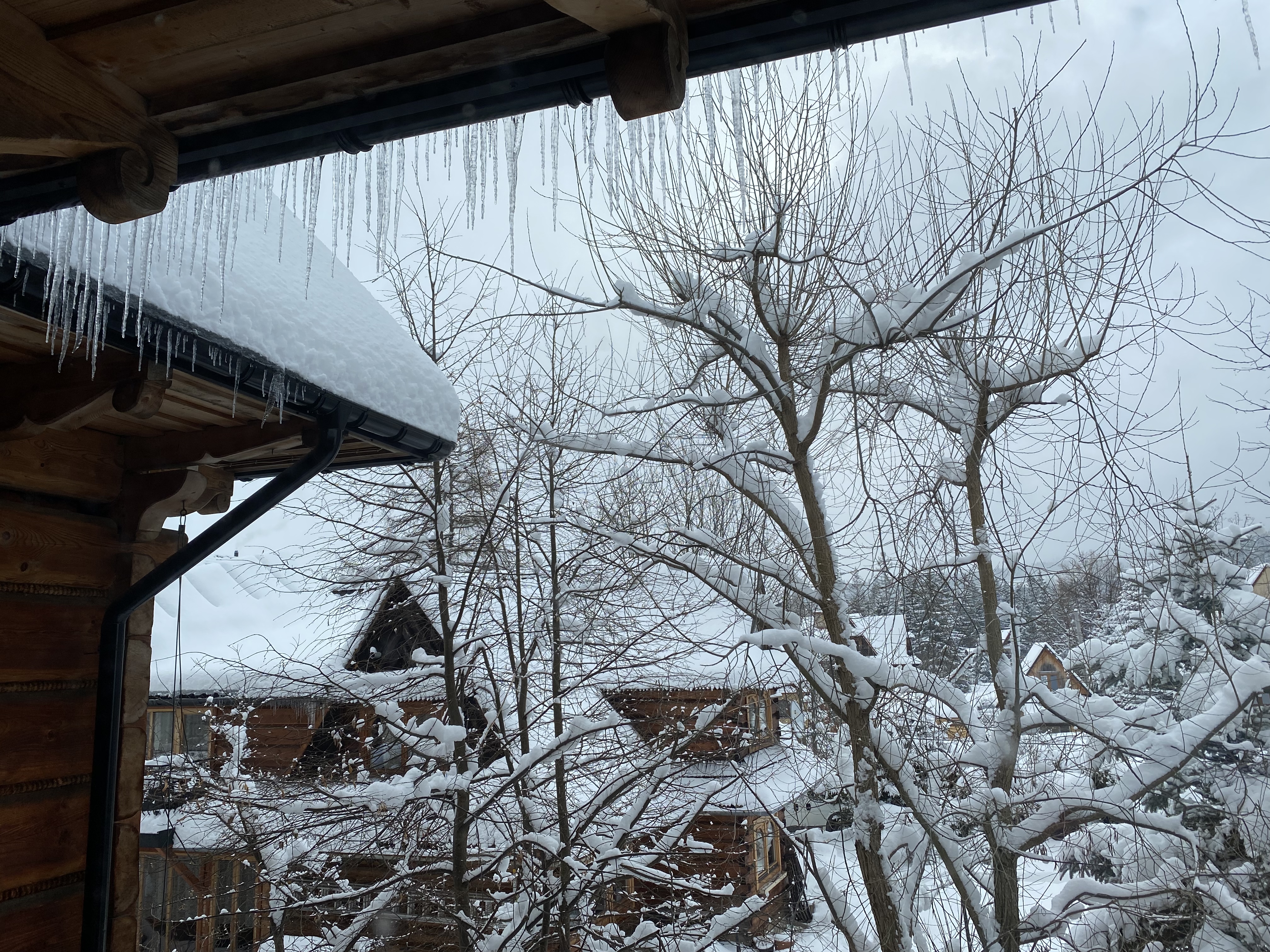
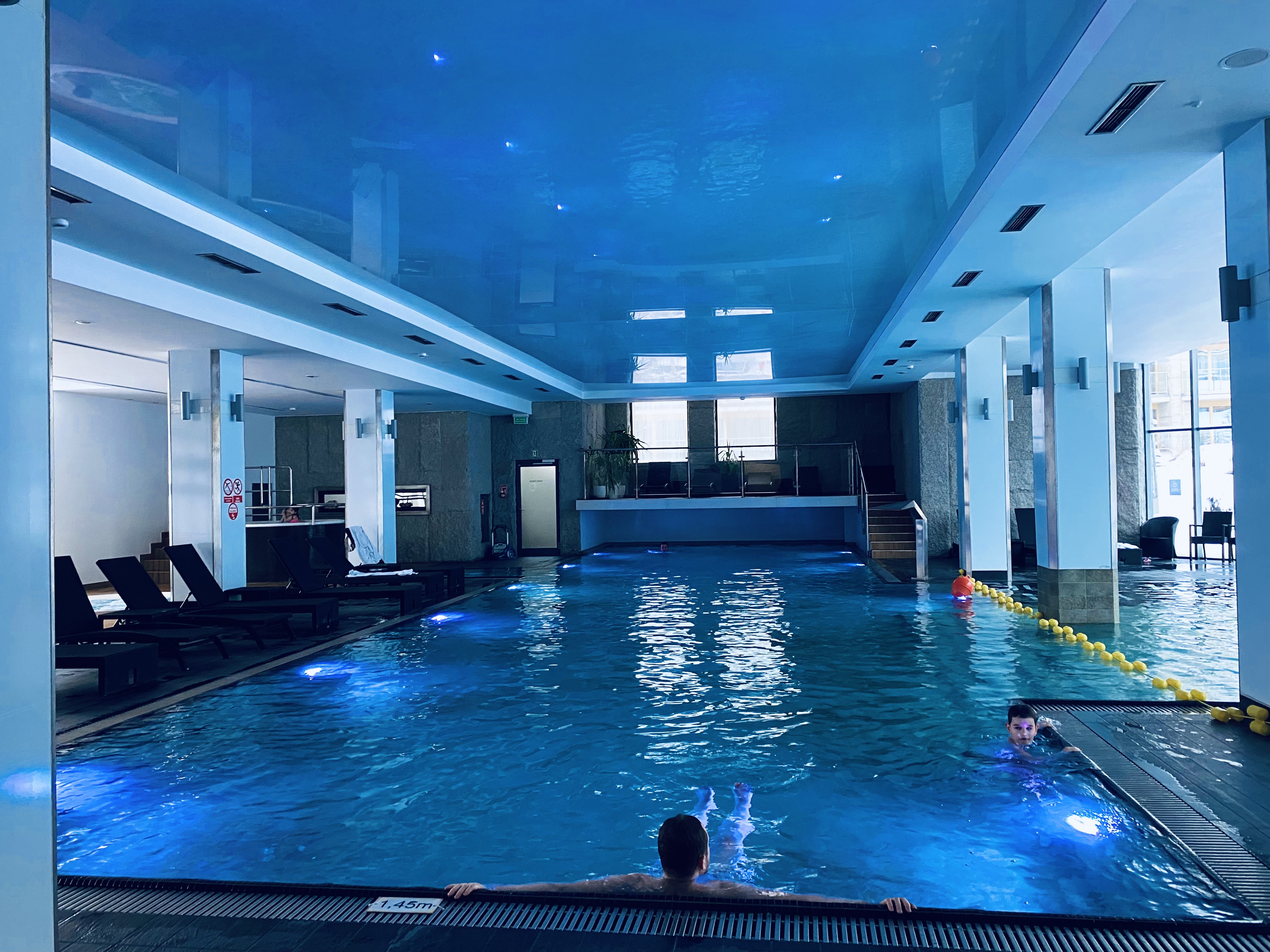
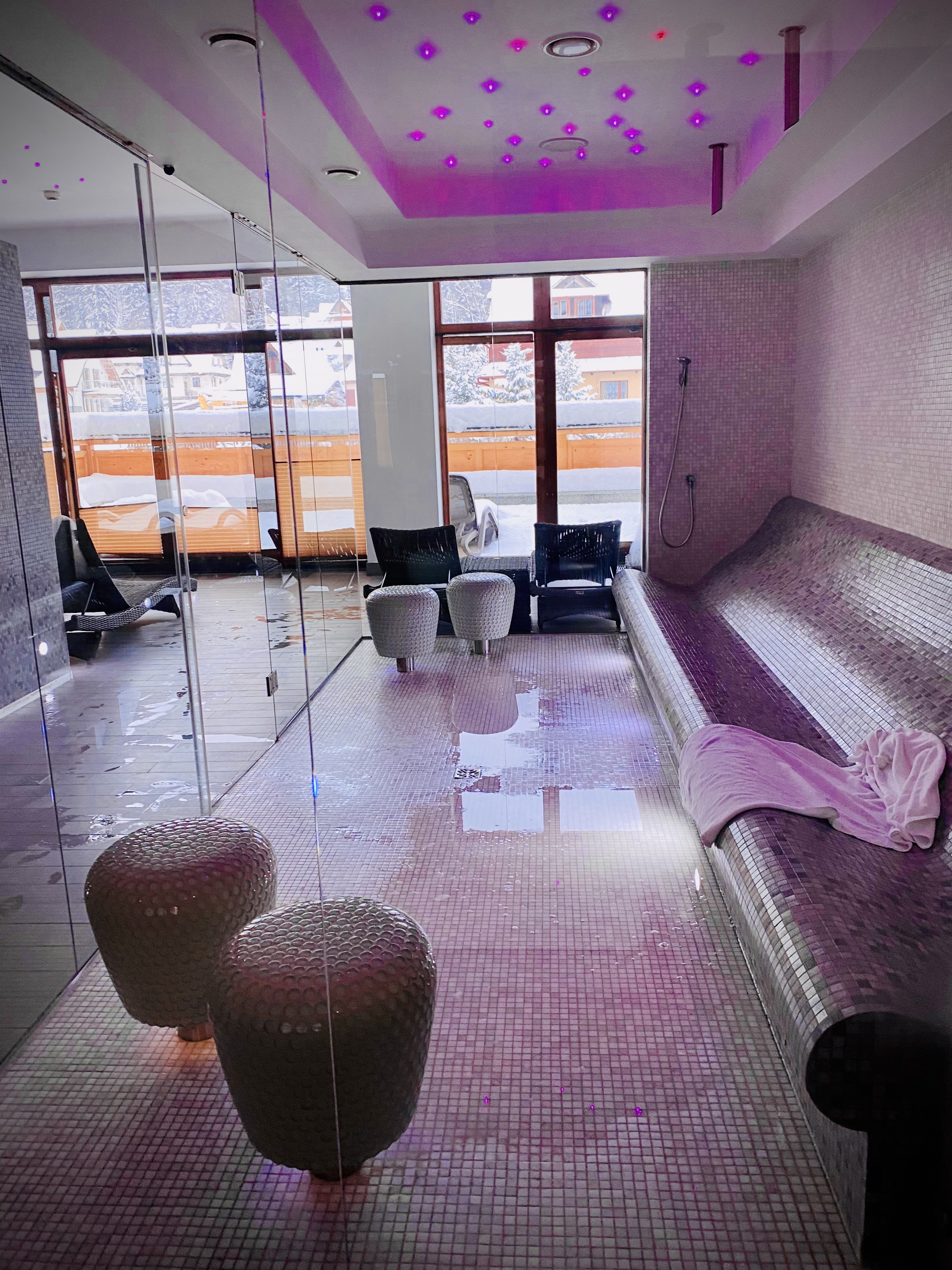
Because the prices are so low, I would recommend staying at Nosalowy Dwor. It’s a spa resort that also has a cute little mountain chalet. You can stay in essentially Snow White’s cottage, eat a good continental breakfast, hit the slopes, and be back to warm up in the spa’s steam room, sauna, and heated pool.



WHAT I ATE
Christmas Market Goodies
Here are a few street foods you shouldn’t miss in Poland. (Don’t miss the immodium, either.)




- Pierogi: Poland’s most popular treat! A pot-sticker-like dumpling filled with cheesy mashed potatoes?? Say no more! And the street food stalls will grill them to perfection. Try not to eat 100 pierogi. I DARE you.
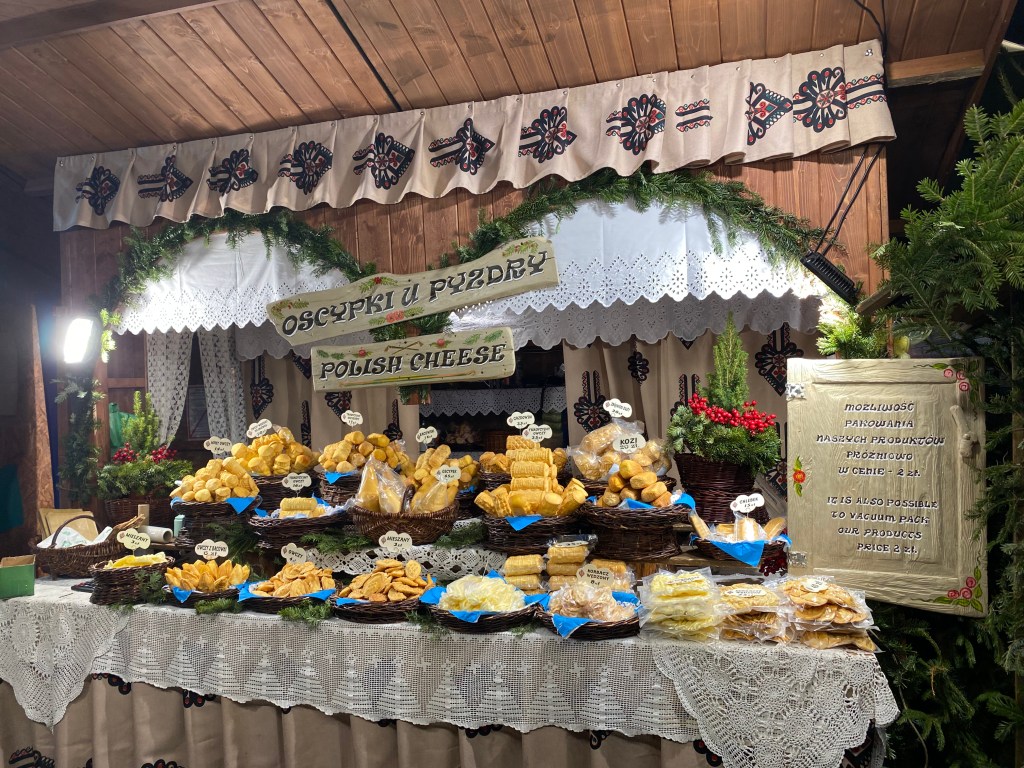
- Oscypek: smoked sheep’s cheese, grilled and sometimes wrapped in prosciutto or ham with lingonberry sauce on top. It’s squeaky like a cheese curd but has the taste of smoked gouda. It has a cute little stamp on it, too. Since it’s smoked like gouda, you can also take some back with you in your suitcase. Don’t share it with your friends, though. That’s YOUR suitcase cheese.
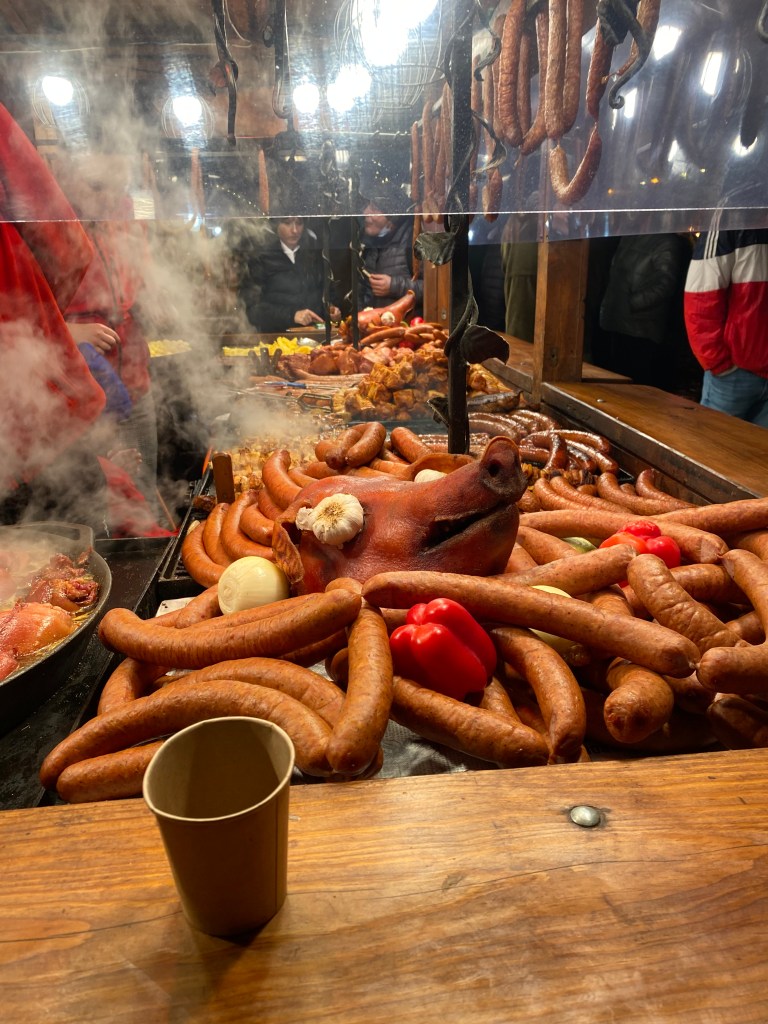
- Kielbasa (grilled Polish sausage)
- In Krakow at the Christmas market, there was a stall that served like twelve different types of soups. Try all of them, starting with the goulash. Then try the Bigos stew, the national dish of Poland.
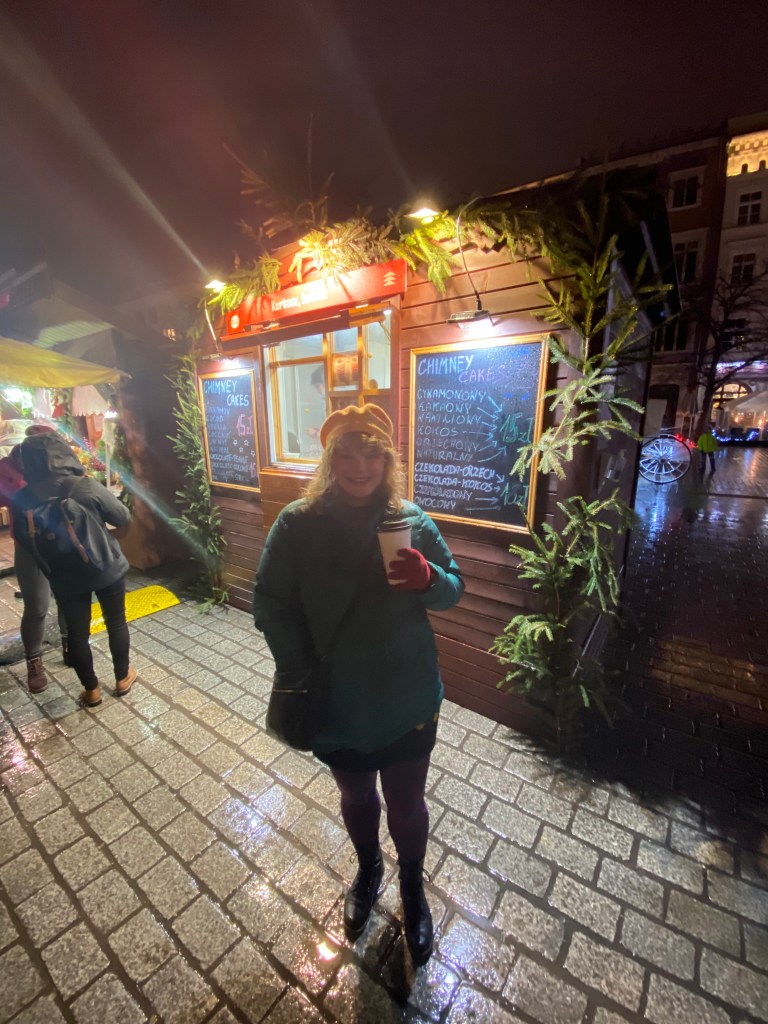
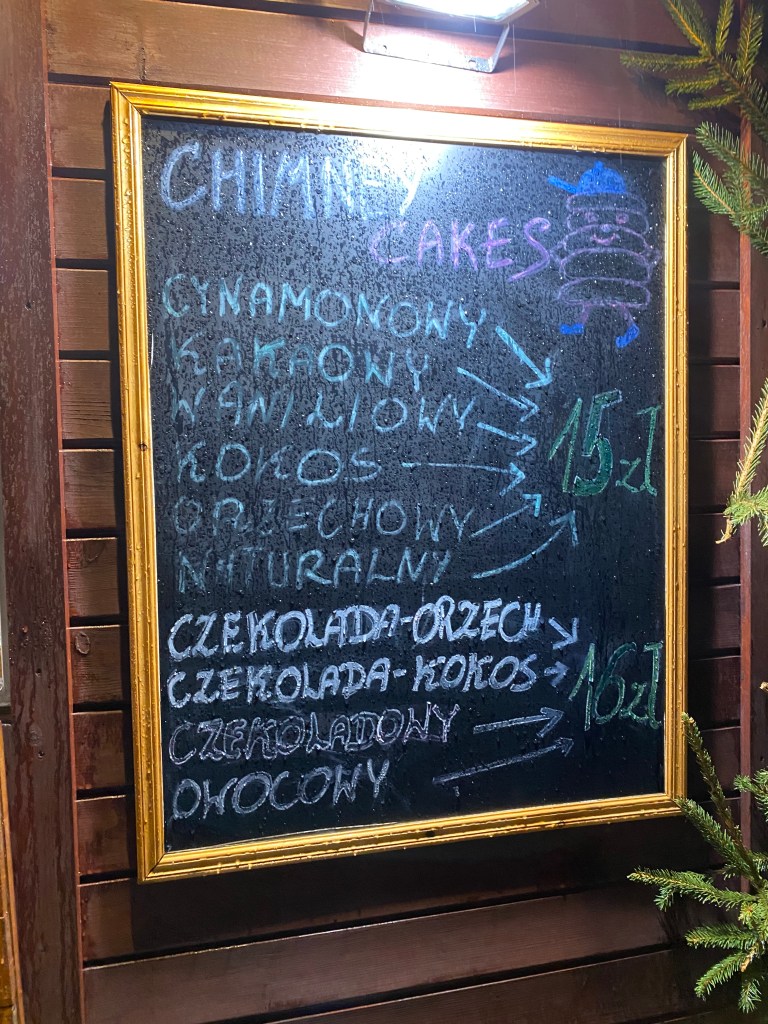
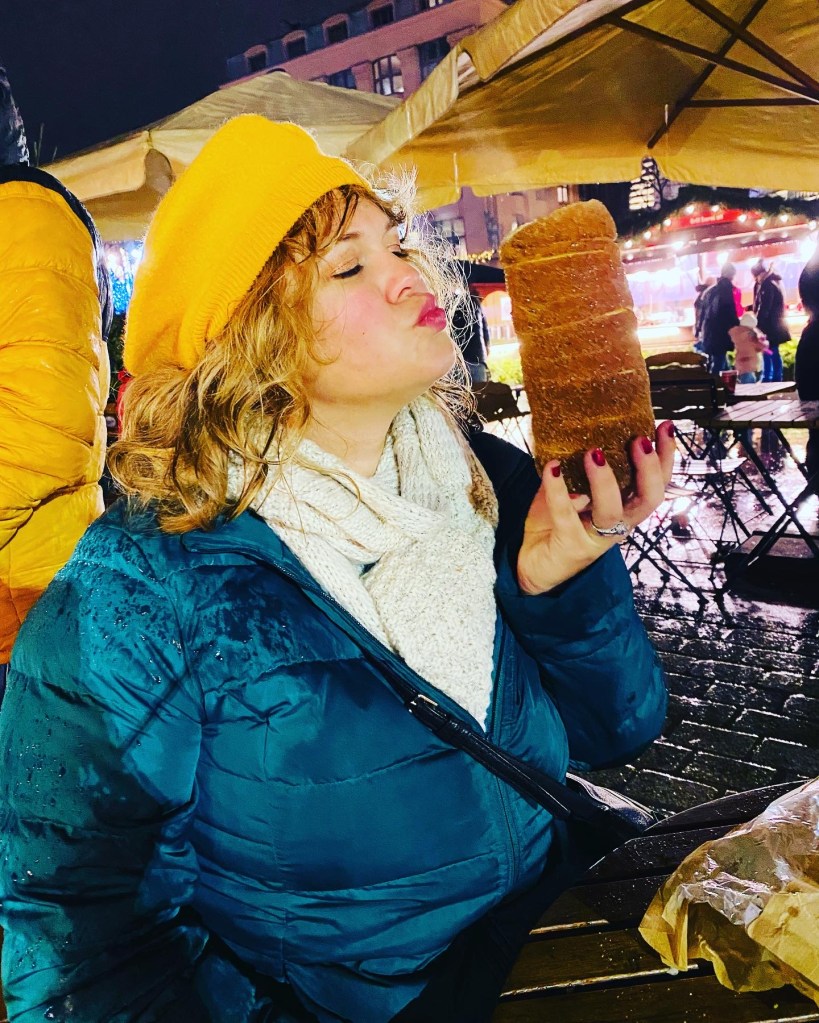
- Chimney cakes (Kürtöskalác or Trdelnik). This tasty pastry can be found all over Eastern Europe. The easiest way to explain it is that it’s a vertical cinnamon bun with a big hole in the middle which steams like a chimney.
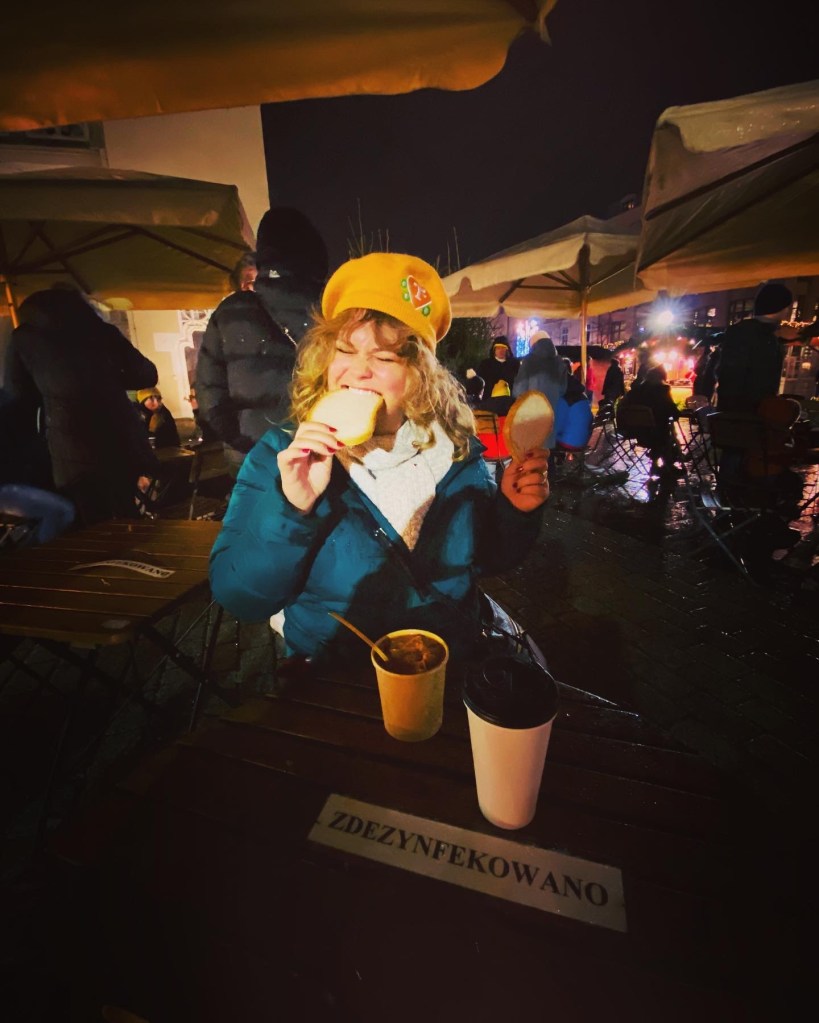
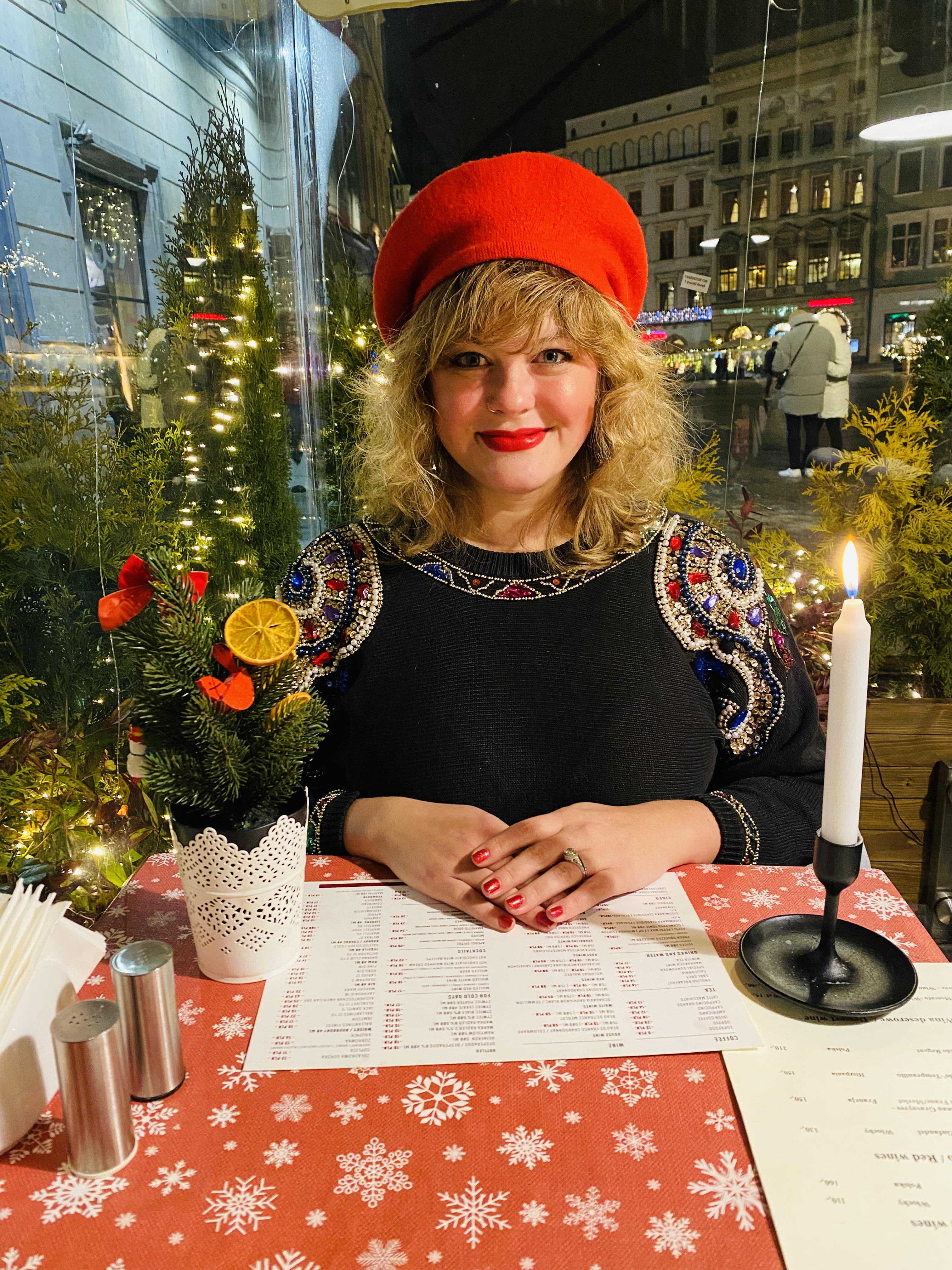
- Grzaniec (spiced hot wine). See, this is why I’m such a Grinch during Christmas in Alabama. Schvitzing in a sweater when it’s 65 degrees and rainy, singing about chestnuts roasting on an open fire, is nothing compared to being eight mugs deep into spiced hot wine, stumbling and swaying down the cobblestone streets of Europe while the garland and lights twinkle above me, snowflakes kissing my eyelashes and blinding my field of vision. CHRISTMAS IS EUROPE IS BETTER.
Also, try to pronounce grzaniec.
Go ahead, try. I’ll wait.
Wrong. It’s pronounced “djan-yeck”. Polish is the hardest language I’ve ever come across in all my travels. And a French woman on the Riviera who was trying to sell me some expensive perfume once told me I have an ear for languages, too. Polish is HARD. This time, take the L and let them speak English to you. Save yourself the embarrassment.
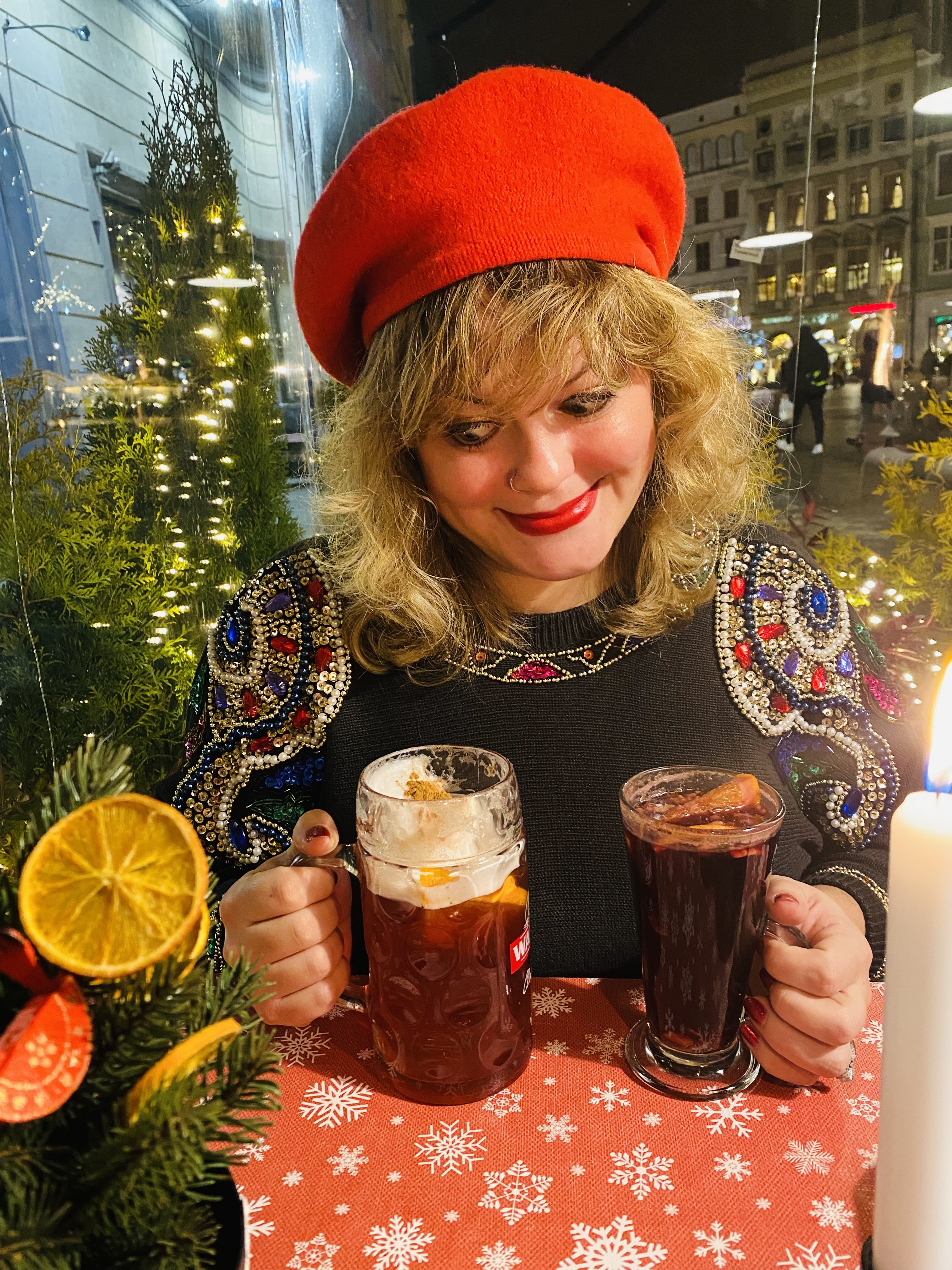
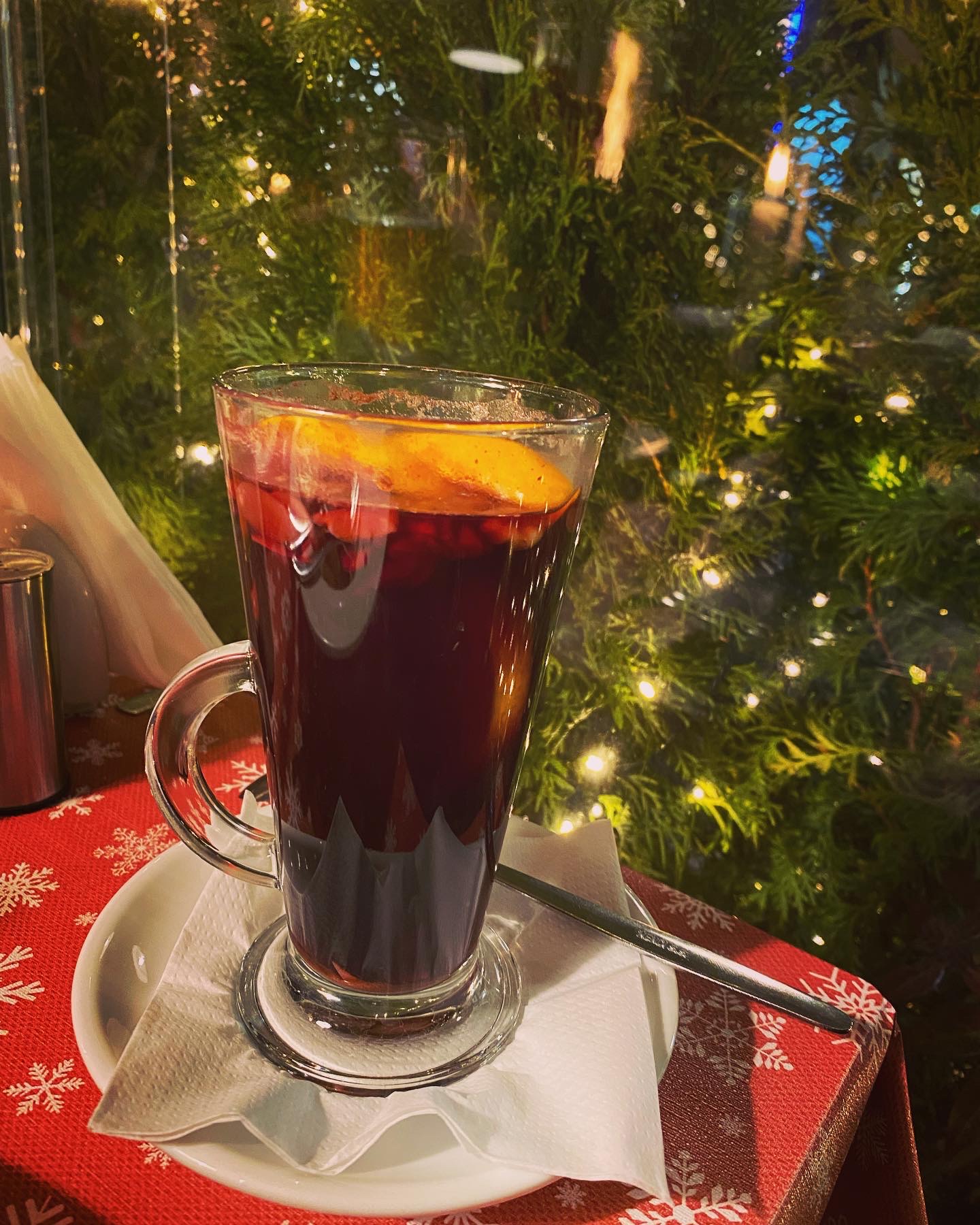
Szara Gęś: On your second night in Krakow (because the first night you’re going to go ham at all those Christmas market food stalls), PLEASE go to Szara Gęś. It’s in a beautifully-restored 13th-century building with a gorgeous vaulted ceiling. Since one American dollar is worth four Polish zloty, you can ball out and eat some truly great meals. Szara Gęś means Grey Goose in English, and the house specialty is a vanilla-custard egg with mango-passionfruit sauce in the middle as the “yolk”, sitting on a bed of shaved chocolate which looks like a bird nest, and THAT is ensconced in a cloud of white cotton candy. You should totally get it to split and definitely don’t eat the whole thing by yourself hahaha who would do that what even that is crazy


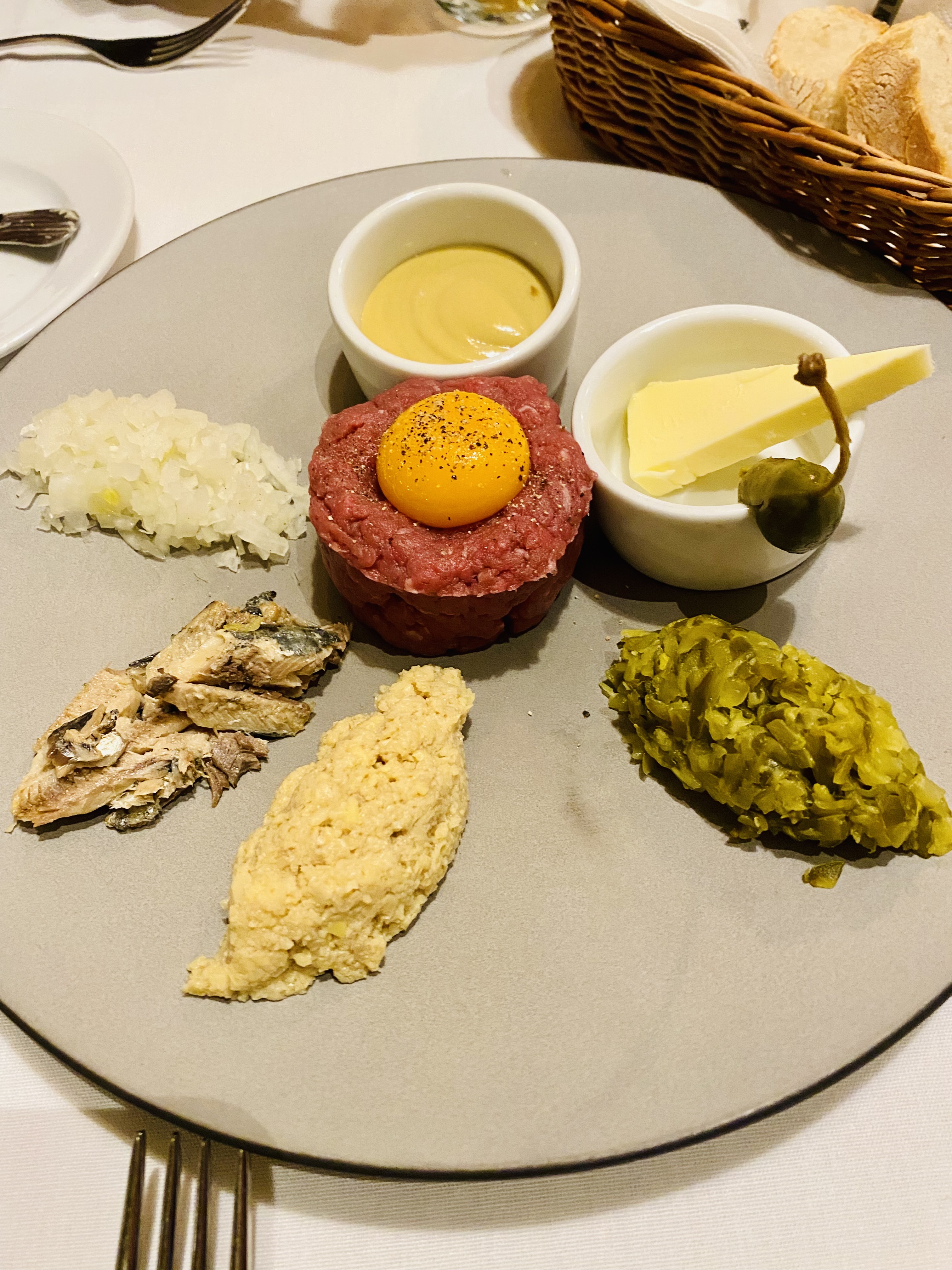
Szara/Michelin Restaurants: Szara Gęś is not to be confused with Szara, a Michelin-starred restaurant that is confusingly right next door. It’s also delicious. Szara is on the town square and sits on an alley with about four other Michelin-starred restaurants. Michelin folks love Krakow, I guess. And I get it: the food is delicious. Definitely get steak tartare while you’re at a high-class restaurant in Poland because it’s a national specialty. You could go to any of the restaurants along Michelin Row (my name) and eat well for the same price as, like, a Bloomin’ Onion and steak dinner at Outback.

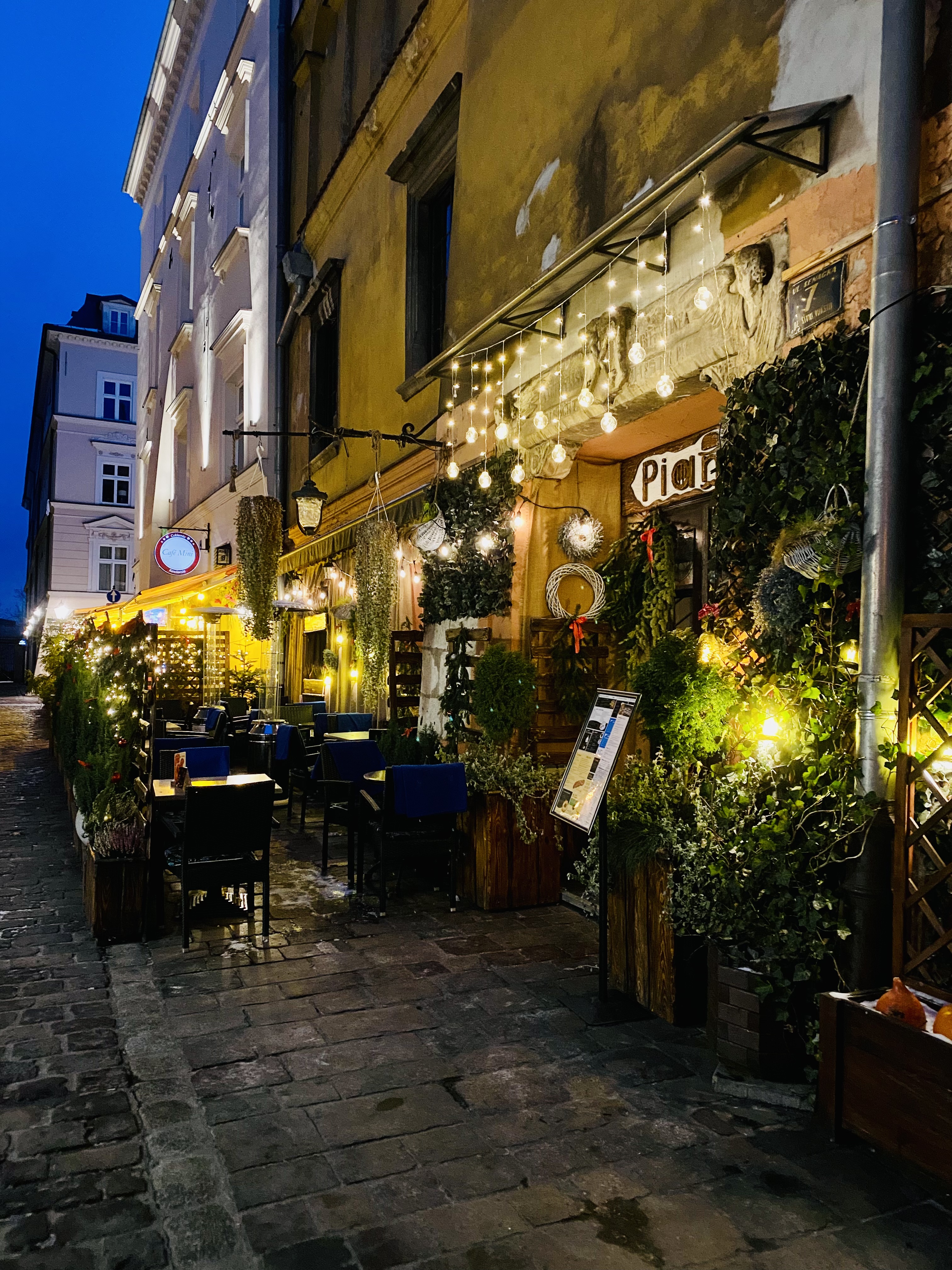
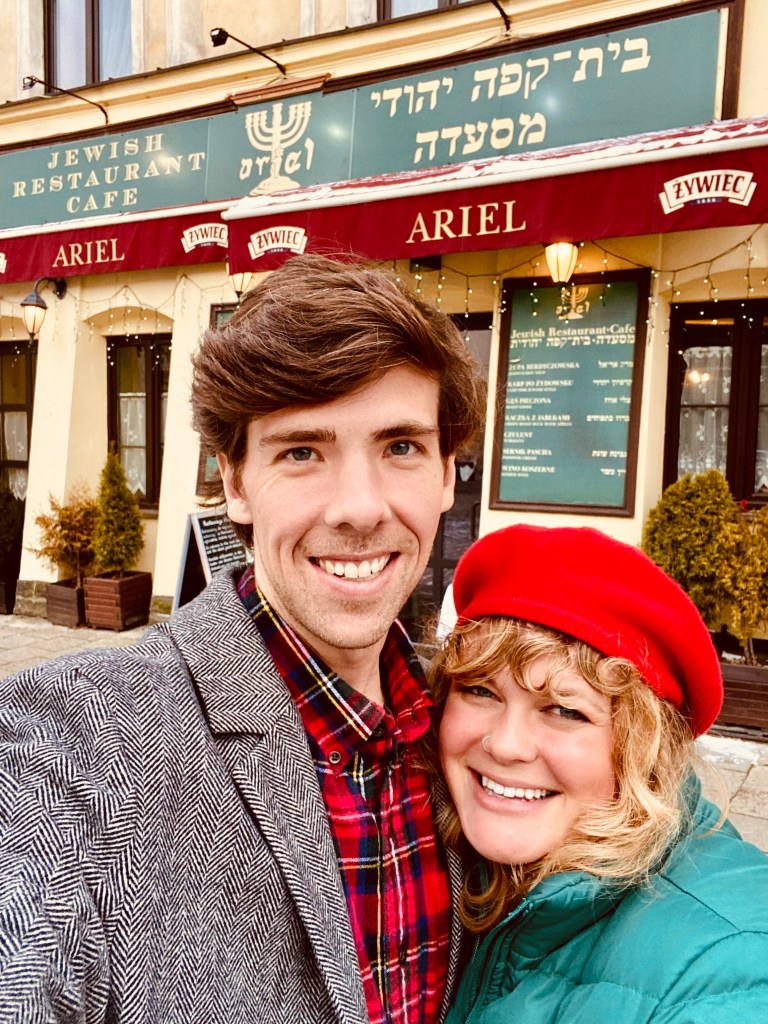
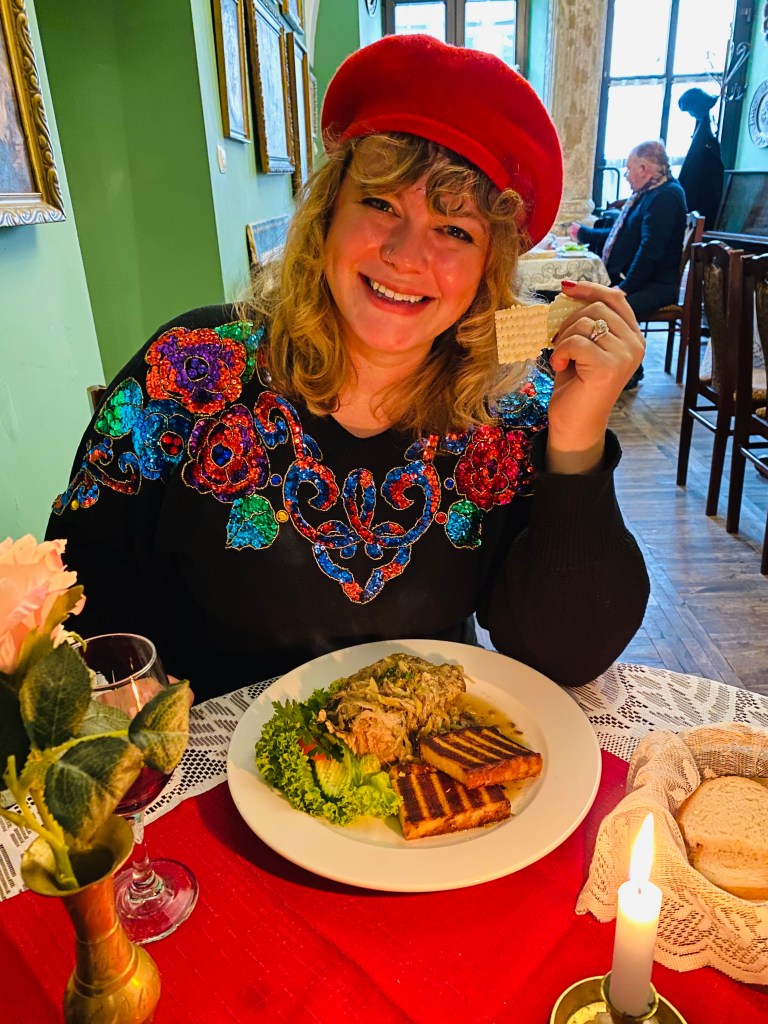
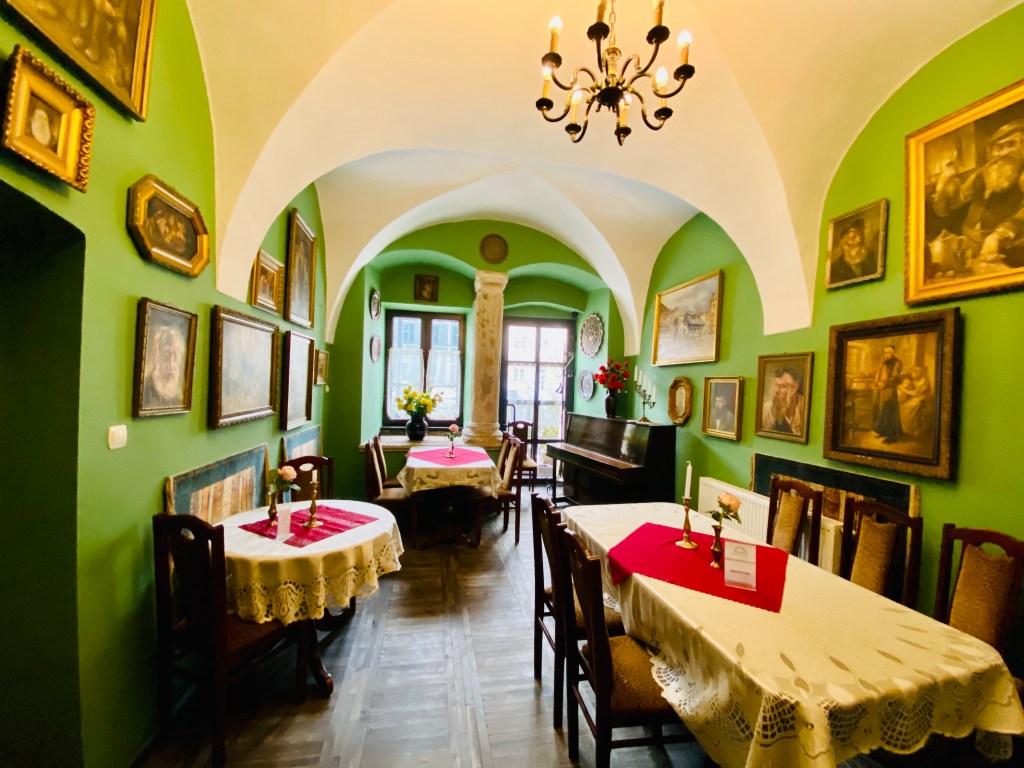
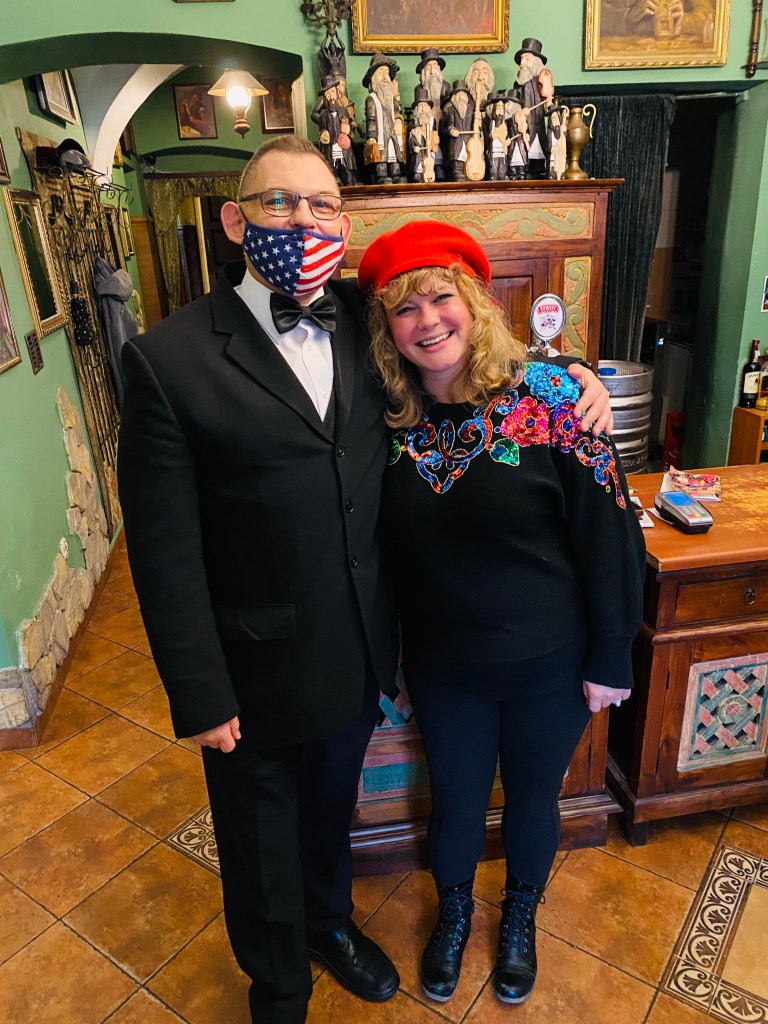
Ariel: oh my goodness how to describe the ambiance of this restaurant. Okay… imagine you had a long-lost great-great-uncle in Eastern Europe. And he was like “Bubula! My little minushka! Sit down at the table while I make you some chicken soup. What about some potato pancakes? Dessert? Not hungry? Bah, you’re skin and bones! Eat your kugel!” And he’s a sweet old man but also he’s wearing a tuxedo because he wants to look his best. And you’re eating in a cozy, apple-green dining room surrounded by a hundred pictures of your relatives. THAT’S the dining experience at Ariel.

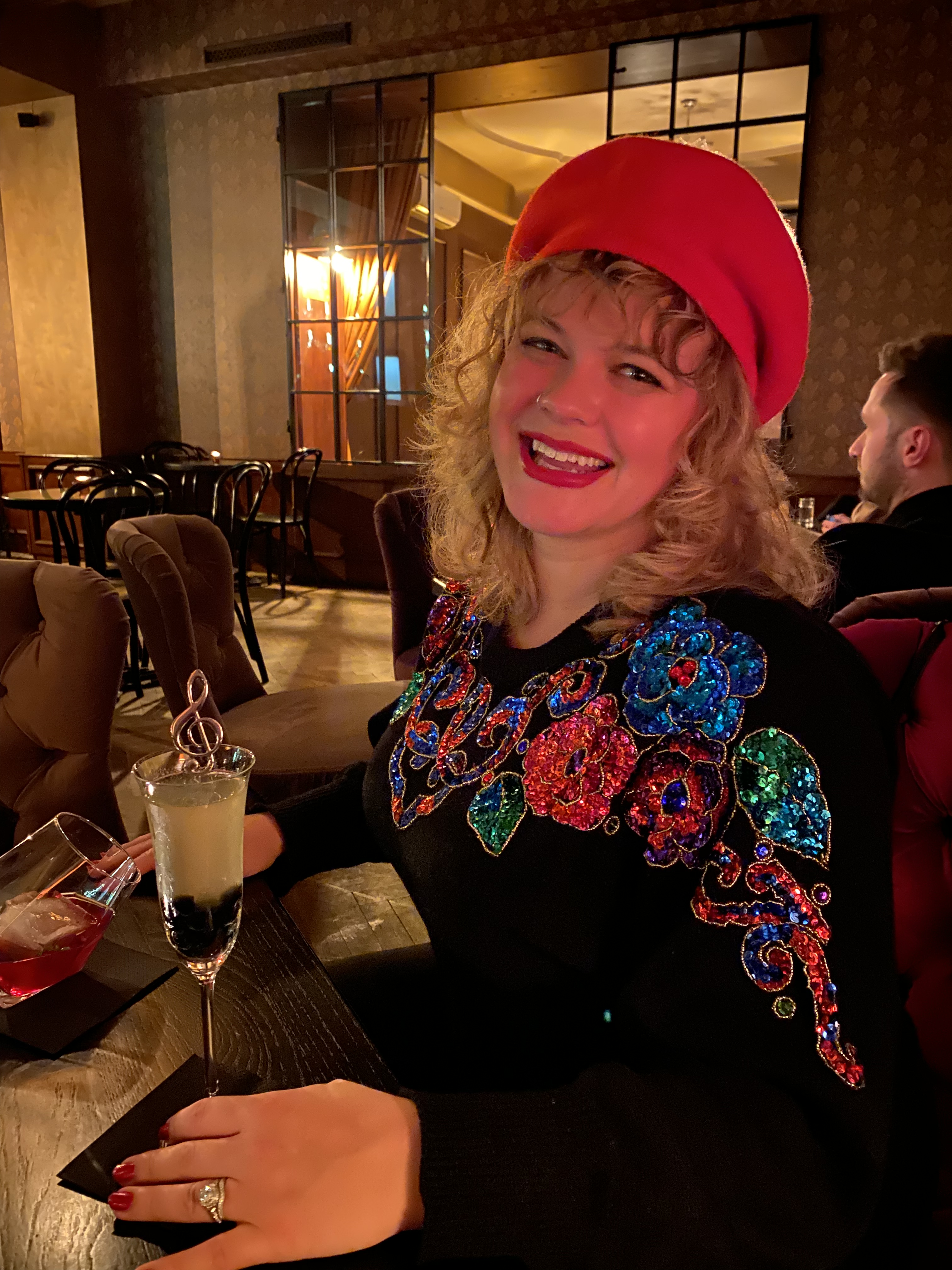
Mercy Brown: You ever feel like you’ve seen one speakeasy, you’ve seen ‘em all? This speakeasy, ironically, tops most of the hideaway bars I’ve been to in the States. First of all, Mercy Brown is an honest-to-goodness speakeasy. It’s located right outside of the walls of Old Town in the pierogi-and-stew version of Jimmy John’s. So you go up to someone waiting in front of a coat rack to ask for directions and they wryly smile and tell you that you ARE in Mercy Brown’s. And then (hopefully you have a reservation) they take you back past the kitchen of the pierogi place, up some stairs, and knock on a wooden door. The wooden door opens, and you’re welcomed into a real-deal 1920’s mahogany-and-leather flapper joint with live music and a themed menu. Plus the bar is named after a Rhode Island woman who was thought to be a vampire who killed off her family! (jk it was tuberculosis)

HOW I PACKED
Poland’s winters are cold and snowy, but not as cold and snowy as they used to be. (Climate change.) You’re not going to be wading through snow, but nobody wants to get snow-puddle feet. Pack a puffer jacket, some good sweaters, fleece-lined leggings, snow boots, thick socks, a good warm scarf, and (in my case) a colorful and stylish assortment of wool berets, and you’ll be fine.


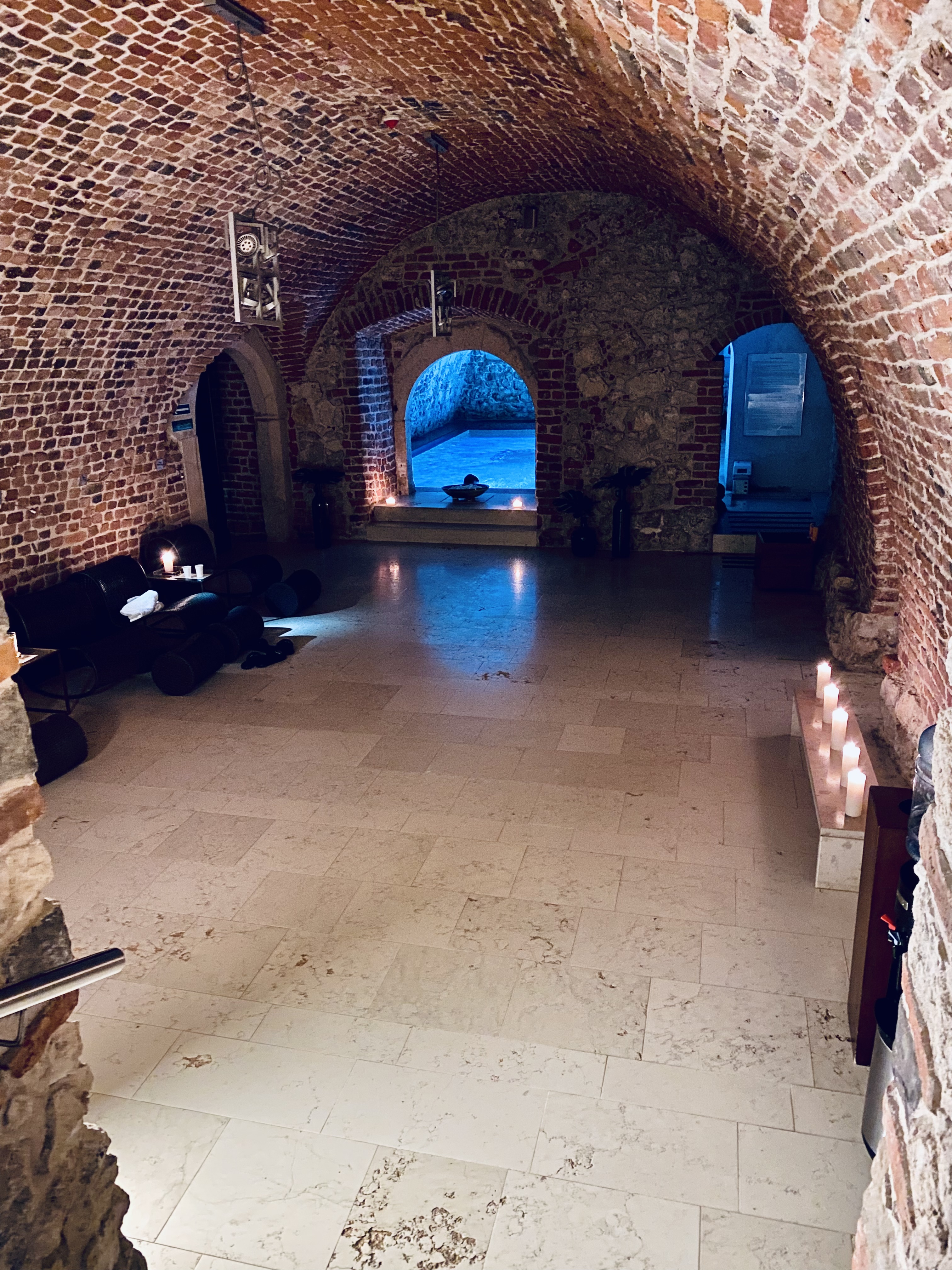
Since prices are so low in Poland, in Krakow I would recommend staying at Hotel Stary. This is a five-star hotel that was once the medieval Merchant’s House, featuring an underground sauna, steam room, pool, and salt room. Just a room with salt block walls where you sit in a bathrobe and think about how relaxed you are, and how glad you are that you took my advice. You can stay at Hotel Stary for about the price of a Holiday Inn. No matter where you stay, pack a swimsuit and shower shoes: nobody does a complimentary spa like North/Eastern Europe.

If you’re planning on skiing, I think you can rent ski stuff at Bialka Tatrzanska. But if I can give you some advice: if you like to travel and you’re planning on going during Christmas, it might be a good idea to invest in some snow pants, gloves, and a ski jacket. Alex and I did a few years ago and we’ve used them in Quebec, Alaska, and Poland. Of course, my Totally Rad ski jacket is my dad’s from the 80s. You can’t buy that kind of style in 2023.

 Ramblin' Reba
Leave a comment