
Now look.
Normally, when I cover a city (heck, a whole country), my blog posts have three sections: What I Saw, What I Ate, and How I Packed. But when it comes to Paris, attempting to cover all three of those within one blog post seems like pure folie, which is what all the nice French people kept calling me, which I’m pretty sure means “really pretty”.
Now, I’m just a humble girl from Alabama, but back when my dad worked for NATO and we lived in Belgium, we used to go to France fairly often. I’ve been to Paris five times. This is not a brag; this is me establishing credibility so that you take my recommendations seriously.
Because if I published this list on, say, Twitter, I’d get a million comments like “ugh of course you went to Le Train Bleu and Café Les Deux Magots what a stereotypical American tourist.” BUT the thing is there’s two types of tourist places: restaurants that are close to high-traffic areas whose food is not very good because they serve so many people a day, and restaurants whose food is very good and that’s how they got to be so famous. So everywhere I’m going to recommend to you today falls within the second category. And also, remember Rule #3 of my Guide to Traveling Well: you are a tourist, be touristy. On your sixth time in Paris, by all means, go to the little hole-in-the-wall restaurant in the 15th Arrondissement that nobody’s ever heard of. But today, check out the 15 restaurants that have stood the test of time in The City of Light.
Before we begin, three very important words of advice if you’ve never been to Paris.
- MAKE A RESERVATION. This counts for most of France, but especially Paris. Paris is the foodie capital of the world; everybody’s trying to get in and eat. All the tourists from all over the world are cramming in with 2.2 million Parisians at the tiny little cafés with wicker chairs out front. So if you want a table, especially for dinner, you need to make a reservation. Even if the place is empty, they’re going to ask you if you have one. If you say, “oh, non, je suis désolée,” they’ll seat you if they have room, but if you don’t have a reservation and they’re busy, they won’t be like “it’s an hour and a half wait, is that okay?”. No one (with the exception of Maxim’s) was rude or snobby to us, in fact everyone was very sunny and cheerful. In my blog post on the French Riviera, I talked about this axiom which should apply to all people but definitely the French: be sweet to them, and they’ll be really sweet to you. So do the polite thing and make a reservation.
- Ball out on food like you’ve never balled before. Parisian food really is worth it. French food is my favorite food in the whole world. But in Paris, it’s expensive. So don’t ruin your Parisian vacation by grumbling and bulging your eyes when you get the bill. (By the way, you have to ask for the bill. They’ll let you sit at that table as long as you want to; nobody’s trying to rush you out the door.) Save up now and plan on budgeting $1,000–$1,500 for food. I know, I know. But trust me: you can save in other parts of your vacation. Paris is worth it. That being said, you’re not going to pay $150 for every meal. I would eat a really light breakfast (le petit déjeuner, or ‘the little lunch’, which is cute), have lunch at a café, and go all out for dinner. And don’t forget to plan a day to just pick up stuff at a local market—a hunk of cheese, a bottle of cheap delicious plentiful French wine, a fresh, yeasty-sweet baguette.
- Embrace afternoon naps and late-night dining. Most Parisian restaurants stay open really, reeeeally late. And you’re gonna be jet-lagged anyway. I’m telling you: that first day in Paris, you’re gonna get off the plane after an 8-hour overnight flight, all tired and grumpy, and after nearly bursting into tears because you spilled a whole bottle of Perrier in your purse in front of the Notre Dame, you decide what you really need is a nap. And you’re gonna fall asleep and wake up like “OMG it’s 8:30 PM we’d better hurry and get dinner!” only to find that all the restaurants have just opened up and are going to stay open until like 2 AM. Their 8:30 is our 5:30. And if you go in the summer, the sun will probably still be up. So vive la France and vive la belle vie, baby!


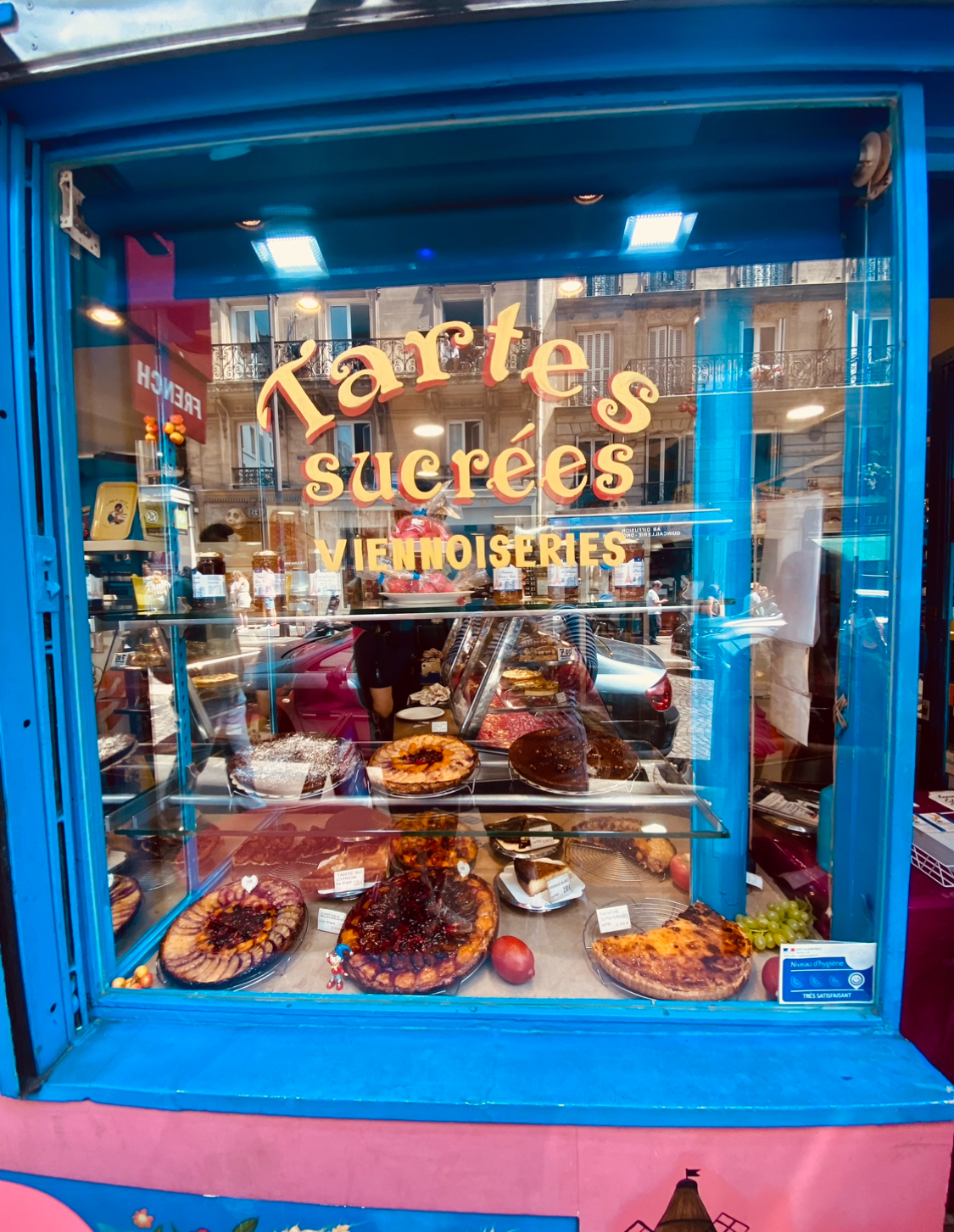

A Guide to French Food
If you’ve never had French food before, you should know that pretty much everything American pop culture says about it is wrong. Most traditional French dishes were invented by good ol’ country peasants who didn’t have access to costly spices but nevertheless managed to produce some of the most flavorful cuisine in the world. The French believe in cooking something down to its absolute essence, intensifying and purifying the flavor.
For example: one of the most popular French dishes is suprême de poulet rôti—which is French for supreme rotisserie chicken. You’ll see rotisserie chickens on spits turning and roasting in windows all day, and they baste the skin in the drippings so it’s nice and crispy, and then they take whatever drippings are left over and boil that down with a stock made from the bones of the last rotisserie chicken, creating a sauce that is intense and delicious without ever having to get near salt and pepper. As Julia Child once said, “Only the French can get a chicken to taste so… chickeny!”
So a lot of the foods you should definitely try on this list aren’t snobby snooty dishes; it’s like the end of Ratatouille when the food critic tastes ratatouille (vegetable stew) that tastes like home. Most of these dishes are provincial stewed home cooking. Be open-minded! The French are proud of their food and love it when you’re willing to be adventurous!
By the way, in France, an entrée is an appetizer. Main courses are called plats (or plates). Just in case you guys aren’t Francophiles, I’ve included a real Yankee-Doodle pronunciation guide just so you won’t be intimidated while ordering. And remember: in Paris, many restaurants have English menus and waiters can mostly speak enough English to help you out. So it’s okay to order in English! Just don’t be that stereotype that’s like “oh I didn’t like Paris because I didn’t know what I was reading on the menu” because to me you sound like a big ol’ poulet.
- Suprême de poulet rôti (suprehm de poolay rotee). Rotisserie chicken with basted chicken sauce.
- Boeuf bourguignon (boof borgiynyon). Beef pot roast.
- Coq au vin (coco vahn). Chicken slow-cooked in red wine sauce and bacon.
- Demi magret de canard (demi magray de cahnahrd). Duck breast. If you really want to impress the French, eat the thick layer of fat with the dark meat. It’s not like gristle.
- Sole meunier (sole myuniyay). Dover Sole fried delicately with lemon-butter sauce. This is the legendary dish that made Julia Child fall in love with French food.
- Moules marinières (moolay mariniyay). Mussels steamed in wine sauce. If you’re not a big fan of seafood but want to give it a try, many restaurants offer garlic butter sauce.
- Jambon beurre (jambahn byuhr). Ham and butter sandwich. This is the #2 most common meal, especially for lunch. The ham isn’t like deli ham, it’s like Honeybaked Ham, thickly-cut. And the butter is so creamy, it’s more like spreadable cheese. It comes on a fresh baguette. I didn’t like ham when I was a kid, but a jambon-beurre sandwich on my first trip to Paris made me a convert.
- Cassoulet (cassoolay). The origin of casserole; franks-and-beans kicked up a notch. Baked beans with all kinds of meat slow-cooked and pull-apart tender. I doubt you’ll find it anywhere if you go to Paris in the summer, but in the fall and winter it should be available. It takes forever to make and it’s too hot to eat in the summer.
- Escargots (es-car-go). Okay, okay. Okay, listen. Okay, just listen. Yes, escargots are snails. But just like… try it, okay? If you’ve ever eaten an oyster (or worse, a lobster, the cockroaches of the sea), I don’t want to hear you complaining about snails. Because nobody eats escargots for the snails: they eat it for the hot garlic butter it comes with. The hot garlic butter alone is worth ordering a plate of escargots, even just to say you did it. I’ve been eating escargot since I was 10 and at first I was like “ick” but now I will happily slurp down a whole plate of them. Honestly, they have the texture of shrimp.
- Bouillabasse (booyabase). This stew, which features a spicy red broth and five types of fish or shellfish, is the specialty of Marseille, in the south of France on the Mediterranean. But if you aren’t planning on going to the French Riviera anytime soon (but you totally could… read about how to go to the south of France on a budget here) then consider trying it in Paris. Prioritize the other dishes on this list first, though.
- Gallette (if you went to Bama, you already know how to pronounce this one). It’s a tart made with pastry crust, kind of like a pie. Can be sweet or savory.
- Tarte Tatin (tart tehtehn). This is one of the most famous desserts in France. It’s an upside-down apple tart–the apples are cooked in caramel, and then a pastry crust is placed on top of the cast-iron skillet, baked, and then the Tarte Tatin is plopped right side up and served with vanilla ice cream.
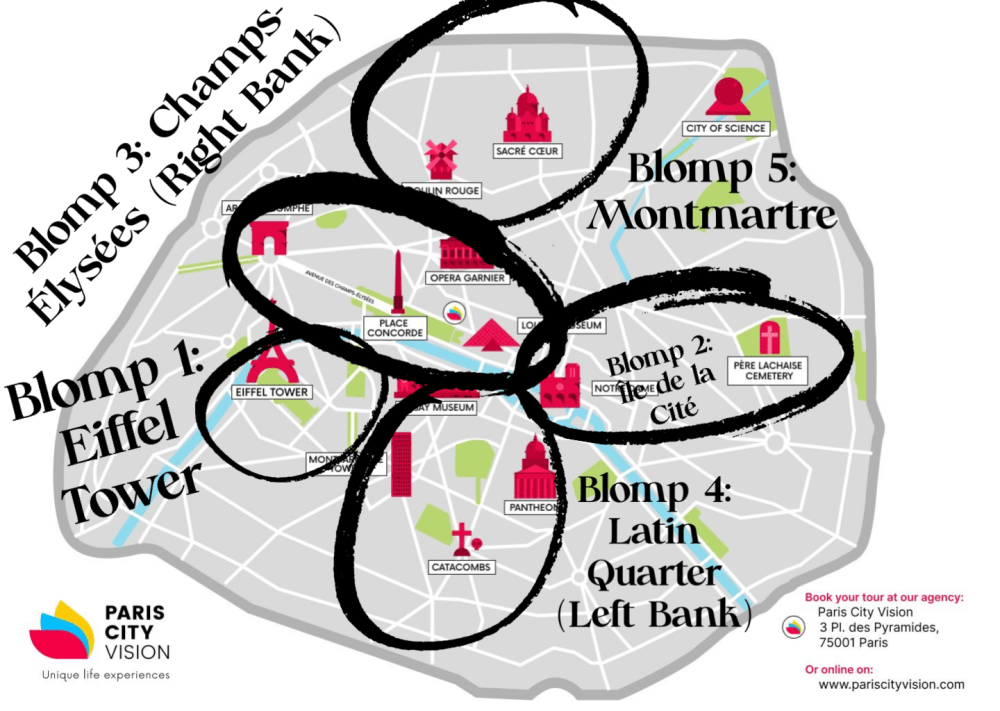
Now, Paris is organized into 20 arrondissements, or districts. The arrondissements start at the heart of the city, where the Louvre is (aka the former palace of the French monarchy, before Louis XIV moved to Versailles, which is 45 minutes away). From the heart of the city, the arrondissements spiral out as Paris continued to grow. But you don’t really need to visit all 20 arrondissements; you can hang out in five blomps, which I have drawn for you. In fact, you could organize your Parisian vacation (which should take a week, do not come at me like “we want to spend three days in Paris and two days in London” don’t DO THAT TO MEEE) around these blomps. If you tackle one blomp per day, you’ll have conquered Paris faster than Napoleon. But not as fast as… uh… never mind.
BLOMP 1: Eiffel Tower
Parisians aren’t big on breakfast, and they stay up later than Americans. So chances are, on that first day when you’re all bright-eyed and bushy-tailed and ready to tackle the city at 8 AM, most places won’t even be open. However, there is a place open for breakfast for just the weirdo Americans who are up at this ungodly hour. Café Fleur is the first of the “yes okay it’s a tourist trap but the food is really good” places. This is a typical French café, with wicker chairs and tiny tables and a beautiful canopy bursting with flowers, with friendly staff (pretty much all restaurant staff speak English in Paris) just one block away from the Eiffel Tower.

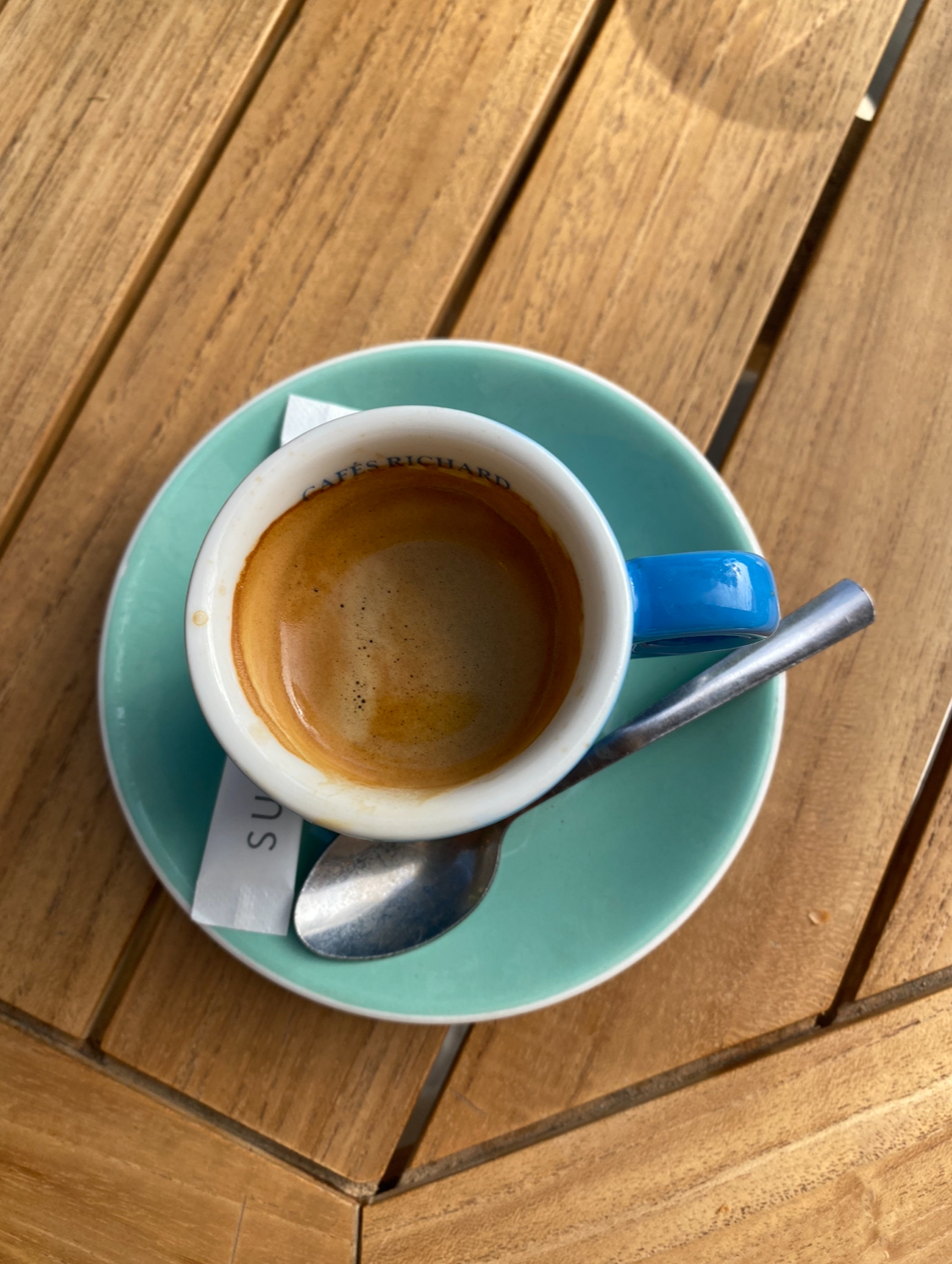
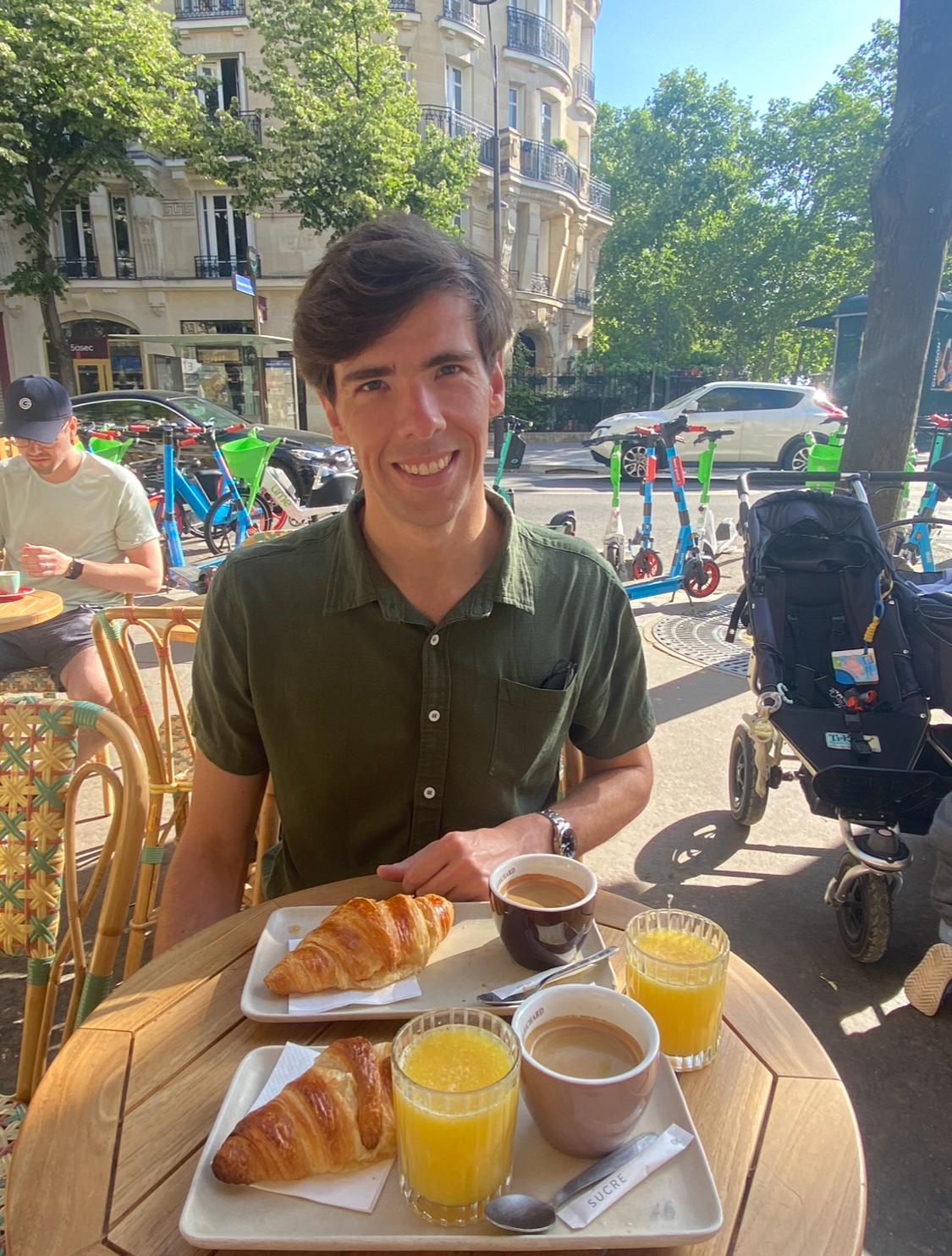
Café Fleur offers you, the American tourist, a petit déjeuner special: a freshly-baked croissant, a glass of freshly-squeezed orange juice, and a café au lait. This is a tiny cup of espresso with milk. You can also get an Americano, which is just black coffee, American-style, or you can get café crême: an espresso with hot frothed milk. They have American-style XL chugalug lattes in Paris, but you won’t see a lot of people drinking them. In fact, it’s sort of rude in Paris to eat on the go. Parisians (and just regular ol’ French folks) appreciate the good vibes you get from sitting and relaxing with good food and a beautiful location, so literally every restaurant in Paris will be like “slowwww dowwwwwn, enjoy yourself.” That’s why the coffees are so small and the croissants are so airy and buttery. But trust me: you don’t want to fill up on a big breakfast. You’ve got a big day of eating lots and lots of butter ahead of you.
BLOMP 2: Île de la Cité
You could easily conquer Blomps 1 and 2 in a day, because Blomp 2 is very tiny. The Seine is the river that bisects the city of Paris, and in the middle of the river is the Île de la Cité, a little islet where Notre Dame sits. If you go down the river a ways, you’ll get to the train station, the Gare de Lyon, which houses Le Train Bleu.
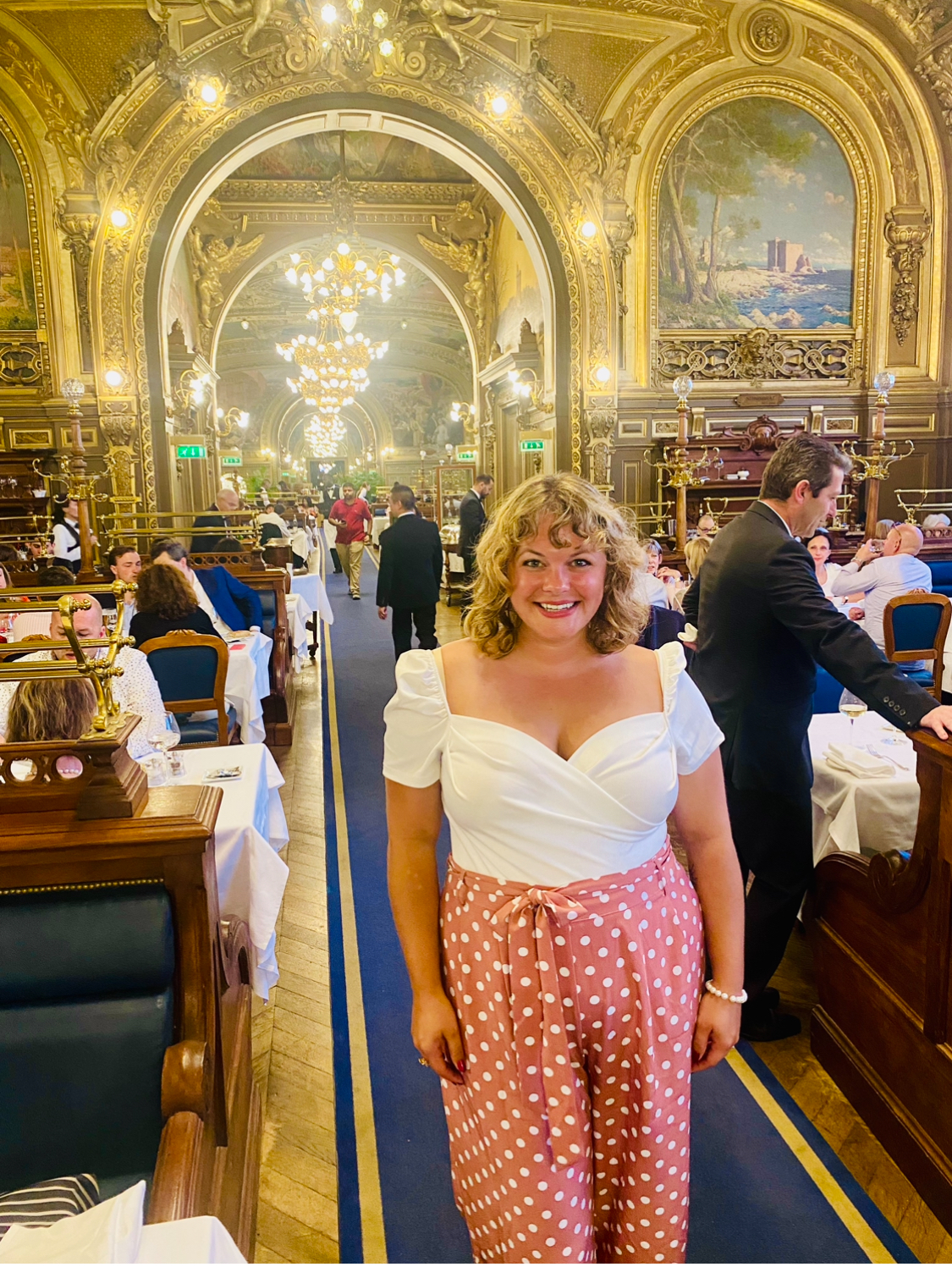
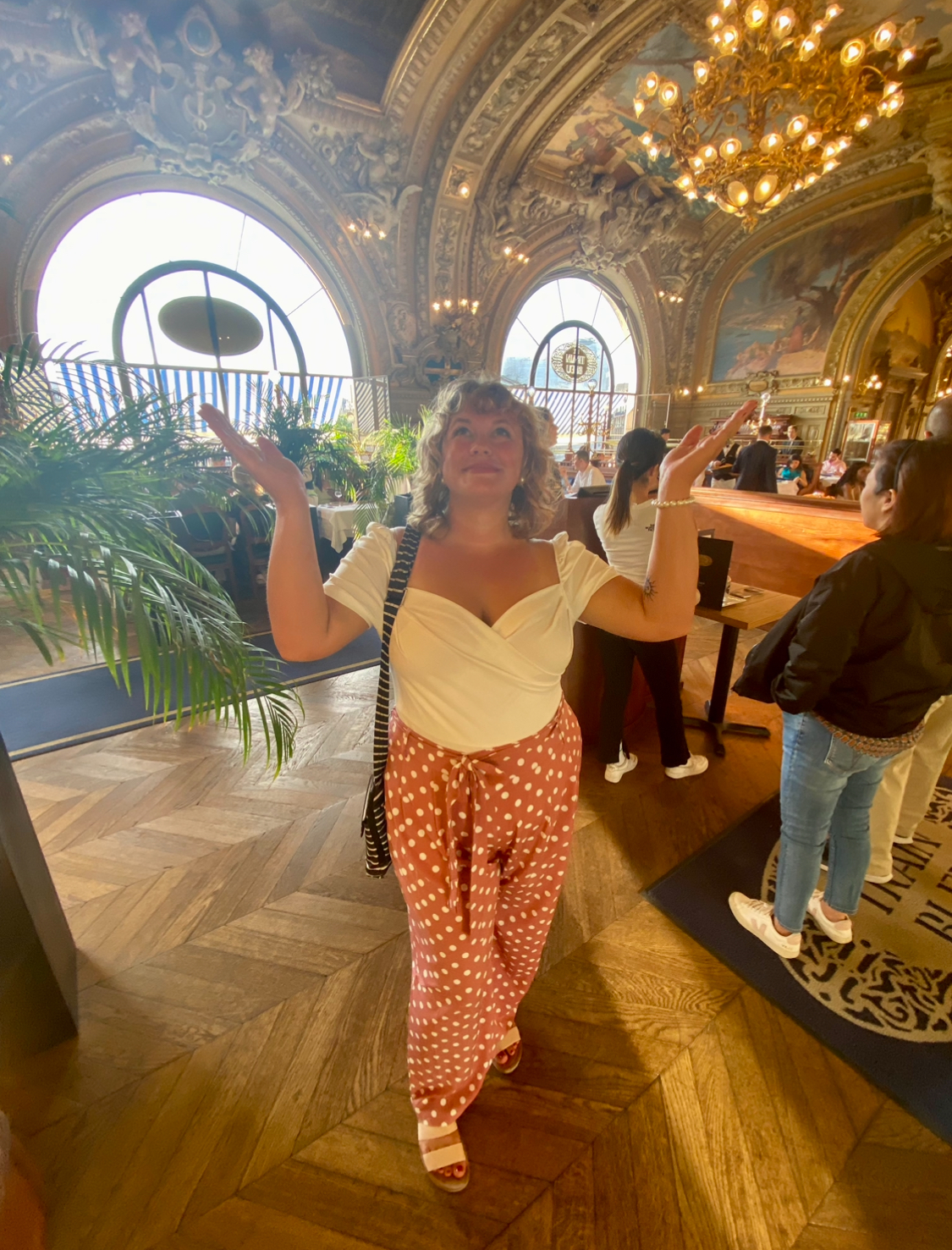
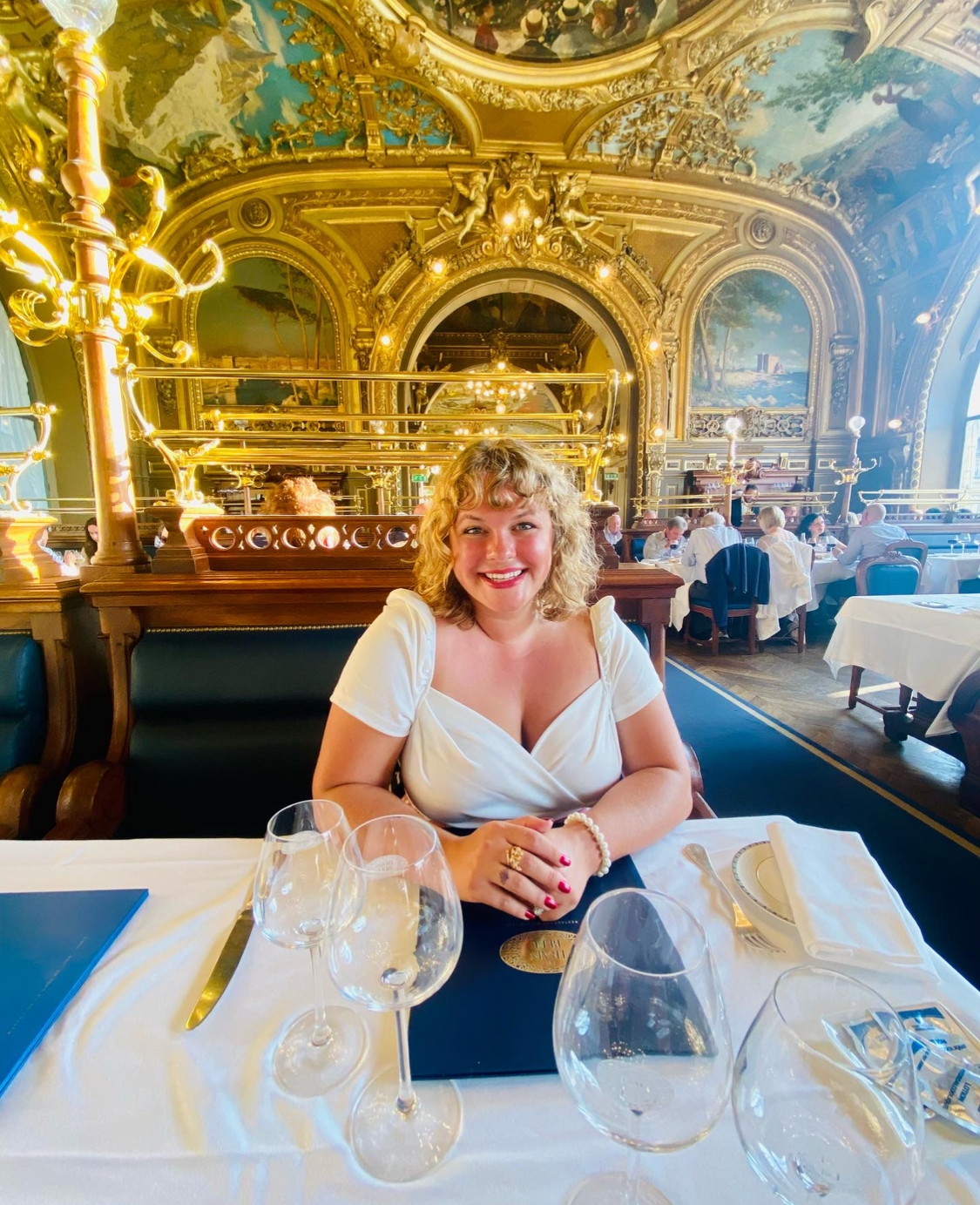
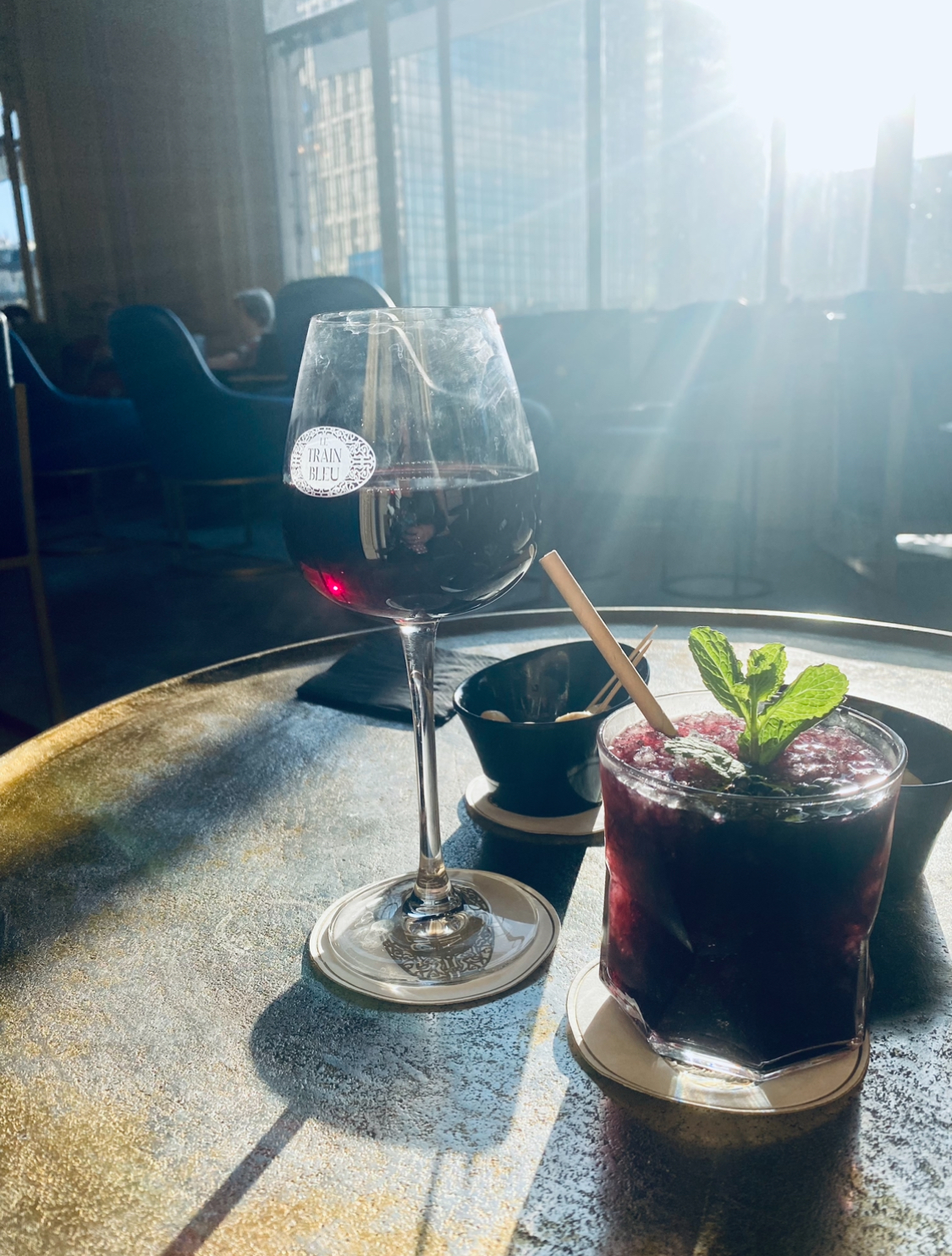

I think Le Train Bleu is a great first night dinner; it’s visually spectacular and a delicious introduction to traditional French food. The restaurant is over a century old; there are 41 paintings on the ceiling to represent the different regions of France. Now, we had great service everywhere, but Le Train Bleu had impeccably friendly service. There’s also a chic dining-car-themed bar that adjoins the gilded dining hall.
Le Train Bleu offers an a la carte menu and a prix-fixe menu at 120 Euros per person. This is a seven-course meal which features an appetizer, another appetizer (entrée), a fish course (poisson), sorbet as a palate-cleanser, main course (viande), a cheese course on a trolley (fromage), and dessert.
Look… go to Le Train Bleu. Definitely go there over Maxim’s, and maybe even Le Grand Vèfour.
BLOMP 3: Champs-Élysées (North Seine aka Right Bank)
As I said, Paris is laterally bisected by the Seine River. The north half of Paris is called Right Bank, or Rive Droit. This is the side the palace was on. After the French Revolution, the palace was converted into the Louvre Museum. Before the French Revolution, during the reign of Louis XIV aka The Sun King aka the party god and therefore a personal role model, a 2-kilometer tree-lined garden road was planned. The Champs-Elysees starts at the Louvre and continues in a straight line to the Egyptian obelisk at the Place de la Concorde, and ends at the Arc de Triomphe. If you’ve ever seen the end of the Tour de France, you know what I’m talking about.
So Right Bank is the bougie side. (Or, you know, it used to be. I think if you’re anywhere in Paris, you’re on the bougie side.) By the way, it’s called the Right Bank because if you’re floating down the Seine toward the ocean, the north side of Paris is on the right. Since this was the side where the palace was, all the snazzy museums are on this side, as are some very historic restaurants. The most historic restaurant in Paris is Le Grand Vèfour. The Michelin Guide and Julia Child say it’s the oldest restaurant in Paris, open since 1784, but other restaurants (La Tour d’Argent) say they’re older, so I don’t know. And most of these OLD old restaurants (as opposed to regular old, just over a measly century) remain tight-lipped when you look on their websites about which one is really the oldest. Le Grand Vèfour serves what you think a Michelin restaurant would serve in Paris. The wait staff is very friendly and accommodating; our server was really funny and charismatic. He dared me to order the calf cheek and tongue (“if you eat this, you will be a REAL Frenchwoman!”) and, as dedicated readers know, I’ll be anyone’s huckleberry in a Weird Food Eating Dare. I cleaned my plate (hey, it’s a Michelin restaurant, it’s gonna be tasty no matter what!), but if that intimidates you, they of course offer less-adventurous-but-always-delicious options like steak.


Okay, maybe calf cheek isn’t your style. I’ve got a better recommendation for you: Le Boeuf Sur Le Toit. Quite literally, “Beef On the Roof”. This cozy art-deco wonderland, open since 1921, is Paris’ last remaining historic cabaret of the Jazz Age. If you want to wander the streets of Paris in the Roaring Twenties like you’re Owen Wilson in Midnight in Paris, book a table on Monday night at Le Boeuf Sur Le Toit at 9:00 PM. (I know it sounds late, but it’ll be 1:00 PM in America, so it’ll actually be the time you want to eat.) On Monday nights, Le Boeuf Sur Le Toit does 1920s-era ragtime jazz dinner and a show. They even played “Stars Fell On Alabama”, and Alex and I promptly lost our minds, and afterwards we had a lively conversation with the band about New Orleans jazz. (“Oh, I want to go to New Orleans so bad!” says the guy who literally lives in Paris, France.) Don’t miss the boeuf bourguignon here: it’s the bee’s knees.


Have you seen Gigi, the creepy musical about a 15-year-old girl who is trained by her aunts to become the mistress of wealthy Parisian men? No? Well you should, otherwise you’ll miss out on wanting to take a long, scalding shower after hearing Maurice Chevalier sing “Thank God for Little Girls” permanently burned into your memory. Le Grand Vèfour is an icon of 18th-century opulence, Le Boeuf Sur Le Toit is an icon of Jazz-Era art deco stylishness, and Maxim’s is an icon of Paris’ signature Art Nouveau beauty. Tiffany stained glass windows and exquisite wooden frames decorate the A-list watering hole of La Belle Époque. Most people will tell you to go to Maxim’s de Paris over my recommendations for fine dining, but uh… Maxim’s was aight.


Okay, you want the truth? Maxim’s de Paris has bugs.
I mean, not cockroaches. There were aphids and larvae in the raspberries in our dessert. Like ALL up in all of the raspberries. And the service, which up until that point had been lukewarm at best, was pretty nonchalant about it. They informed the chef, who said “oh, I was just about to eat some of those!” but made no apology. An American restaurant would comp the whole meal (especially a Michelin restaurant), but after gauging our unhappy reactions, the server asked if we wanted another dessert, and we were charged for that one. Was it the worst restaurant I ever ate at? No, no. Was it the worst restaurant I ate at during my beautiful, lovely, yummy week in Paris with beautiful, lovely, friendly servers everywhere I went? Yes.

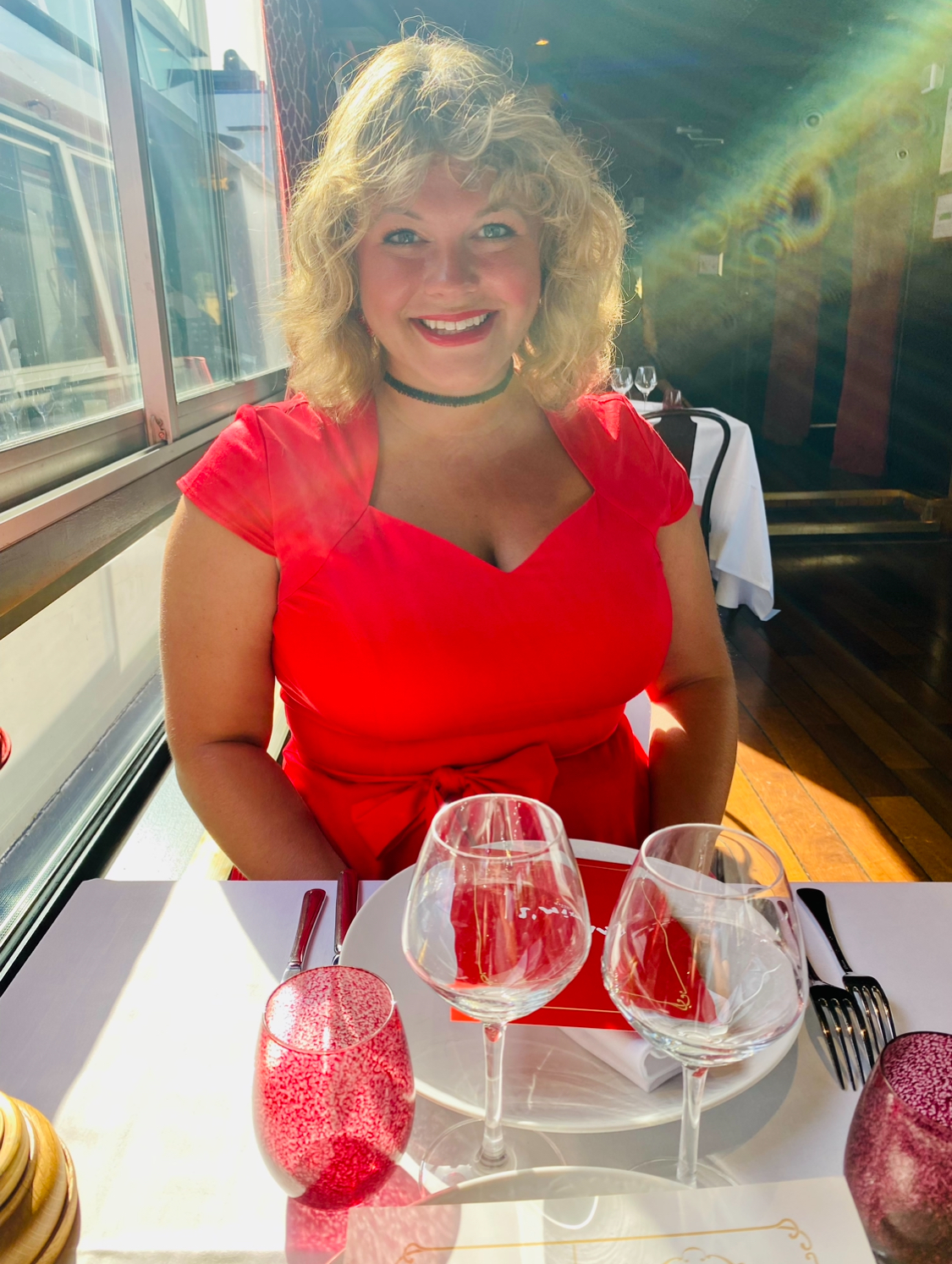
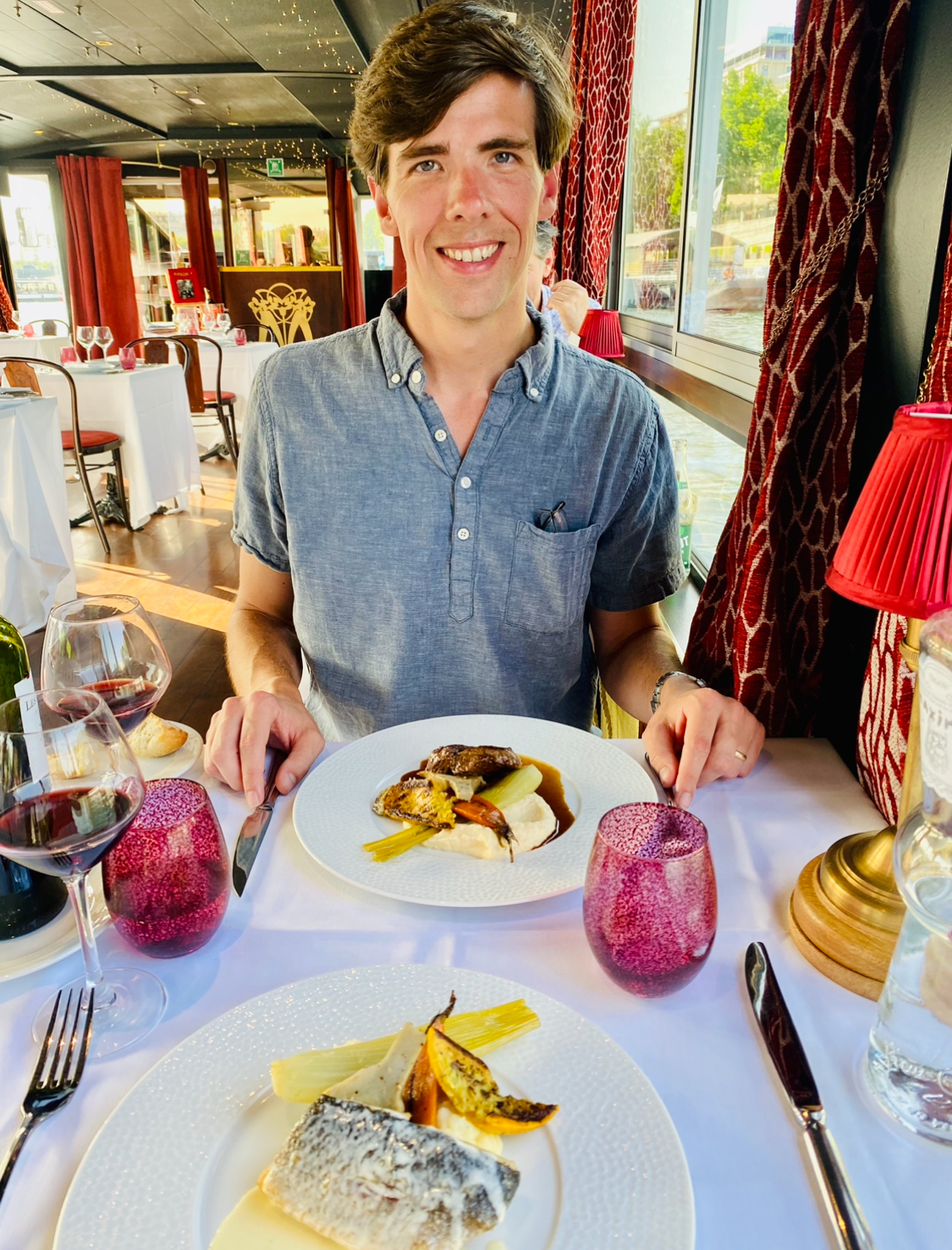
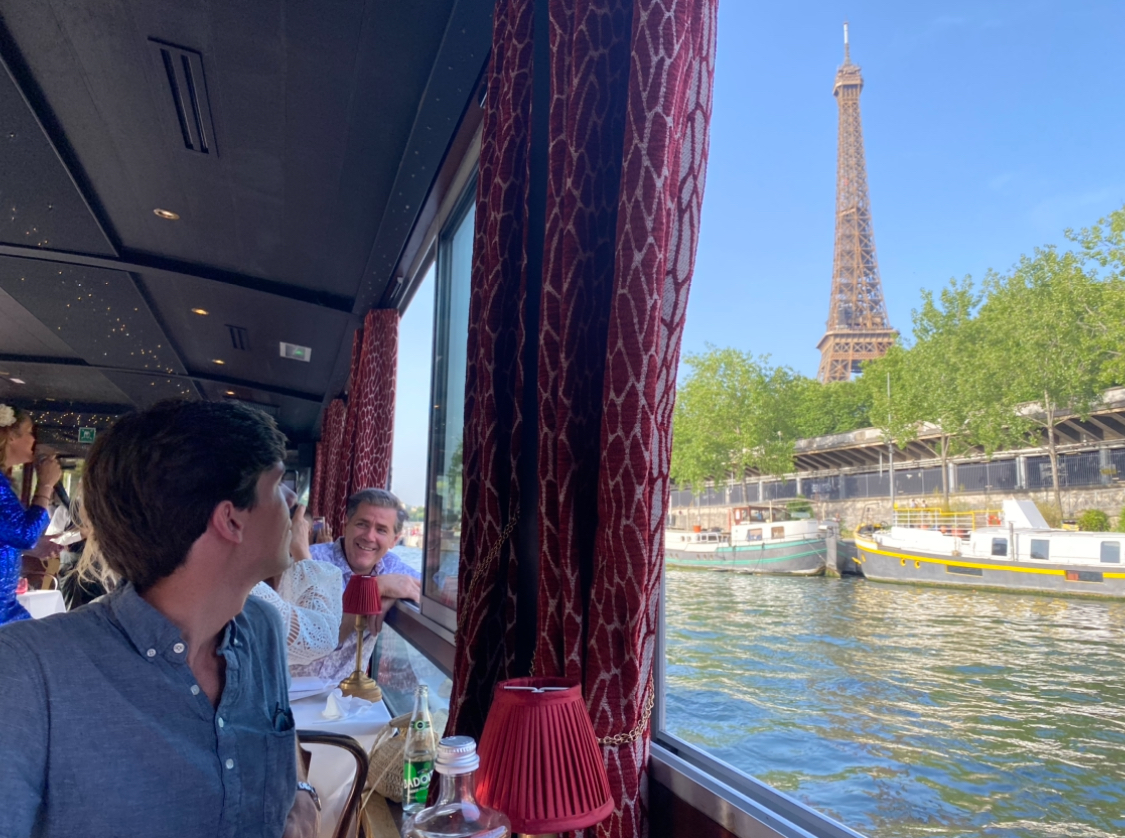
Instead of going to Maxim’s proper, why not do Maxim’s-sur-Seine, a dinner cruise on the Seine River? There are plenty of river dinner cruises along the Seine, but Maxim’s-sur-Seine offers the elegance of the restaurant with way friendlier staff. There’s a charming singer who will serenade you to classic French songs (lots of Edith Piaf) and timeless American love ballads. The service was so friendly and accommodating, and the food was excellent and bug-free. Seriously, just do the river cruise. C’est très romantique!
BLOMP 4: Latin Quarter (South Seine aka Left Bank)
The Left Bank used to be the cheaper side, where writers from The Lost Generation–such as F. Scott Fitzgerald, Ernest Hemingway, Gertrude Stein, T.S. Eliot, James Joyce, and Ezra Pound–escaped post-WWI America to live a bohemian life in the Roaring Twenties. The area they live in is called the Latin Quarter, because the Sorbonne, Paris’ major university (where centuries ago, scholars used to read, write, and speak in Latin) is located there. The neighborhood within the Latin Quarter where the Lost Generation lived is called Montparnasse.
Okay, fun side note: the Left Bank is called Le Rive Gauche. Have you ever heard someone say “don’t you think wearing that XXL t-shirt of a bikini-clad double-D torso is a bit gauche?” No? Just me? Well, “gauche,” meaning “tacky,” comes from “Rive Gauche”, as in “oh you must be poor and tacky because you have to live on the Rive Gauche, the Left Bank of Paris.”
Now, since you humored me thus far by listening to my Rive Gauche jokes and stomach-churning bug stories, I will reward you: Blomp 4 and 5 were my favorite restaurants of the whole trip. Blomp 4’s cafés are the personal recommendations of Papa Doble Himself, Ernest Hemingway. Hemingway gushes over these restaurants in his memoir of life in Paris in the Roaring Twenties, A Moveable Feast.


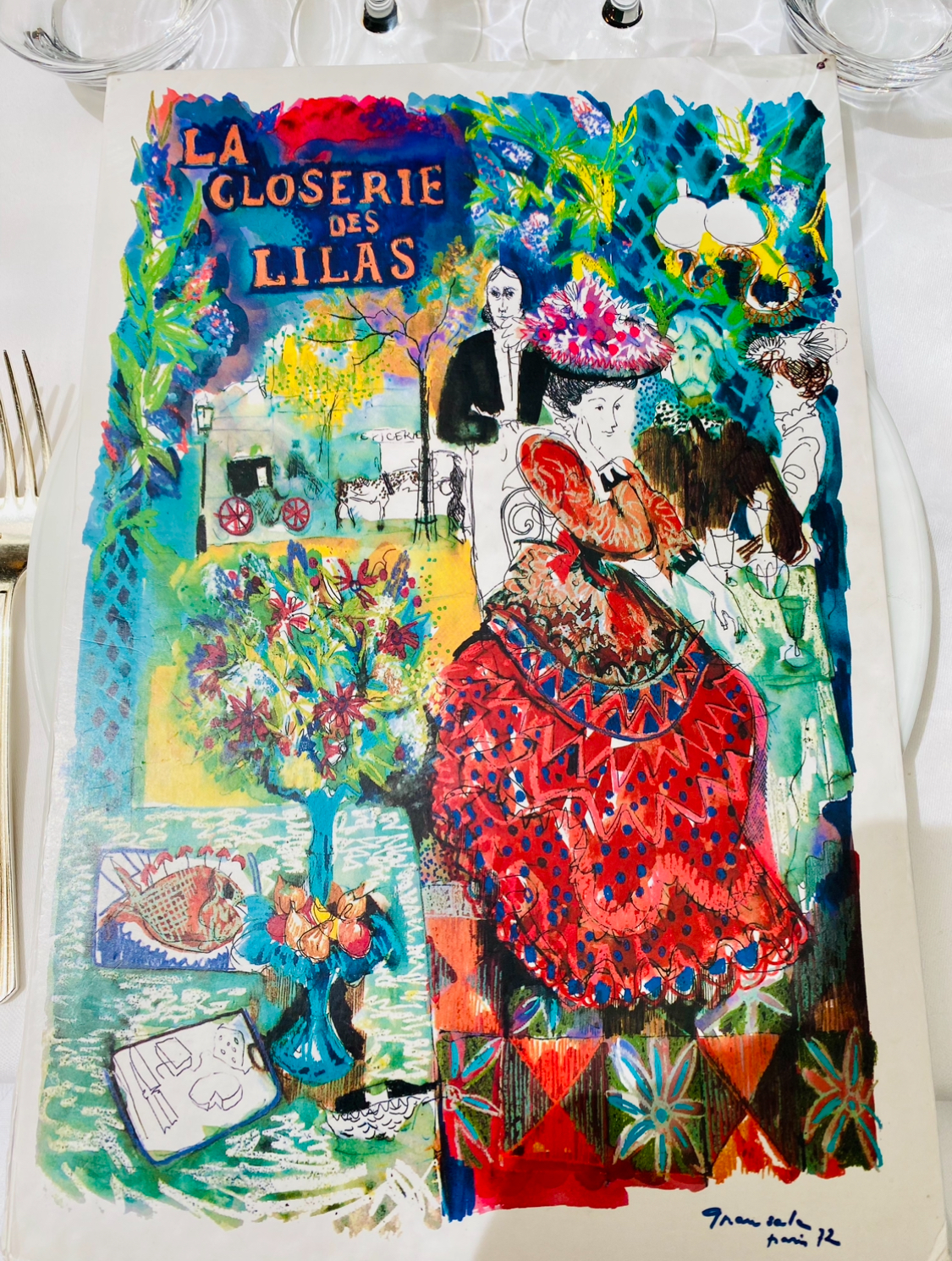
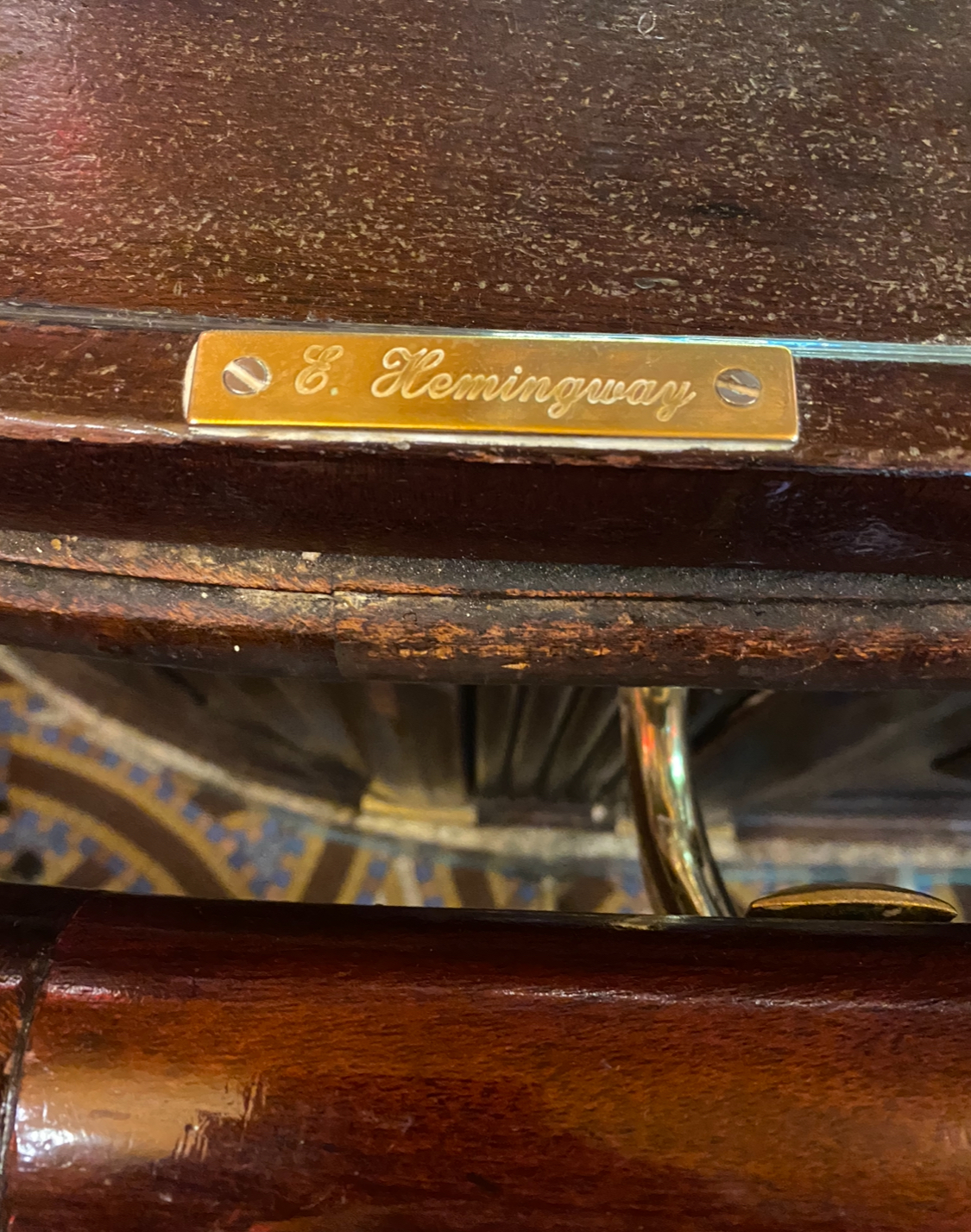
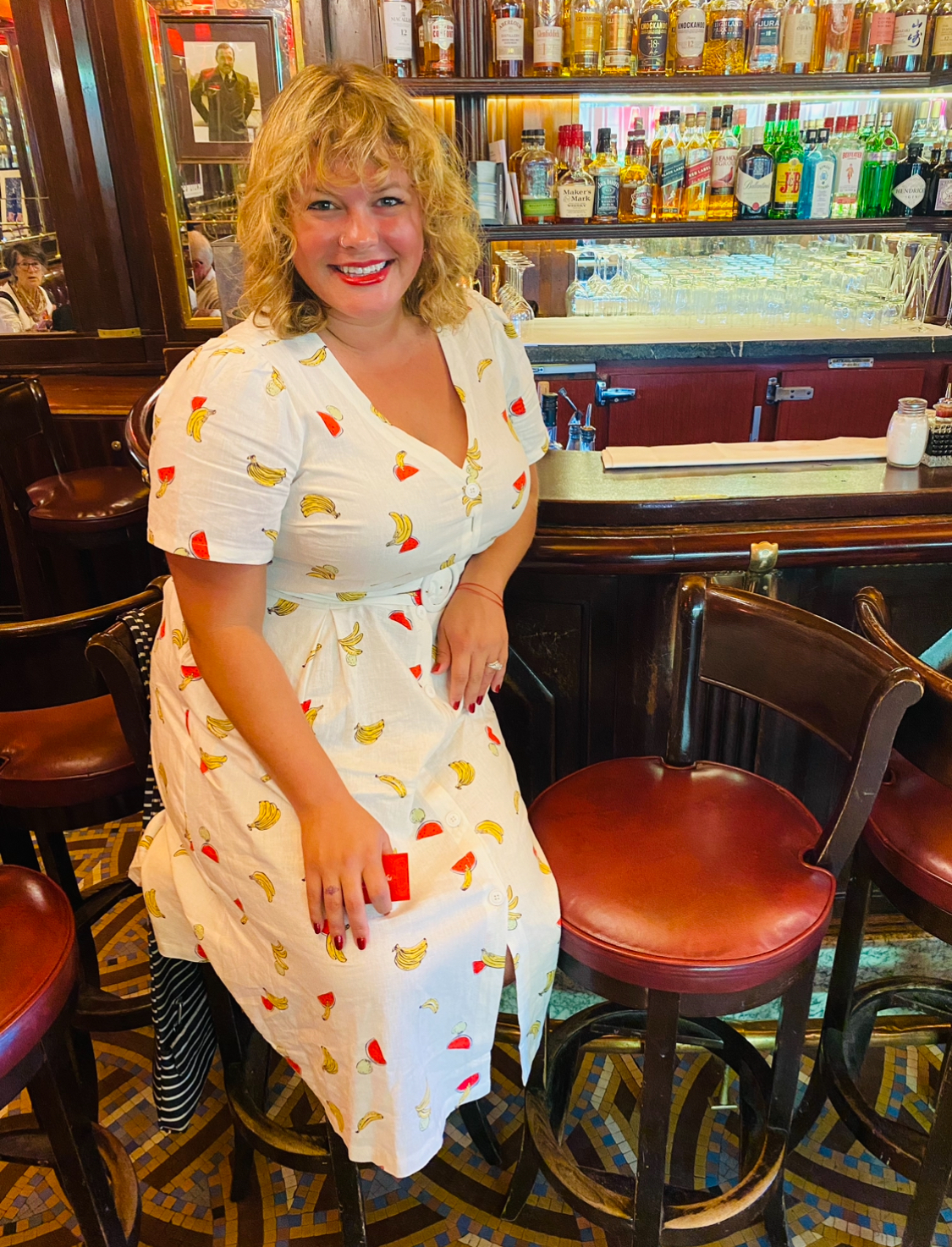
Hemingway’s favorite restaurant, and mine too, is La Closerie des Lilas. It’s an upscale café just down the road from Hemingway’s apartment. Hemingway wrote The Sun Also Rises at the bar of La Closerie des Lilas, where a golden plaque with his name is nailed to his spot. This is also where F. Scott Fitzgerald talked to Ernest Hemingway about The Great Gatsby. After reading A Moveable Feast, I immediately booked a reservation, and in the comments section I wrote about how I’m an English literature teacher, how I love the Lost Generation, and how The Great Gatsby is my favorite book. The food was excellent (the sole meuniere was lighter than a cloud, buttery and lemony, I can still taste it), our server was hilarious and charming and fastidious, and at the end of an excellent lunch, I told him about how much I loved Hemingway and Fitzgerald.
With a grin, he said, “We know. We sat you at the table where Fitzgerald and Hemingway used to sit.”
Just.
Like.
I love Paris.
I mean the WHOLE staff was just excellent, everybody was smiling, but our server was one of the nicest people I’ve ever met in my life. He even sent us off with a postcard of La Closerie des Lilas from the Roaring Twenties. That’s why La Closerie des Lilas ranks as my #1 Restaurant in Paris. A century later, they’re still living up to the legacy Hemingway wrote about them.

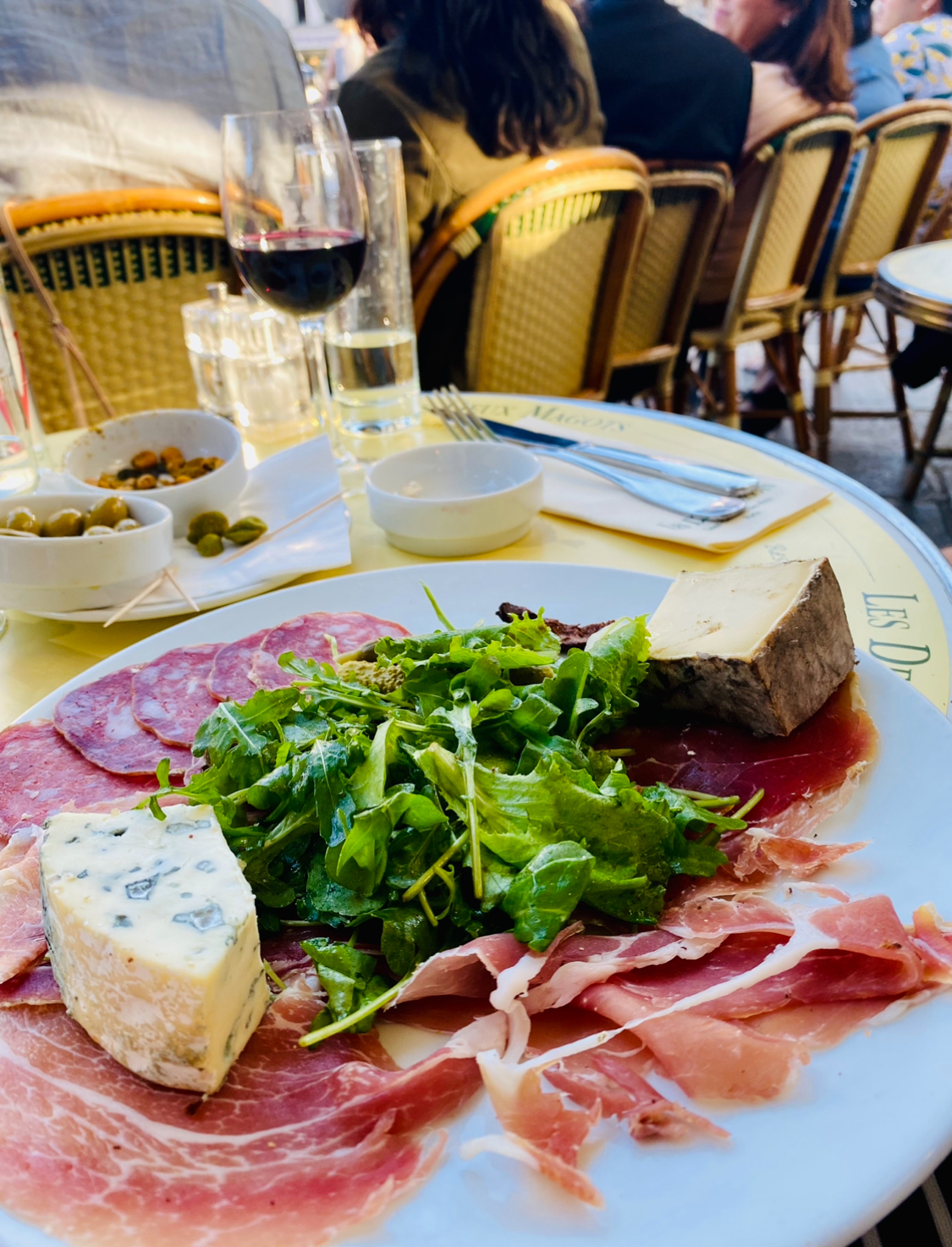
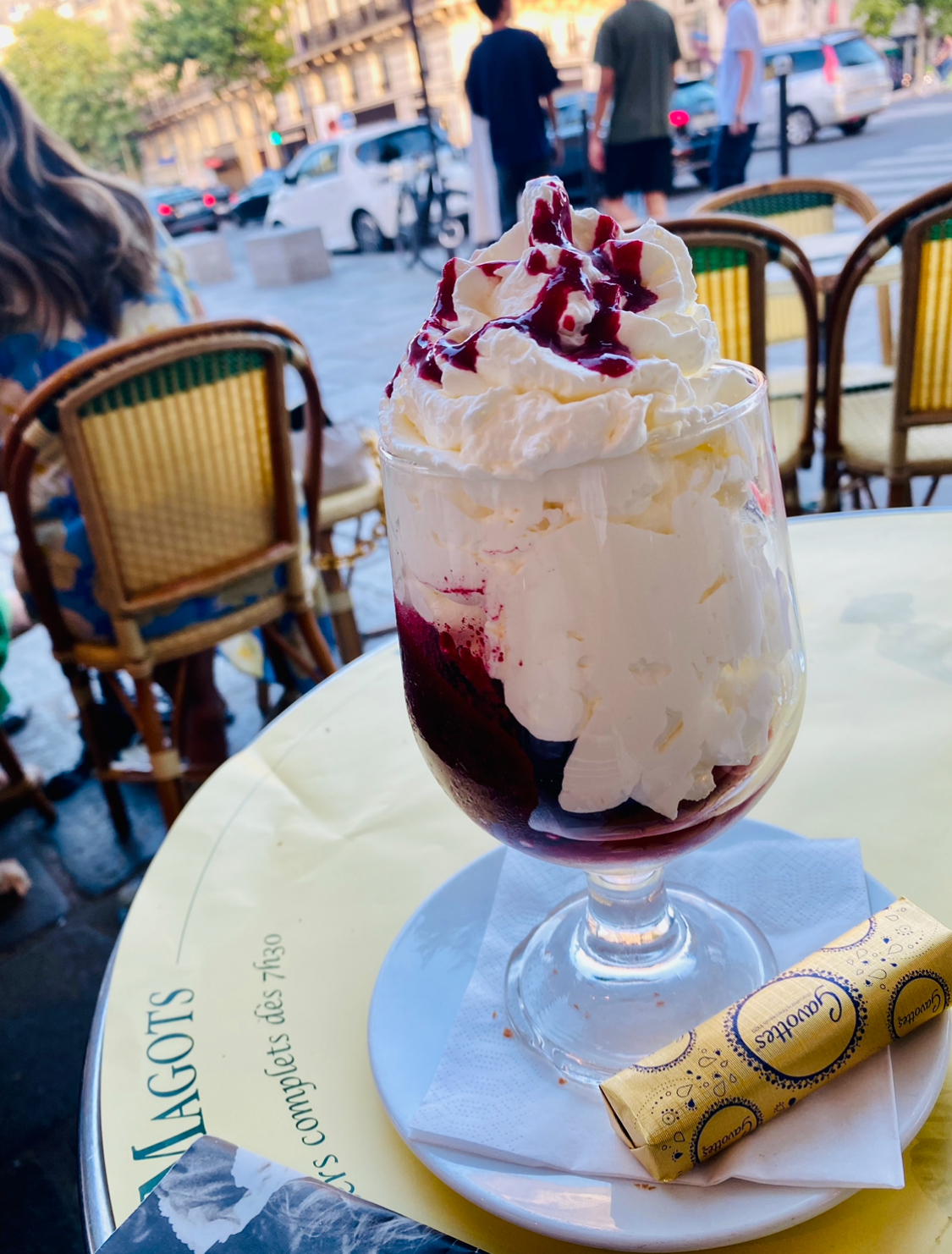
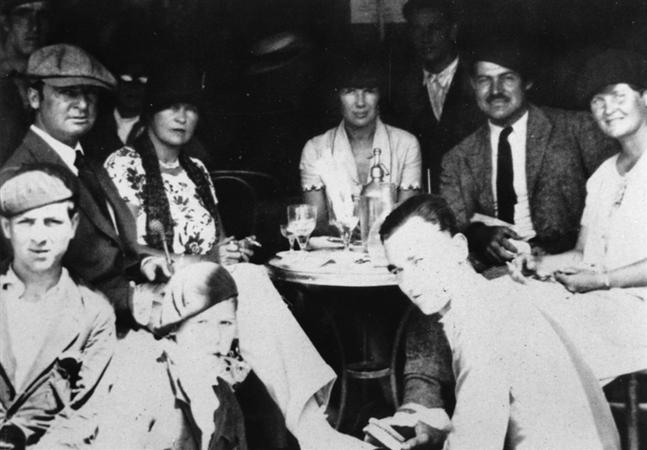
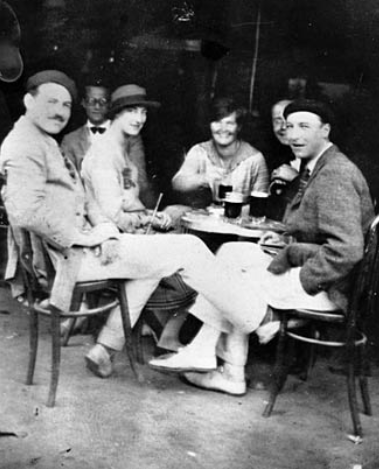
Of course, the more iconic Parisian cafe is Café Les Deux Magots. Café de Flore, identical and identically famous, is across the street. These cafés have long lines and are really, really crowded, but what the heck, do it anyway. We ate charcuterie and a ridiculously indulgent dessert. Don’t forget to order a St. Germain spritz. You are, after all, on Boulevard Saint-Germain in the Saint-Germain-des-Prés neighborhood. You might have also heard this cocktail called a Hugo or a Victor Hugo Spritz: that’s because the famed French writer of Les Miserables and The Hunchback of Notre Dame made this neighborhood and its cafés famous.
BLOMP 5: Montmartre
I’ve saved the best for last. Montmartre is one of my favorite places in the whole wide world. The artist’s neighborhood in the 18th arrondissement is a bohemian paradise on a hill, topped with my favorite cathedral of all time, Le Sacré-Cœur. Please please please do yourself a favor and book your hotel in Montmartre. Montmartre will charm you, seduce you, and make you fall in love with Paris. Composer Frédéric Chopin’s last request was that his body be buried in Paris, but his heart be buried in Poland. After staying in Paris, my final request is to bury my body in Huntsville, but my heart in Montmartre. (And my stomach in Las Closerie des Lilas.)
Stroll along the winding alleyways of Montmartre, serenaded to an accordion playing “La Vie En Rose” for the millionth time that hour, and stop in any of these cafés late at night. Seriously. You could go to ANY café in Montmartre and I don’t think you’ll be disappointed. But here are the ones we trundled on into and absolutely loved:
La Maison Rose. The darling of Instagram, the studio of Picasso… ‘s friend. It’s been around for as long as Le Train Bleu, but it’s sweet and snug and offers lighter fare than the heavy French classics. We ordered salmon carpaccio for an appetizer and I had pasta with green peas and mint as a main, topped off with a glass of rosé to match La Maison.


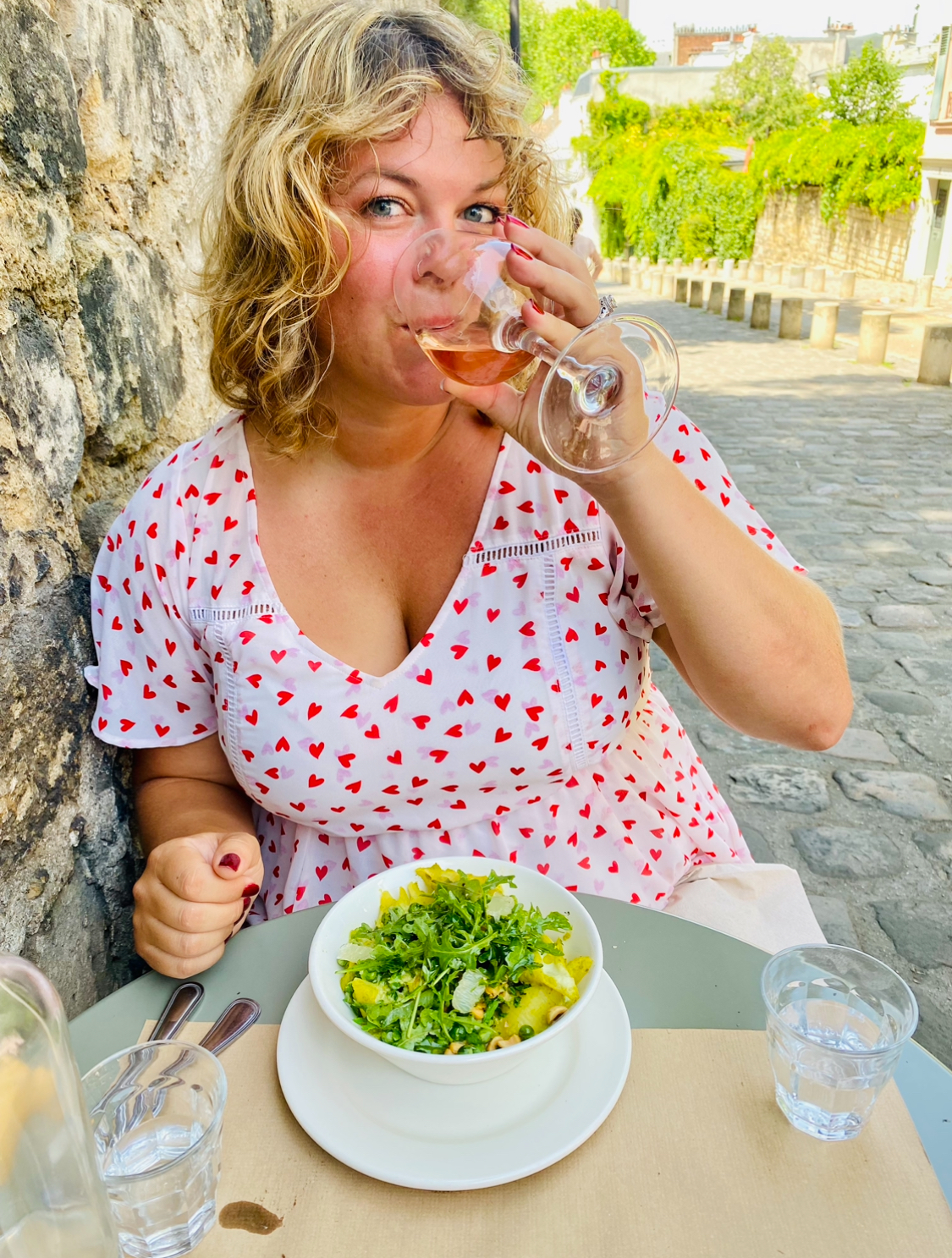
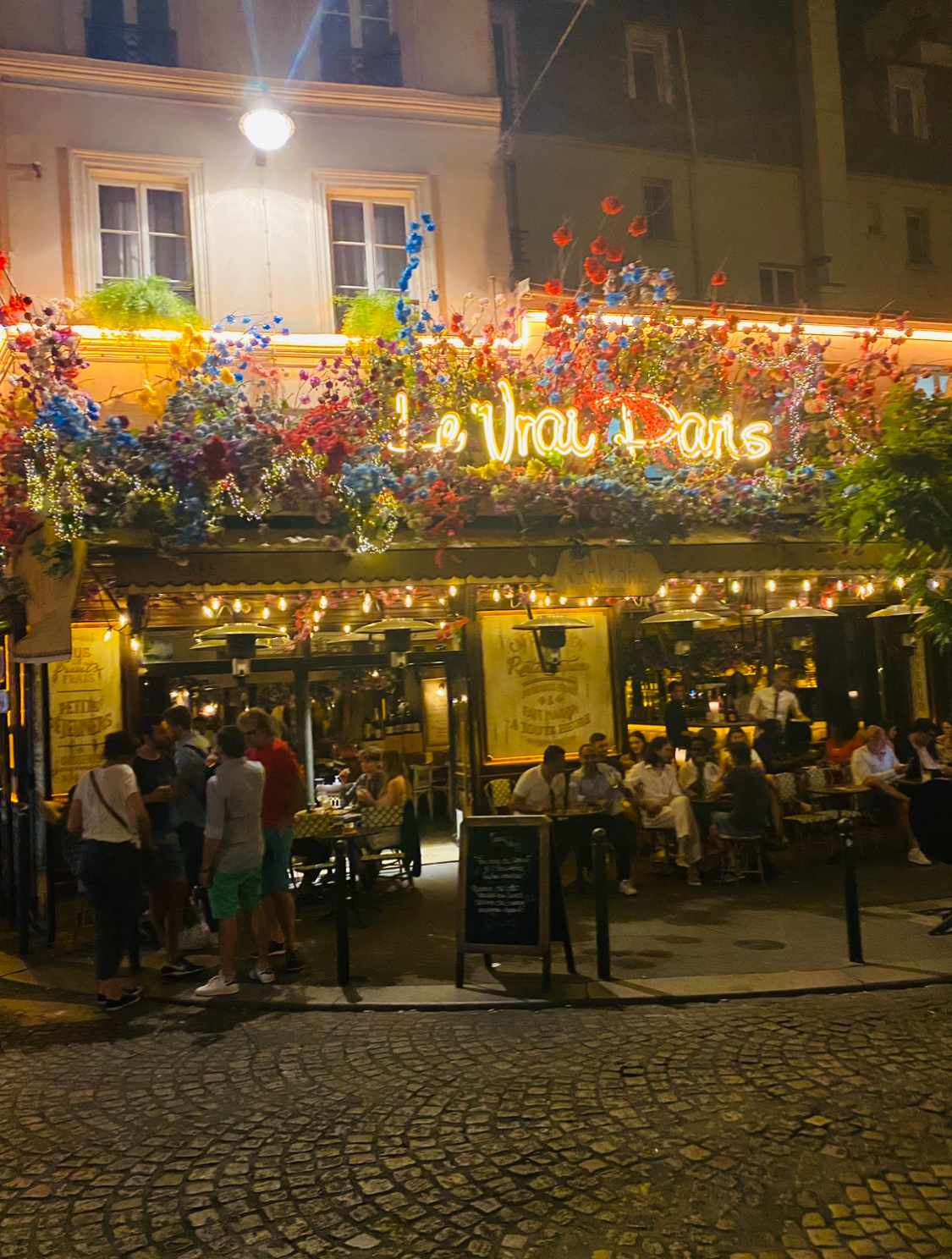
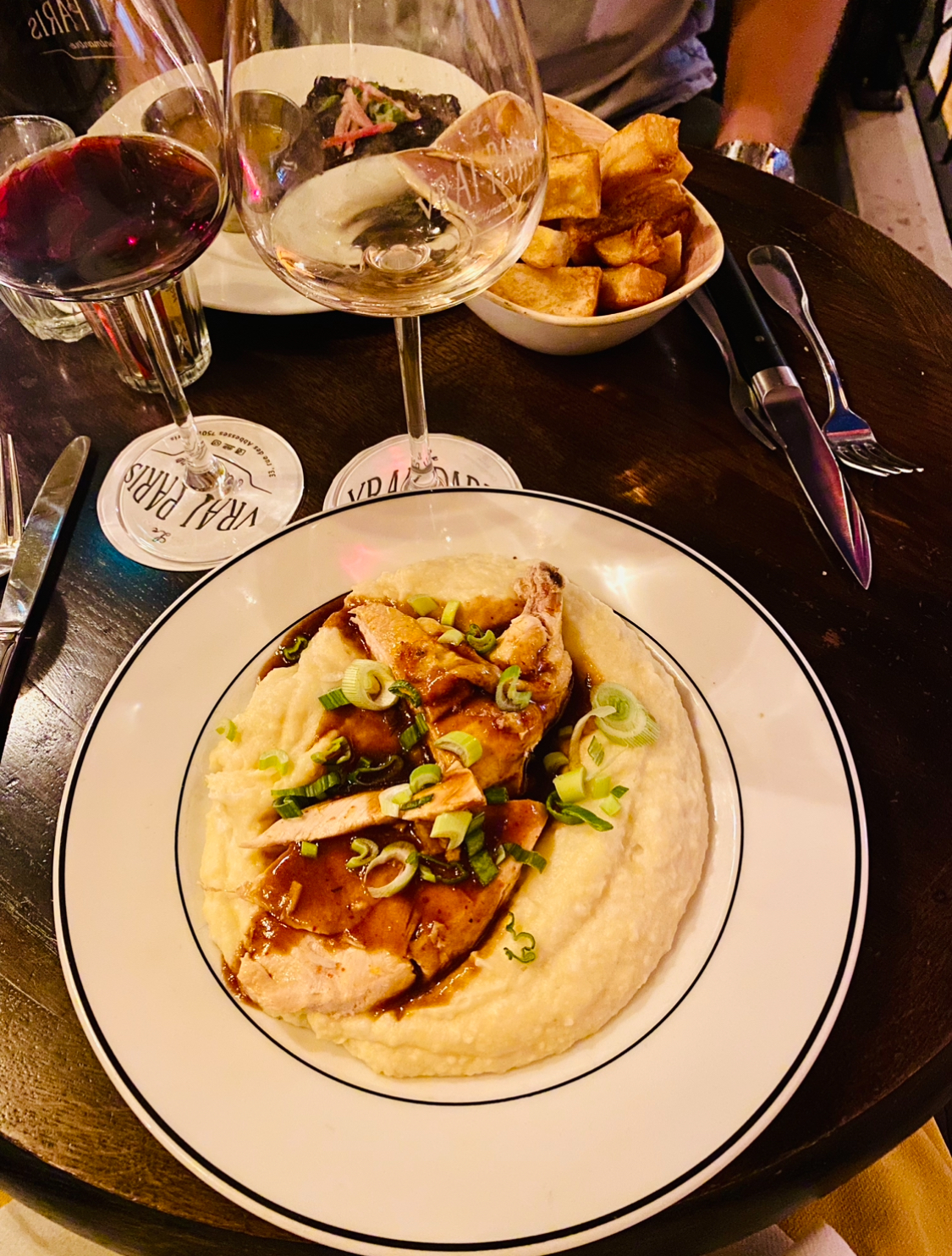
Le Vrai Paris. Gorgeous, gorgeous café on Rue de Abbesses, one of the main roads of Montmartre to wander down. Its roof is positively bursting with flowers, and our server was so friendly and polite. She even gave me a few new phrases to try in French! I ordered suprême de poulet rôti. There is a small local theater nearby, and once the play finished, all the actors met at Le Vrai; apparently it’s the local thespian hangout. The staff was very attentive to us and asked if we’d like to be seated somewhere quieter once the actors’ party settled nearby, but we loved it–the evening was a true slice of la vie bohème!

Le Sancerre. We took a day trip to Amsterdam and got back around 9:30, so we didn’t have a reservation for Le Sancerre, but we still got great service. I know it’s getting old but I really have to emphasize how nice everybody was! I ordered moules marinières, but I should’ve listened to our server and gotten the garlic butter mussels instead of the white wine mussels. I think white wine mussels are okay if you’re already a fan of mussels. It’s my least-favorite shellfish, so I should’ve given it the escargot treatment. They also offer a delicious selection of risotto.


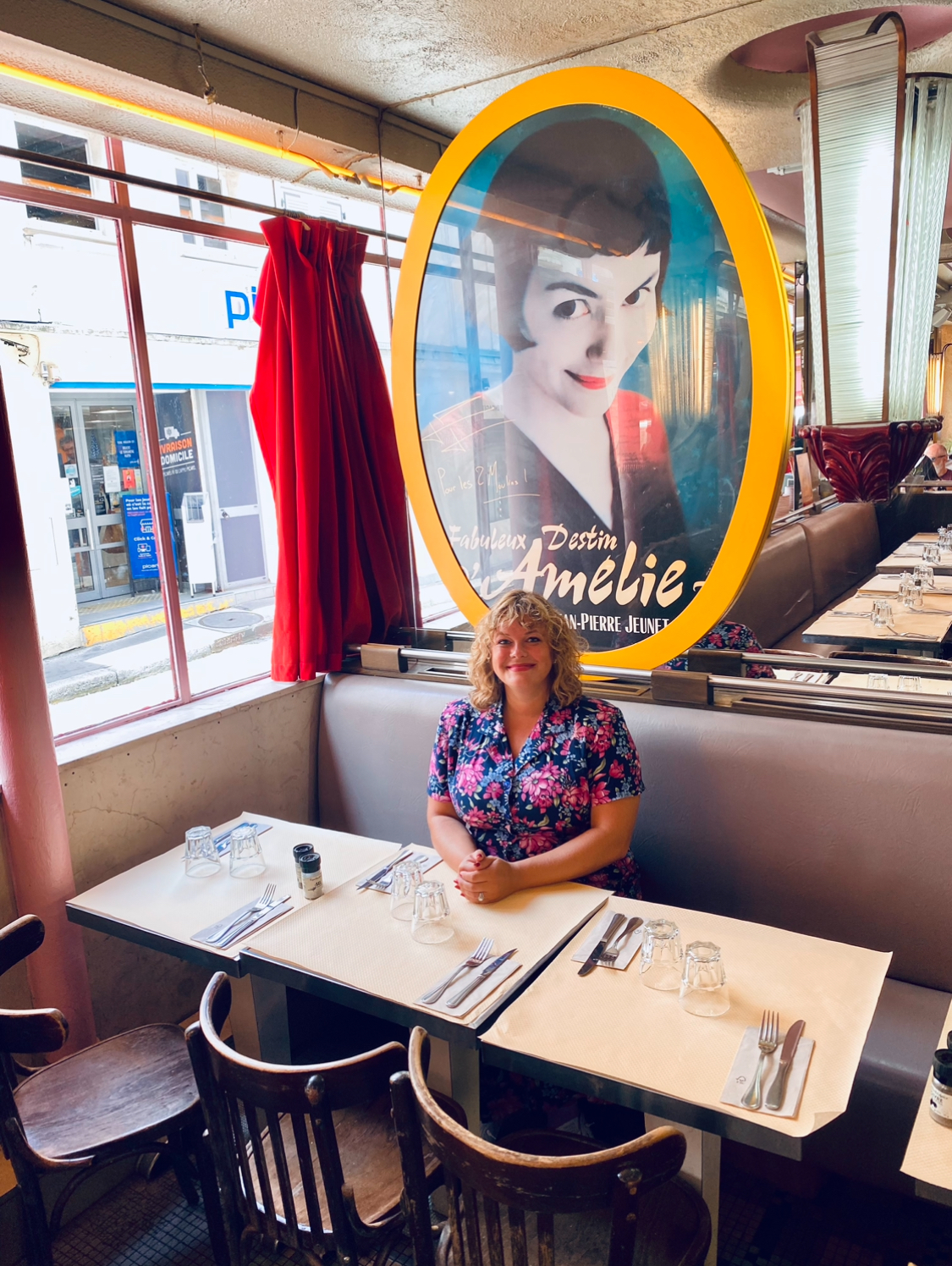
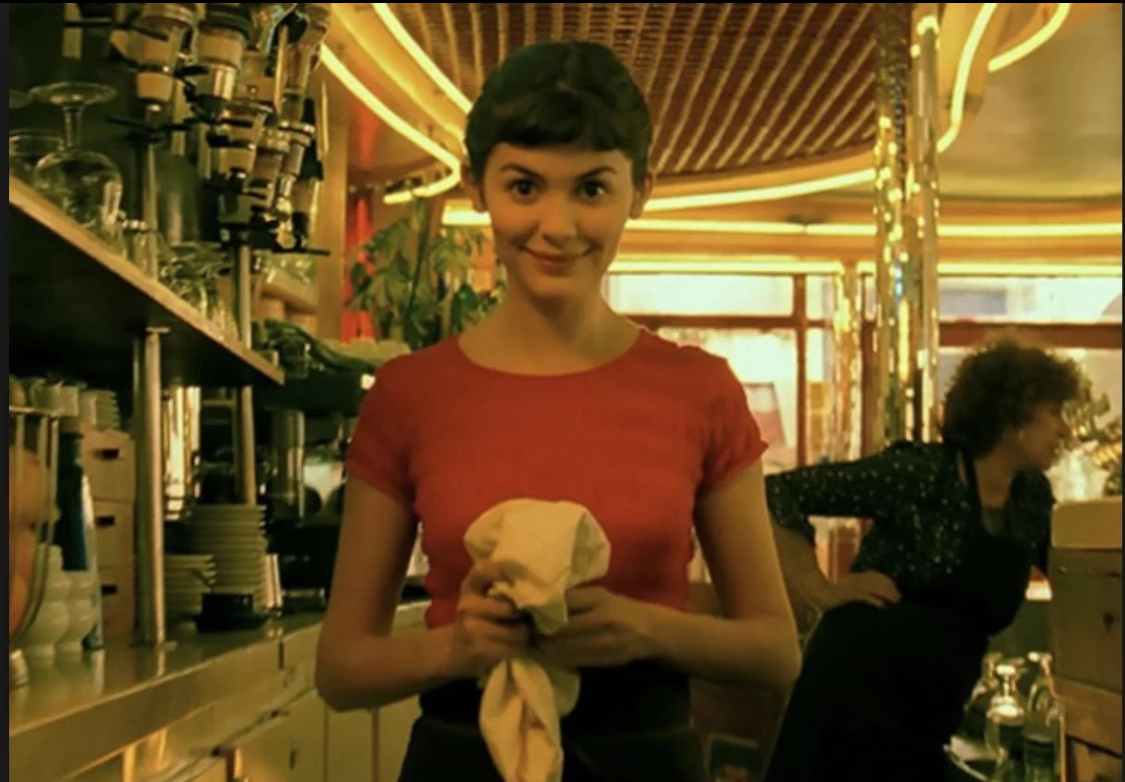
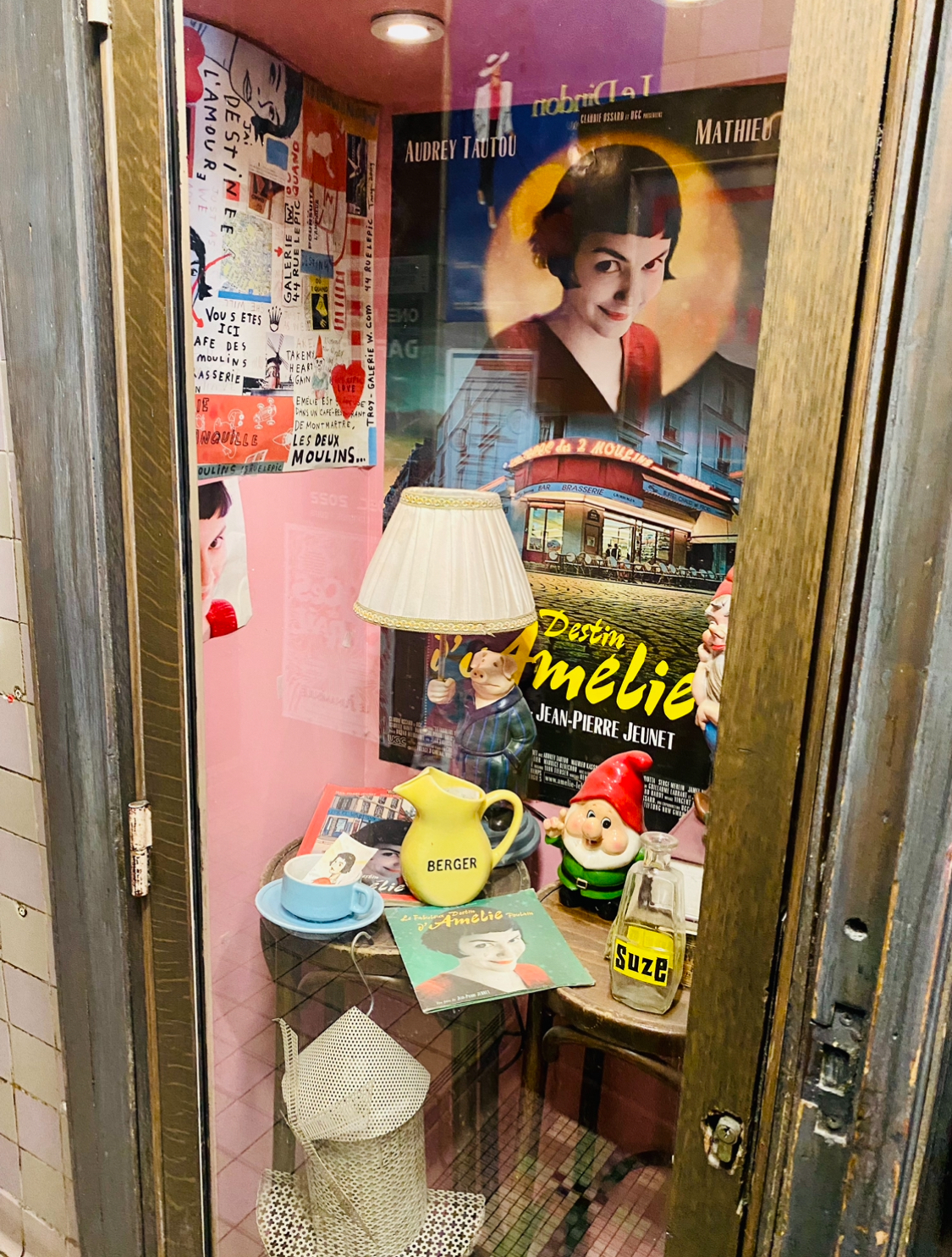
Café Les Deux Moulins. I am an avid, rabid fan of Amélie. If you’ve never seen the movie, make it a point to this week. It’s a cheer-you-up kind of movie about a waitress at a café in Montmartre who makes it her mission in life to secretly perform random acts of kindness for various people in Paris. And the real-life café from the movie is Café Les Deux Moulins. The waiters good-naturedly (with maybe a little eye roll) know that everyone who wants to eat there is a fan of the movie, but the food is really good, too. I ordered duck breast and a potato galette.



Le Moulin de la Galette. Moulin means windmill. There’s the windmill of the Moulin Rouge, the cabaret at the bottom of the hill that marks the entrance to Montmartre, and a windmill at the top of the hill on the same road. (In the middle is Café Les Deux Moulins, “The Café of the Two Windmills.”) Idk this is a lot of talk about windmills but at the base of the top windmill is a nice open-air restaurant that serves excellent escargot and coq au vin.

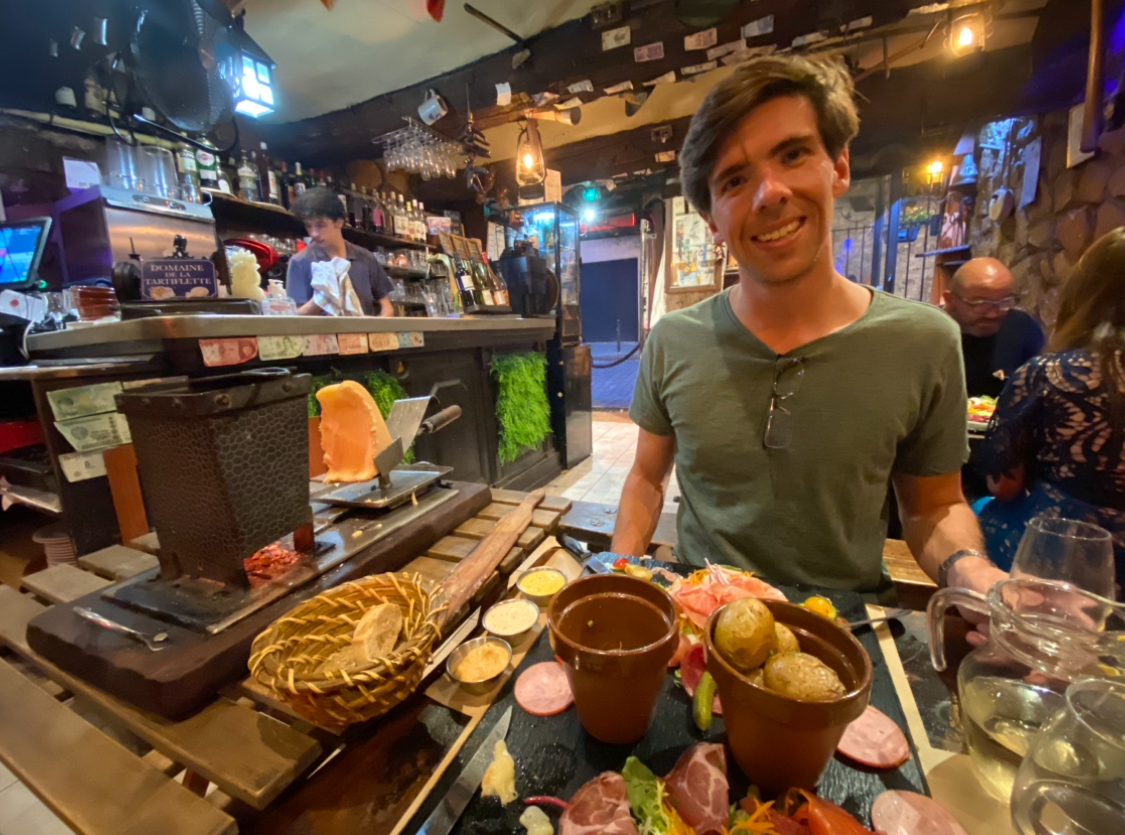
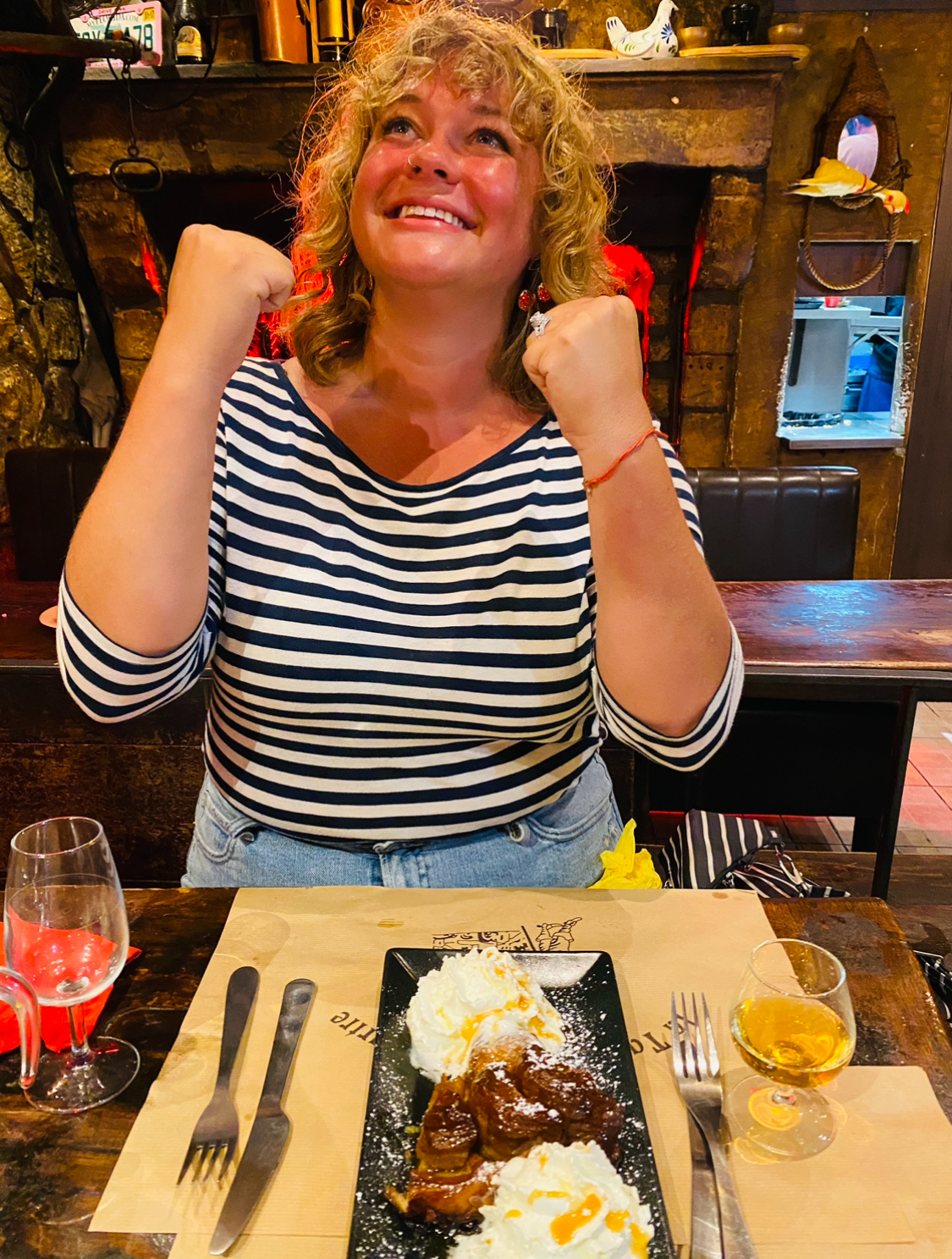
La Taverne de Montmartre. This was our final meal in Paris and man, it did not disappoint. One of the oldest restaurants in Montmartre, it’s run by foreign college kids and a no-nonsense woman who tends the bar and bakes her pastries in-house. La Taverne boasts a popular boeuf bourguignon, but if you save this place for last, you’ve already had that dish. Take my advice and order raclette: just a giant hunk of cheese set over an open flame at your table that melts down and you use various foods to scoop the cheese off. Potatoes, pickles, charcuterie, etc. But what made La Taverne really special was the Tarte Tatin. I’d searched high and low for Tarte Tatin but couldn’t find it in the peak of summer. I was really excited to try it finally because I had unsuccessfully attempted to make Tarte Tatin twice before, but always ended up with a goopy mess. The manager was pleased to give me step-by-step instructions on how she makes hers, and when I got home, I followed her recipe, and voila! Perfect Tarte Tatin. Perfect vacation.

RANKING
It seems rude to rank these fifteen excellent restaurants, but if you don’t have a full week to eat your way through Paris, here are the restaurants in the order of how much I enjoyed the food, the value of the food for the price, the friendliness of the staff, and the overall ambience.
15. Maxim’s de Paris
14. Le Grand Vèfour
13. Café Fleur
12. Café de Flore
11. Café Les Deux Magots
10. Le Moulin de la Galette
9. La Sancerre
8. Café Les Deux Moulins
7. Maxim’s-sur-Seine
6. La Maison Rose
5. Le Vrai Paris
4. La Taverne de Montmartre
3. Le Boeuf Sur Le Toit (Monday jazz)
2. Le Train Bleu
1. La Closerie des Lilas

 Ramblin' Reba
Leave a comment