

London is great, but there’s so much more that England has to offer. If you’re taking a trip to the United Kingdom (that’s England, Scotland, Wales, and Northern Ireland—the big island that doesn’t include Ireland is called Great Britain), make sure to carve out time to see the misty rolling hills of west England’s countryside.
Scotland is at the top of Great Britain, and Wales is on the left chunk. Both are definitely worth visiting and can be accessed easily within a few hours by train or, if you have a penchant for danger, driving. Just to the east of Wales is a green valley dappled with sheep and latticed by ancient stone walls. A group of villages linked by interconnecting brooks and rivers comports the Cotswolds AONB (Area of Outstanding Natural Beauty). In Great Britain, AONBs are marked for conservation because of their historic and aesthetic significance.
The Cotswolds are an easy day trip from London. If you do a GetYourGuide experience, more than likely you’ll be seeing Stow-on-the-Wold, Bourton-on-the-Water, Burford, and Bibury (don’t you love these names?). Depending on the tour, you might also see Oxford. West England reminds me a lot of New England–quaint, historic, collegiate, gorgeous, and more expensive than it appears.
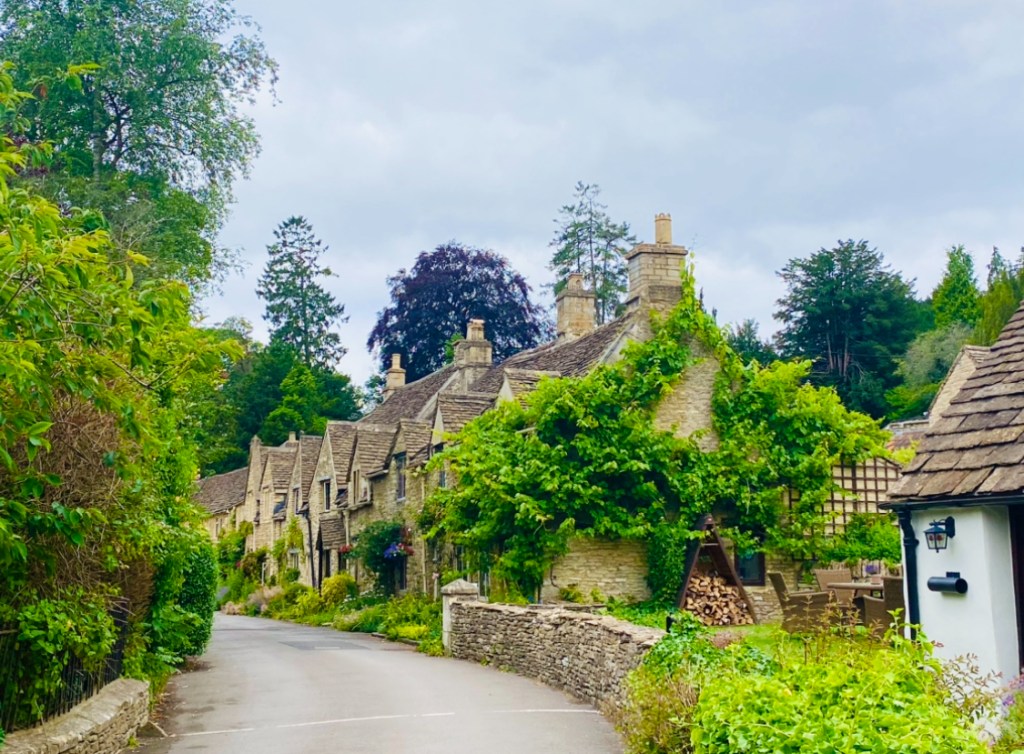
If you are taking my very good advice and spending the week seeing all of Great Britain (as in, seeing Scotland and Wales as well as England, instead of just sticking to London), you can make Wales your home base in the second part of your trip. It is possible to see London, Edinburgh/Scotland, Cardiff/Wales, and English villages/Bath/Stratford-Upon-Avon within eight days. If you stay on the west side of Britain, you can see Castle Combe and Tetbury, as well as the aforementioned villages. But if you’re a book nerd with a love for literature like me, you have the opportunity to squeeze in one (or two!) half-day excursions to see Bath, which is Jane Austen’s home and Mecca for All Bookish Girls, and Stratford-Upon-Avon, the birthplace of William Shakespeare, my close personal homie and ghost bestie.
Normally I break my blogs down into What to See, Where to Eat, and How to Pack, but for this post, I’m going to focus on what to do and where to eat for each excursion, since you could knock this out easily in a day and a half. As for how to pack, make sure to bring a light jacket and umbrella—even in the middle of summer, England can be quite chilly.
THE COTSWOLDS
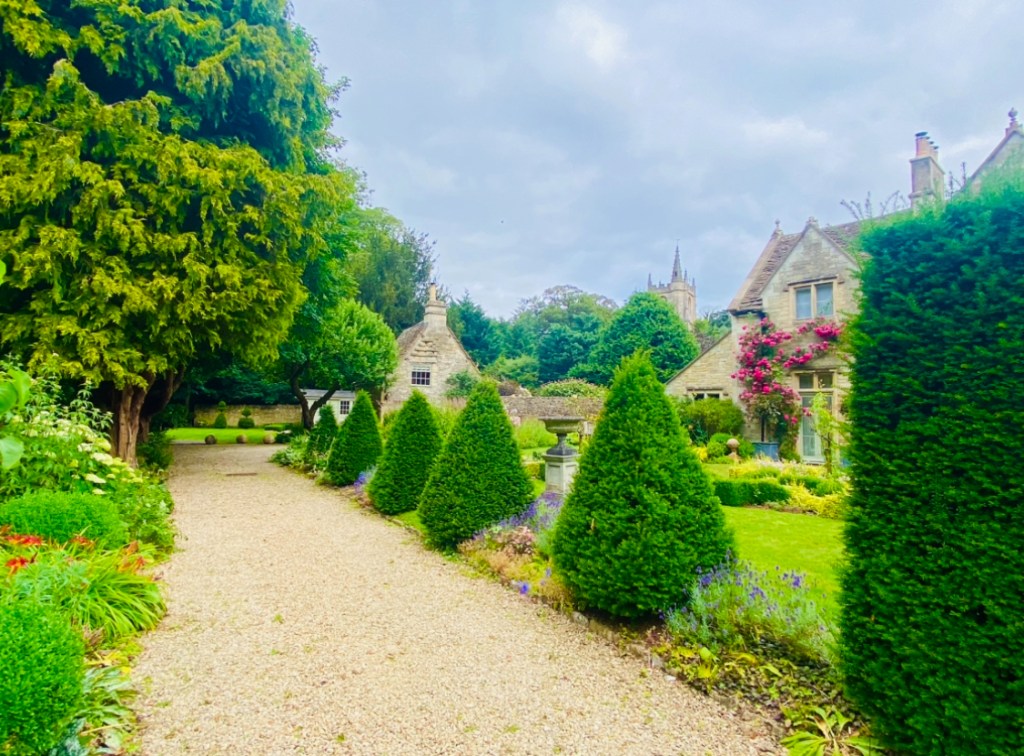
During our tour of the United Kingdom, I had ulterior motives in coming to the Cotswolds: my latest novel is a Shakespearean-era murder mystery that takes place in an arcadian English village. The inspiration for the village was Castle Combe.
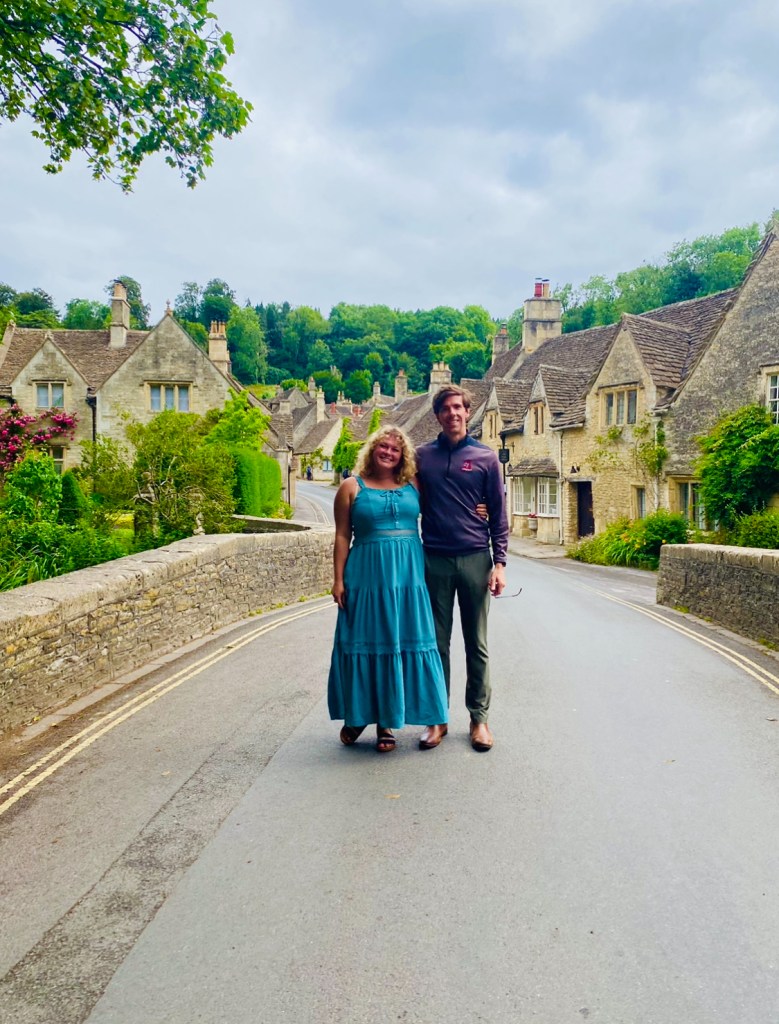
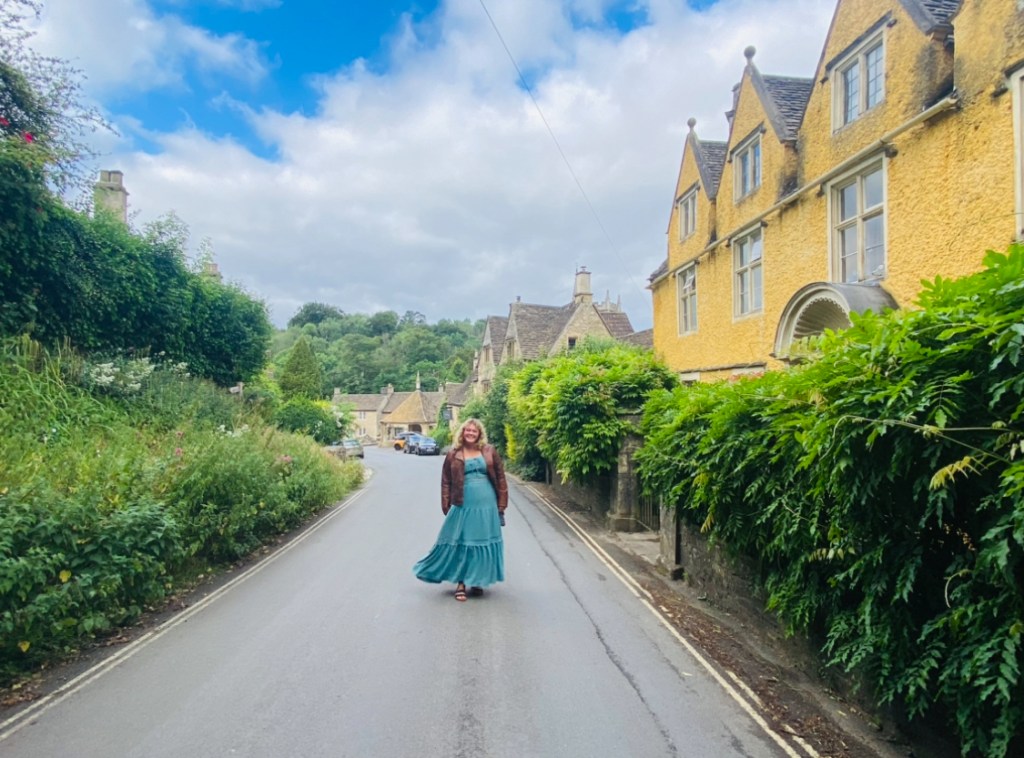
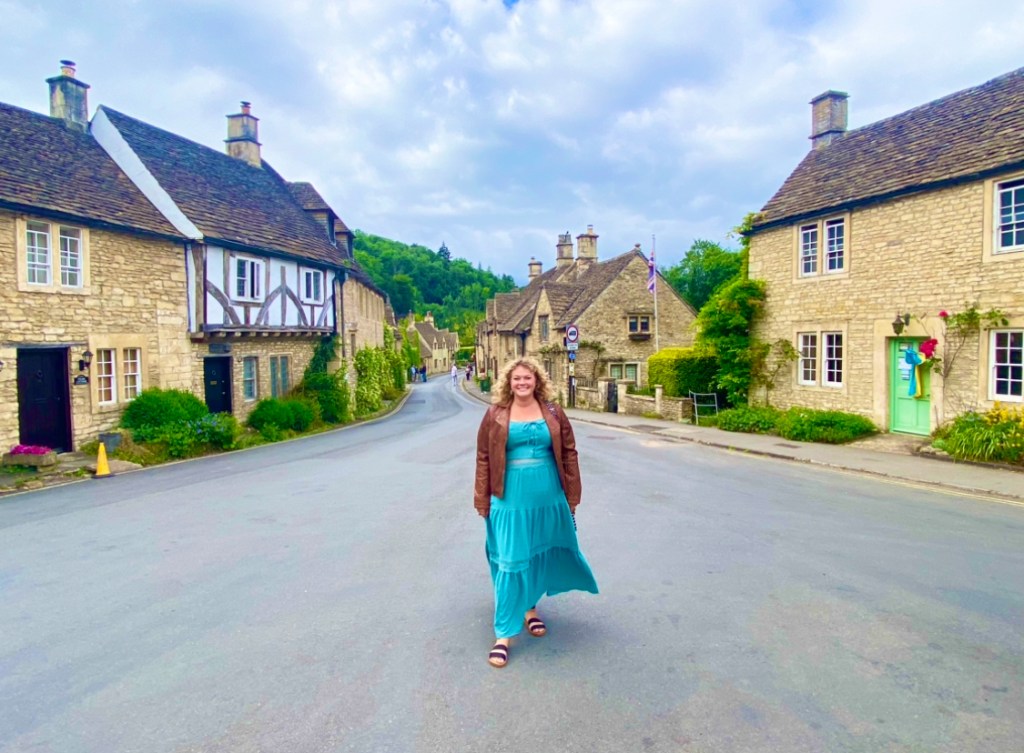
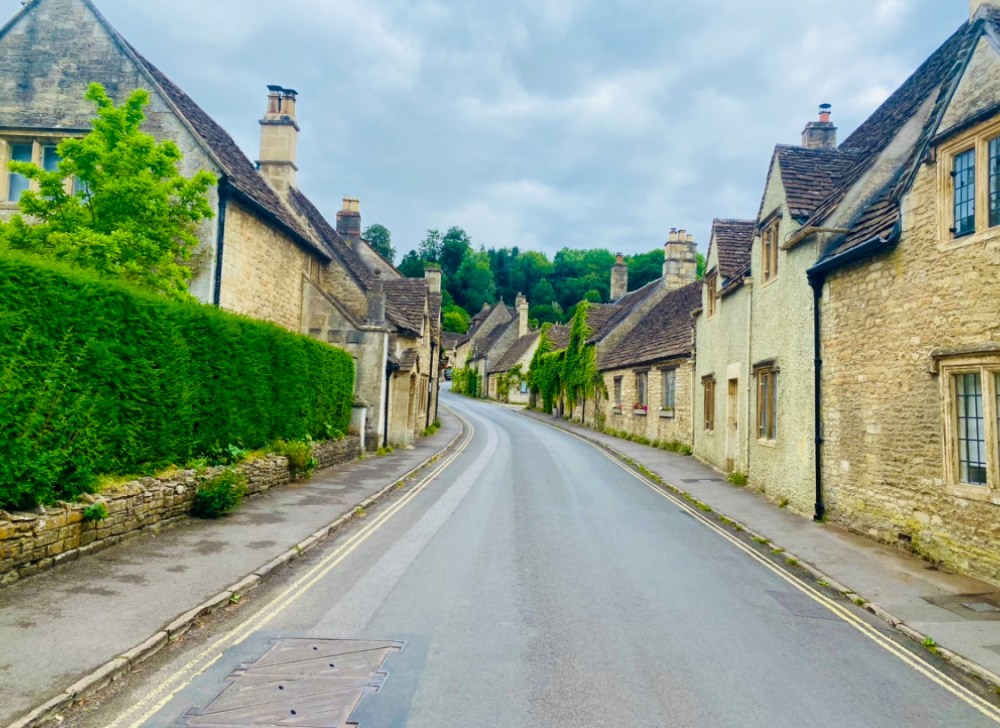
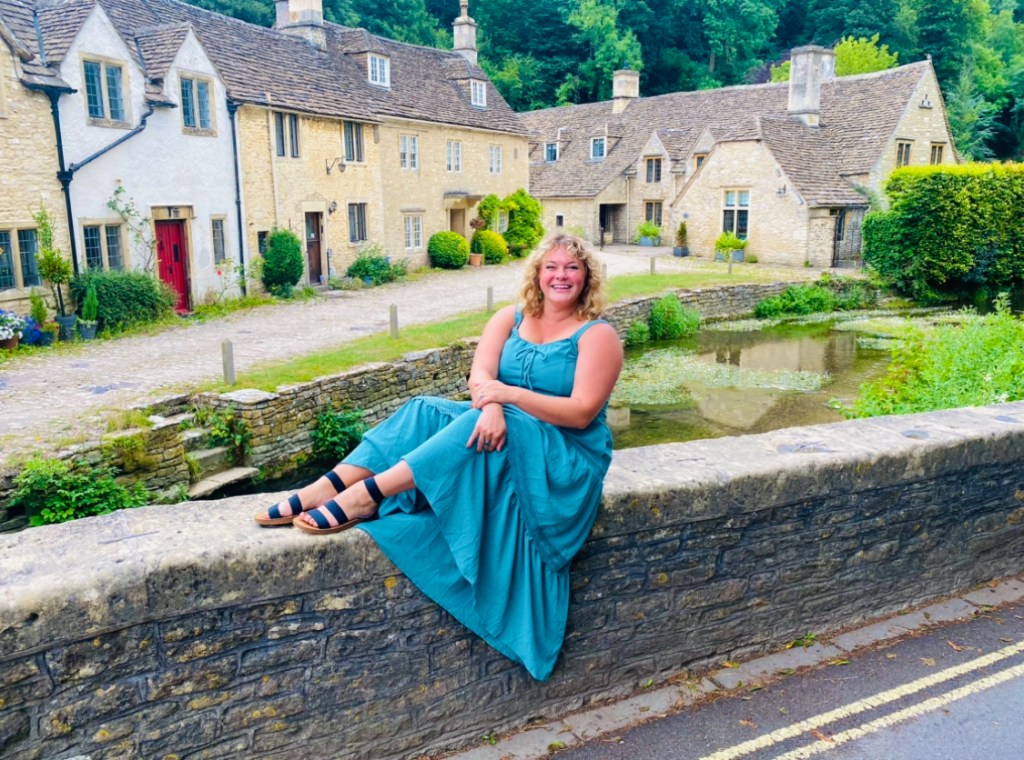
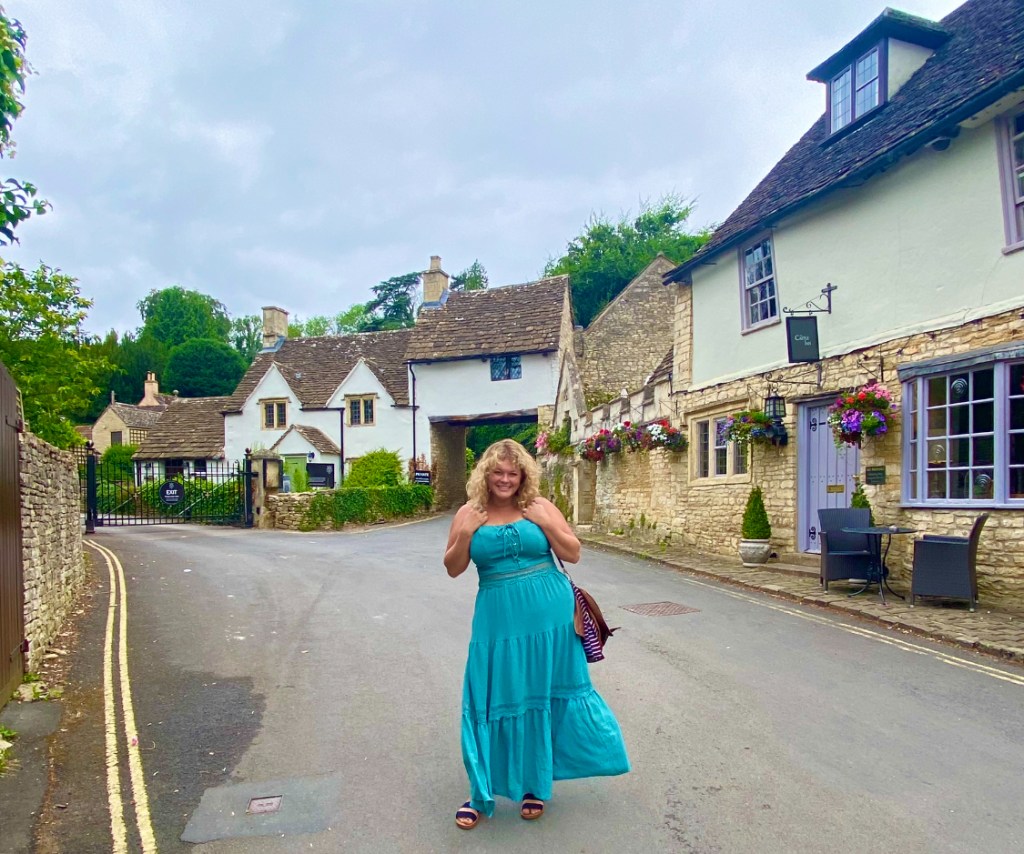
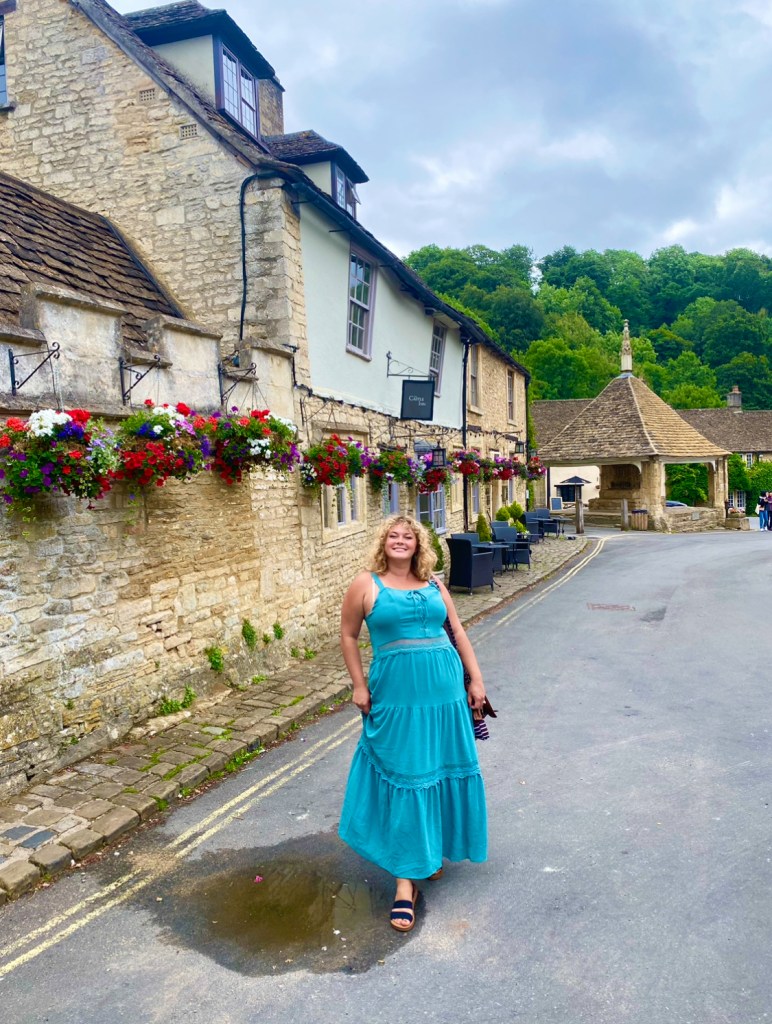
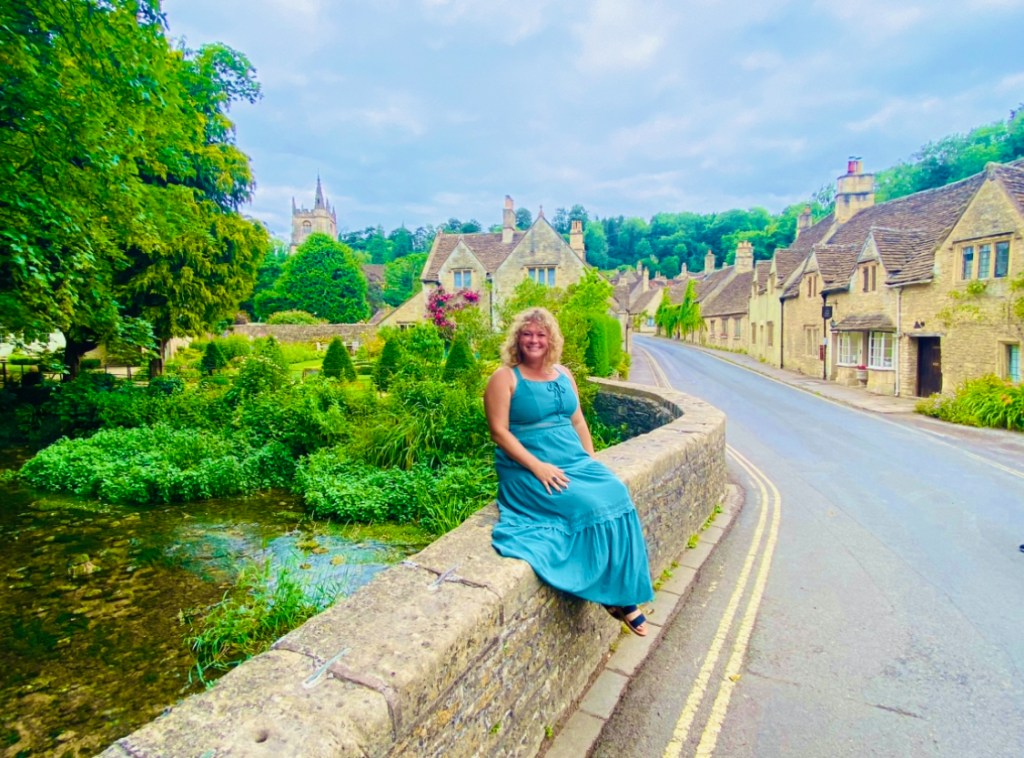
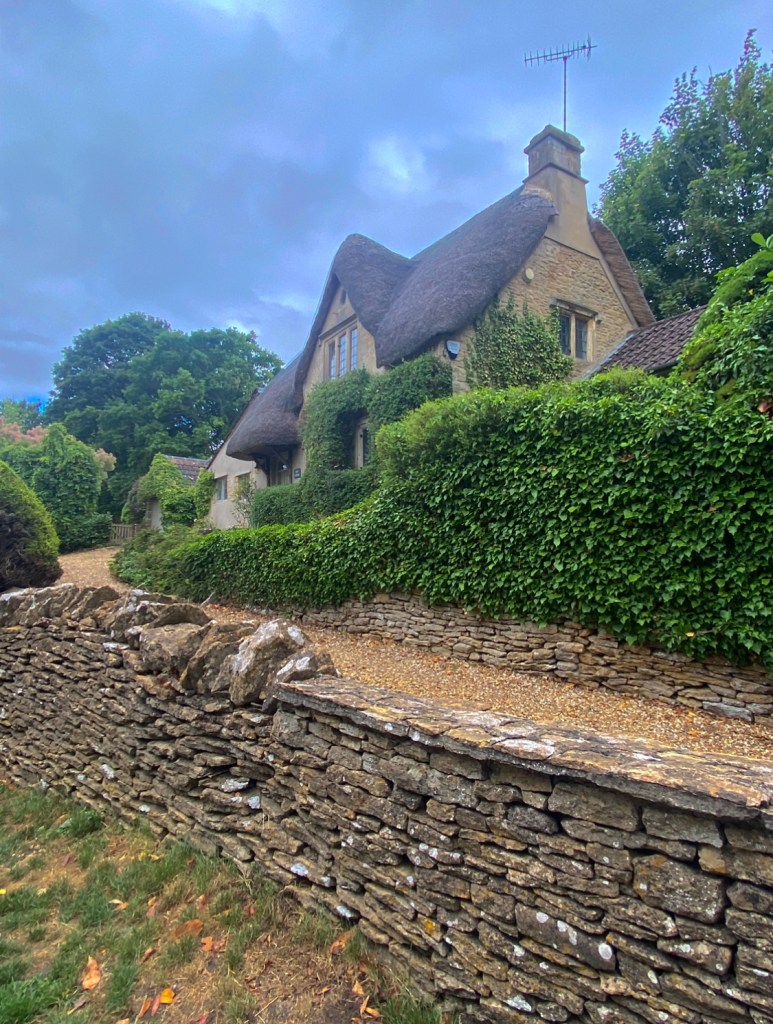
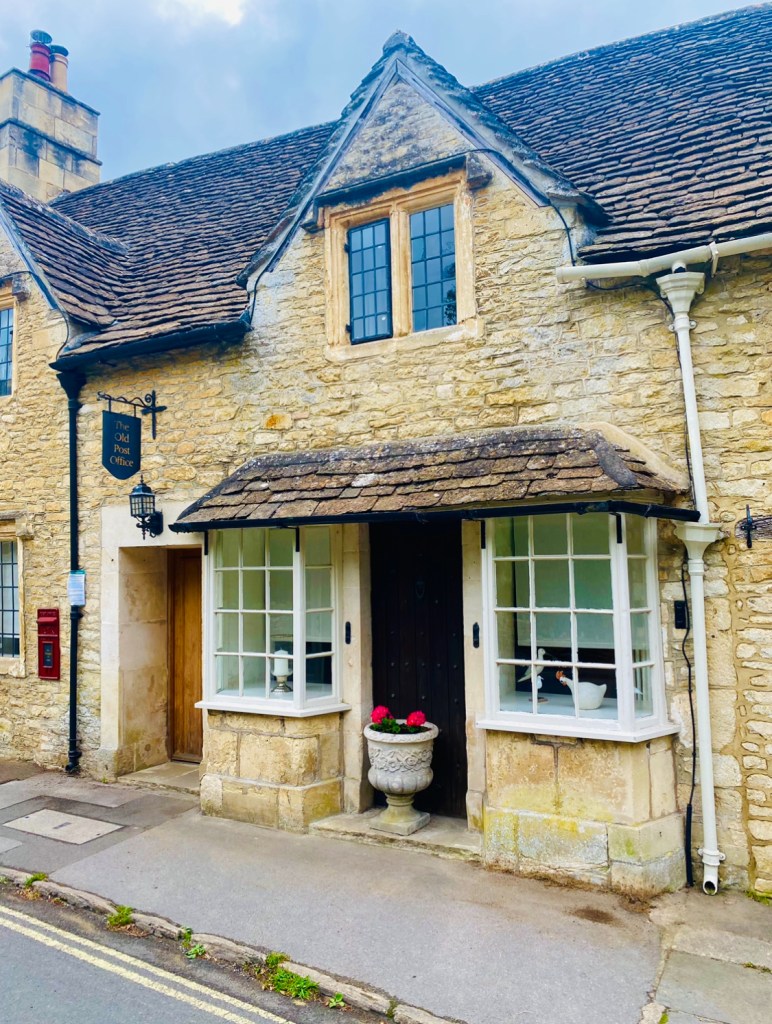
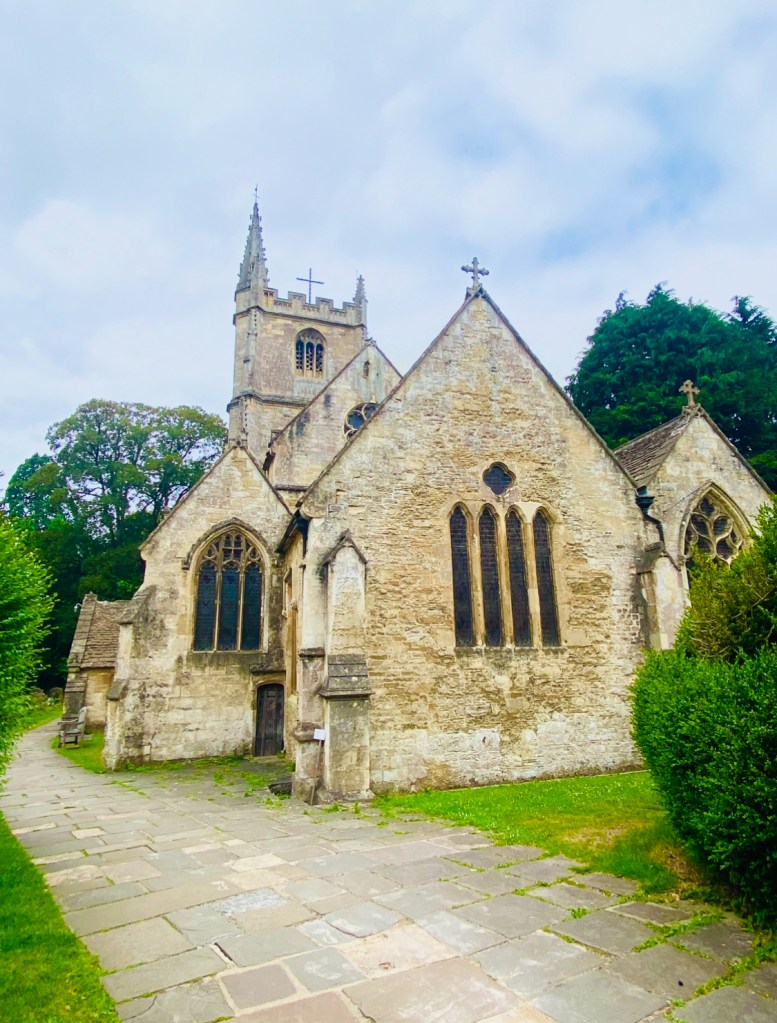
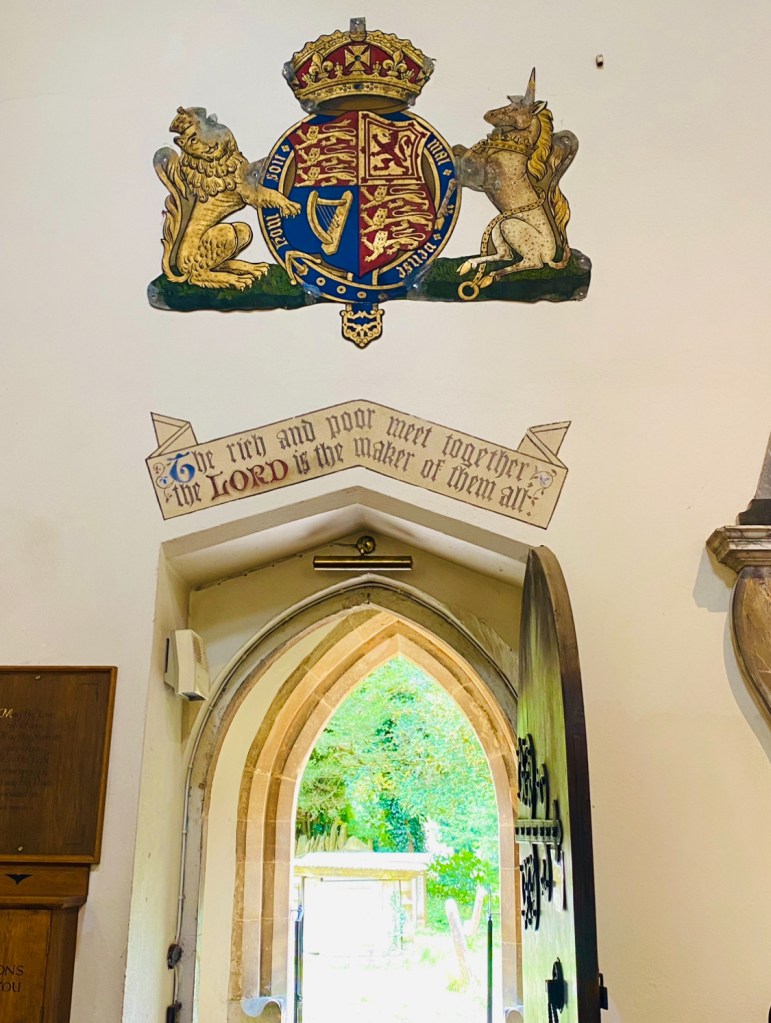
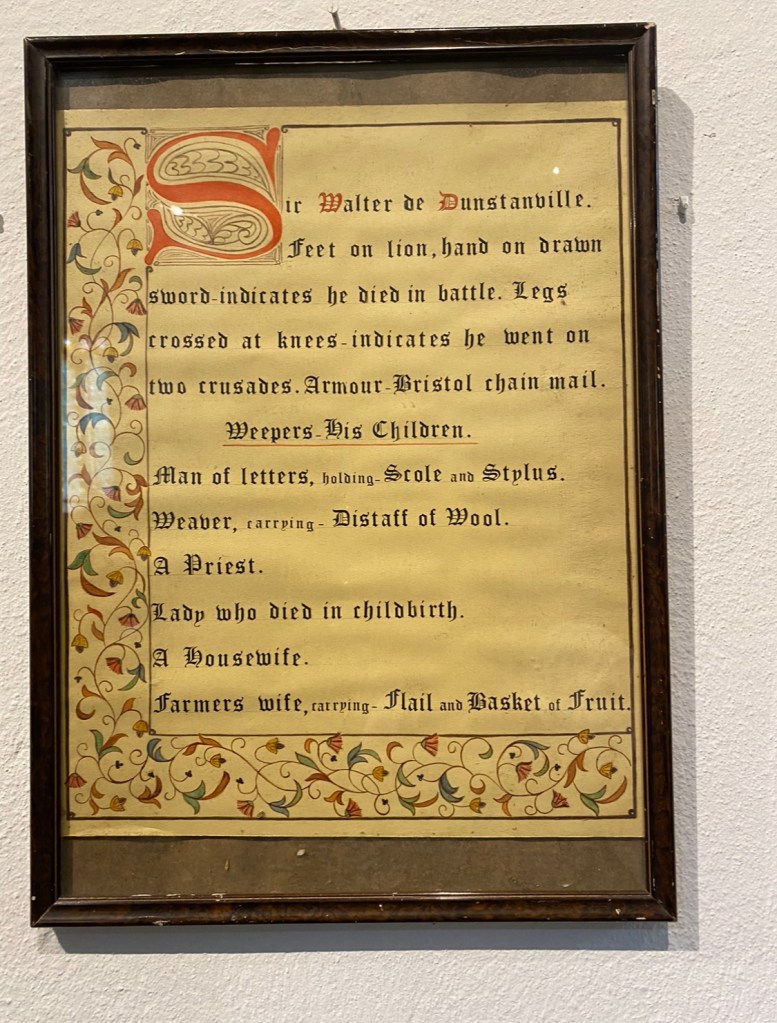
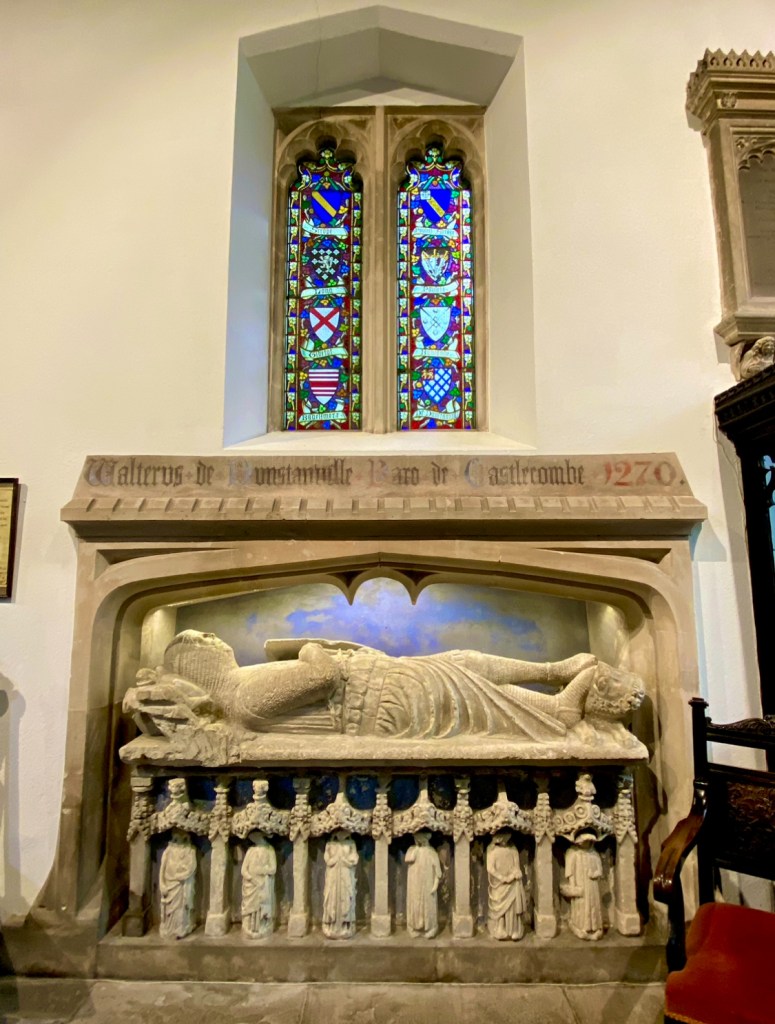
Castle Combe is the most instagrammable of the villages. It’s so beautiful, no new houses have been built since the 1600s. While it certainly looks spacious, it’s really just one Y-shaped street. This is, after all, a village. And anyone from a REALLY small town knows that parishes are basically one cute street and a whole lot of rural terrain. Therefore, there isn’t really a whole lot to do in Castle Combe, simply because it’s so small and cute, other than take a whole mess of pictures, check out the church, and maybe grab a bite to eat. I would recommend going to Castle Combe early in the morning because the streets will be empty, and that place gets chock-a-block full of tourists around 10:00 AM. If you want to get that iconic picture of yourself sitting wistfully on the stone bridge that leads into the village, while cheery limestone cottages twist up the lane, you need to be there at 9:00. Nothing else will be open except the church (which is really cool and worth checking out! There’s a knight buried there who went on TWO crusades!), and if you skip seeing The Manor House, you’ll be able to see more villages and towns with plenty of time to explore Bath.
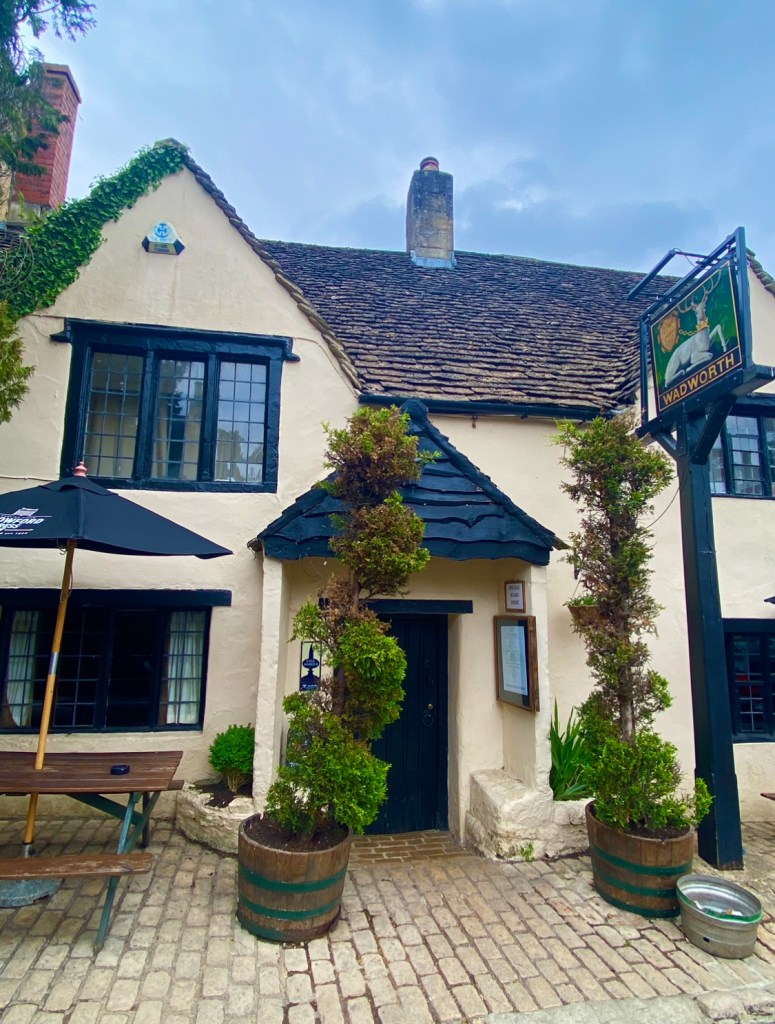
That being said, if you’re seeing Castle Combe in the afternoon or evening, you have some pretty solid options for British cuisine (lol). Within Castle Combe, there are three places to eat: The Castle Inn, the White Hart, and the Little Picnic Shop. The Castle Inn is in the heart of the village, a charming inn with a highly-rated pub which serves an upscale version of standard British fare (fish and chips, bubble and squeak, Welsh rarebit, etc.) for about $20-$28. The White Hart offers basically the same thing, except it’s a little more huntsman-themed, focusing on beef and game dishes like meat pies (the best of all English food, imho) and “venison-pheasant faggots” which I can only hope means sausage. The Little Picnic Shop is takeaway only: sandwiches, fritters, sausage rolls, muffins, cakes, etc. You can also do afternoon tea at The Manor House.
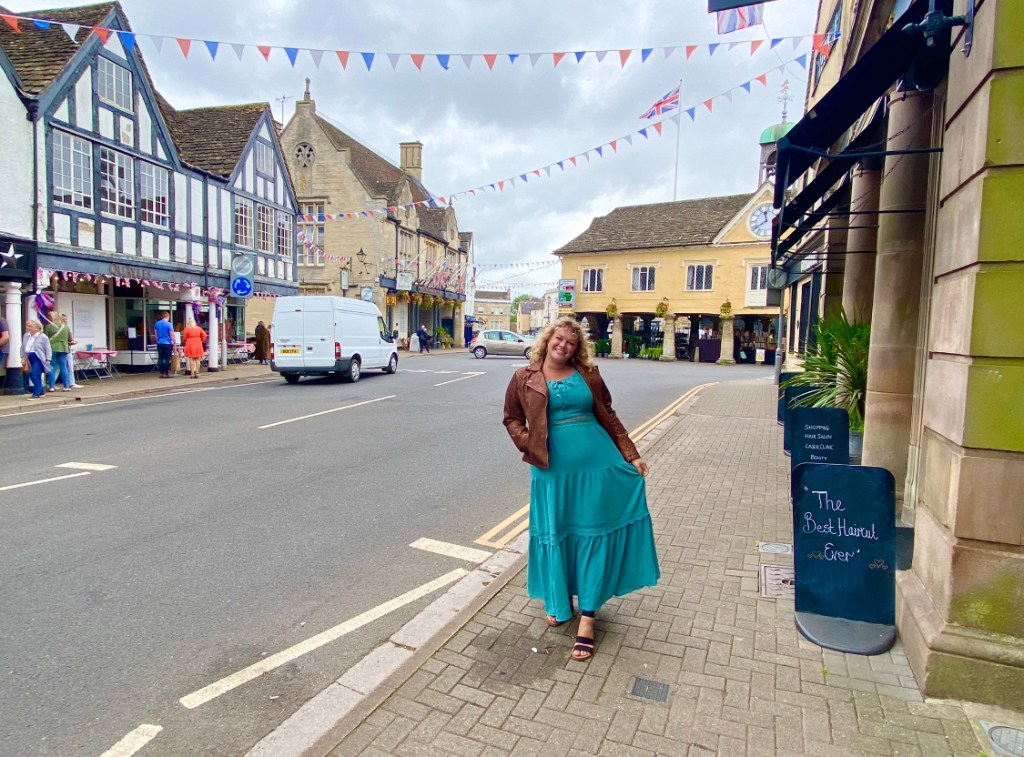
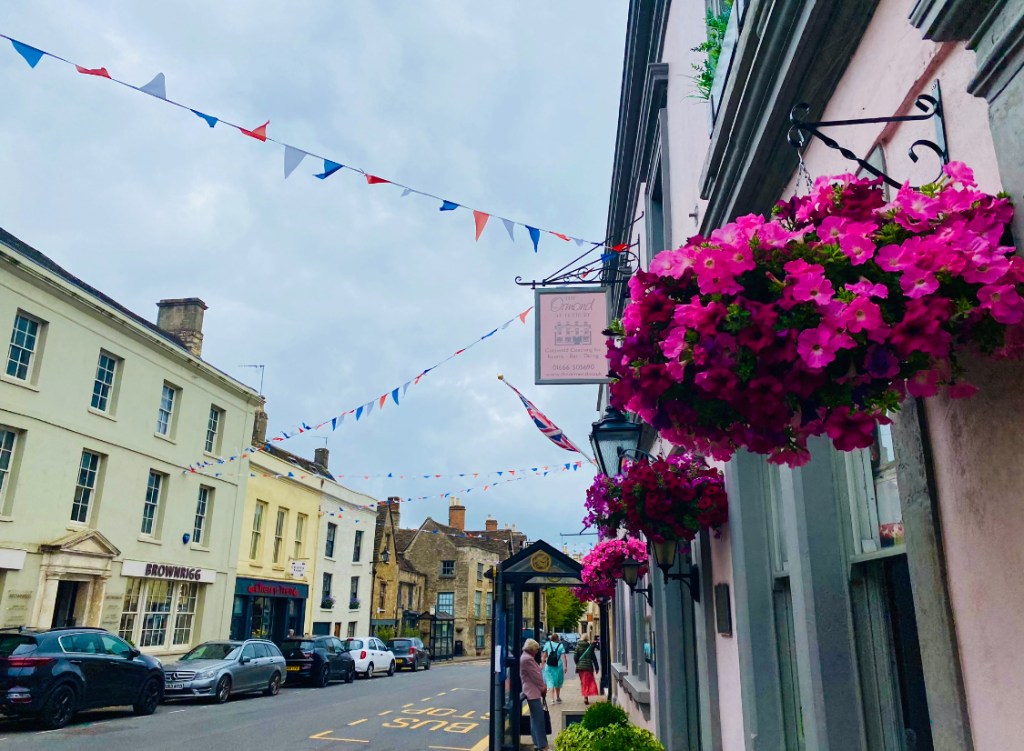
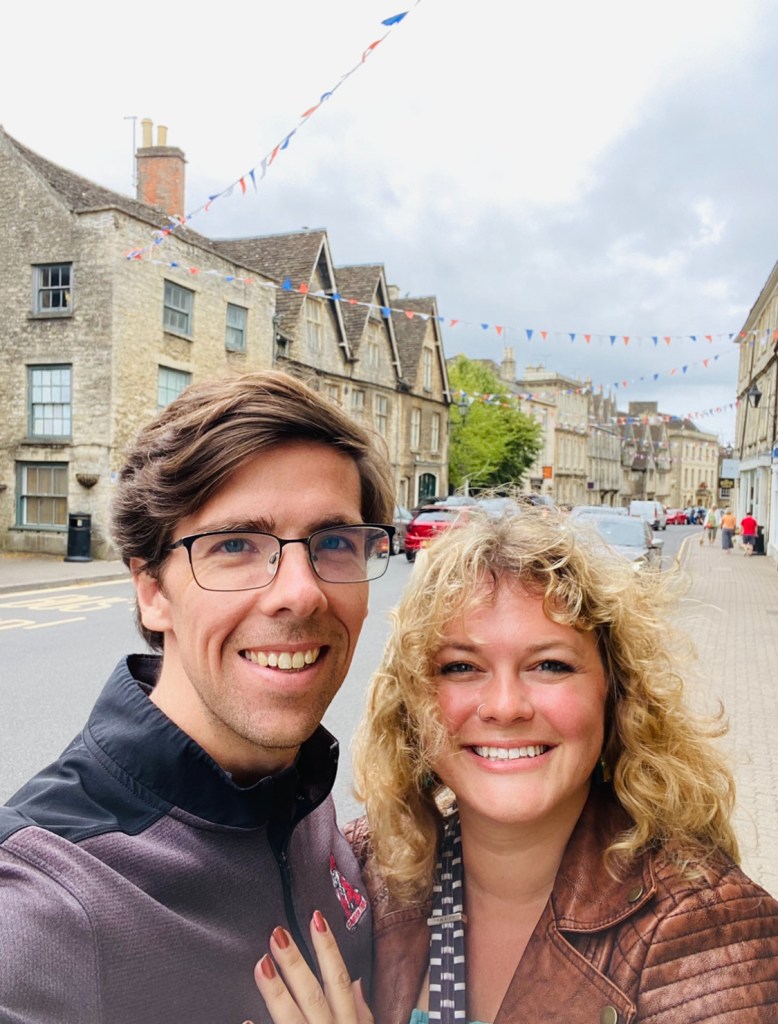
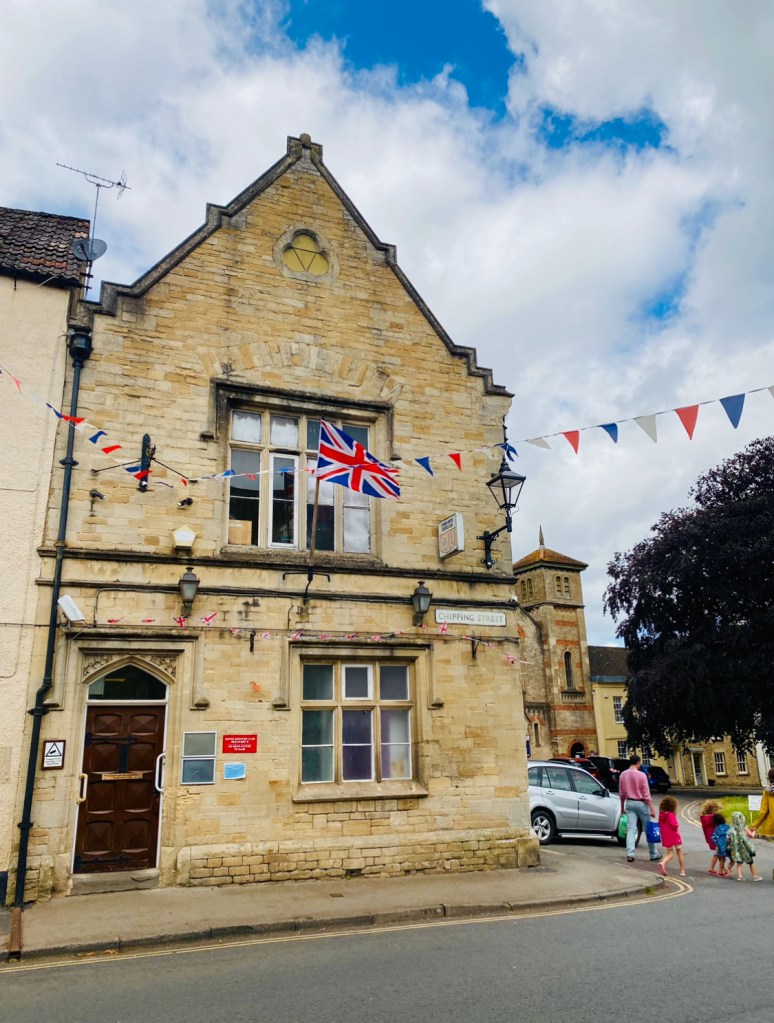
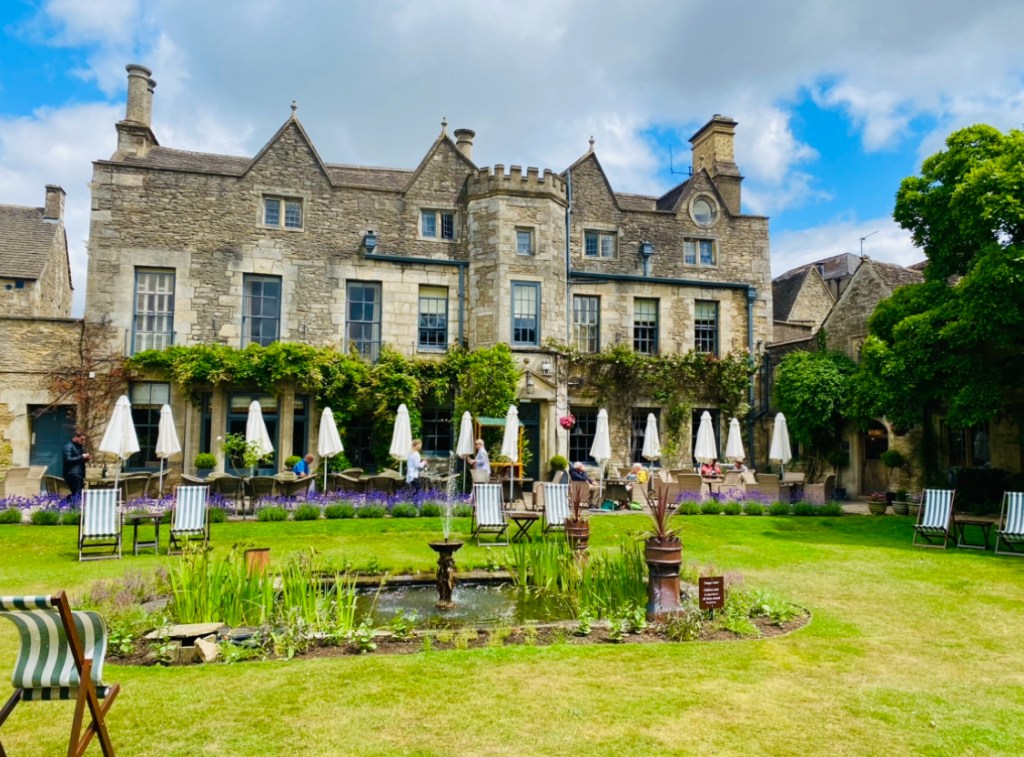
We opted for lunch at the neighboring town of Tetbury, which is bigger and had more options. Tetbury is notable because it’s the site of Highgrove, the residence of King Charles and Queen Camilla. (I know what you’re thinking: don’t they live in Buckingham Palace? Yeah, but Highgrove is their HOUSE house, and they’ve been living there since the 80s. Coincidentally, I saw another one of King Charles’ residences, a blue-painted villa in the Romanian countryside, a few months later.) You have to buy tickets way in advance, but Highgrove offers tours of the gardens for 34 pounds (or, if you’re a baller, a tea and champagne tour for 900 pounds), as well as fun little arts and crafts workshops. Obviously, none of that sounded particularly interesting to Alex, so we did not partake in Highgrove.
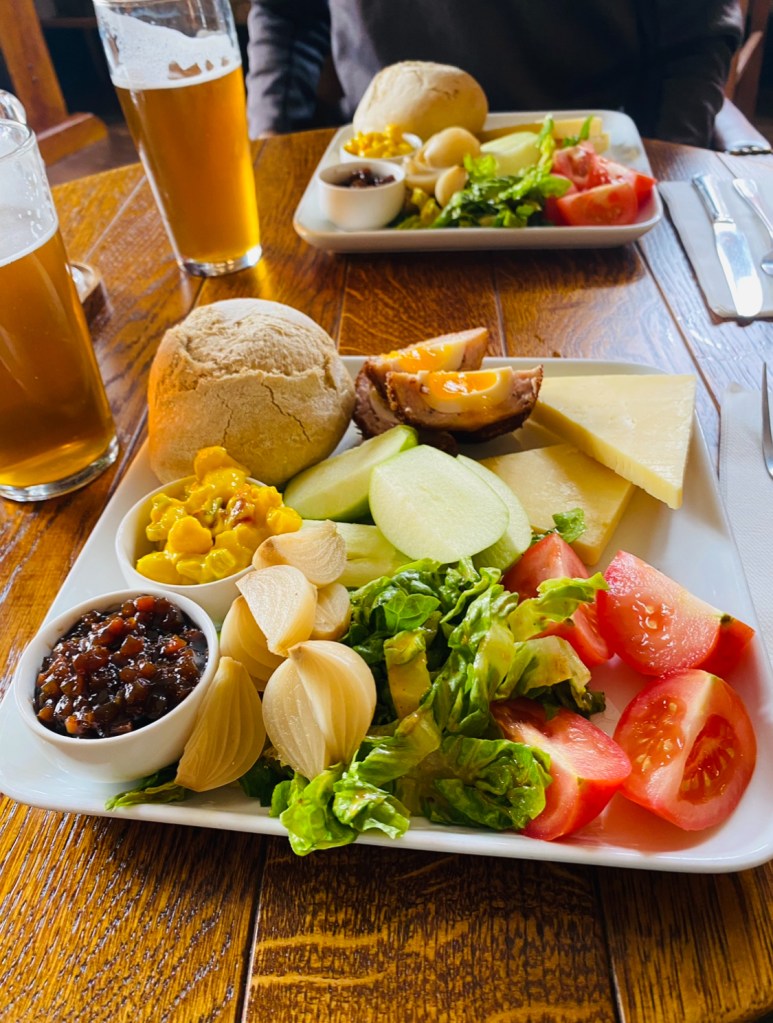
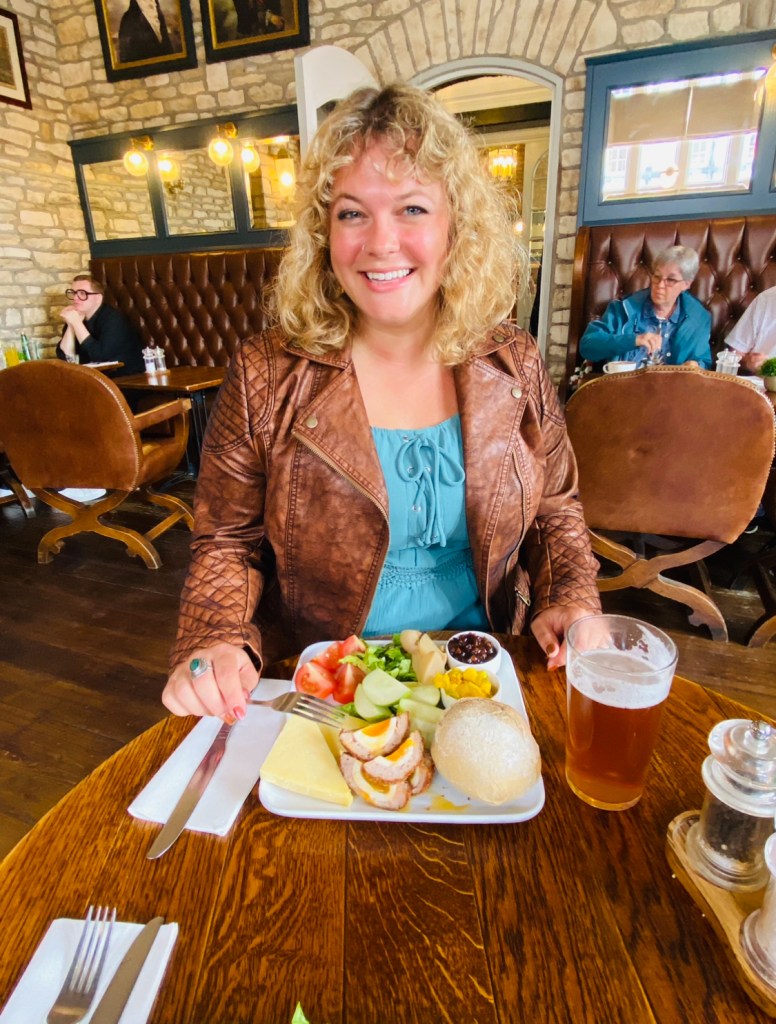
We did, however, enjoy exploring the town, which has plenty of shopping, bookstores, and lovely stone cottages. We ate lunch at The Snooty Fox, which was… pretty good. But, if I’m being honest, nothing in my whirlwind adventure exploring the United Kingdom absolutely blew me away, culinary-wise. It’s not to say I didn’t like the food! I did! But it didn’t make my soul come out of my body, like street tacos in Mexico City and croissants in Nice. Anyway, I had the Ploughman’s Lunch, which is a HUGE chunk of cheese and bread, pickled onions, and chutney. Alex chose the better option of Scotch eggs, which are deep-fried boiled eggs encased in sausage and crispy breading. (If nobody’s told you yet: you’ll need to take statins for your cholesterol well in advance of your trip to the United Kingdom, because everything is cured, drenched in gravy, deep-fried, and/or served with potatoes. And they say our food is unhealthy.)
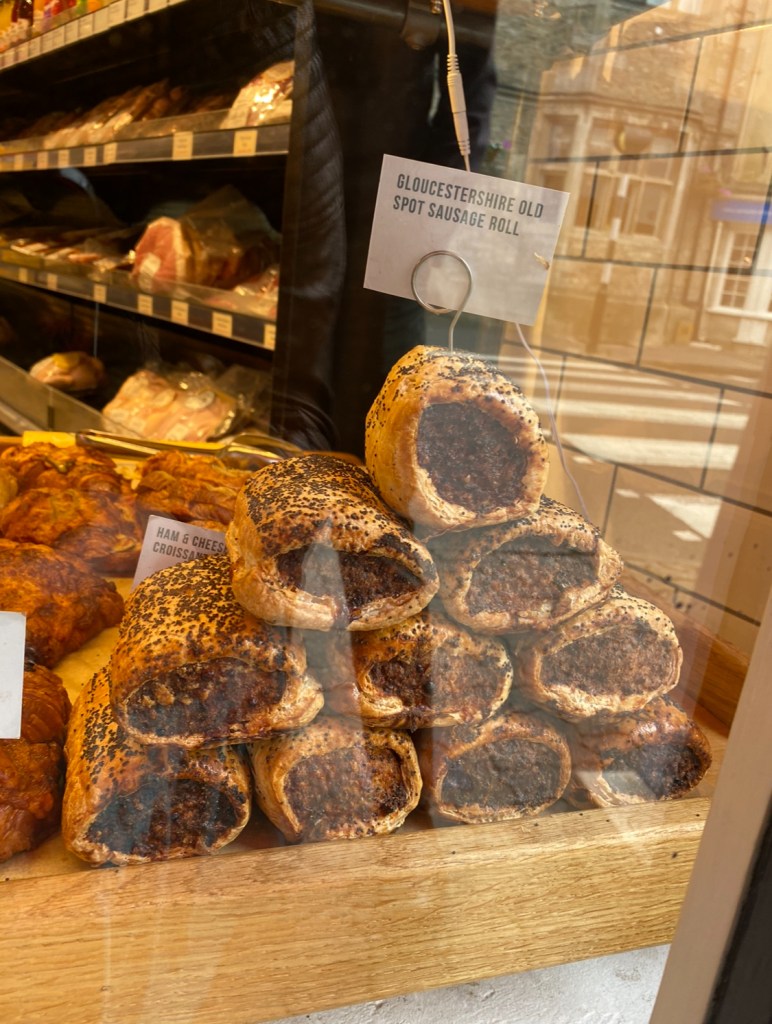
But if you go to Tetbury for lunch, there are plenty of options! Tetbury’s website has a lengthy description of the kinds of fare each restaurant serves. We passed by The Blue Zucchini and Lyndsey’s and they also looked good! And if you’re in the mood for a light snack (ha), Hobbs House Bakery has excellent sausage rolls (I mean these things are behemoth) and other pastries for your vegetarian-inclined friends. But I dare you to pass by Hobbs House Bakery, where they roast meat for sandwiches right outside and you can smell it all the way down the street, and not want to take a bite.
BATH
Once you’ve had your fill of picture-perfect English villages, drive from Tetbury down to Bath in one of the most underrated, magnificently scenic routes I’ve ever traveled. Drive at the roaring speed of 50 mph (British roads are very narrow, very old, and very slow) along the ridge of a dramatic valley lit with golden mist and rolling hills. You know those sweeping shots of breathtaking English landscape that comes in the middle of all great Jane Austen films, when the winsome heroine is wistfully looking out over the valley, murmuring the name of the lover who jilted her? You’ll feel like you’re in the middle of that. And it makes sense, because at the end of this valley is the spa city of Bath, the home of OG Thrilla Killa Grandmommy of All Literary Ladies, Miss Jane Austen.
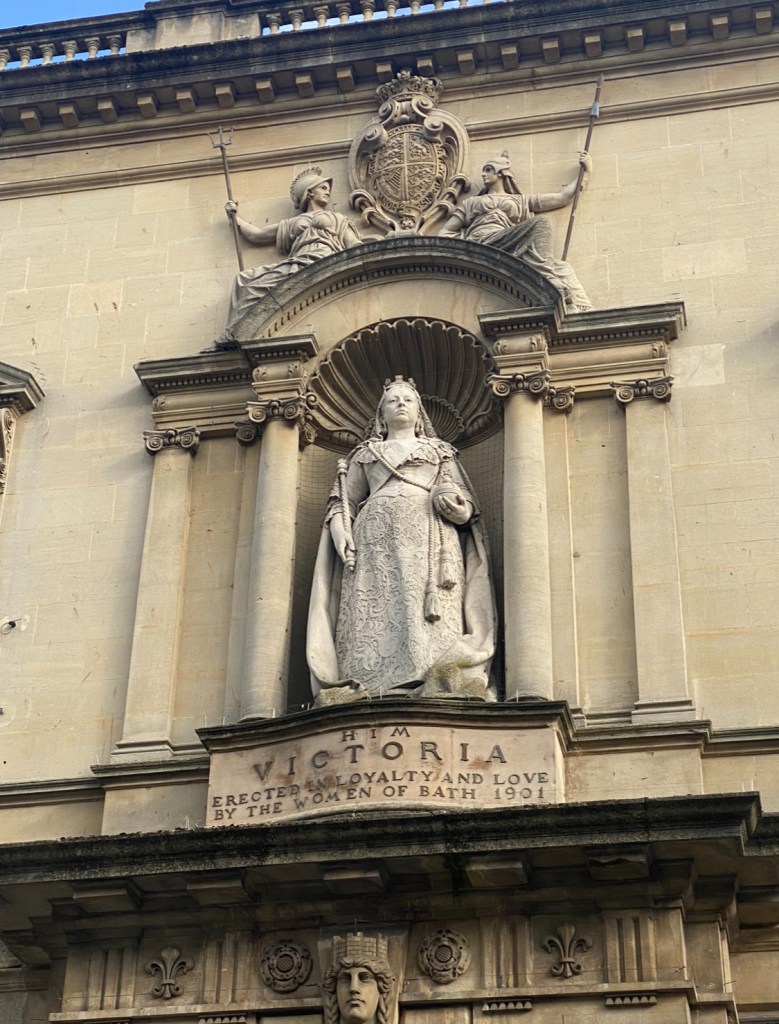
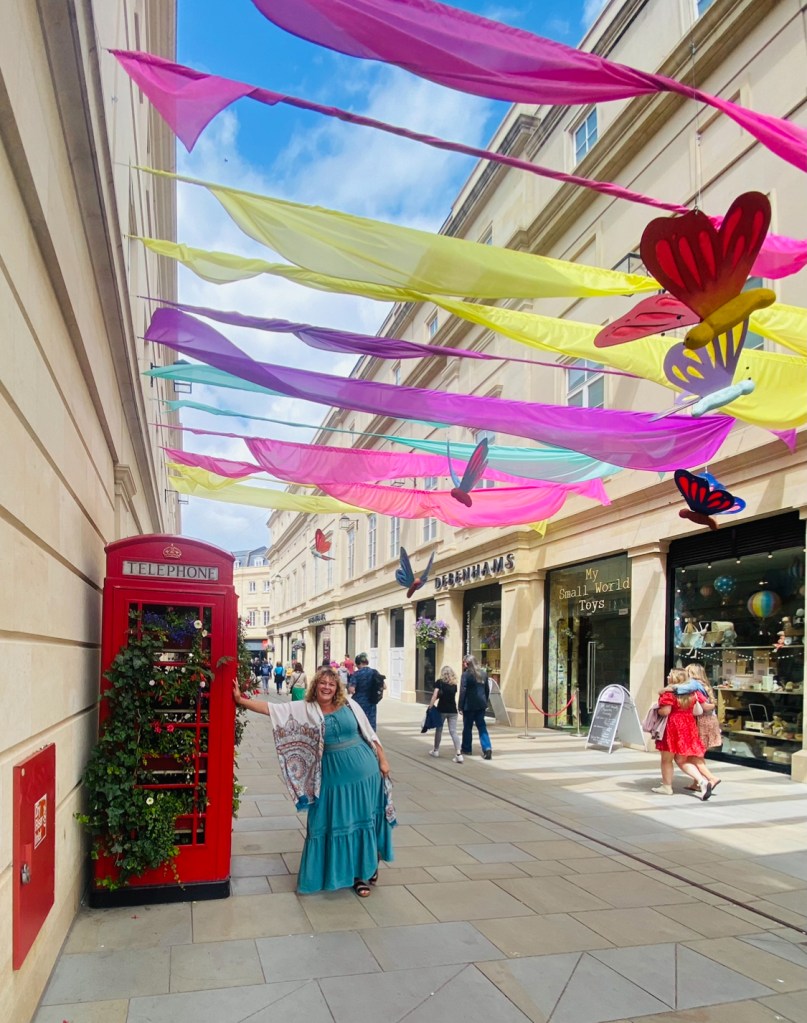
I don’t care if you don’t vibe with Jane Austen; you need to spend time in Bath. Alex loathes and despises Jane Austen, but Bath was his favorite part of the trip! This city is COOL and by COOL I mean HOT and by HOT I mean there’s a thermal spring under the city and the Romans once built a bathhouse here because they believed it had healing properties. While the city of Bath, named for the Roman Baths, has been around since King Arthur times (500 AD), it’s mostly famous for its status as a spa metropolis during the Georgian Era (1700s–1800s, King George III, as in the one who lost the Revolutionary War, but he was also crazy, but he was also a nice dude and a pretty good king). This city is a gorgeous example of Georgian architecture; most of the landmarks to see are just cool Georgian buildings and housing. Sorry, I know I nerd out too much on architecture, but architecture is a living historical testimony to the cultural values of when the city was built.
Georgian architecture pays tribute to ancient Rome. I mean, you get it, right? England was like “oh we have ARRIVED hello yes we’re the new empire we RULE this ish” so of course they would try to remix Roman iconography. Meanwhile, the actual Rome looked completely different, as it was all up into Baroque architecture, they were too busy building the Trevi Fountain and the Spanish Steps. Sorry, tangent. Anyway, as England grew richer and the air grew grosser because of all the Industrial Era factories clogging up London, the fashionable elite were like “oh heavens Tabitha has caught the consumption, we must move her to take the healing waters and the fresh sea air or she will perish, but also we are rich and want to be seen in our empire dresses and bad hairdos”. So the city planners and architects worked to build up the city of Bath and add some fashionable housing with lots of parks and recreation areas. Keeping all that in mind, there are a few spots you HAVE to see when you’re in Bath.
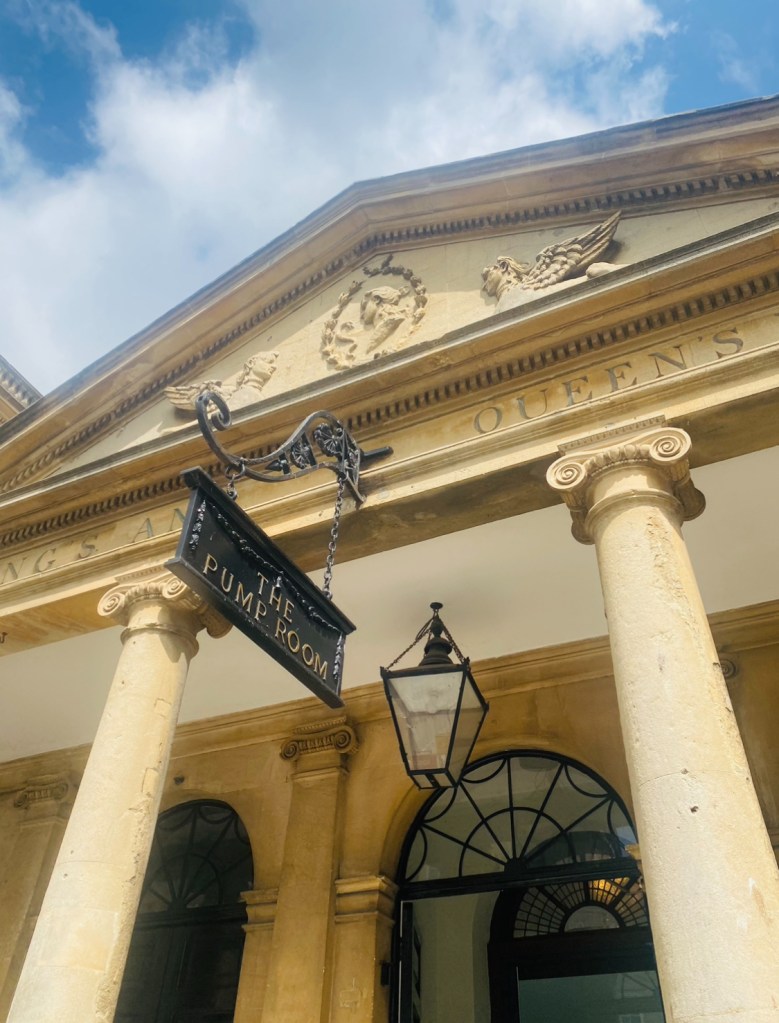
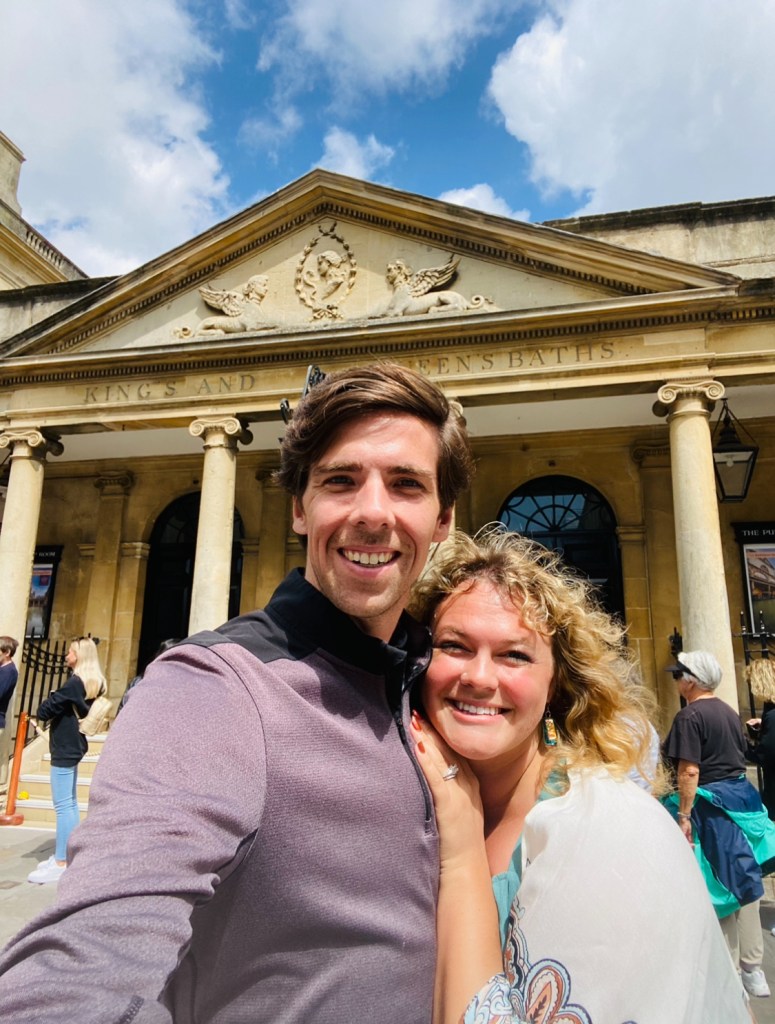
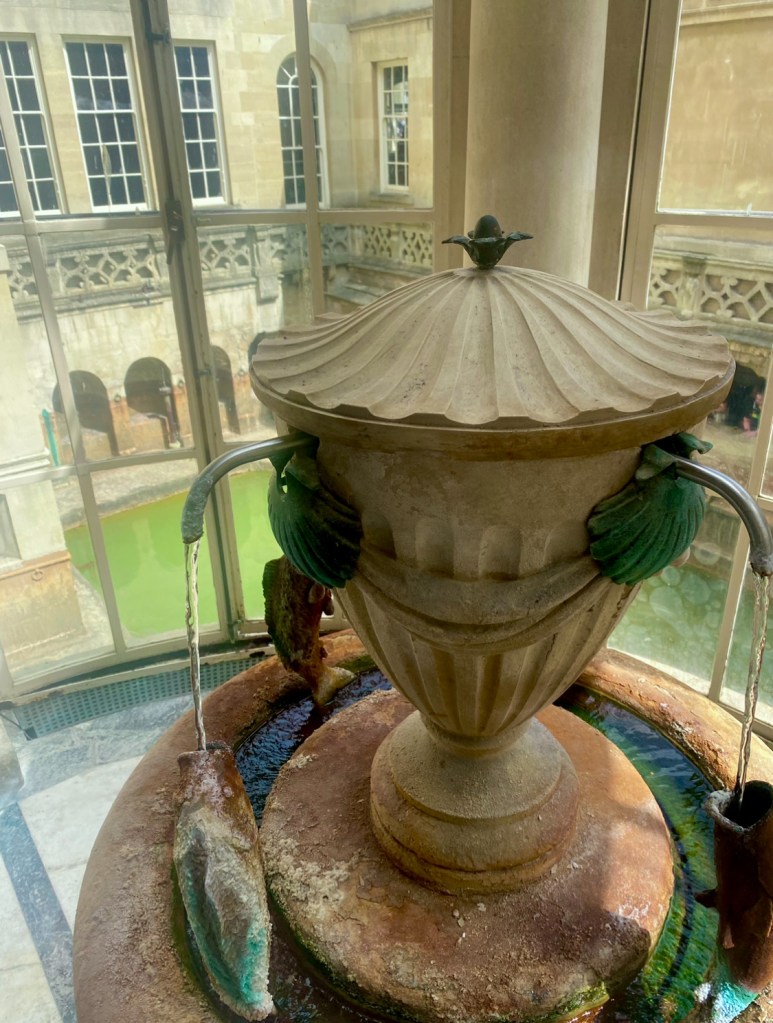
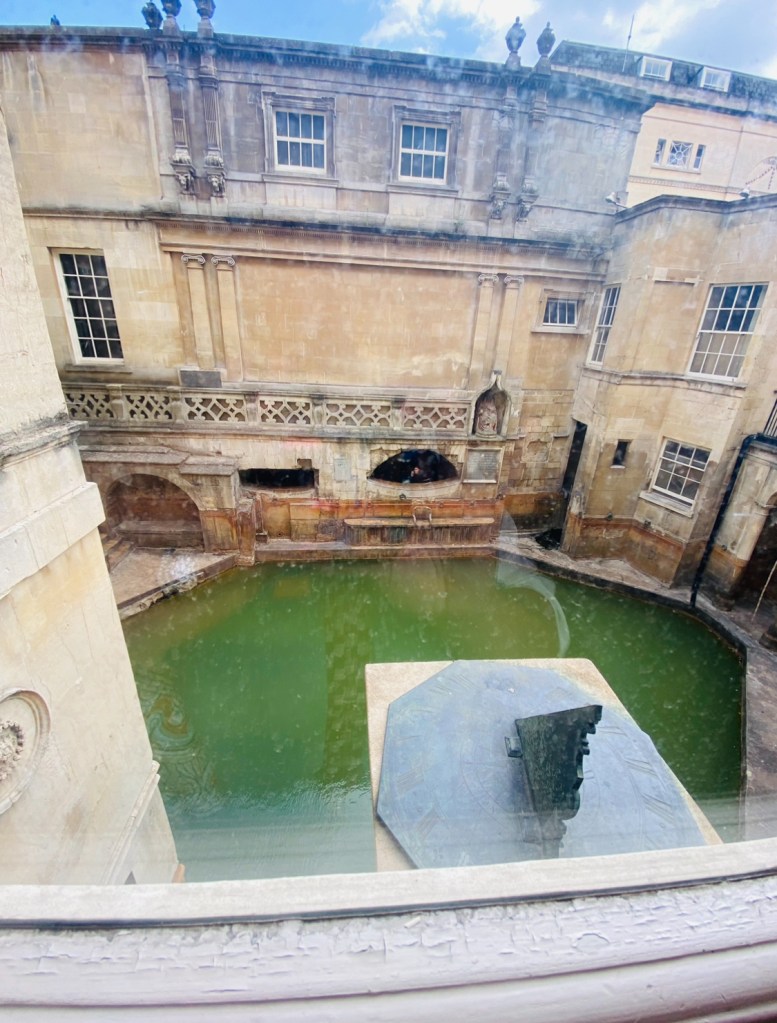
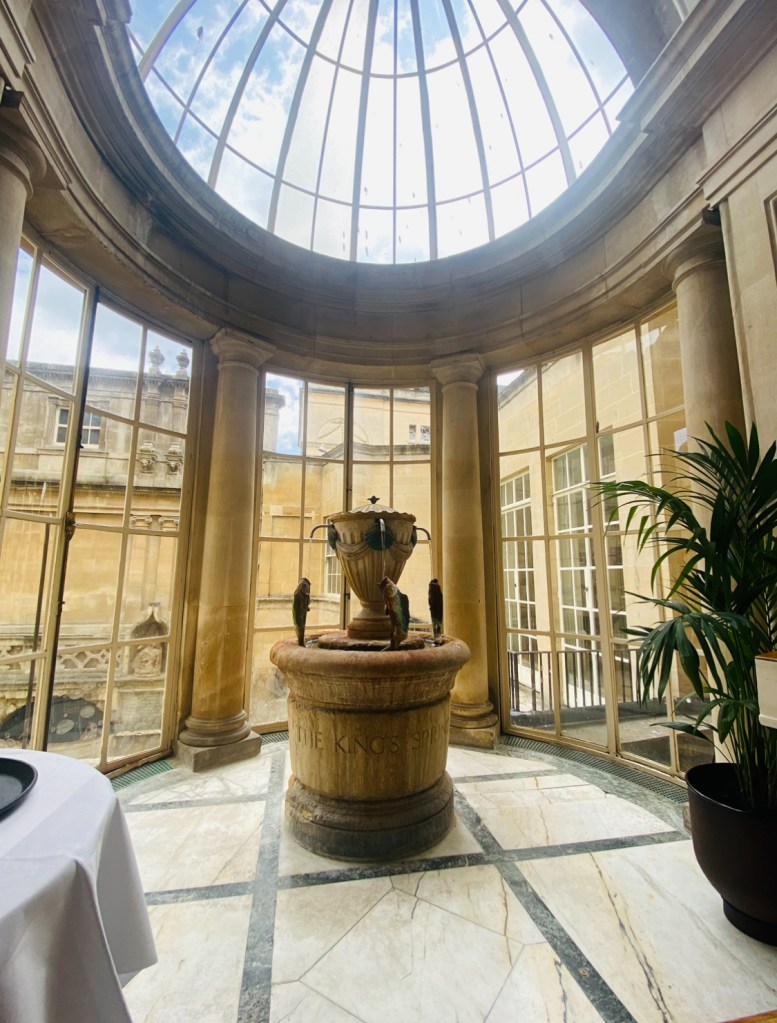
First, go to The Pump Room. This is a grand building that’s built around the ancient Roman Baths. A large ballroom features a window into the Roman Baths and a fountain where you can drink the thermal water being pumped up from underground. Caution: the water is warm and very metallic, nice for swimming but a little gross for drinking. But drinking the tears of my students who fail my class isn’t keeping me as young as I’d hoped, so I drank two cups of fountain water.
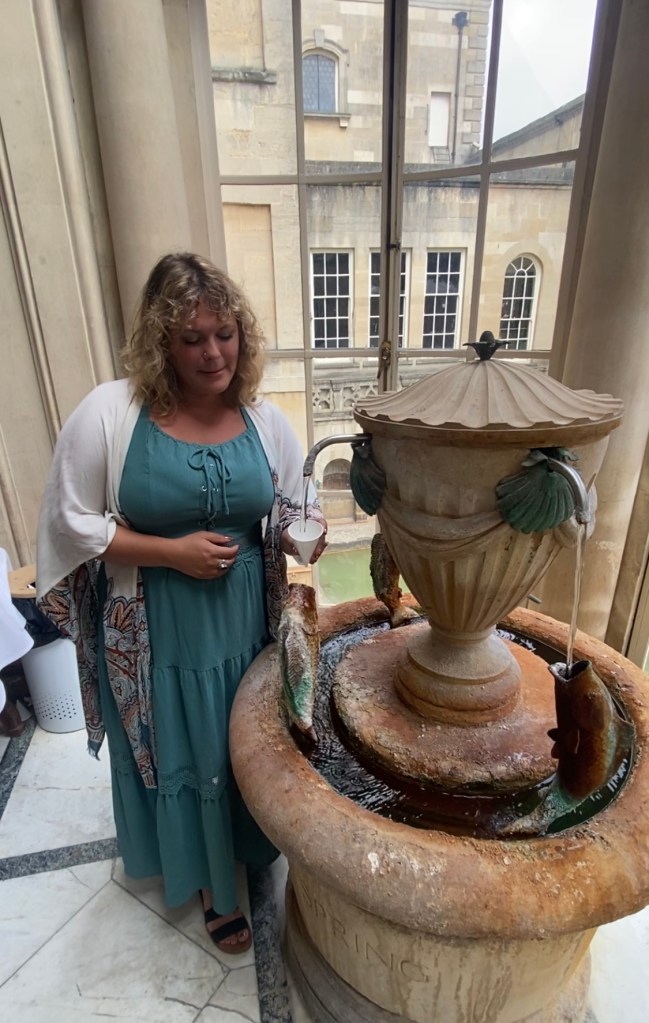
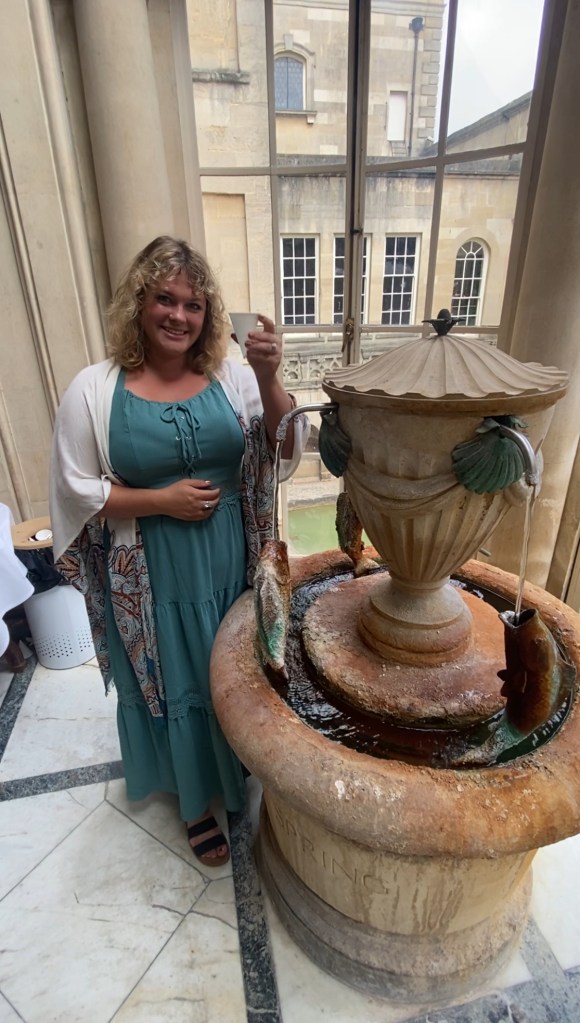
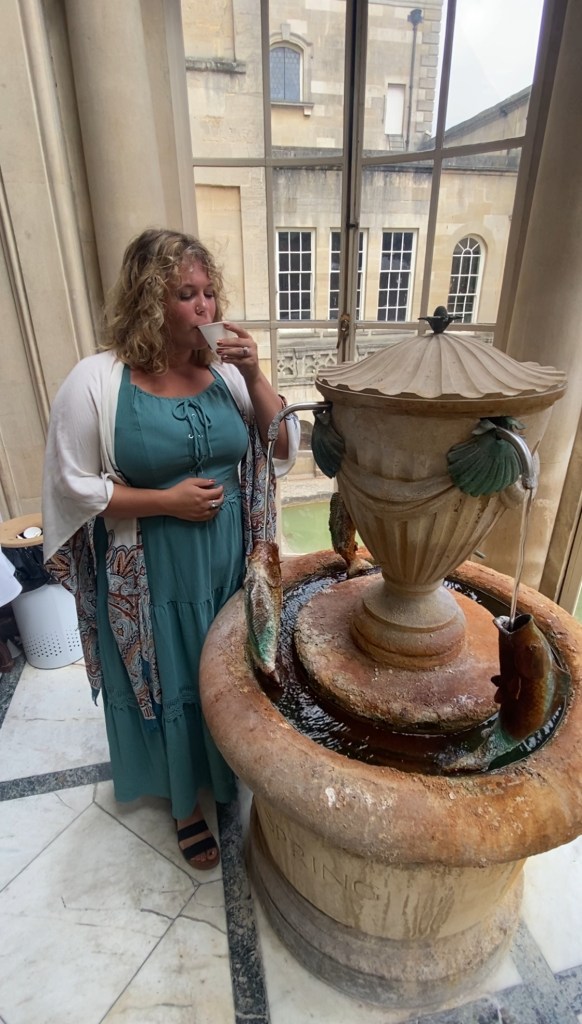
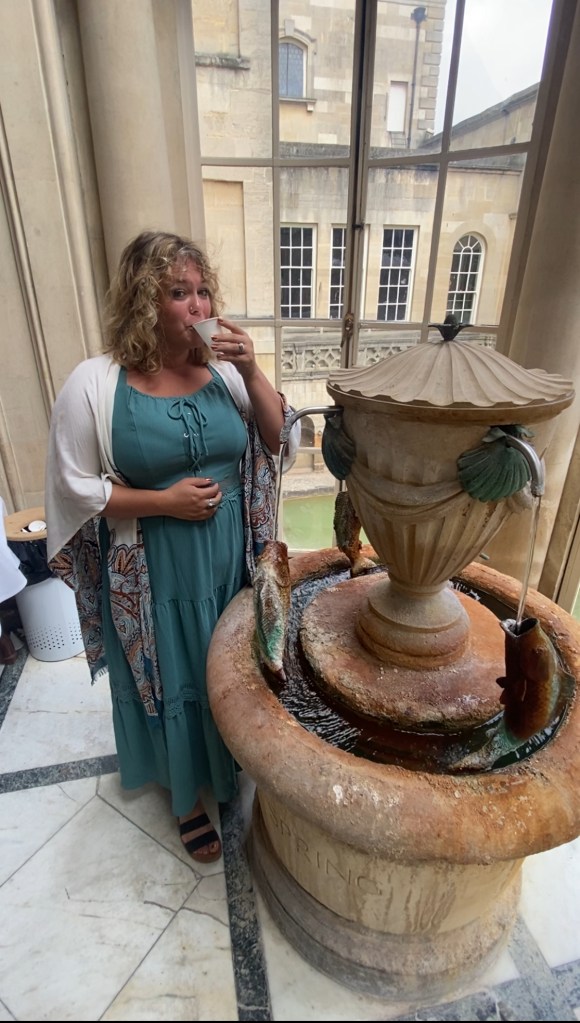
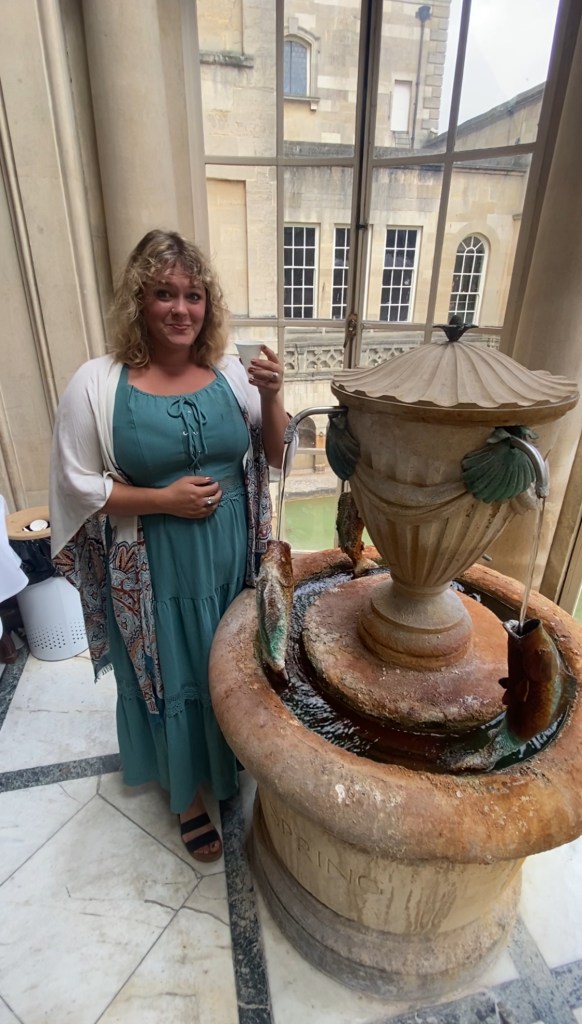
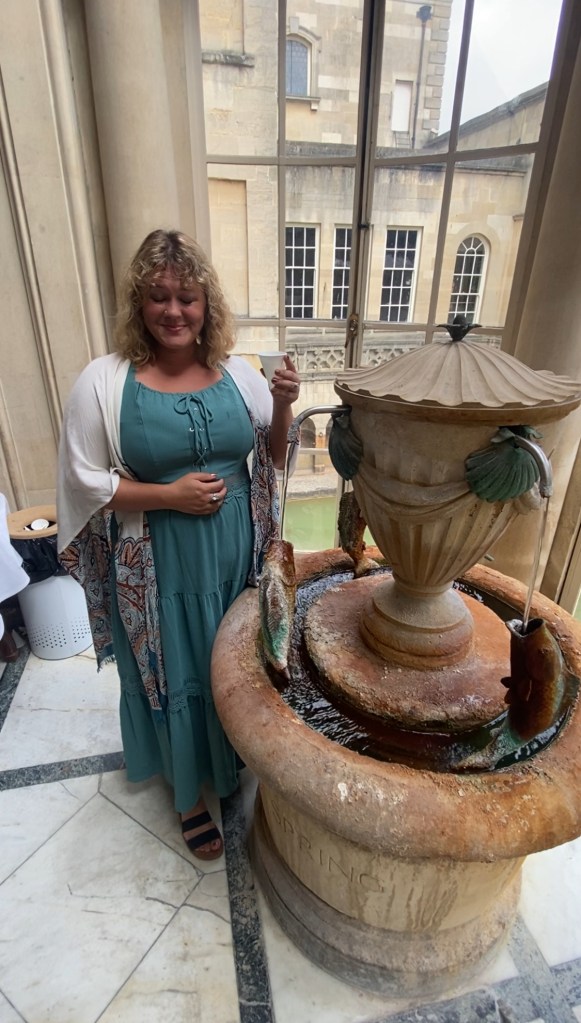
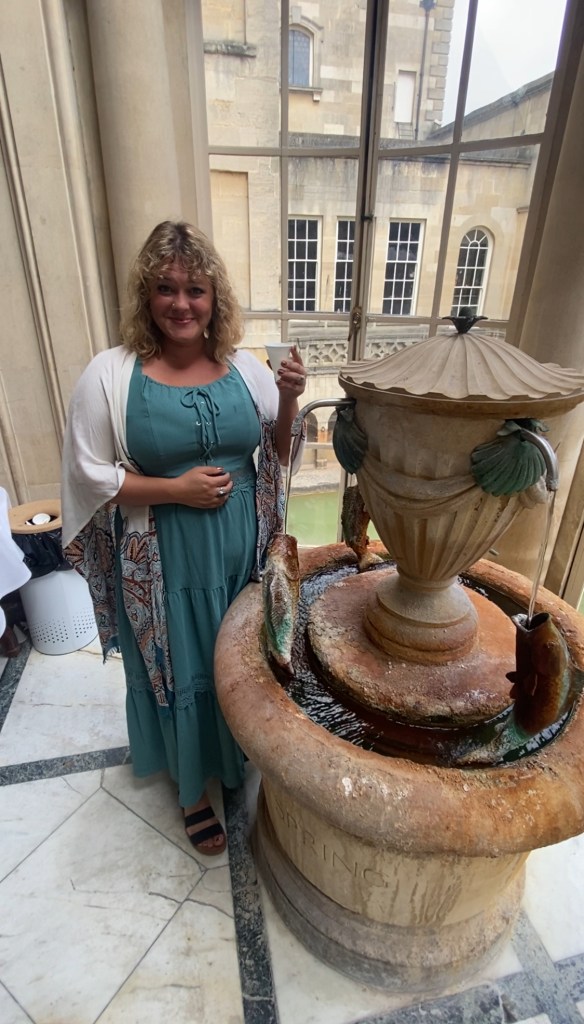
This was the place to BE SEEN in the Regency Era. (Brief history lesson: Georgian Era ends with King George III, who was super cray-cray by 1795, so his son George IV rules for him as prince regent until George III died in 1820, at which point George IV was crowned king. All of Jane Austen’s novels and the Bridgerton series take place during this time.) Jane Austen’s final novel, Persuasion, is set almost exclusively in Bath, and all “the drama” happens at The Pump Room. Today, The Pump Room is a restaurant, and I would highly recommend dropping in for Afternoon Tea. (Reservation not required but recommended.)
If you’ve never been to England before, Afternoon Tea is, like Spanish siestas, a great luxury that we would absolutely eat up in the States but are too busy being workaholics to ever truly appreciate. You get a whole pot of tea and a three-tier stand of little treats: tiny finger sandwiches, scones with clotted cream and jam, and little cakes and pastries. Afternoon Tea was one of my favorite parts of my UK trip, I wish I could have participated in one every day on our vacation. All the best hotels offer Afternoon Tea, and The Pump Room’s afternoon tea was spectacular!
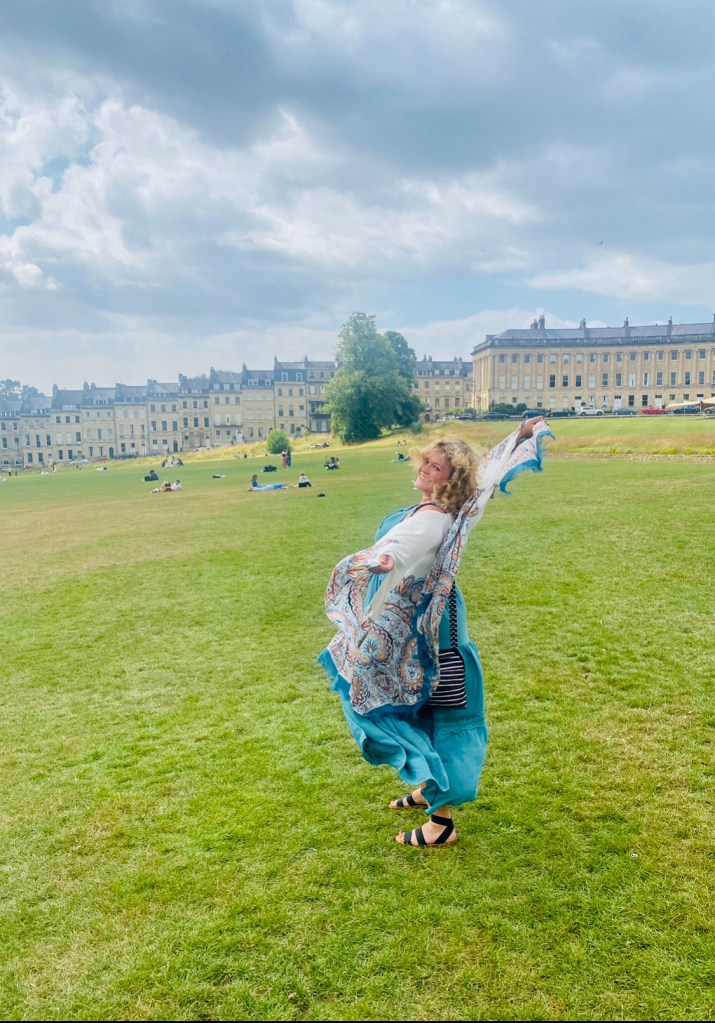
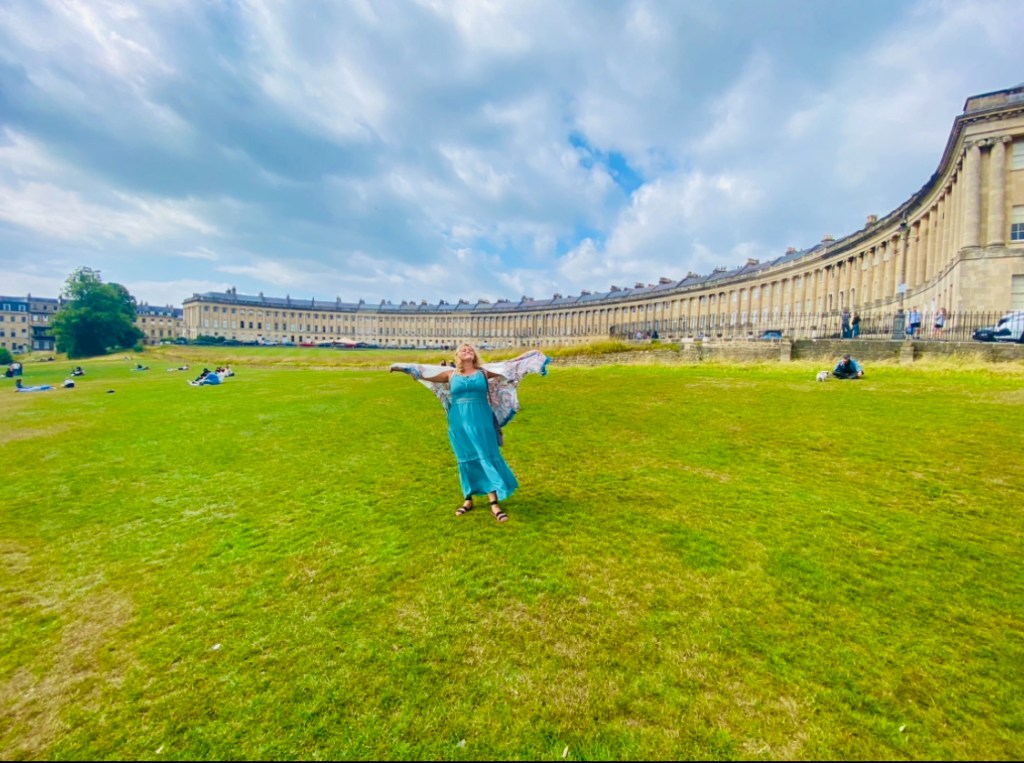
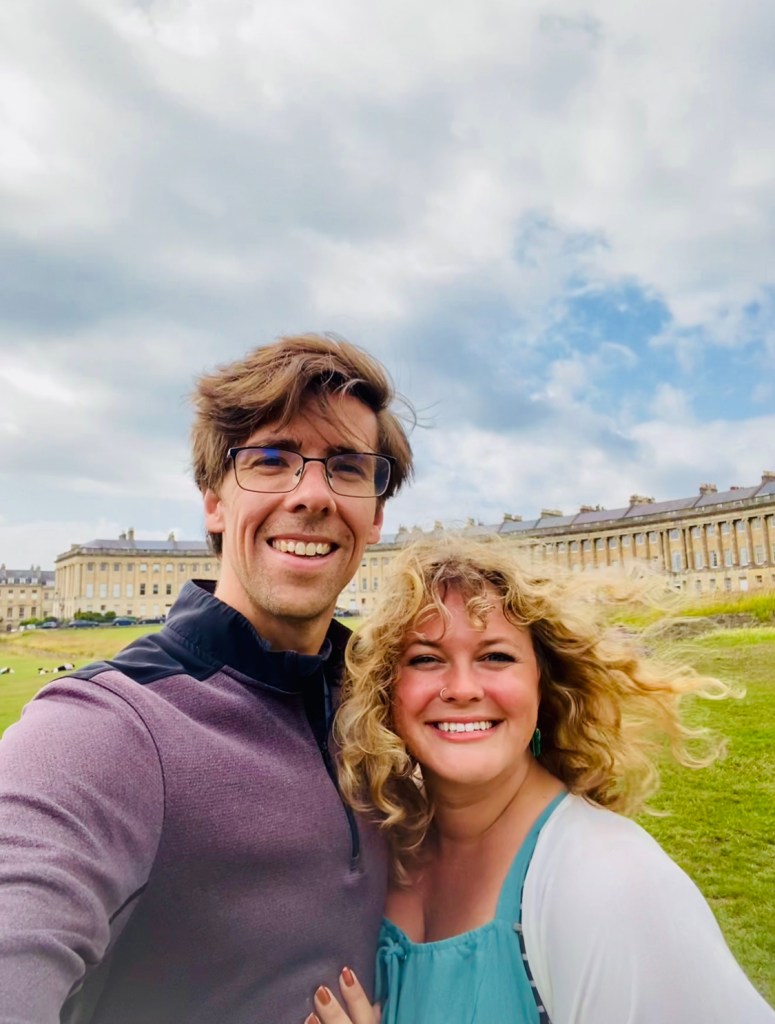
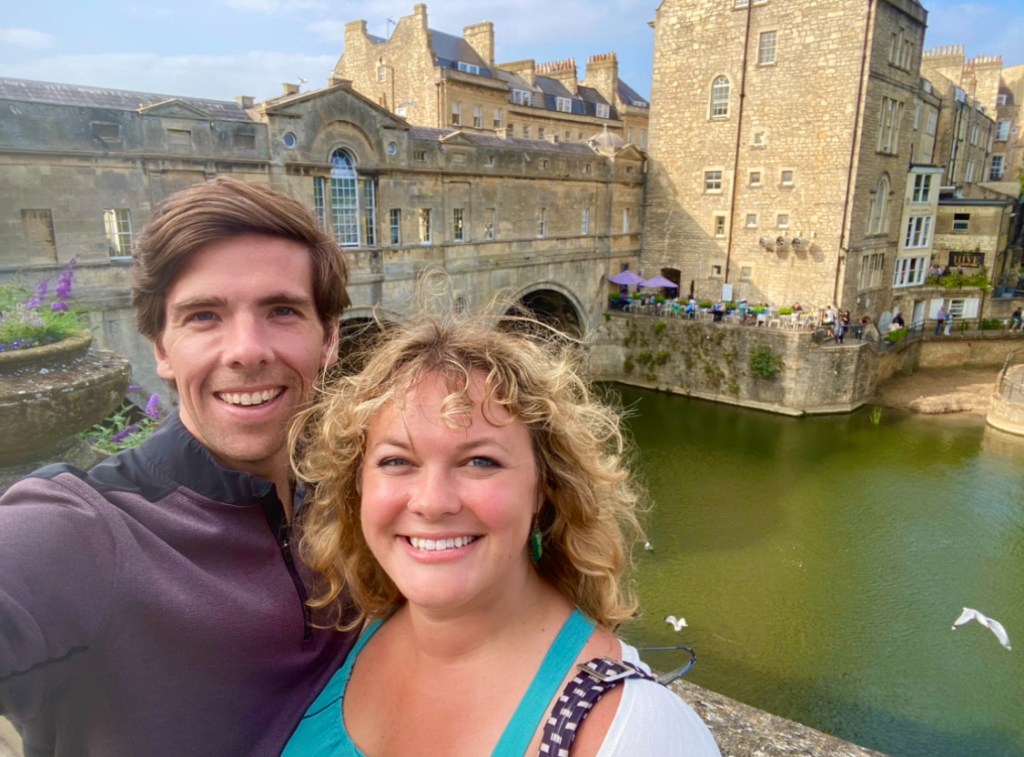
The Roman Baths and the stunning Bath Abbey next door offer tours, but you need to buy tickets way in advance. We didn’t, but we had a great time skipping out on those landmarks. There’s so much to see and do in the city, and you can see the Roman Baths from inside the Pump Room, so I would just do that and move on to the Circus, Pulteney Bridge and the Royal Crescent. The Circus is a round-about road with housing that encloses it in a circle, Pulteney Bridge is similar to Florence’s Ponte Vecchio in that it’s a bridge with a bunch of shops and houses on it, and the Royal Crescent is a half-moon of houses with a large park in front. Check these landmarks out while you shop and bop around the city.
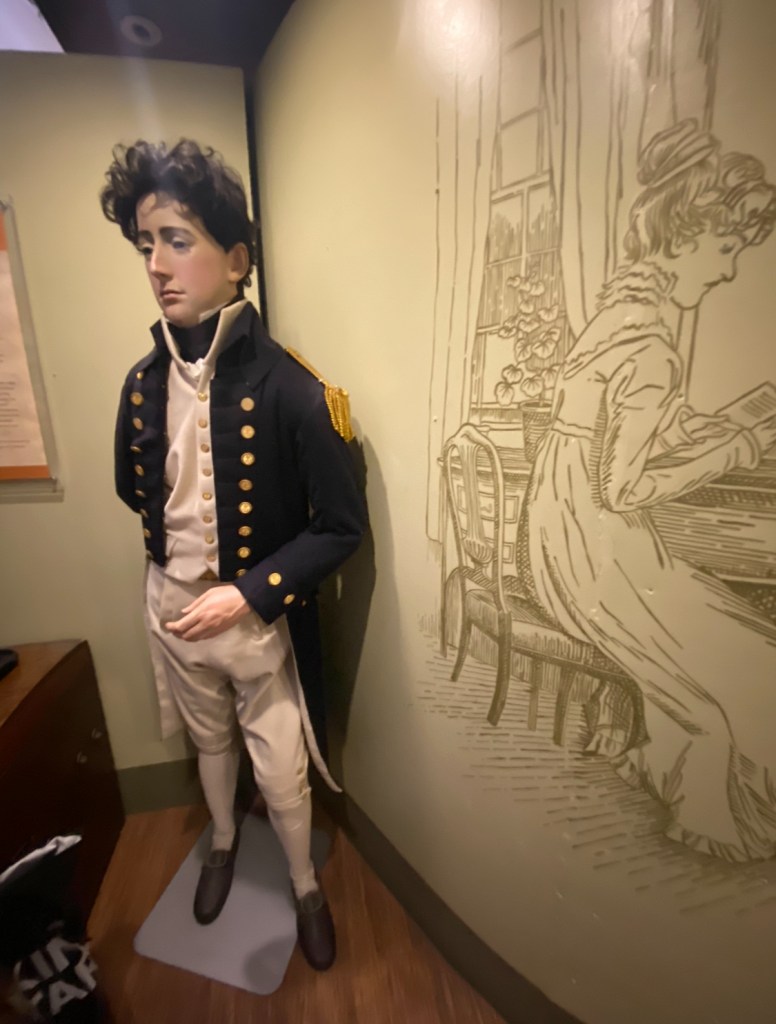
If you’re a literature lover, a romantic girl with a thing for period pieces, or a begrudging boyfriend/husband who’s been promised a really big favor, don’t miss The Jane Austen Centre. The Austen family lived in Bath for a few years, and this mannequin museum is dedicated to what little we know about Jane Austen’s life. (Dedicated readers may remember my post on Romania, where I explained that there are three types of museums: Big Ol’ Museums like the Met and the Louvre, Artifact Museums like the Smithsonian, and Mannequin Museums which don’t really have many artifacts but offer plenty of interesting information about the subject, complete with mannequins in felt costumes.) HOWEVER—this museum does actually have some valuable artifacts to Austen aficionados in the form of movie memorabilia.
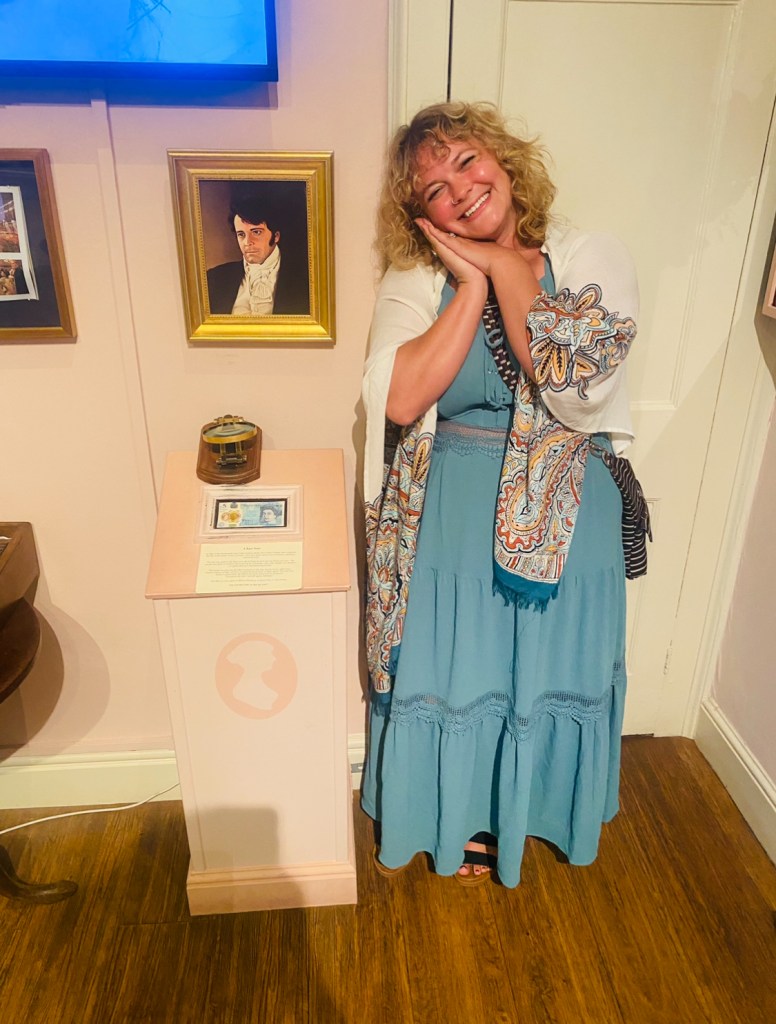
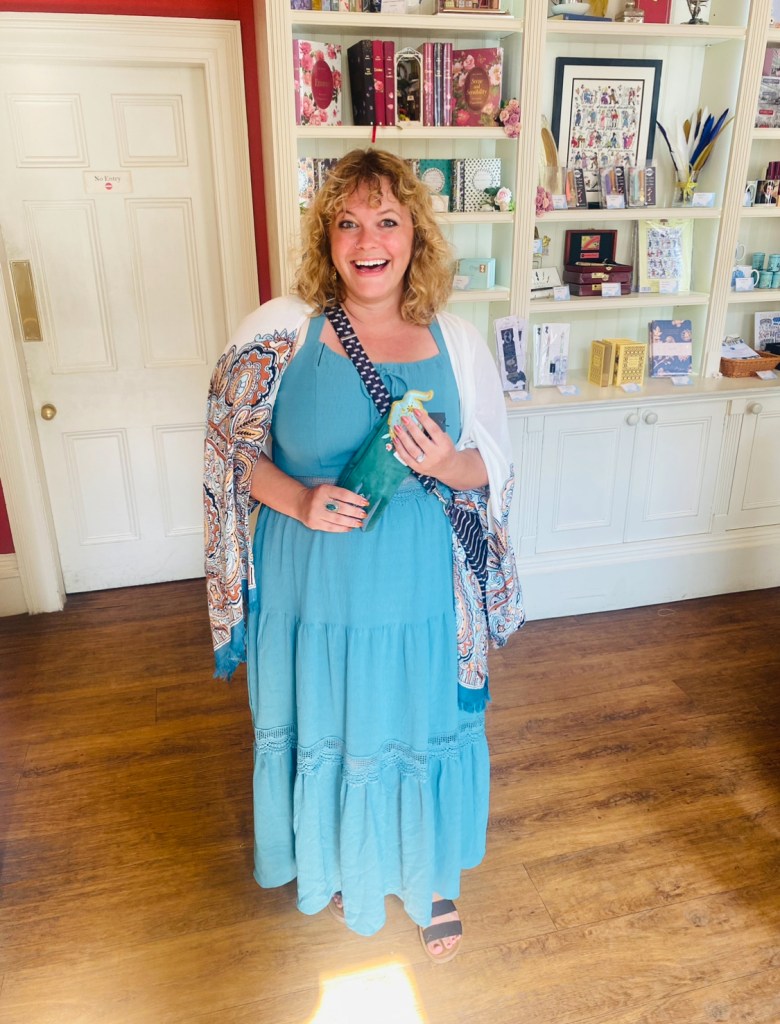
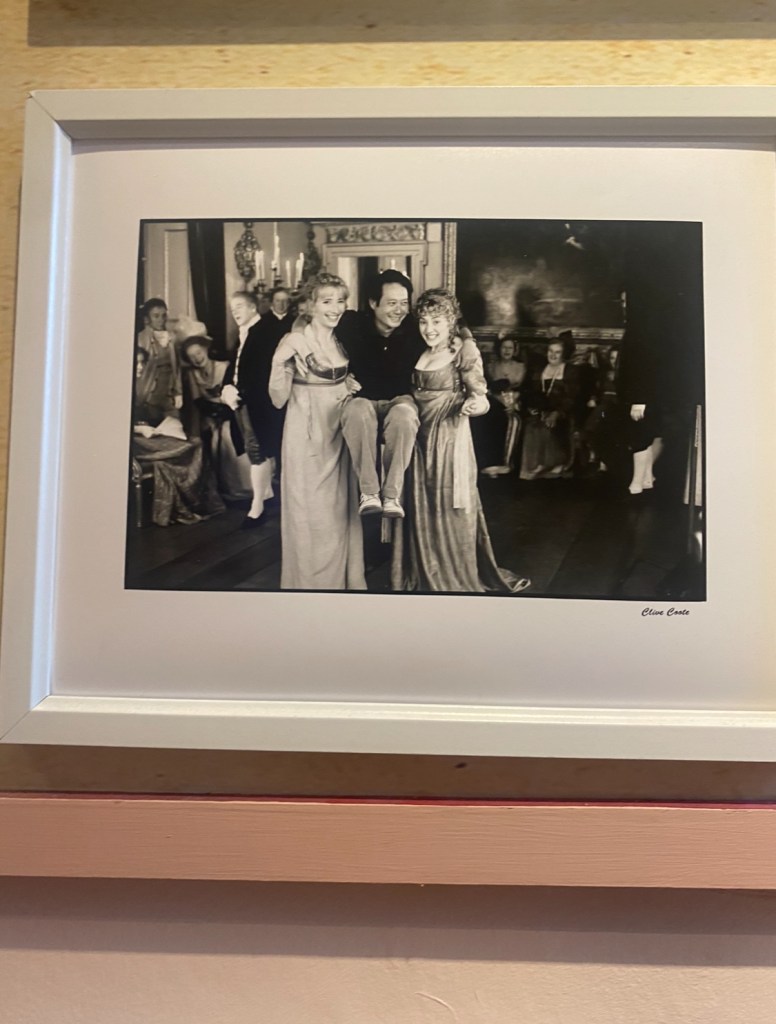
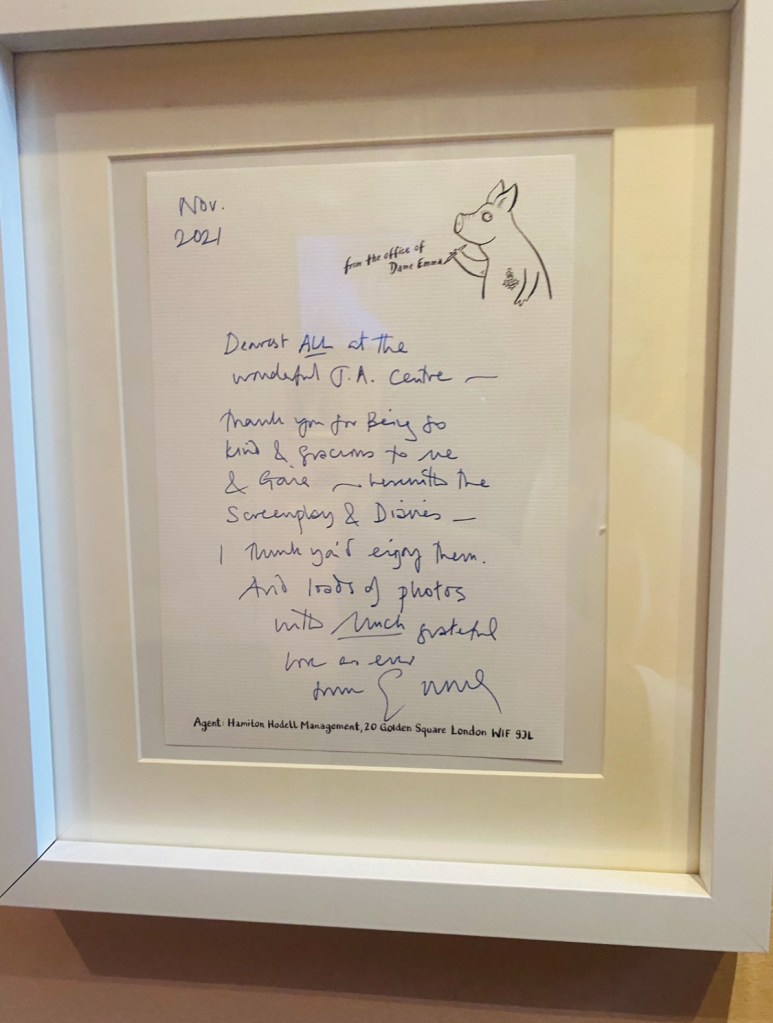
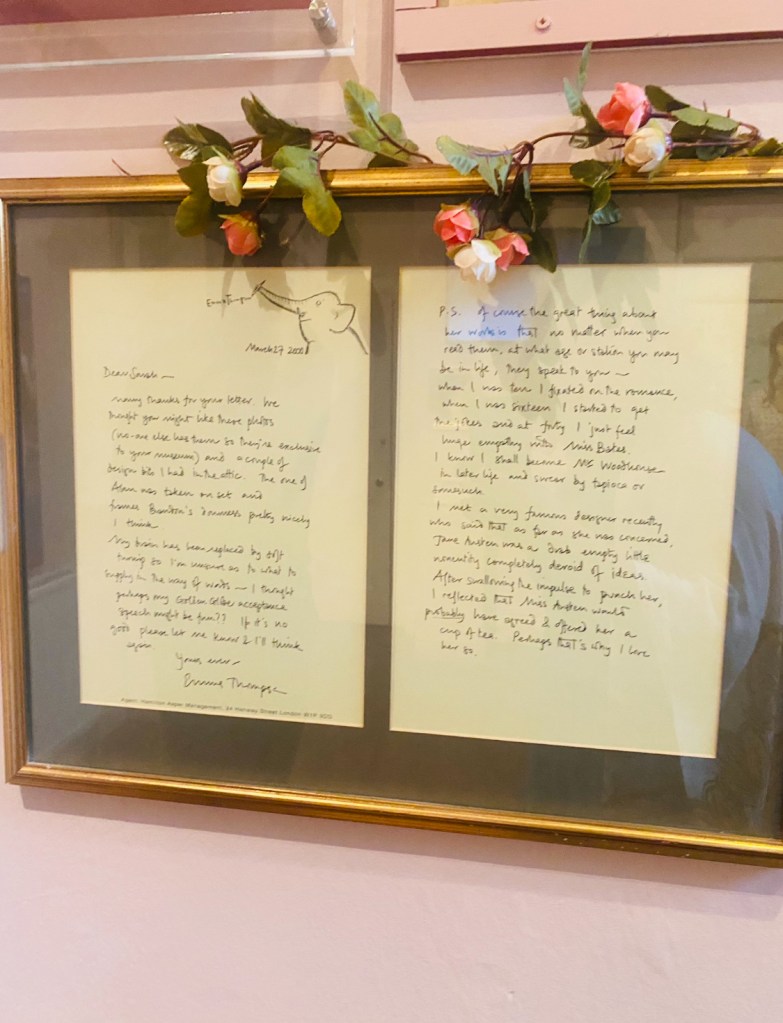
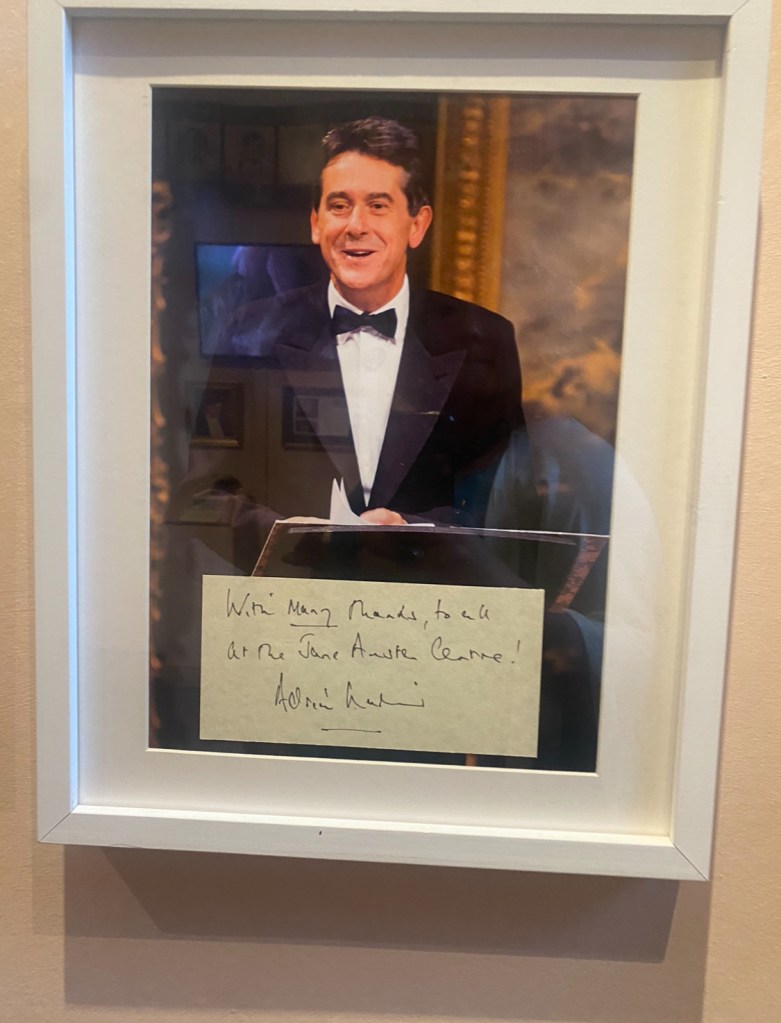
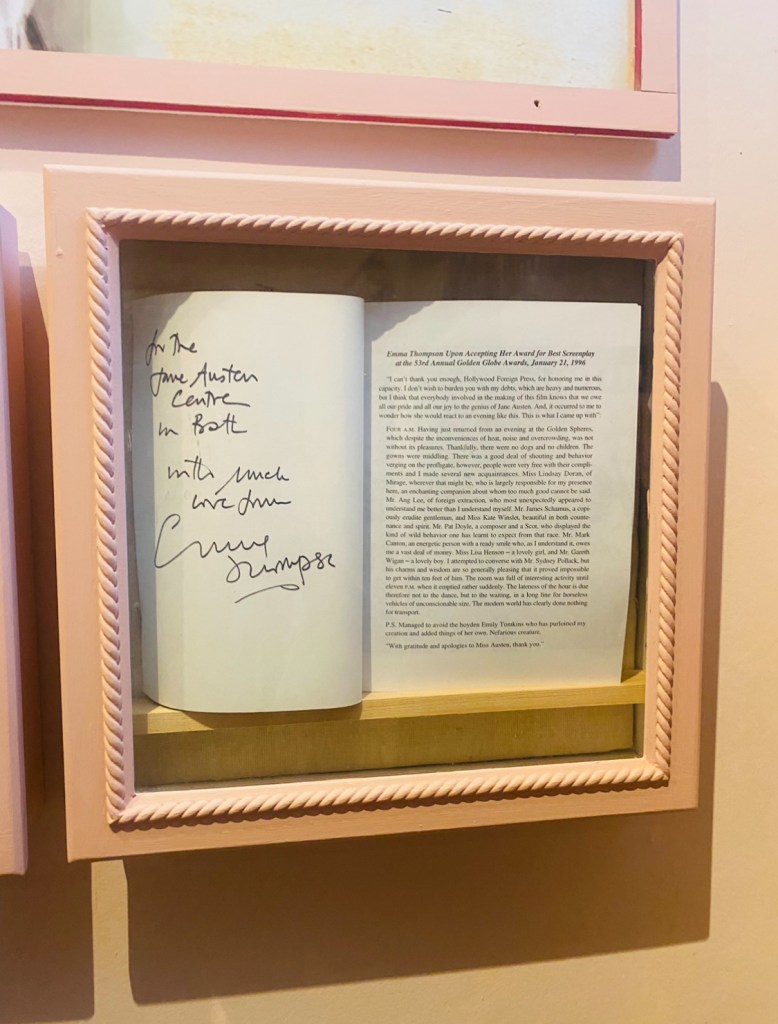
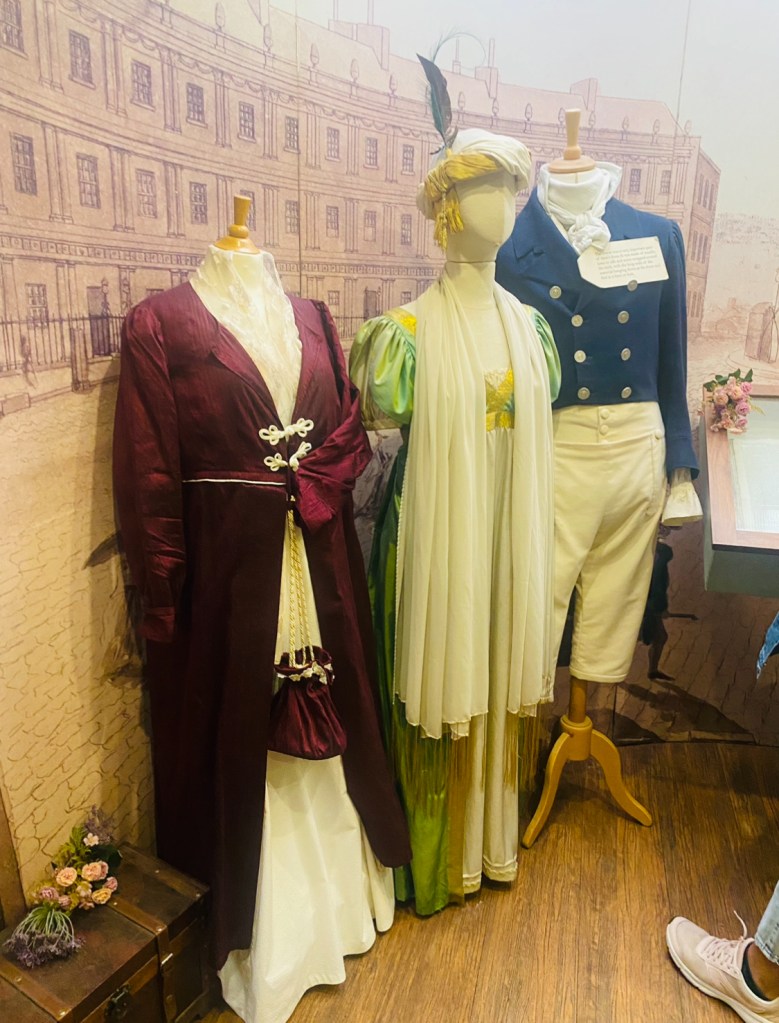
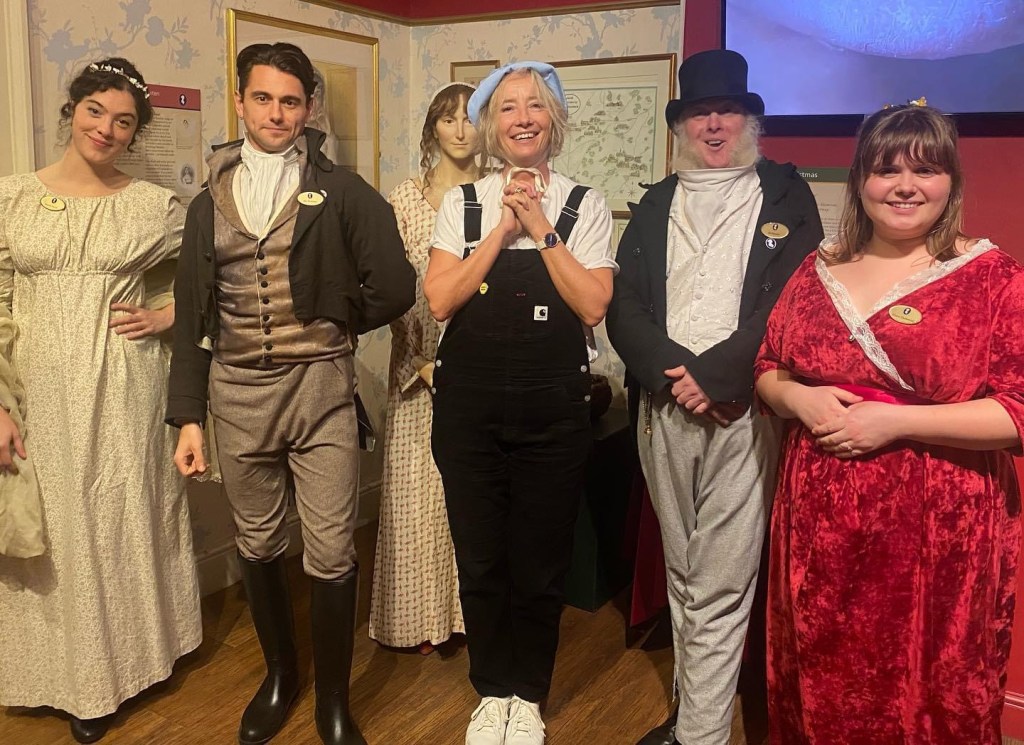
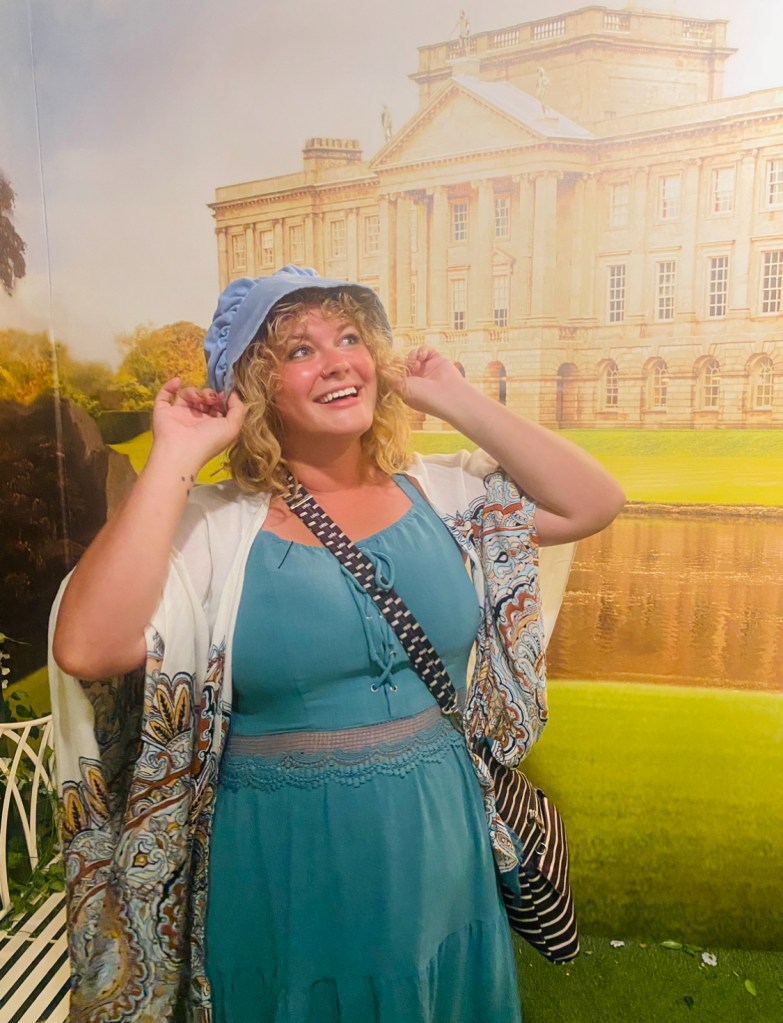
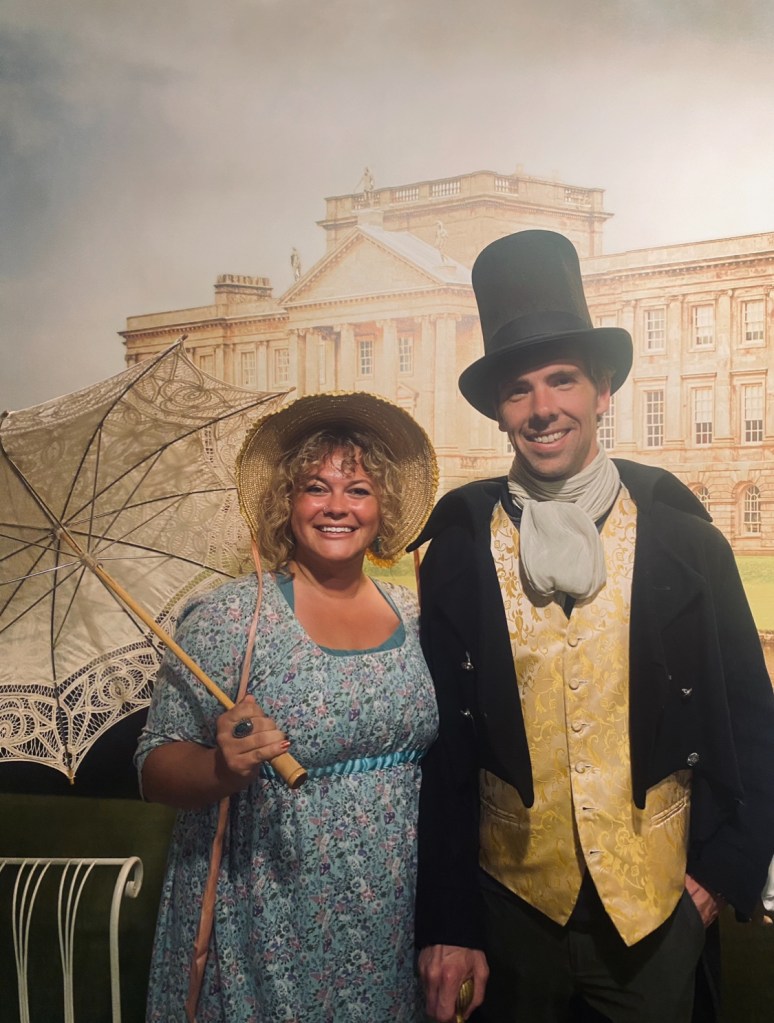
If you’re a real-deal Jane Austen fan, you know that the greatest adaptations of Austen’s works are the BBC miniseries of Pride and Prejudice starring Colin Firth (pls do not make me talk about the Keira Knightley version) and the 1995 movie Sense and Sensibility starring Emma Thompson, Kate Winslet, Alan Rickman and Hugh Grant. *Dame* Emma Thompson, my personal hero, donated most of the artifacts in the “Jane Austen on Film” section of the museum, and wore a blue bonnet throughout the entirety of her visit in 2021, which I also wore, which means maybe our DNA touched within the bonnet, and no that’s not as creepy as it sounds. The end of the tour offers you the chance to dress up in Regency Era clothing and take a picture in front of a Pemberley backdrop with a mannequin that’s supposed to be Mr. Darcy but looks a lot like Mr. Wickham. Take my advice and unashamedly beg and grovel and plead and promise a million favors if your boyfriend or husband will participate in this activity with you, because I promise y’all will have a lot more fun than you think. It was honestly my favorite part of the museum! (Btw, Alex, who nerds out on sports history almost as much as I nerd out on Jane Austen and Shakespeare, was repaid sevenfold during our sports-history-themed trip to Detroit for taking these pictures.)
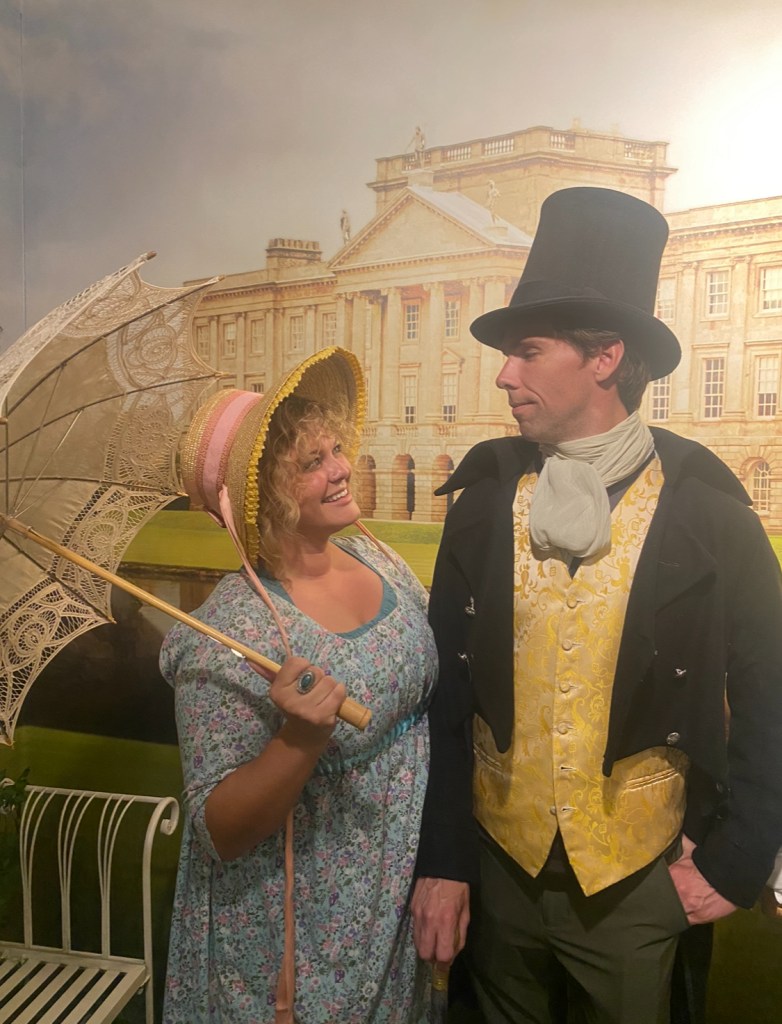
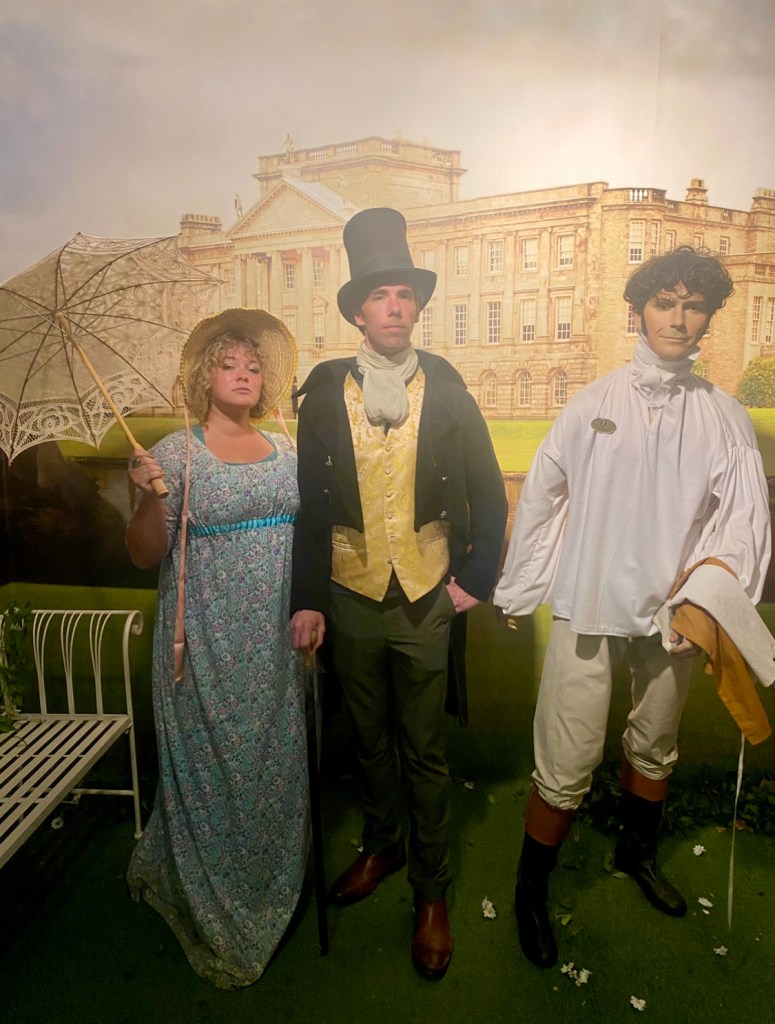
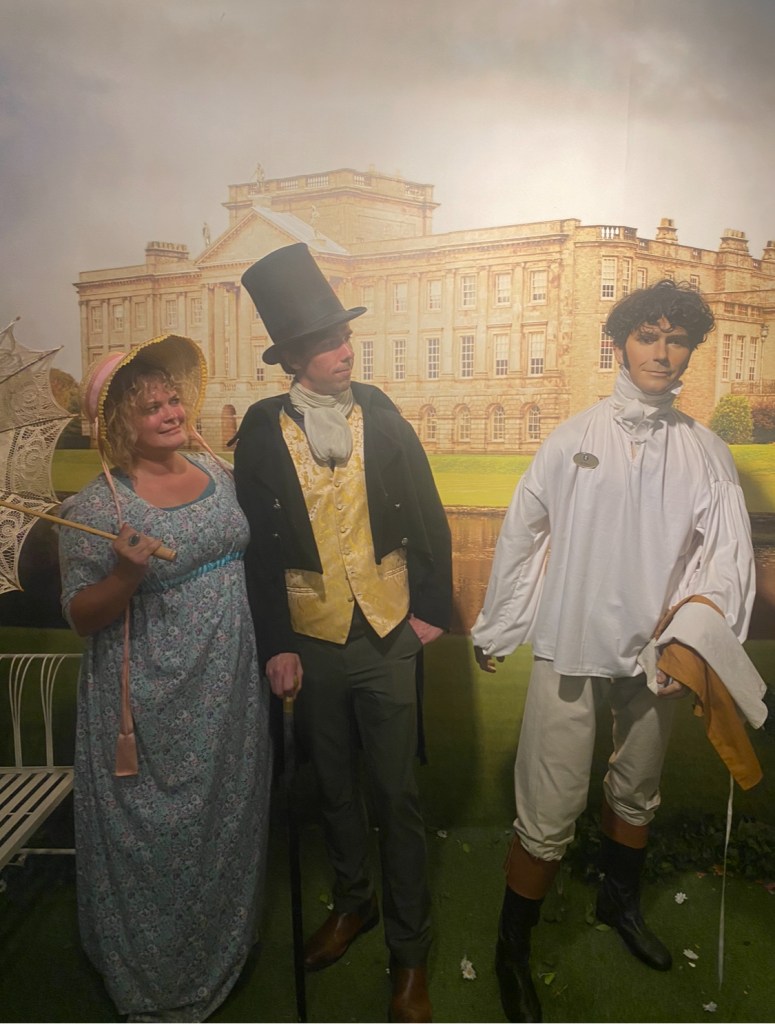
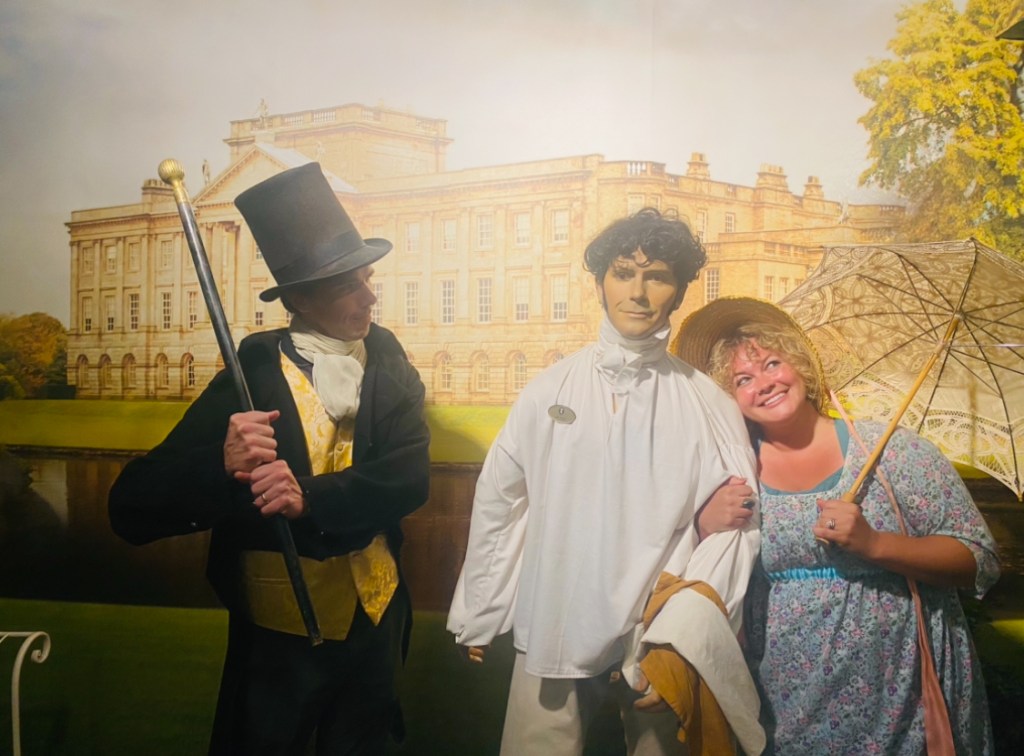
If you haven’t yet had your fill of Jane Austen, make sure to stop by No. 4 Sydney Place, the actual home of the Austen family, which is now an AirBnB. If you’re a MEGAFAN, visit Bath during mid-September for the Jane Austen Festival, where the WHOLE CITY—and hundreds of superfans visiting from all over the world—dress in their stuffiest Regency Era costumes and promenade down Bath’s streets. There’s sword fighting, dancing (there are MULTIPLE balls… rural country balls, fancy Netherfield balls… you’ll be balls-deep in balls, which is a joke Jane Austen would’ve hated), a theatrical walking tour of Bath, and a Jane Austen-themed parade. If only I could be so lucky!!!!
STRATFORD-UPON-AVON
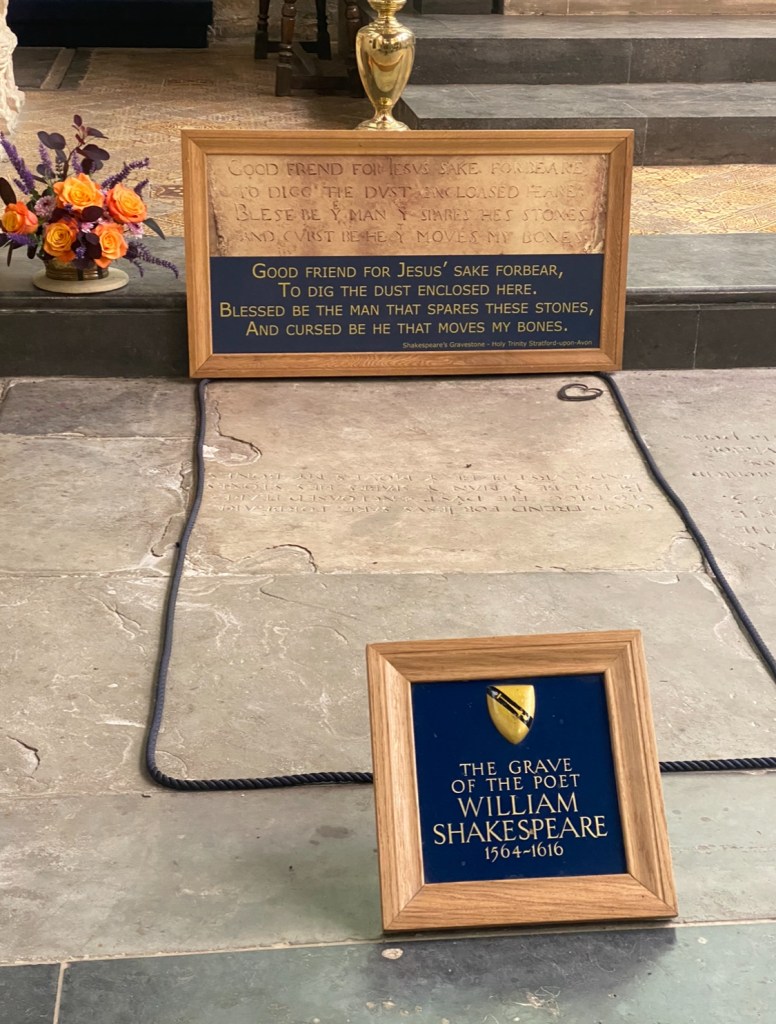
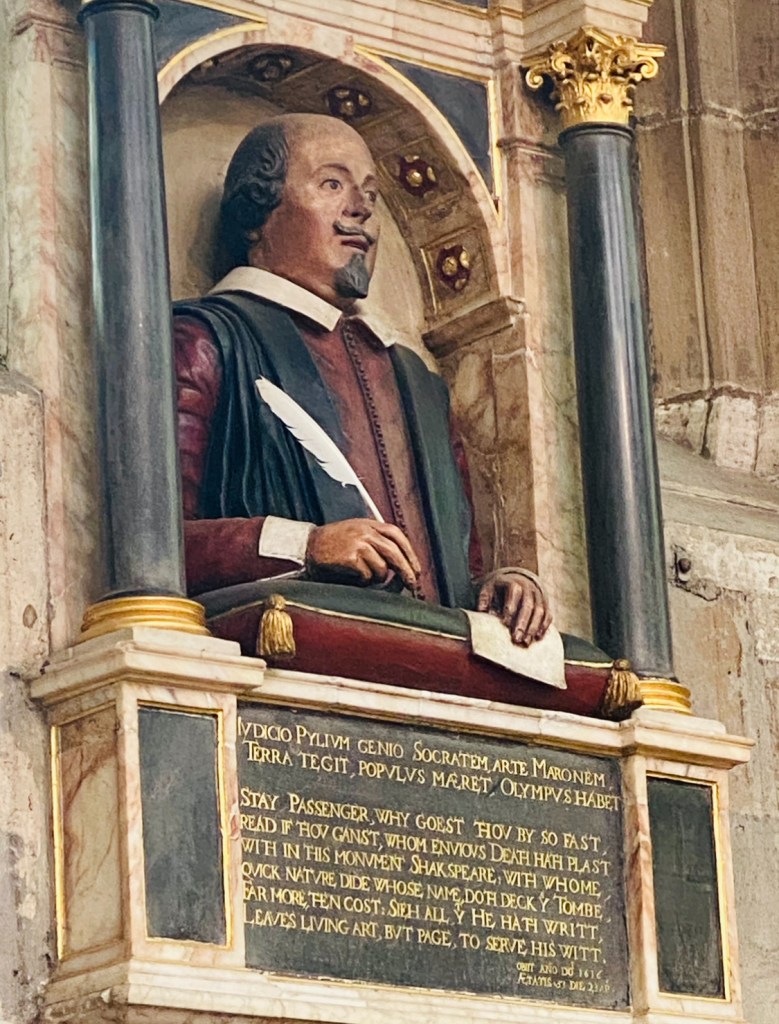
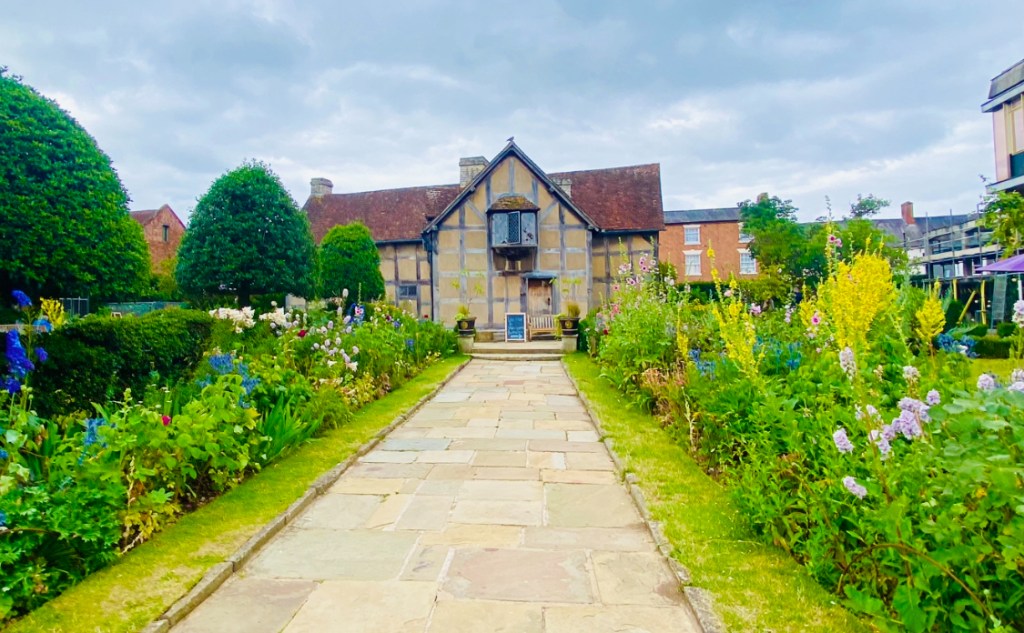
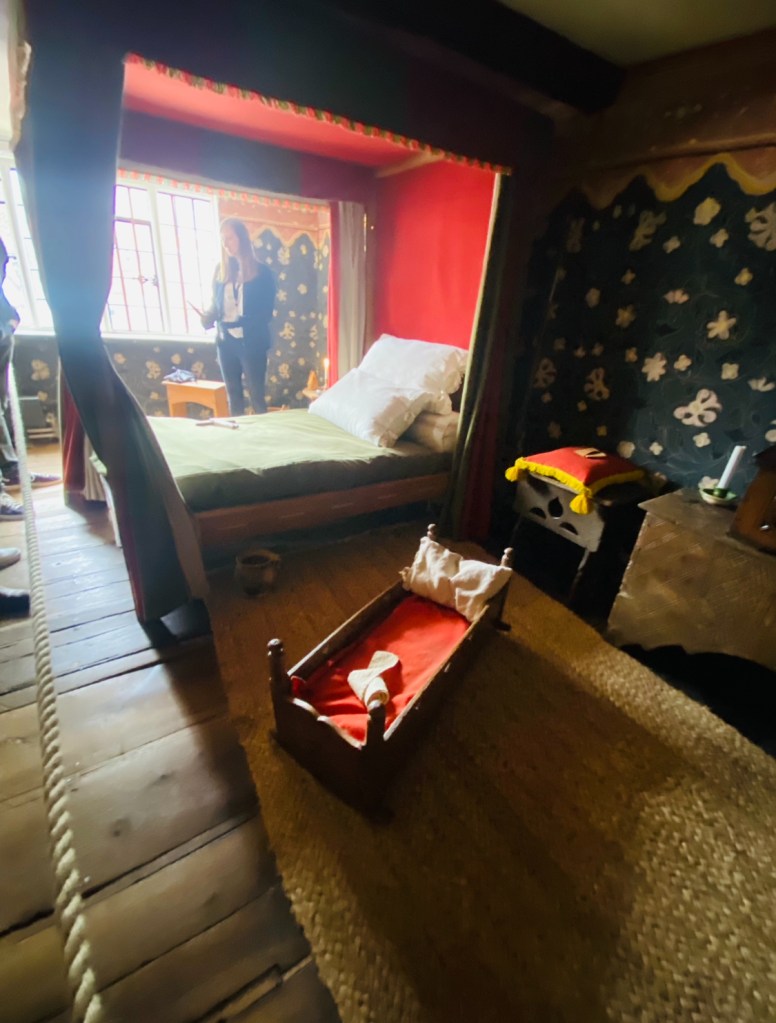
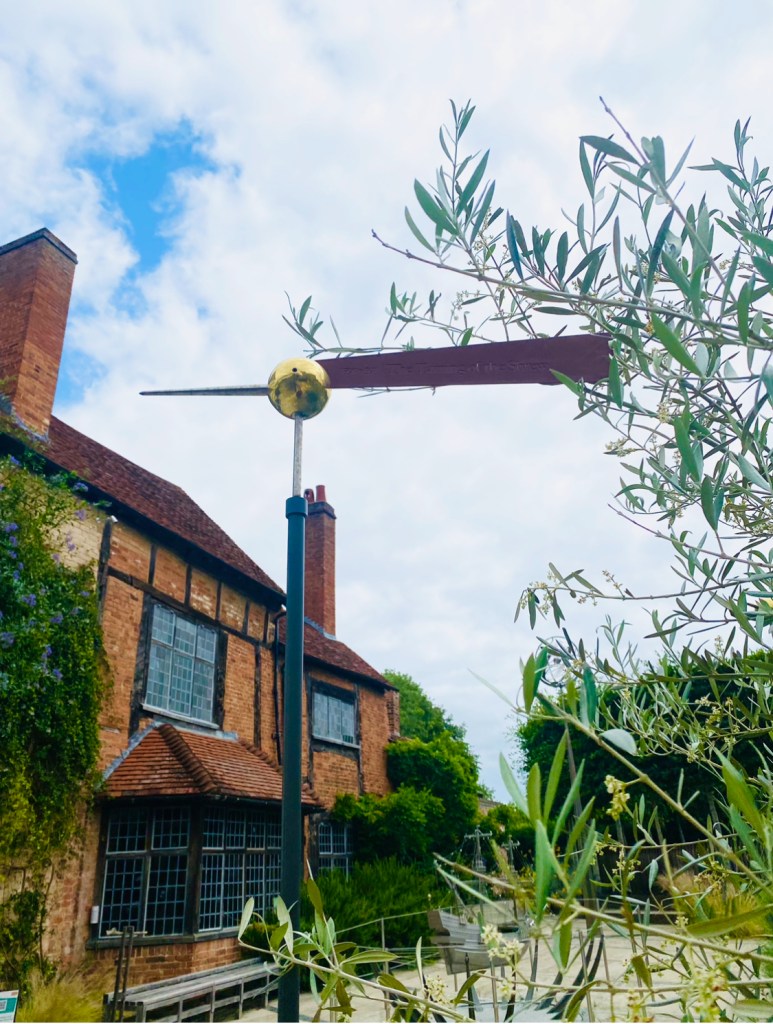
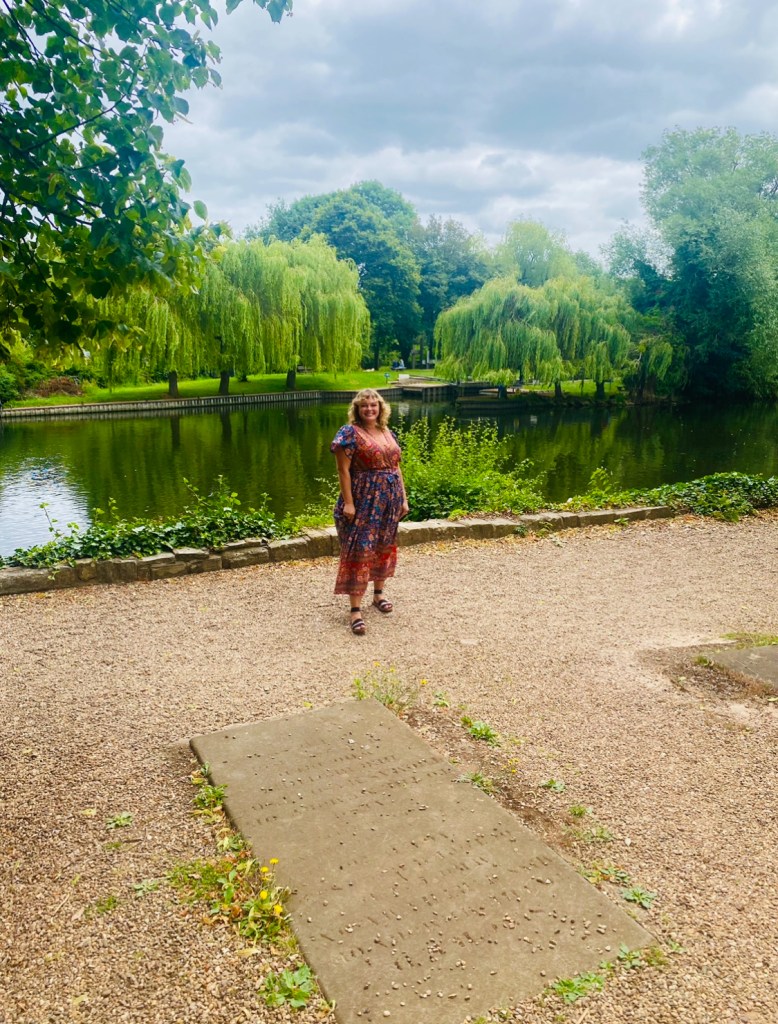
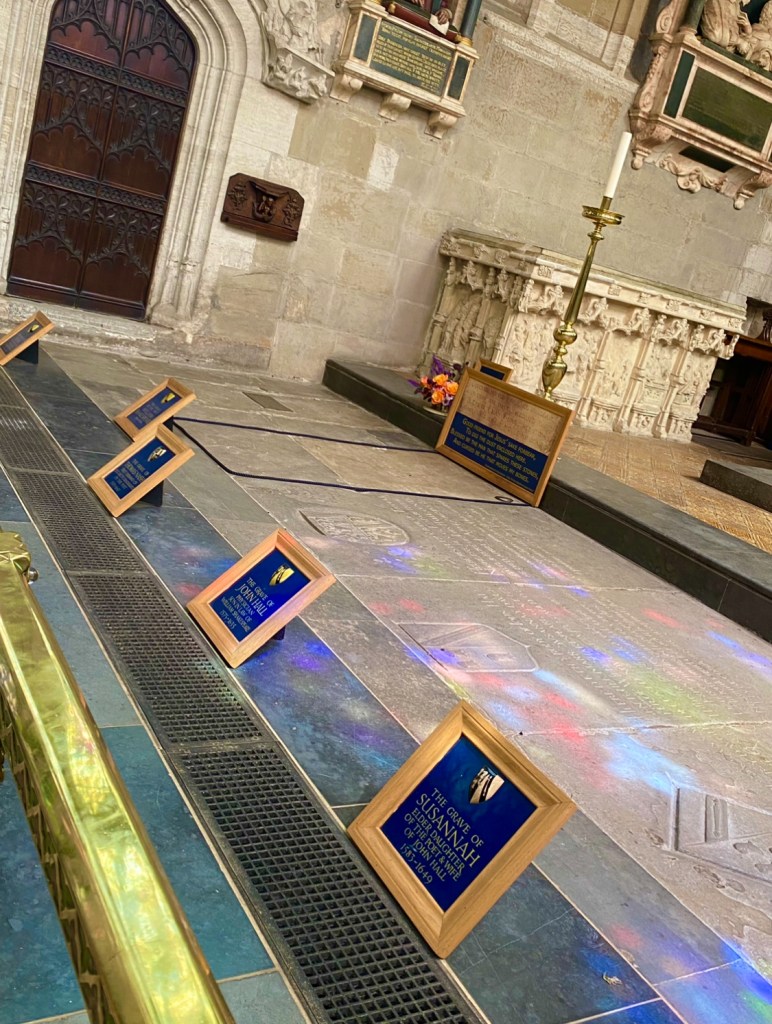
There’s a train that will take you from Bath to Stratford-Upon-Avon in an hour and forty-five minutes, but we went back to Cardiff (wouldn’t actually recommend staying there) and drove to Stratford-Upon-Avon on our way back to London for the last day of our UK trip. This was the pies de resistance of our British vacation, because after being obsessed with William Shakespeare for 20 years and obsessively teaching his works for 10, I finally got to see Shakespeare’s birthplace and final resting place. (Fun fact: Shakespeare died on his 52nd birthday, two blocks away from where he was born.)
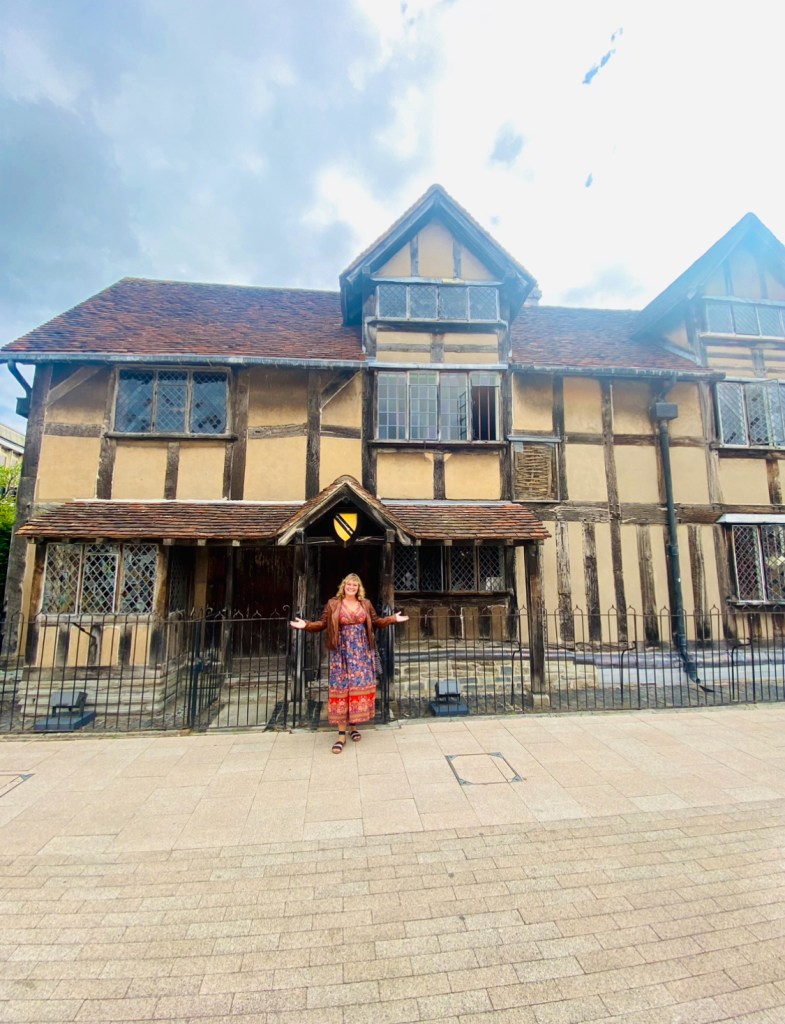
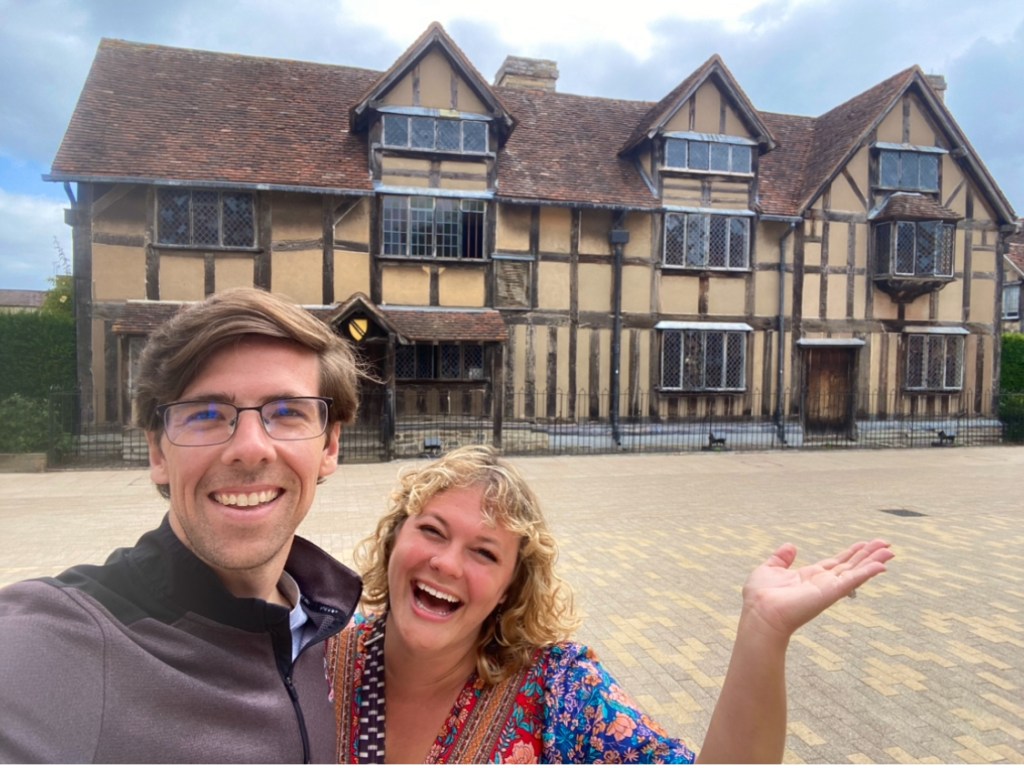
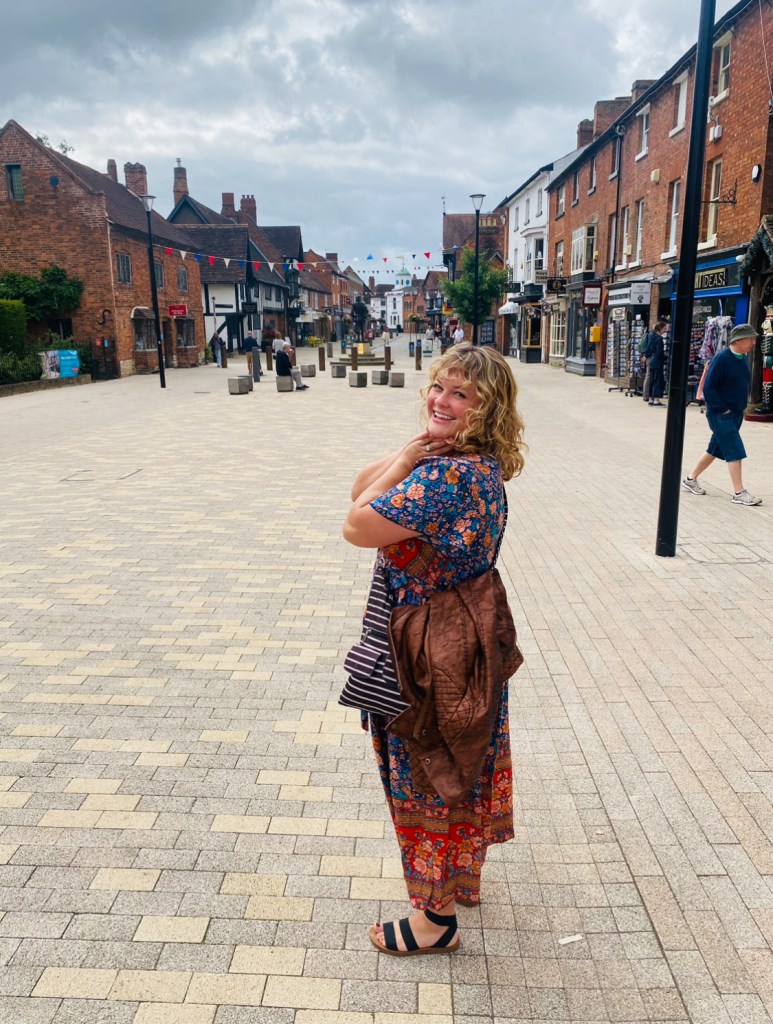
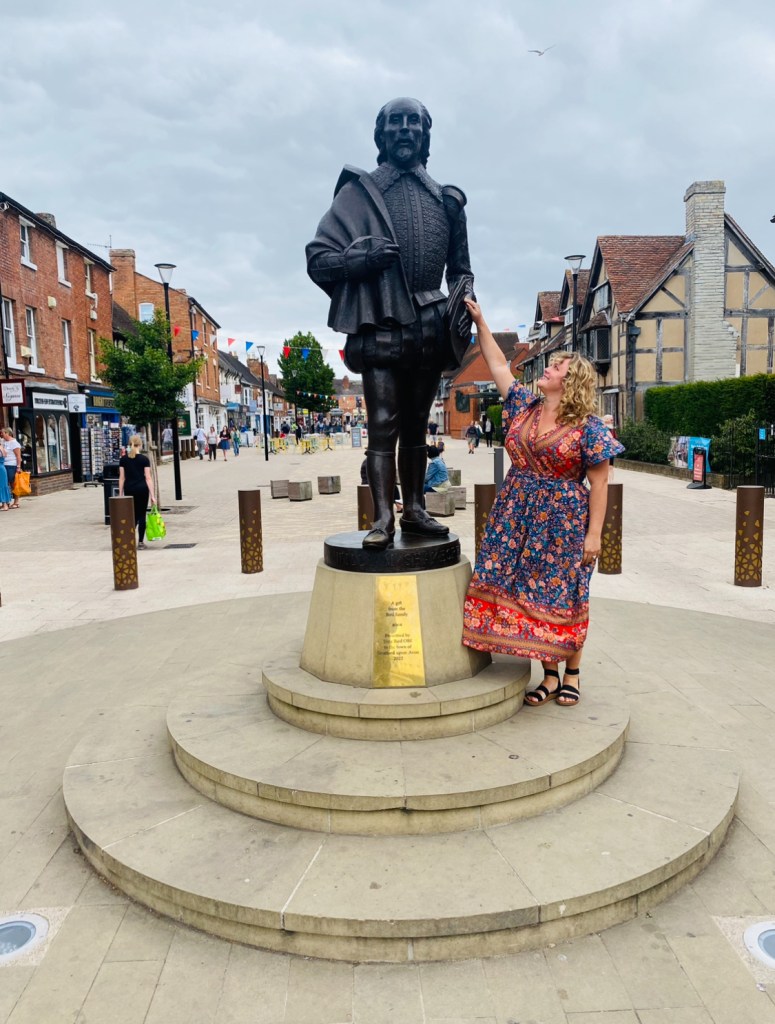
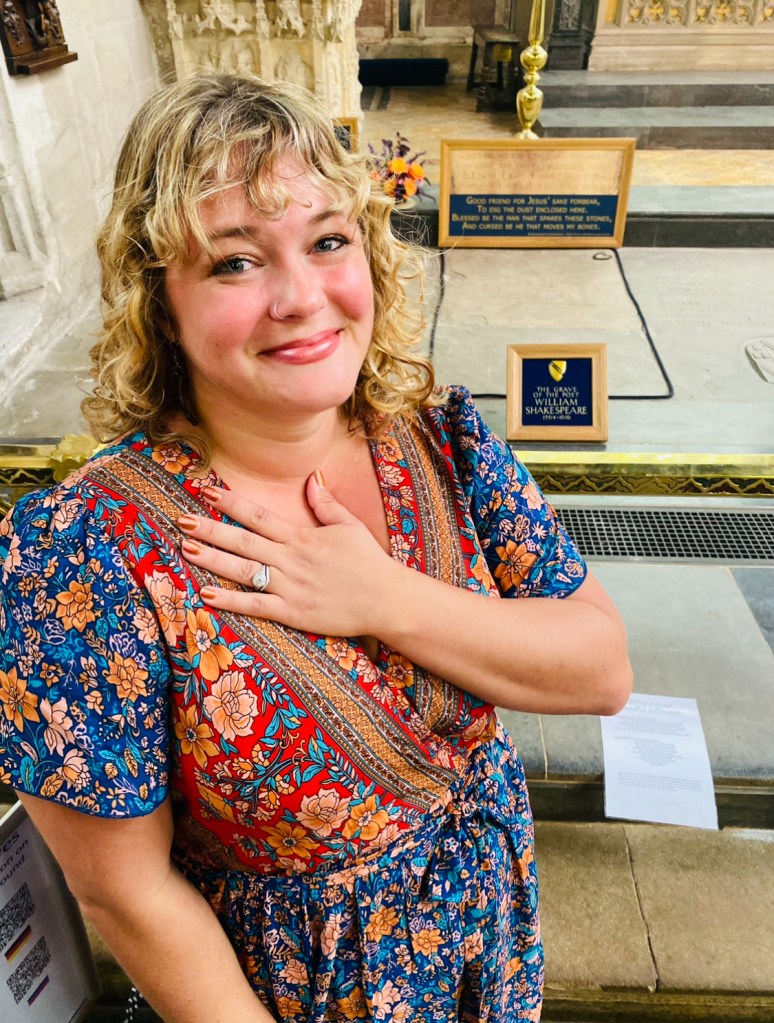
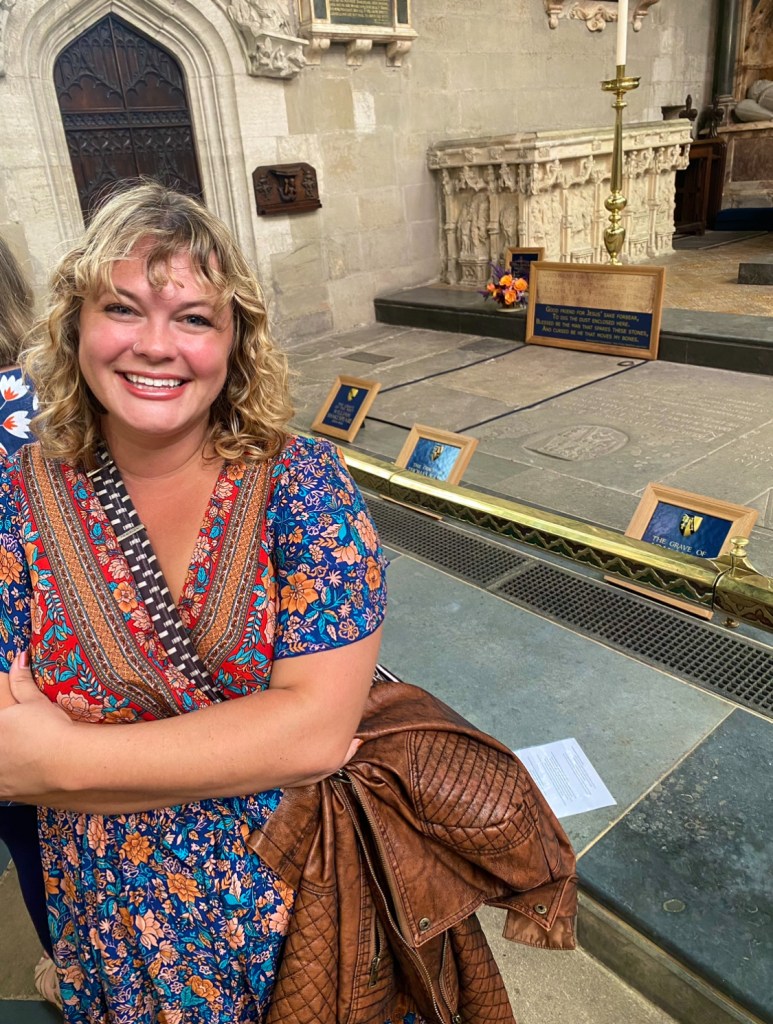
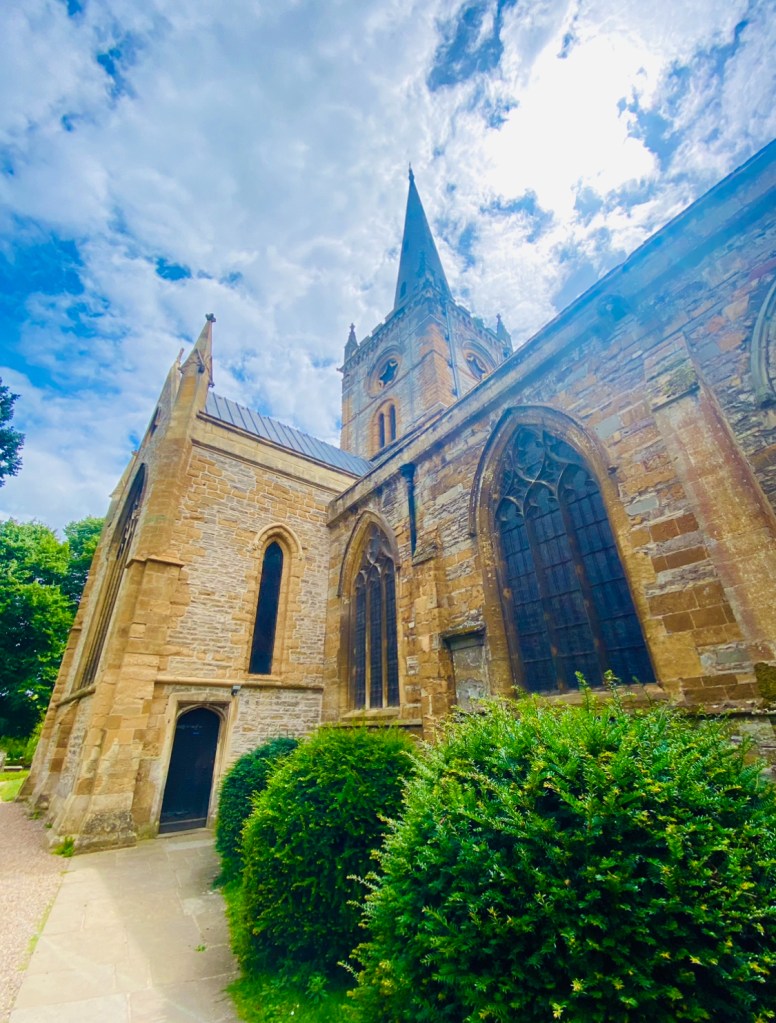
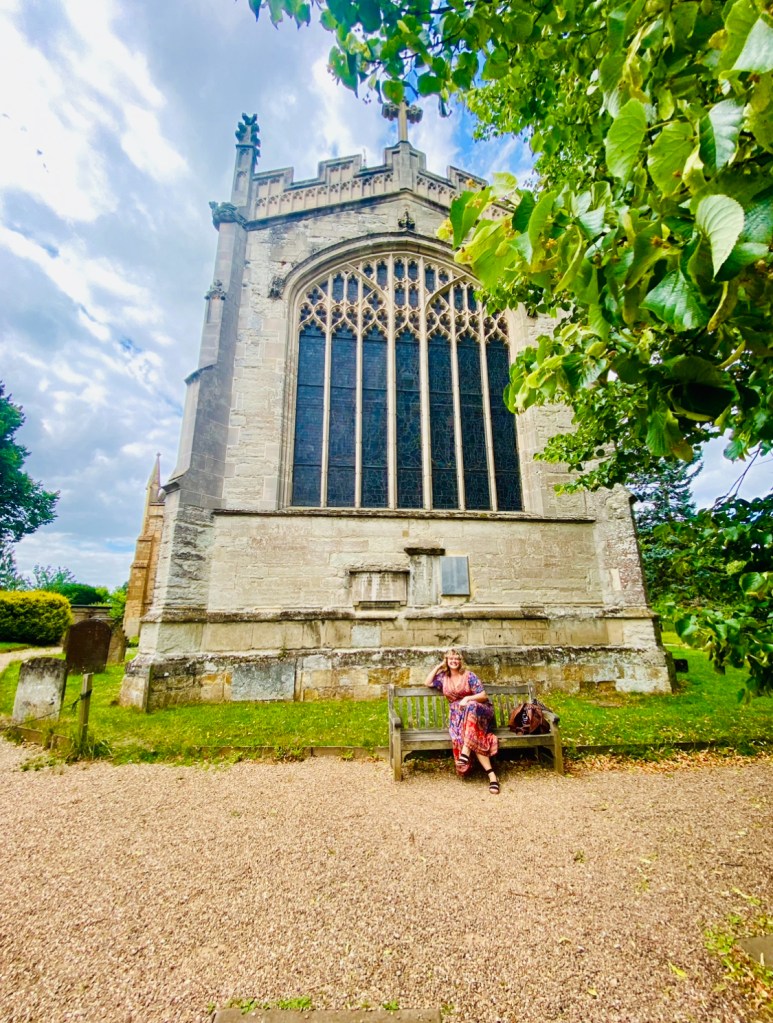
I’m assuming if you’ve made it all the way down to this part of the blog and you managed to slog through me gushing about Jane Austen and the Regency Era that you, too, are a book-hoarding appreciator of famous literature. So I can trust you to understand that, after ten years of showing Shakespeare’s house in a slideshow to my students and imagining myself there, actually seeing it with my own two eyes put me into a catatonic state of joy. And seeing where the greatest writer who ever lived is buried at Trinity Church, to know that the man who wrote such beautiful stories that made me believe I could do it too, brought me to tears… and made everyone in the sanctuary really uncomfortable.
Stratford-Upon-Avon, like Bath, takes about a day to really get through but is definitely doable as a half-day excursion. Go to the Shakespeare Birthplace Trust’s website to procure your tickets. I’d recommend getting the Shakespeare’s Story package: it’s 26 pounds and will give you access to Shakespeare’s childhood home and the home he bought and died in, as well as his wife Anne Hathaway’s cottage. (No, not that Anne Hathaway.) Even if you don’t want to visit all three sites, it’s a much better deal than buying tickets separately.
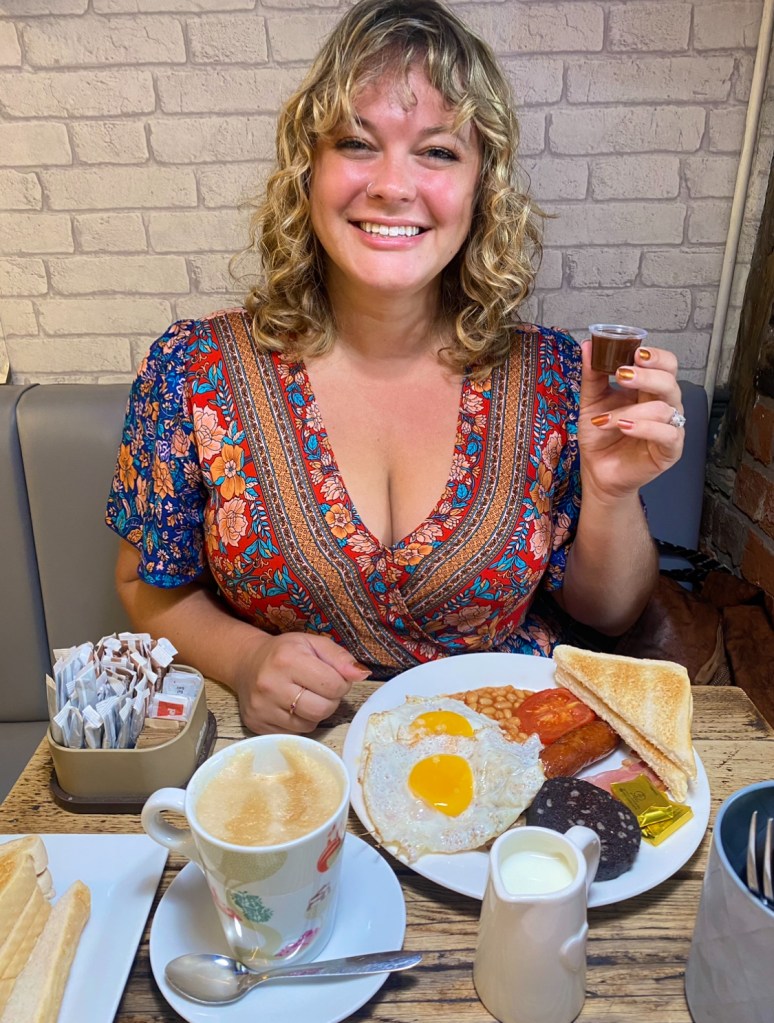
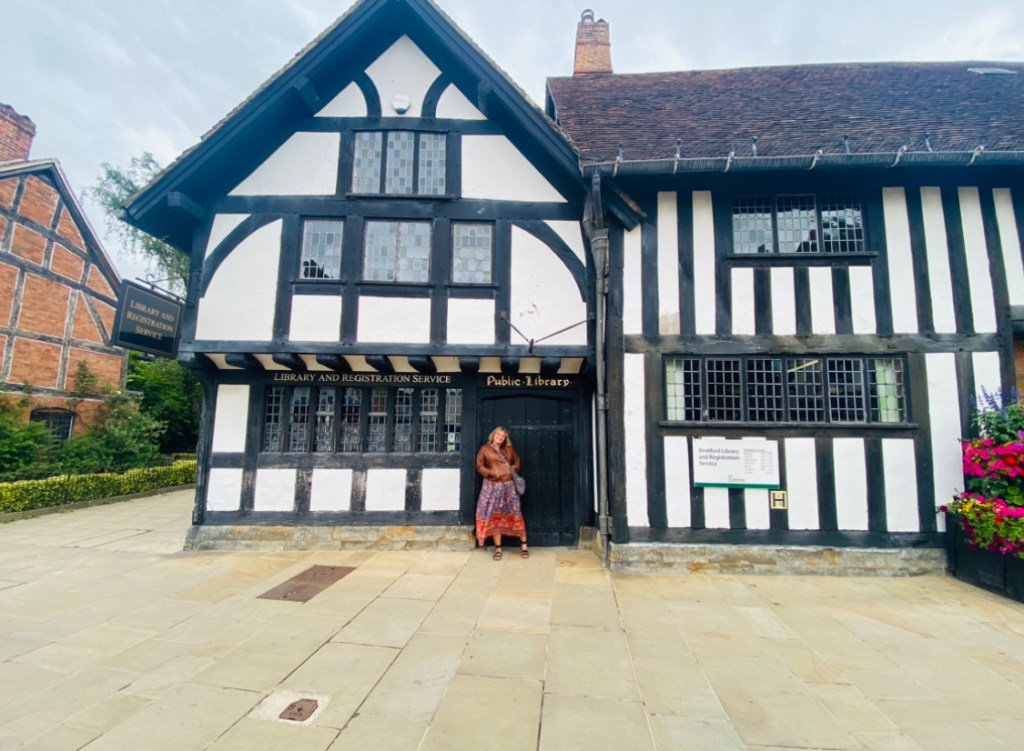
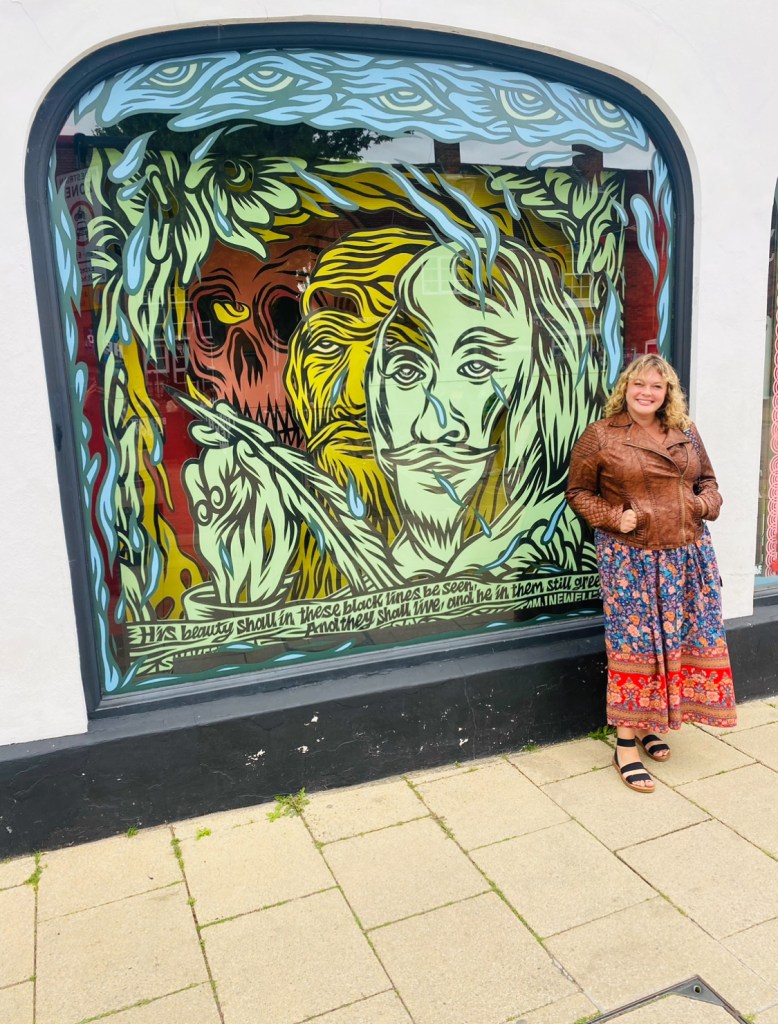
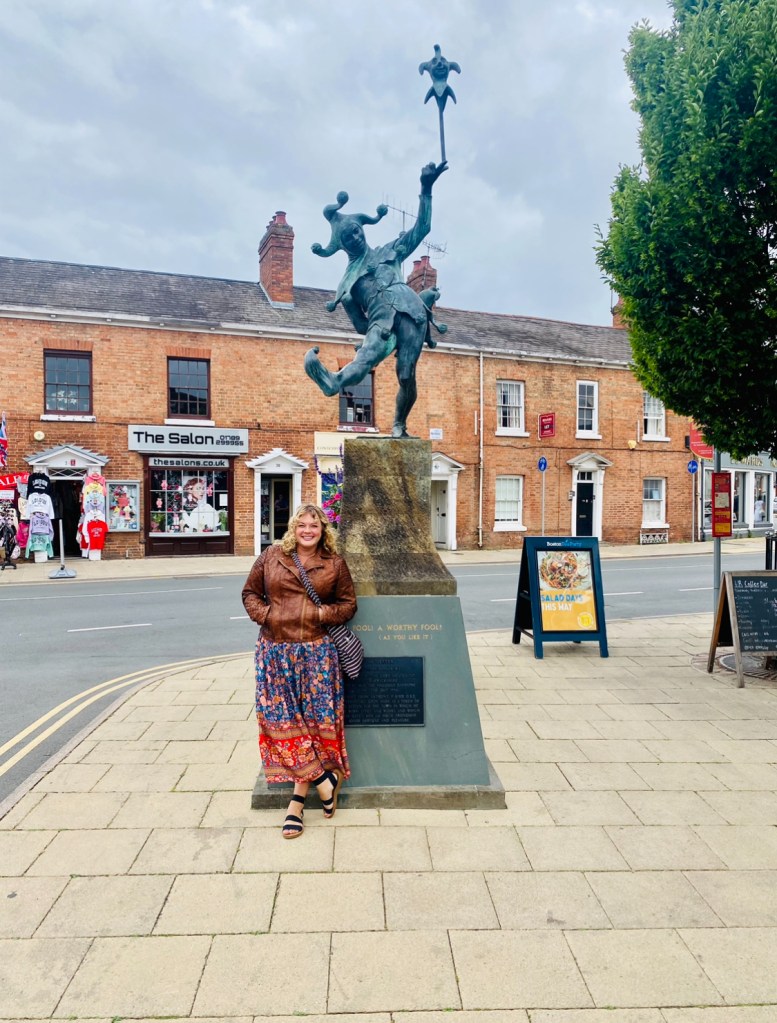
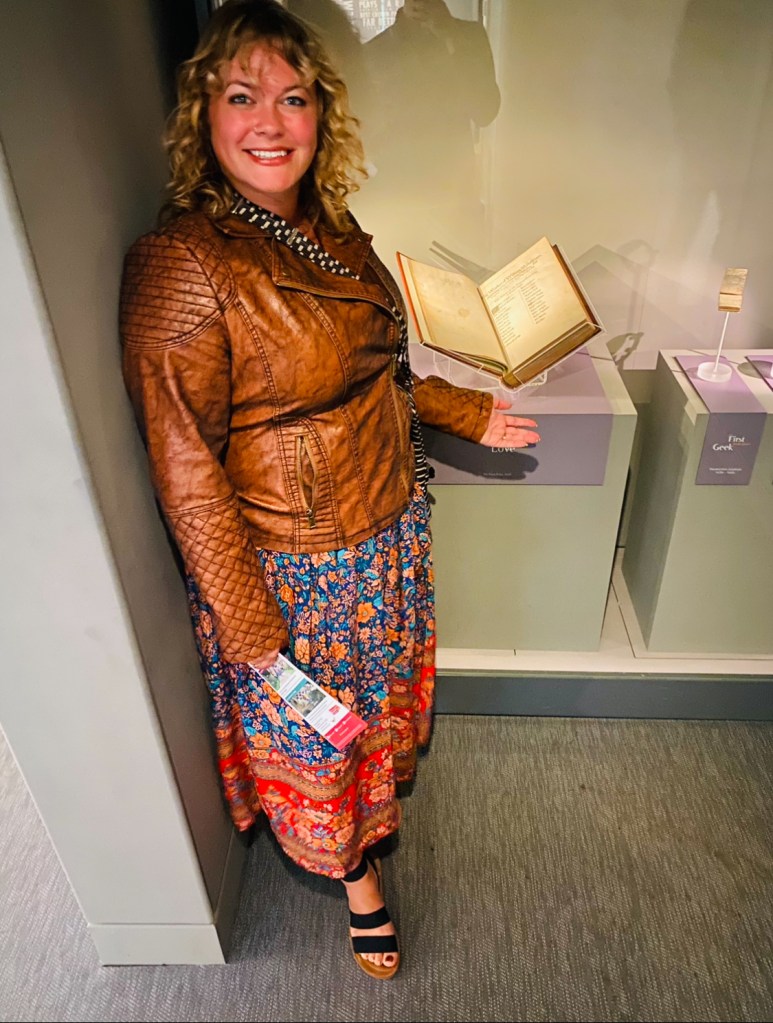
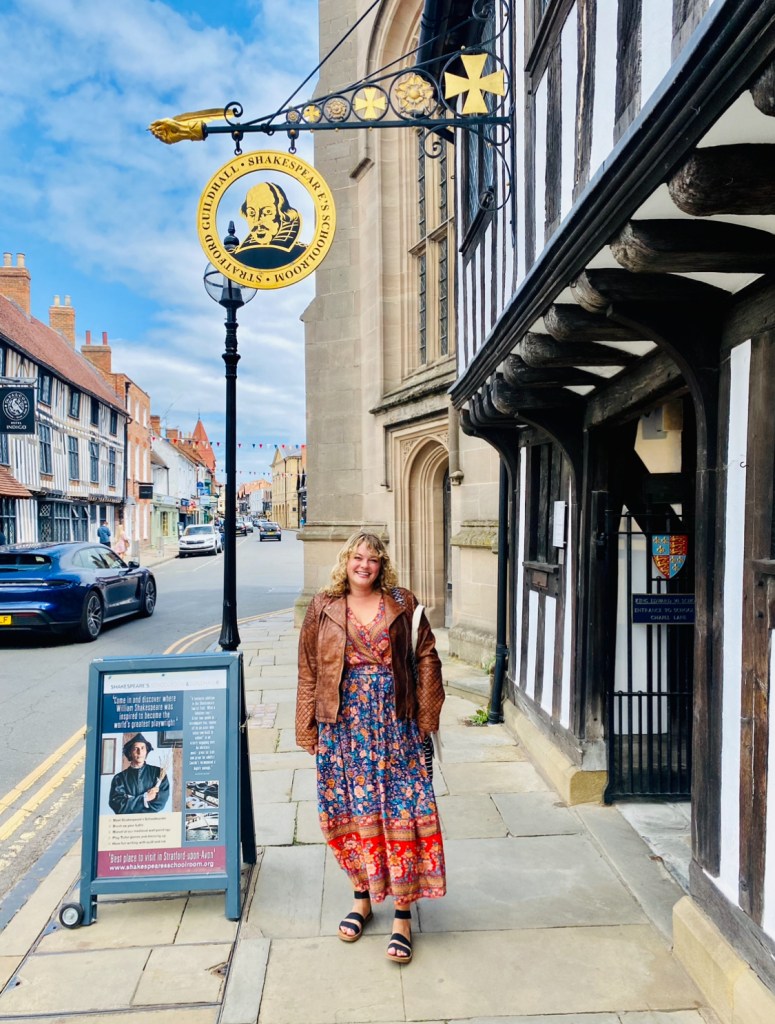
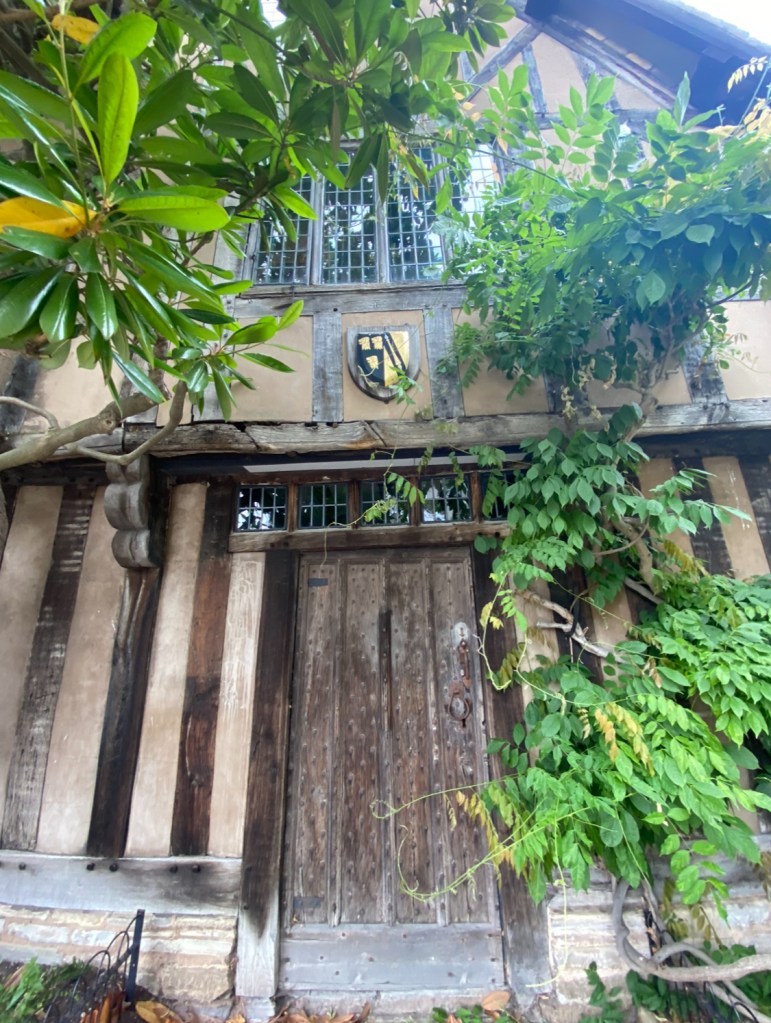
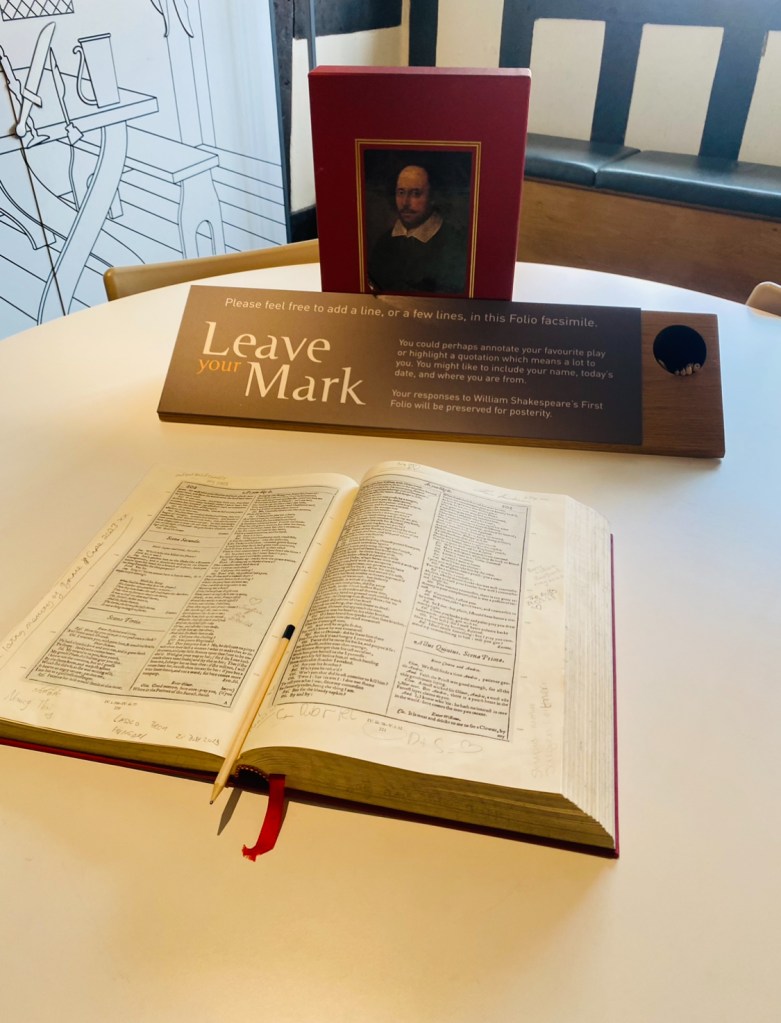
Just like Castle Combe, I’d recommend getting there early. Parking is cheaper a block down the road, and if you get there early enough before the museum opens, I’d recommend going to Benson’s Restaurant and Tea Rooms and getting a full English breakfast. I’ll admit, while British cuisine hardly thrilled me, I did grow to love slathering baked beans on a fried egg over toast. Trust me: don’t knock it ‘til you’ve tried it. Or, as my homeboy Billy Shakes once said, “Our doubts are traitors, and make us lose the good we oft might win by fearing to attempt.”
(He also said “Thy breath stinks with eating toasted cheese.”)
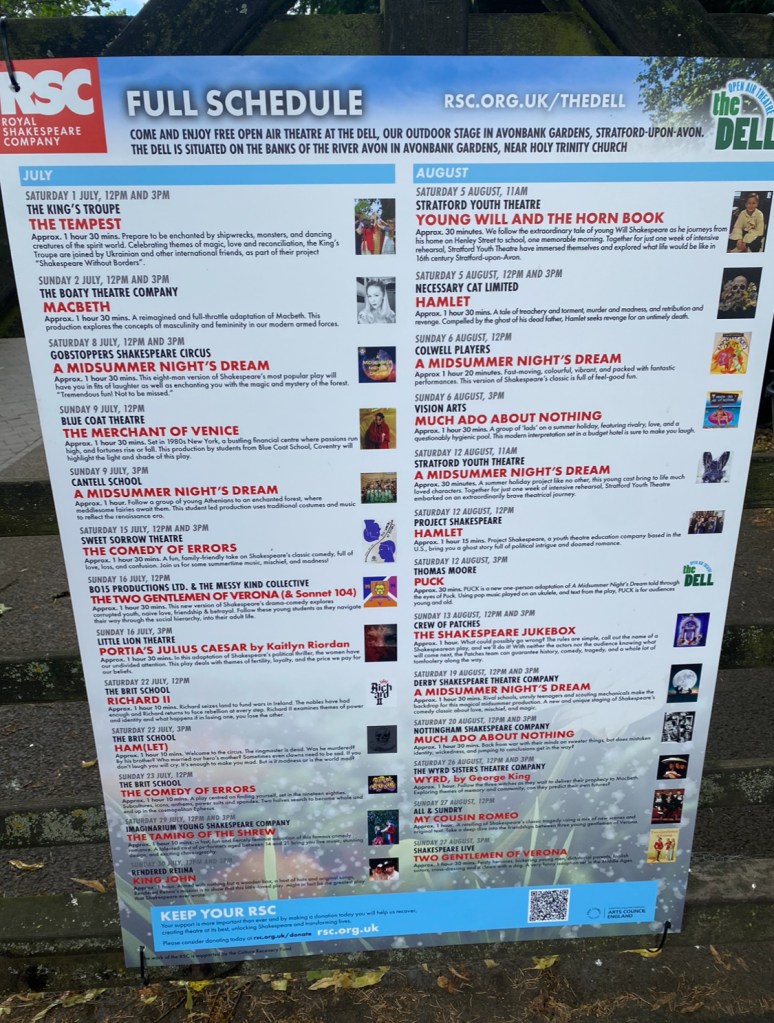
Well, brevity is the soul of wit, and neither brevity nor wit can be found in this blog, so let’s wrap this up. If you’re looking for a Shakespearean theater experience in Stratford-Upon-Avon, you do have the opportunity to watch The Royal Shakespeare Company perform Shakespeare’s plays at the Royal Shakespeare Theater. We were fortunate enough to see the RSC perform Macbeth (excuse me, ~The Scottish Play~) specifically Lady Macbeth’s dying scene and Macbeth’s “tomorrow and tomorrow and tomorrow” speech, which meant a lot to me because Macbeth was my first Shakespeare play and I got to play Lady Macbeth in 7th grade English, and all of that was for free in the park right next to Trinity Church where Shakespeare and his whole family are buried. Watching the play that made me love Shakespeare, the part that I played, while the actual Shakespeare rested next to me??? It was an emotionally compromising day.
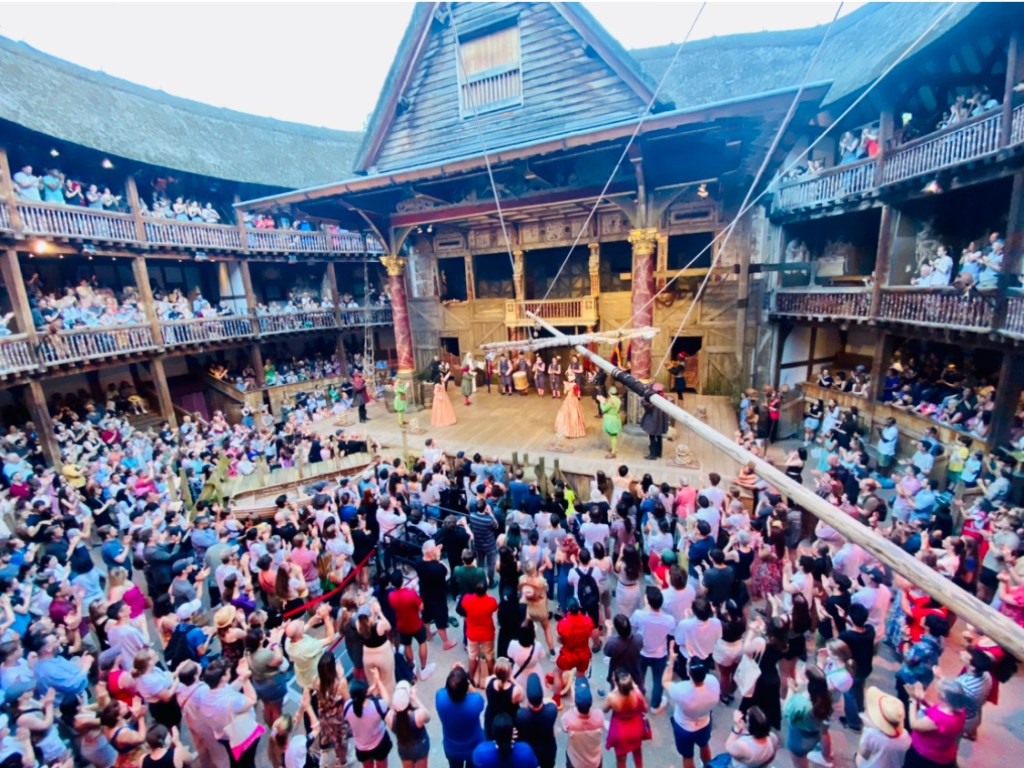
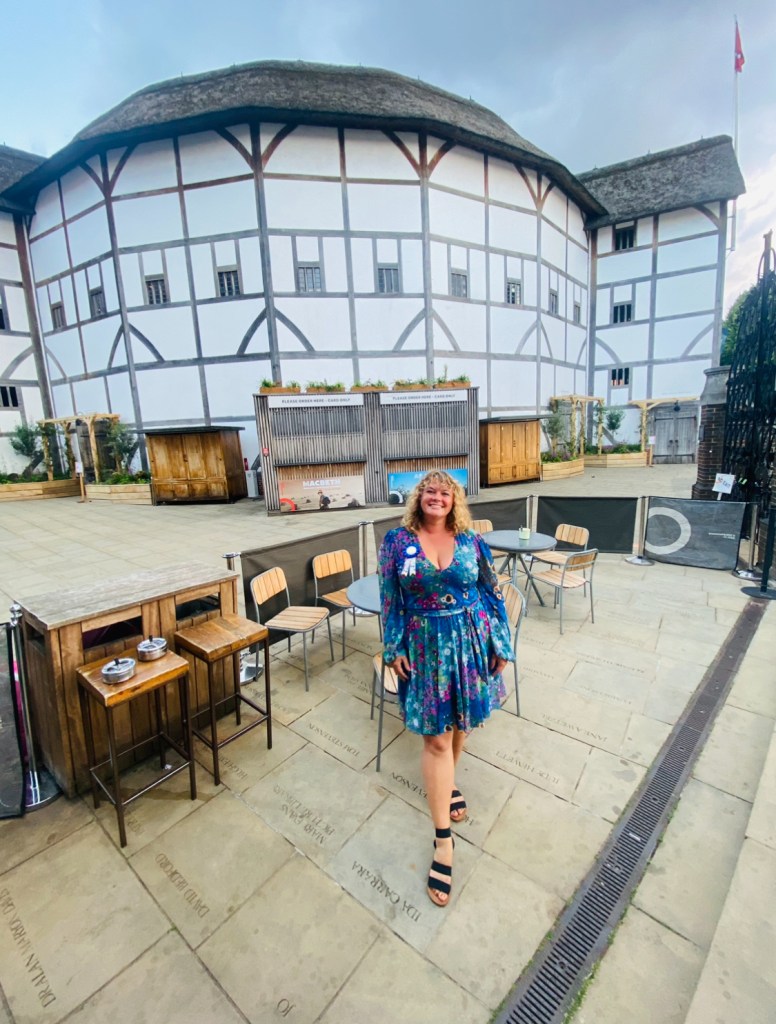
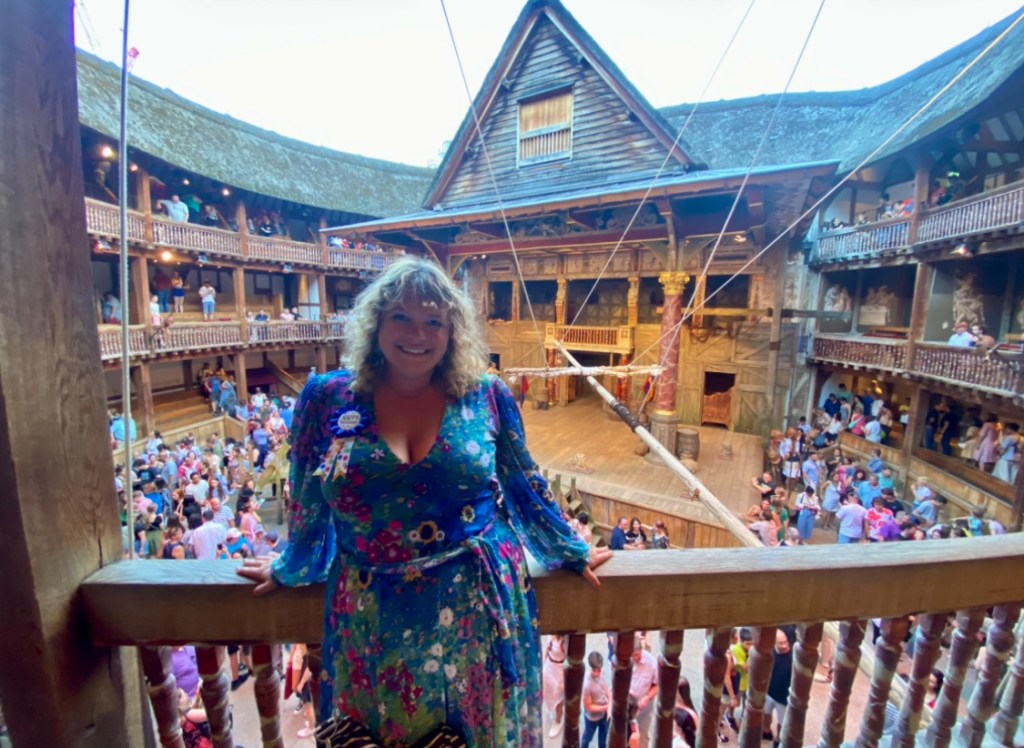
But honestly, if I were you, I would not buy tickets to see a play at The Royal Shakespeare Theater. Shakespeare didn’t perform any plays in Stratford-Upon-Avon; all of his plays were performed in London. I would go to Shakespeare’s Globe, which is an exact reproduction of Shakespeare’s theater that he built with his actors, the theater company known as Lord Chamberlain’s Men. The original Globe Theatre was on the old side of the Thames River, the side that Big Ben is on, but the original Globe burned down centuries ago, so they rebuilt it in the 90s directly across the river. Head back to London after your Stratford-Upon-Avon tour and catch a comedy (PLEASE go see a comedy) at Shakespeare’s Globe. Even if Shakespeare isn’t your thing or you’re intimidated by the language, I promise, the actors are really well-trained and say the lines in a way that you’ll know what’s going on. And Shakespeare’s comedies, oh my lord, they’re gut-busting hilarious when you see them live. The best way I can describe a Shakespearean comedy is like… if Weekend at Bernie’s, The Big Lebowski, and Ten Things I Hate About You happened in a universe where they wore poofy pantaloons and ruffs and said things like “your girlfriend is so fat, she’s shaped like a globe, and I could discover her countries all day.”
If you’ve never seen a Shakespeare comedy and you’d like to check out a movie version first, watch 1993’s Much Ado About Nothing, starring Denzel Washington, Keanu Reeves, and, once again, the incomparable Emma Thompson. You go see one Shakespeare comedy, just one, and I guarantee you’ll turn into a superfan, weeping openly over his grave, just like me.
All’s well that ends well!
 Ramblin' Reba
Leave a comment