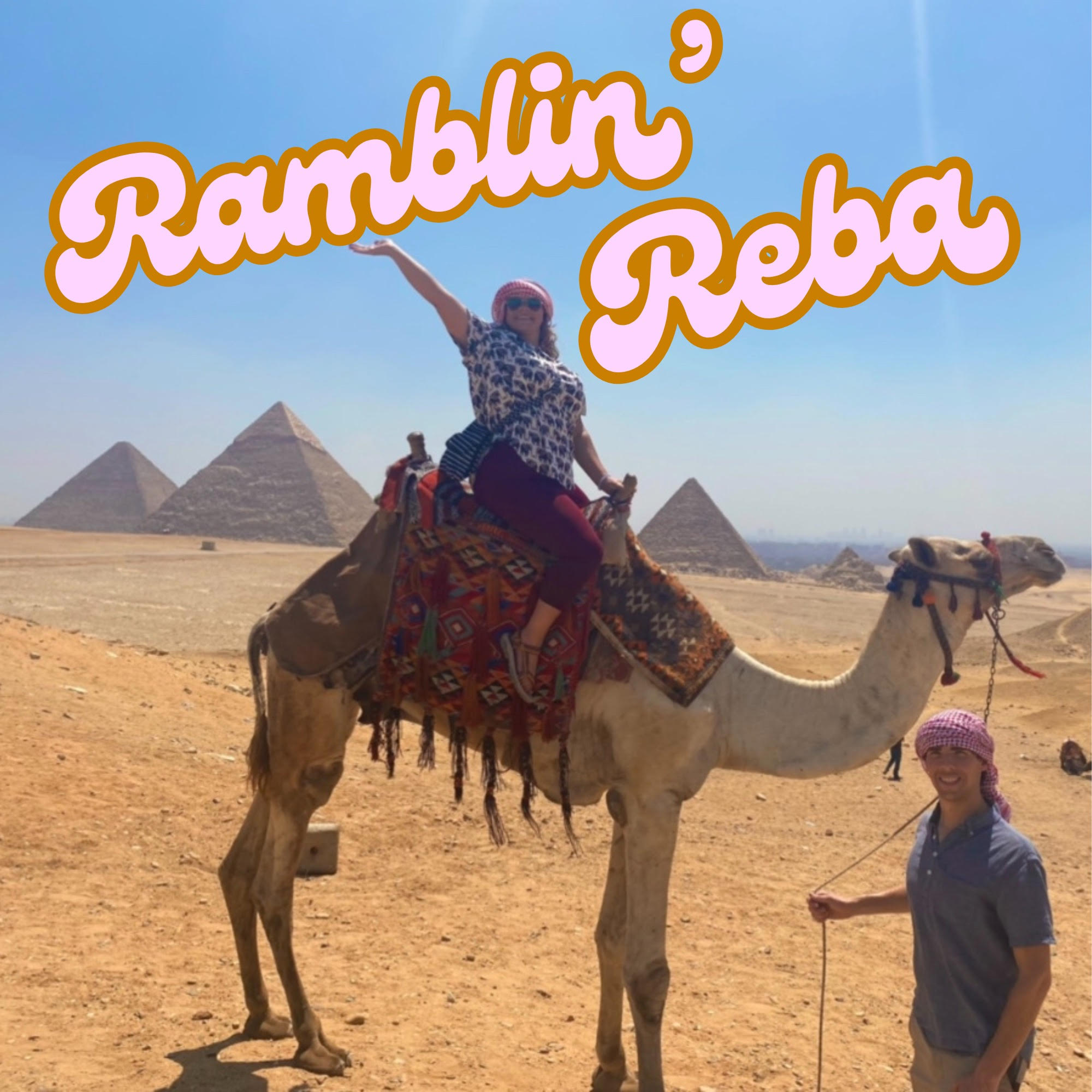

The benefit of vacationing in Eastern Europe is, while it’s expensive to fly there, it’s very cheap to have a fun-filled trip doing whatever you want. Romania is a beautiful destination because it’s very mountainous and picturesque, full of medieval castles and quaint villages. And yes, there’s plenty of winks to Romania’s most notable ancestor, Vlad the Impaler, also known as Dracula.
Romania contains three regions, which used to be kingdoms: Transylvania, Wallachia, and Moldavia. Take my advice: don’t look up “things to do/see in Romania”, because it will point you all over the country. It would be impossible to cover everything within one week because everything’s so spread out: most of the major attractions are five hours apart. So instead, here’s what you should do: spend one day in Buchareșt, the capital city located in Wallachia. Spend the rest in Brașov, the true gem of Romania, located in the heart of Transylvania. From Brașov, you can see many castles and villages, so you’ll get a true Transylvanian experience.
(By the way, a lot of these places have ș in the title, which is pronounced “sh”.)
Romania: the melting pot of medieval history
Okay, have you ever watched a monster movie set in Transylvania, and you’re like “wait if this is Romania, why does everything look German? Why does everyone in Young Frankenstein speak with a German accent?” This is because of Romania’s history as a Saxon territory.
Remember the Saxons from World History? If you need a refresher, Saxons were northern Germans who moved into lower England around 400 AD. Anyway, the Saxons who weren’t spreading west into England went into Eastern Europe. Eventually, they stopped in Romania. So Transylvania in particular has a strong German flavor because of the Saxon influence. Transylvanians are very proud of their Saxon heritage.
So where does Vlad the Impaler come in? Alright, going back to World History: remember the Ottoman Empire? The Ottomans took over the Middle East, from Turkey to Saudi Arabia, from 1300 AD until pretty much World War I. The reason Islam is the major religion of so many countries in that area is largely due to the prowess of the Ottomans. In the 1400s, the Turks were trying to move up into Europe, but they had to pass through the Carpathian mountains of Wallachia, which wasn’t easy. Especially considering the Prince of Wallachia was a guy who was enslaved by the Turks in his youth, who knew how to fight like them, and who had a penchant for shish-kebabing his enemies by impaling them on pikes.
Yup.
Now, by this point, Eastern Orthodox Catholicism has spread through Romania. Vlad Tepeș (Tepeș means Impaler) was the son of the mayor of Sighișoara, sold to the Ottoman Turks so they would leave the city alone, returned as a hardened warrior. Vlad’s father, also named Vlad, was nicknamed “Dragul” which means devil. Adding “ya” means “son of”, so since Vlad Tepeș’ nickname was “son of the devil” or “baby devil” (lol), it would translate to Dragulya, or Dracula.
But wait! Why did Gary Oldman wear dragon armor in Bram Stoker’s Dracula? Furthermore, Luke Evans did the same thing in Dracula Untold! Vlad’s dad was a member of The Order of the Dragon, an Orthodox order of knights whose aim was to defend Eastern Orthodox countries from Ottoman Turks (who would convert any conquered people to Islam). Okay okay okay one more historical fact and I promise I’ll stop nerding out: you know why it was called The Order of the Dragon? Because of Saint George and the Dragon. Saint George (the patron saint of England, the patron saint of calvary, the patron saint of soldiers, the patron saint of everything) killing the dragon that demanded sacrifices from the village was symbolic for the Order of the Dragon defending villages from the Ottoman Empire, which was doing the same thing.
So why does all that matter? Because Romania is one gigantic melting pot of culture, since they’re at the crossroads of so many different empires. They have a little Turkish/Ottoman Empire influence, a little Byzantine Empire/Russian/Eastern Orthodox influence, a little Austro-Hungarian Empire influence, and a whole lot of German/Saxon ancestry. That’s what makes the country so cool!
Okay, now that you know about the culture, let’s talk about places to see.
WHAT I SAW
Brașov
We arrived in the evening in Buchareșt and boarded a train to Brașov the next morning. The train ride alone is worthy of recommendation, as it climbs from the plains of Buchareșt into the Carpathian mountains, passing neat little villages along the way.
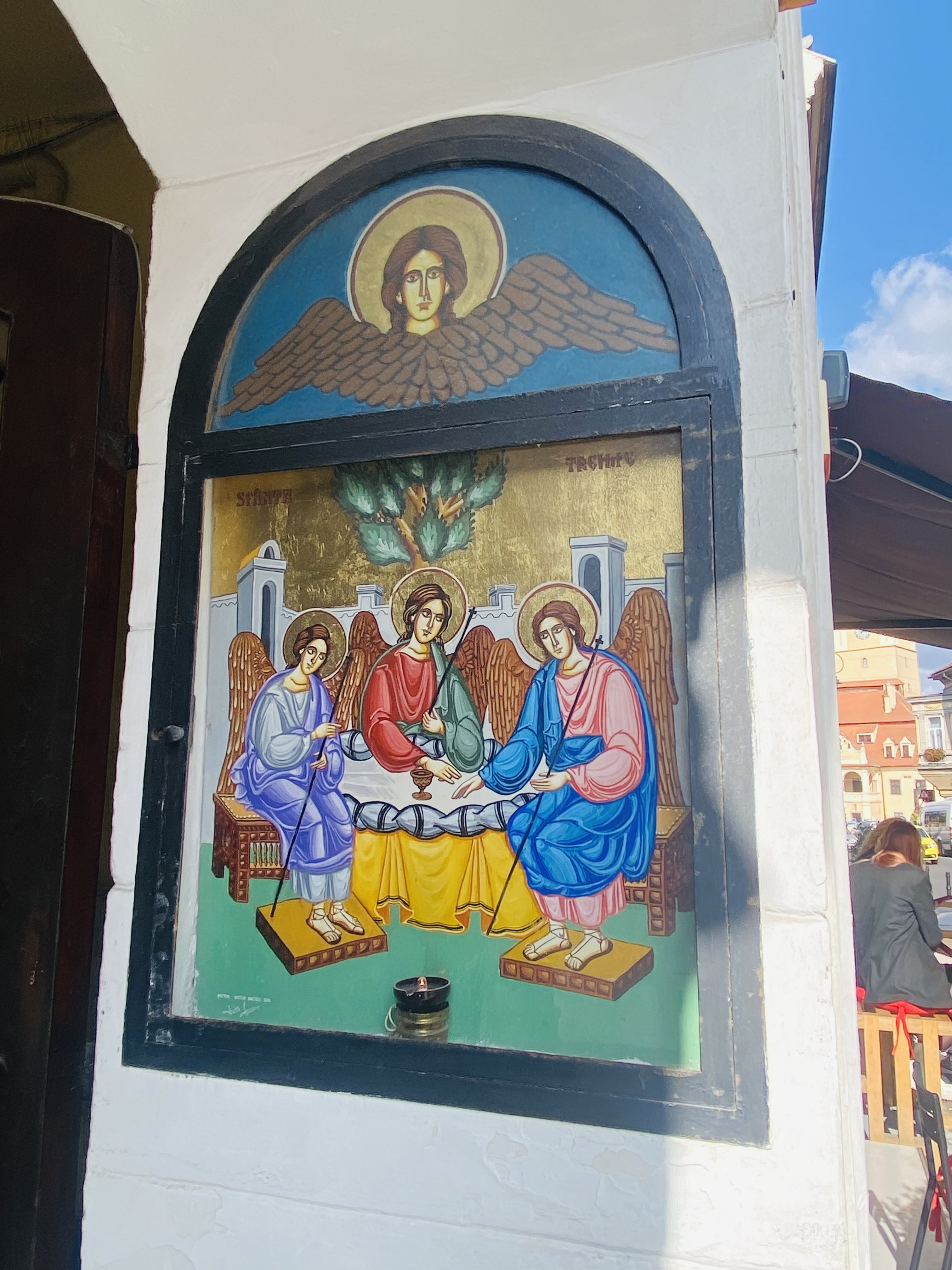

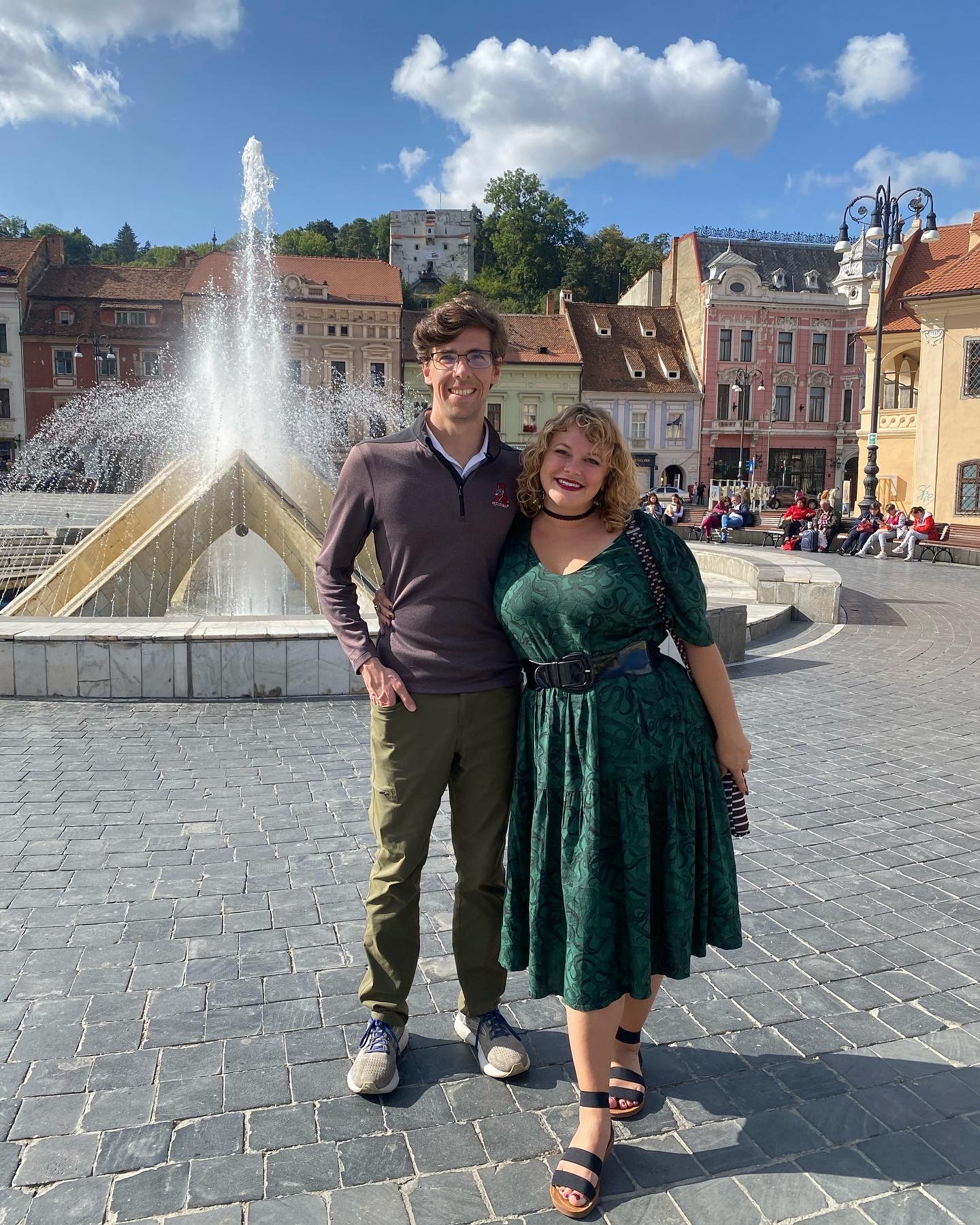
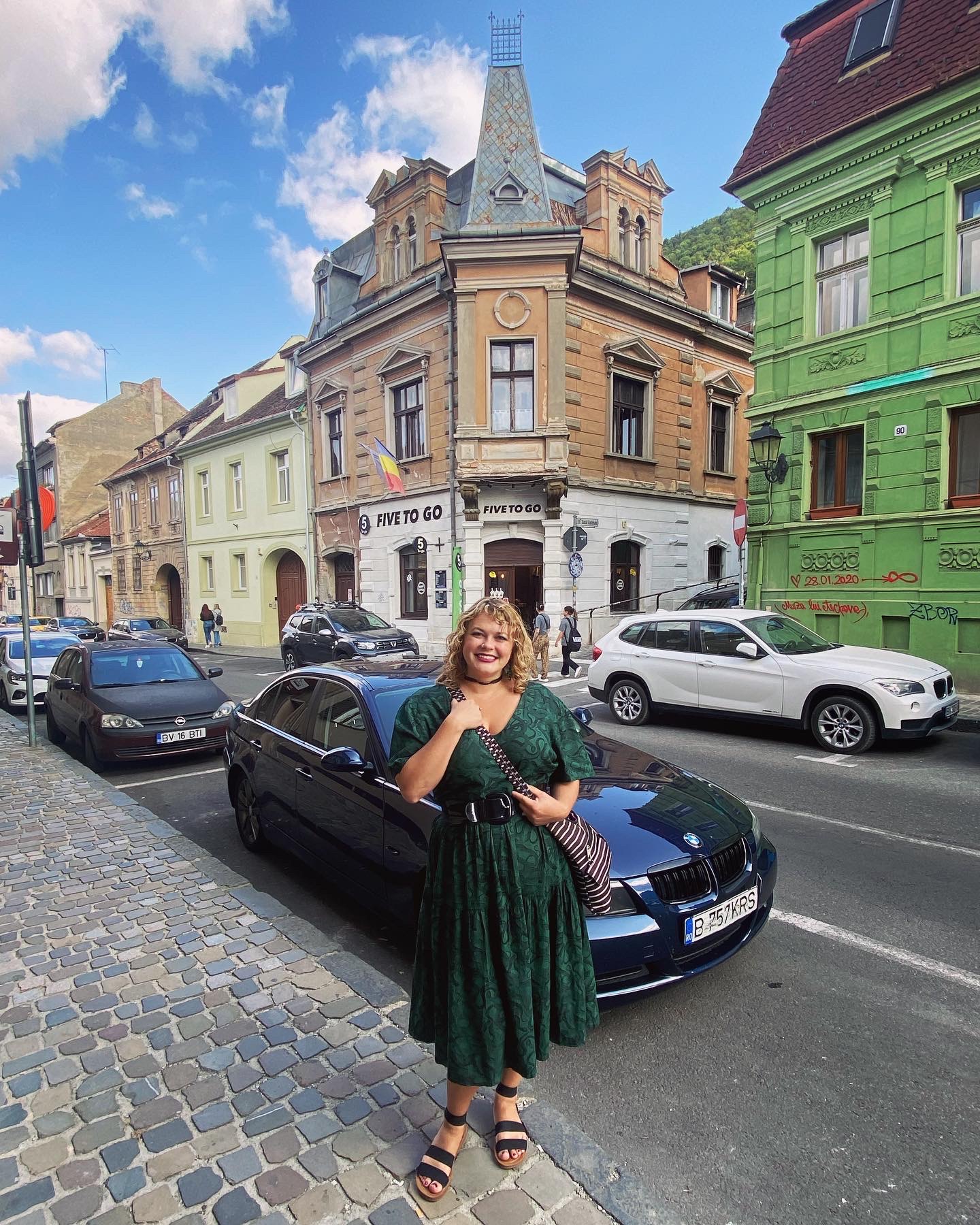
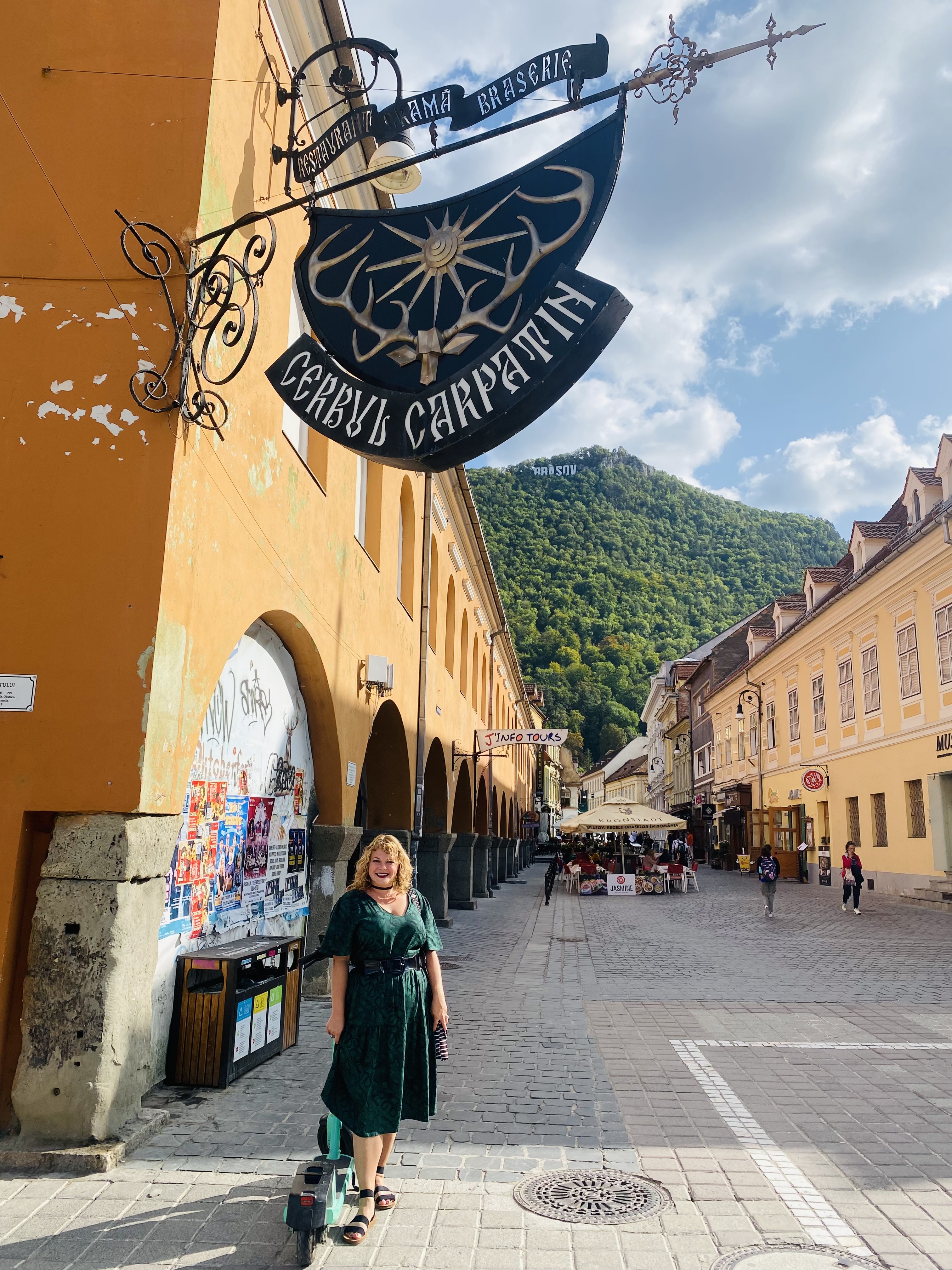
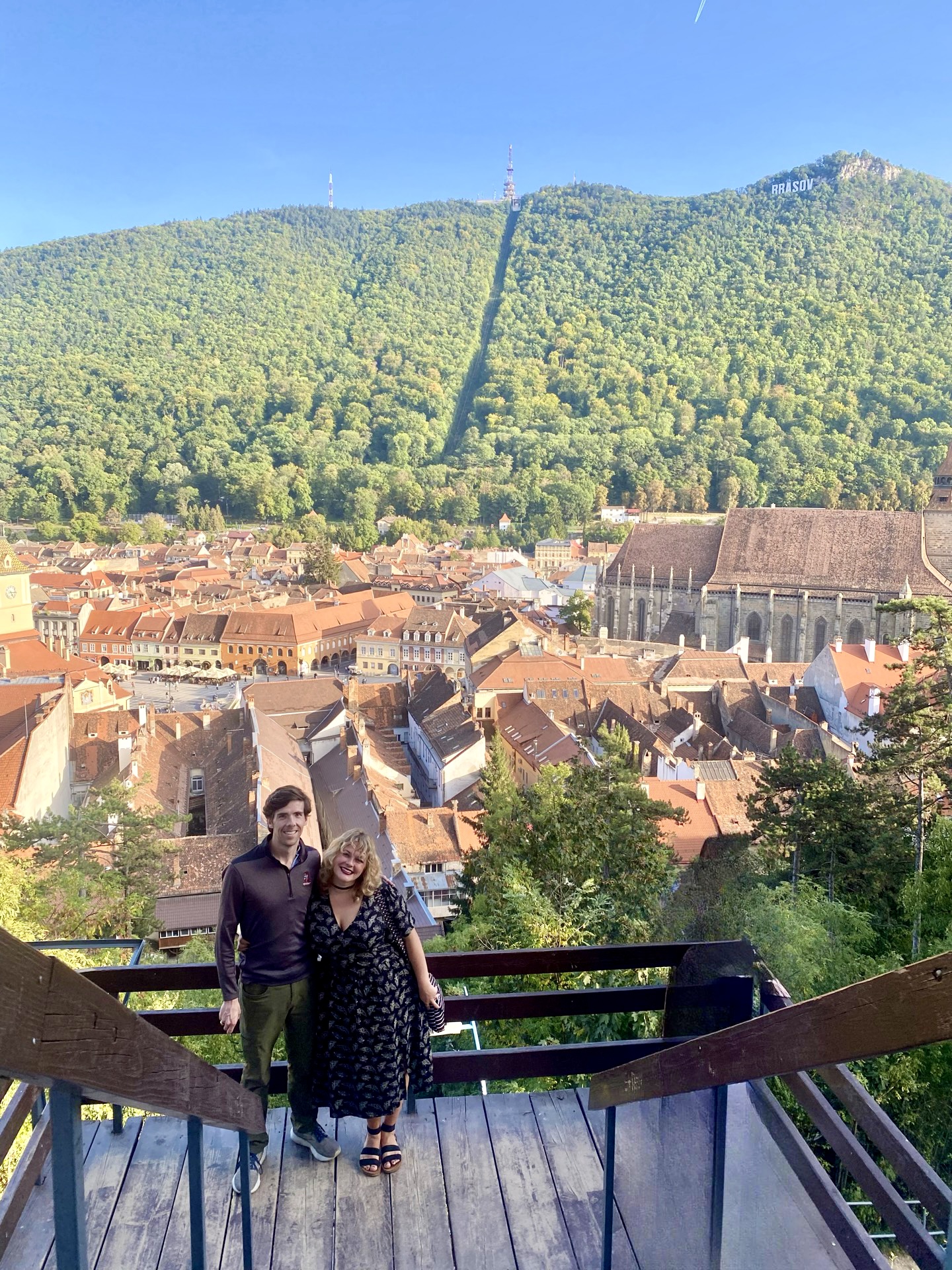
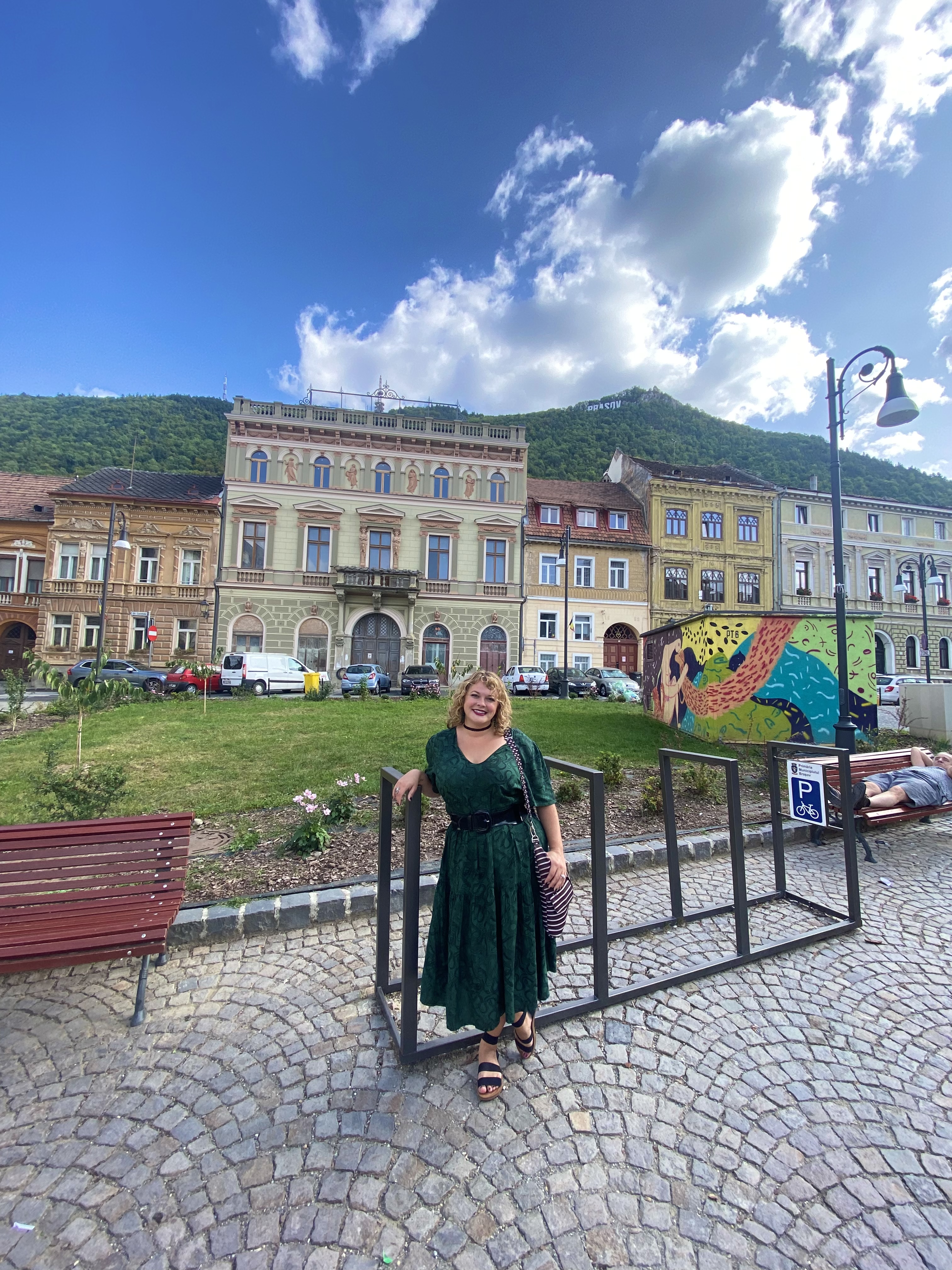

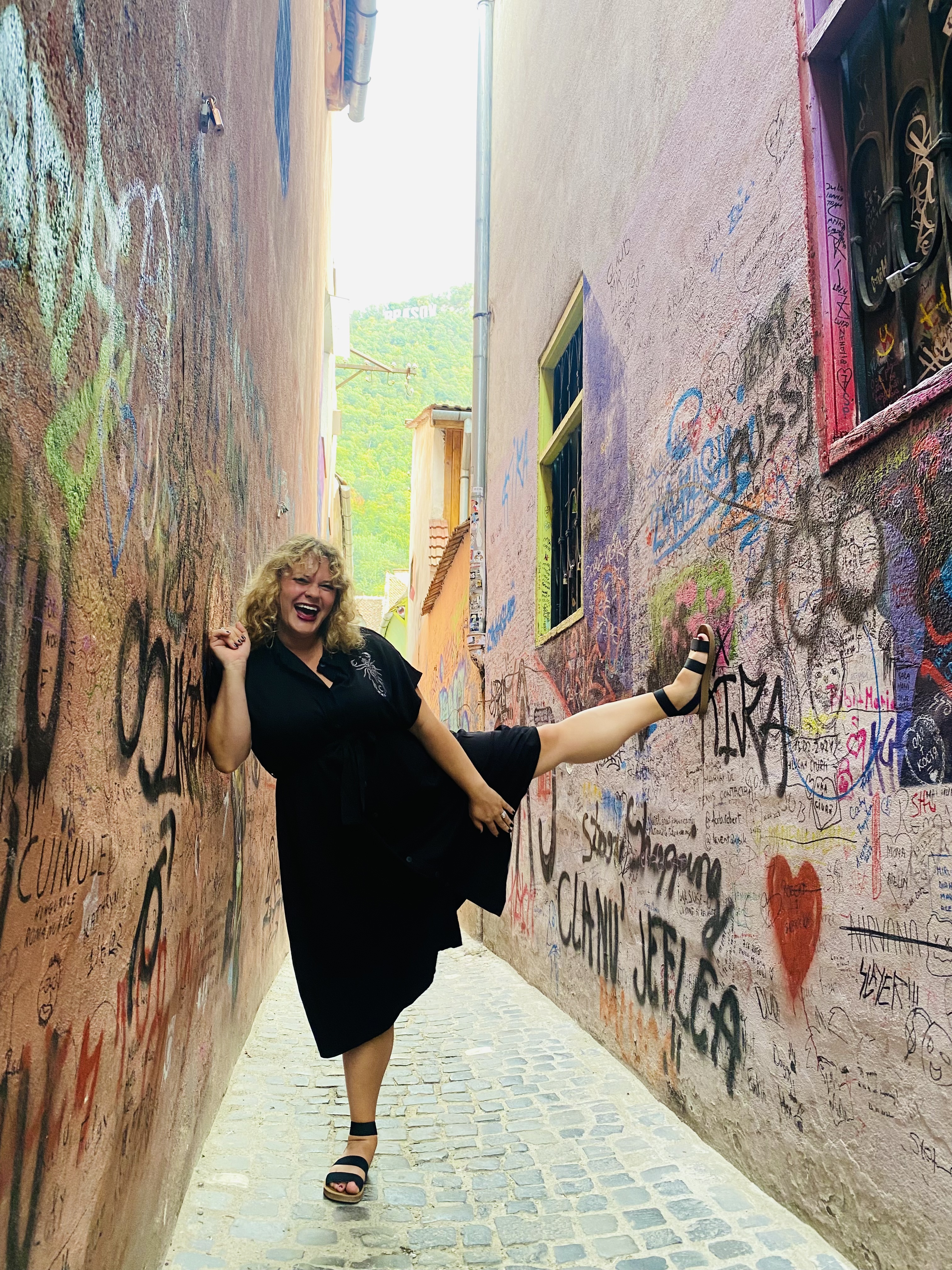
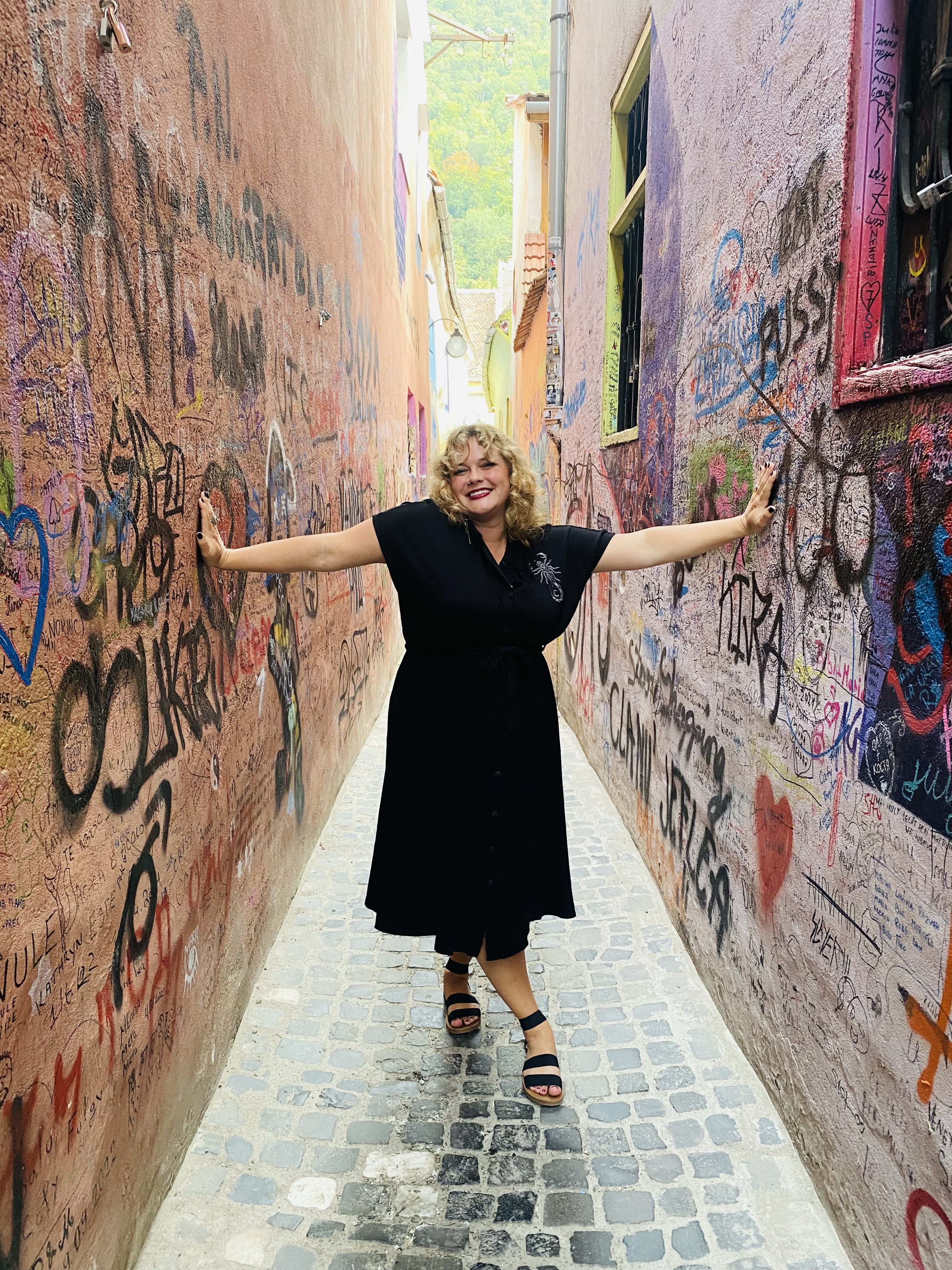
Romania has been pulling their economy up by its bootstraps since the fall of communism in 1989. Around 2017, Romania REALLY started cleaning up UNESCO Heritage Sites in an effort to increase tourism. So if you’re thinking “idk about traveling to Romania, what if I get grifted or robbed?” You won’t, especially not in Brașov. The streets are incredibly clean, it’s very safe to walk around at night, the old town is SO gorgeous because it’s nestled in a clutch of mountains, and the people are very proud of their city. They have worked very hard to give you a charming Transylvanian experience, but it’s totally authentic. This will be your jumping-off point as you explore the rest of Transylvania. Most of the day-trips around Transylvania will still leave you with plenty of time to explore. Don’t miss the Black Church, a Gothic Cathedral that turned into a Methodist Church during the Protestant Reformation.
Bran Castle
This is Romania’s main tourist attraction, the residence of Vlad the Impaler and Bram Stoker’s inspiration for Castle Dracula. This is actually a medieval fortress; Vlad Tepeș was the ruler of Wallachia, and the kingdom of Transylvania was like “hey buddy, while you’re at it, can you come watch over Transylvania real quick? Maybe do some of that impaling in case Ottomans try to invade?” Bran Castle sits in a narrow valley in between the borders of Wallachia and Transylvania. Parts of Bran Castle may seem bare bones, but remember that 1) it’s a fortress built in the 1300s, and 2) a lot of the really opulent furnishings were removed in the Communist era.
Much of the furniture that does exist, along with a collection of Vlad the Impaler’s knives, belonged to Queen Marie, the last Queen of Romania. She united Romania, commanded a calvary regiment in WWI and was also a nurse, and changed Bran Fortress into a true castle.
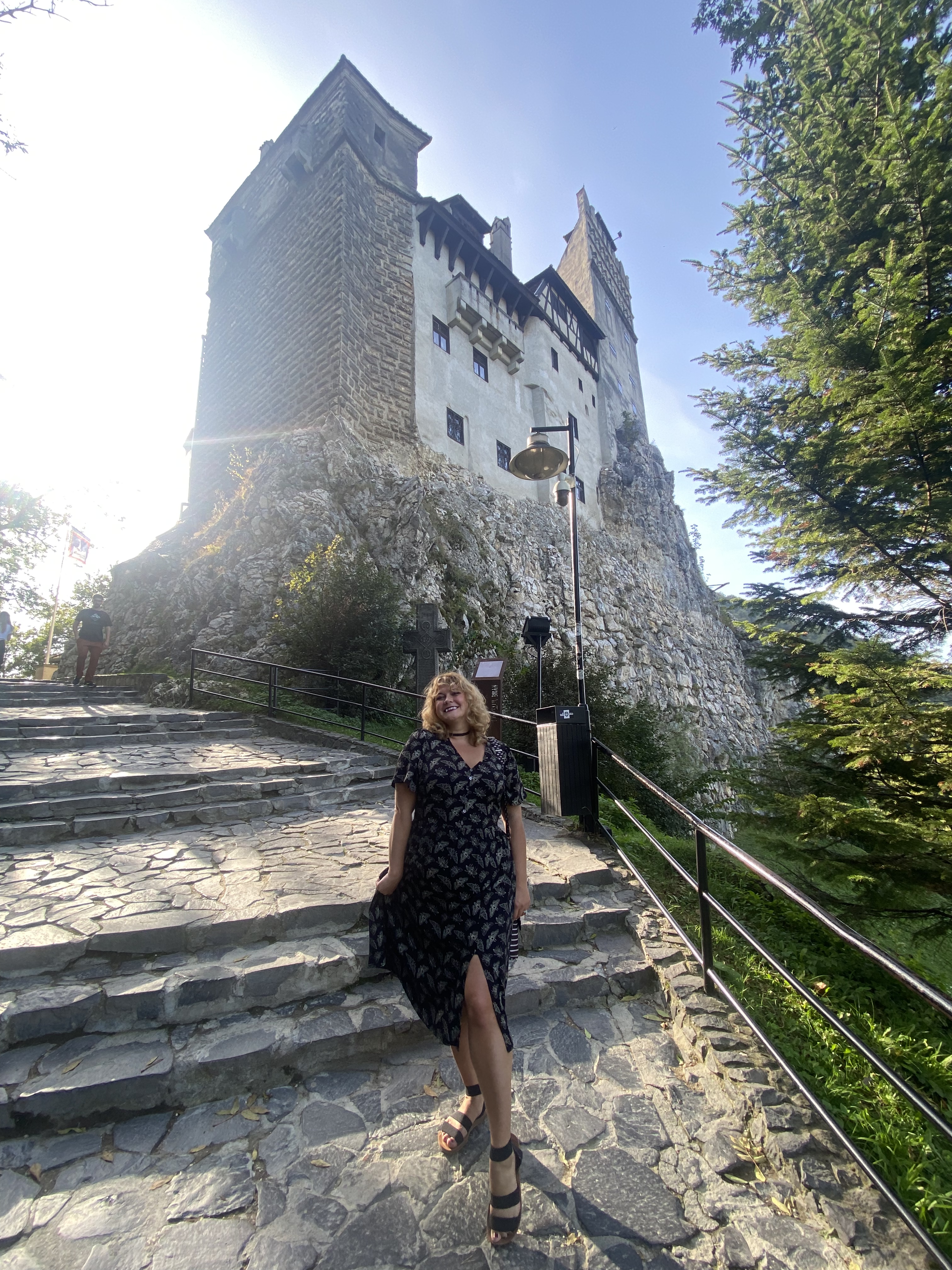
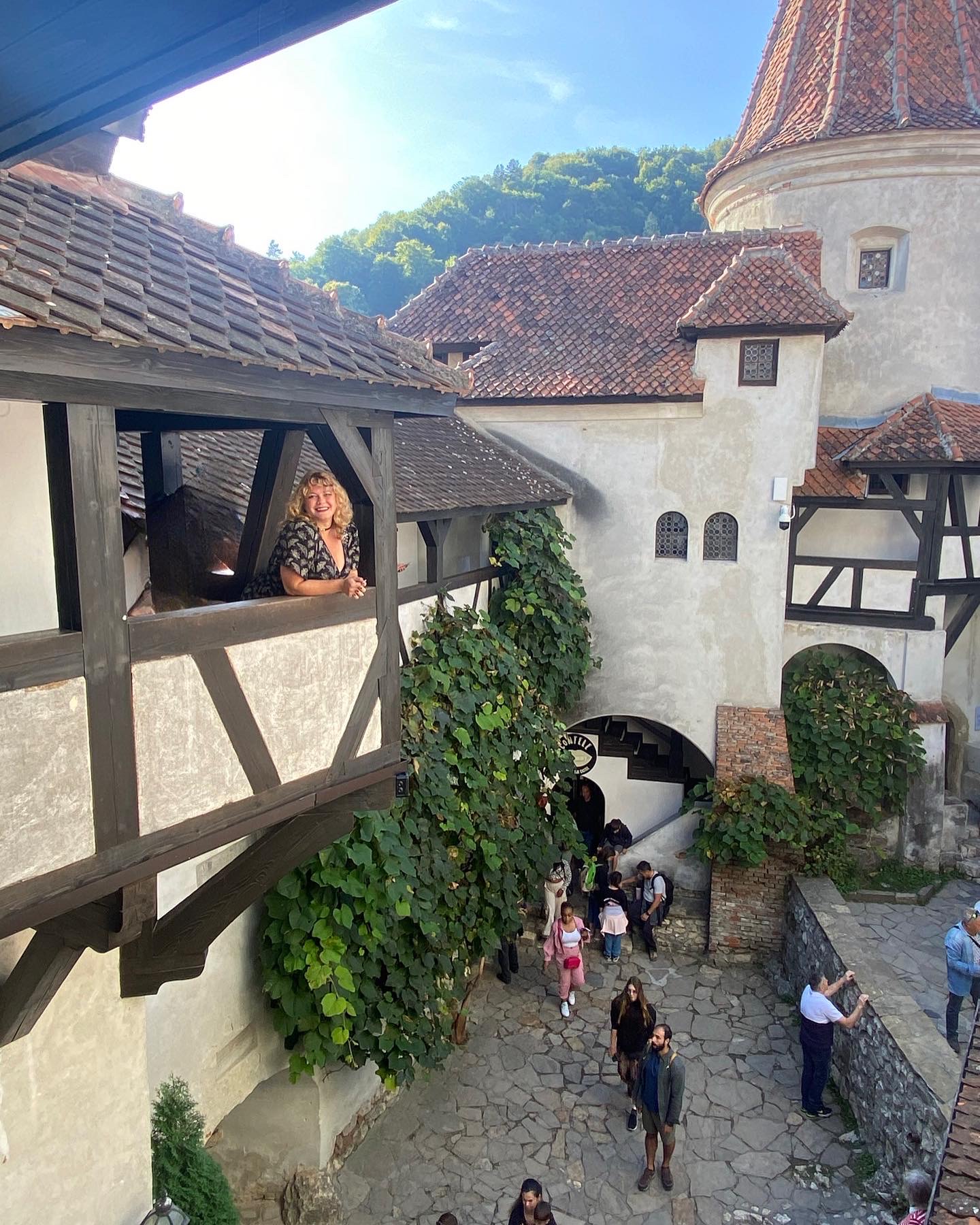
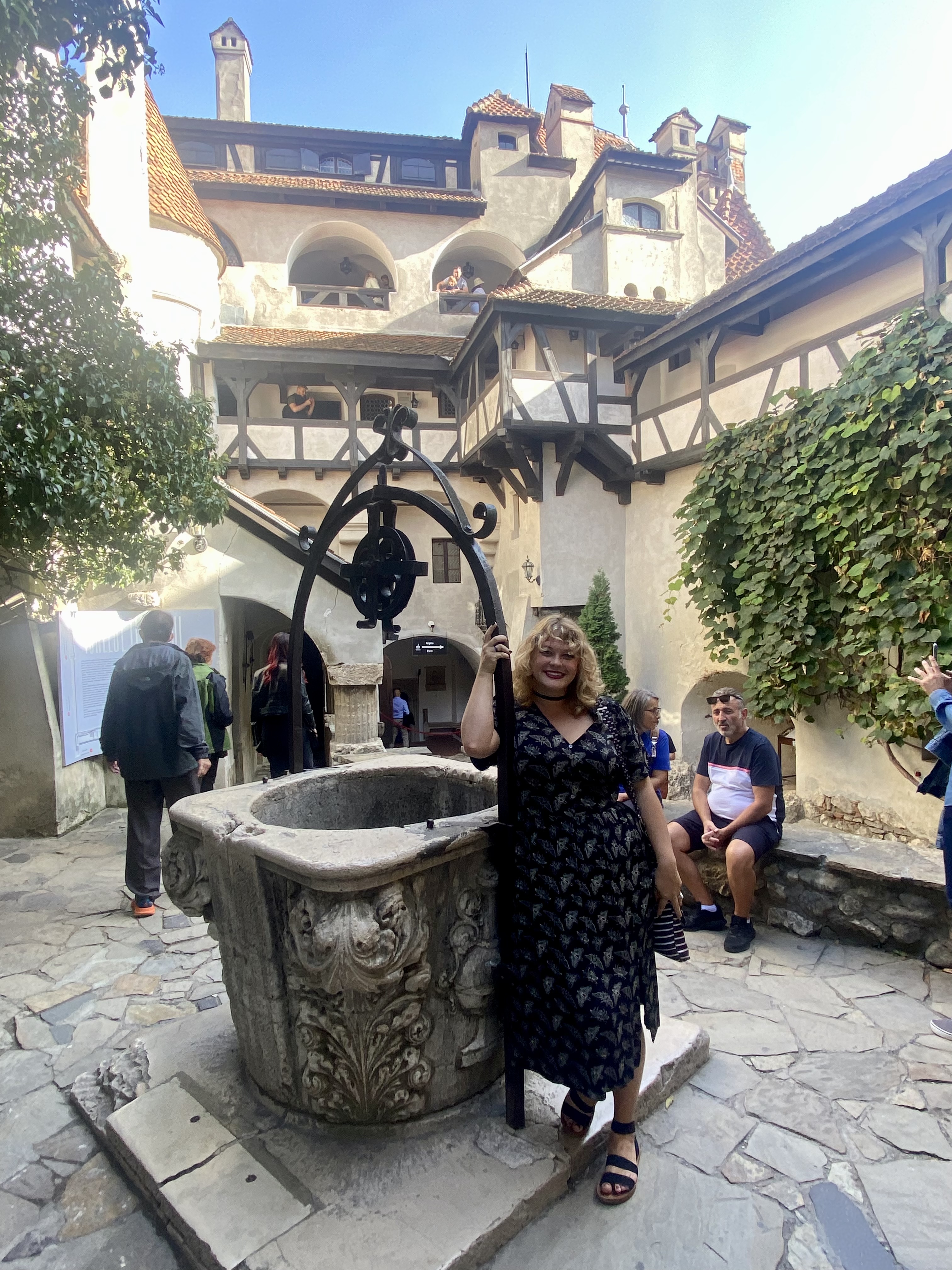
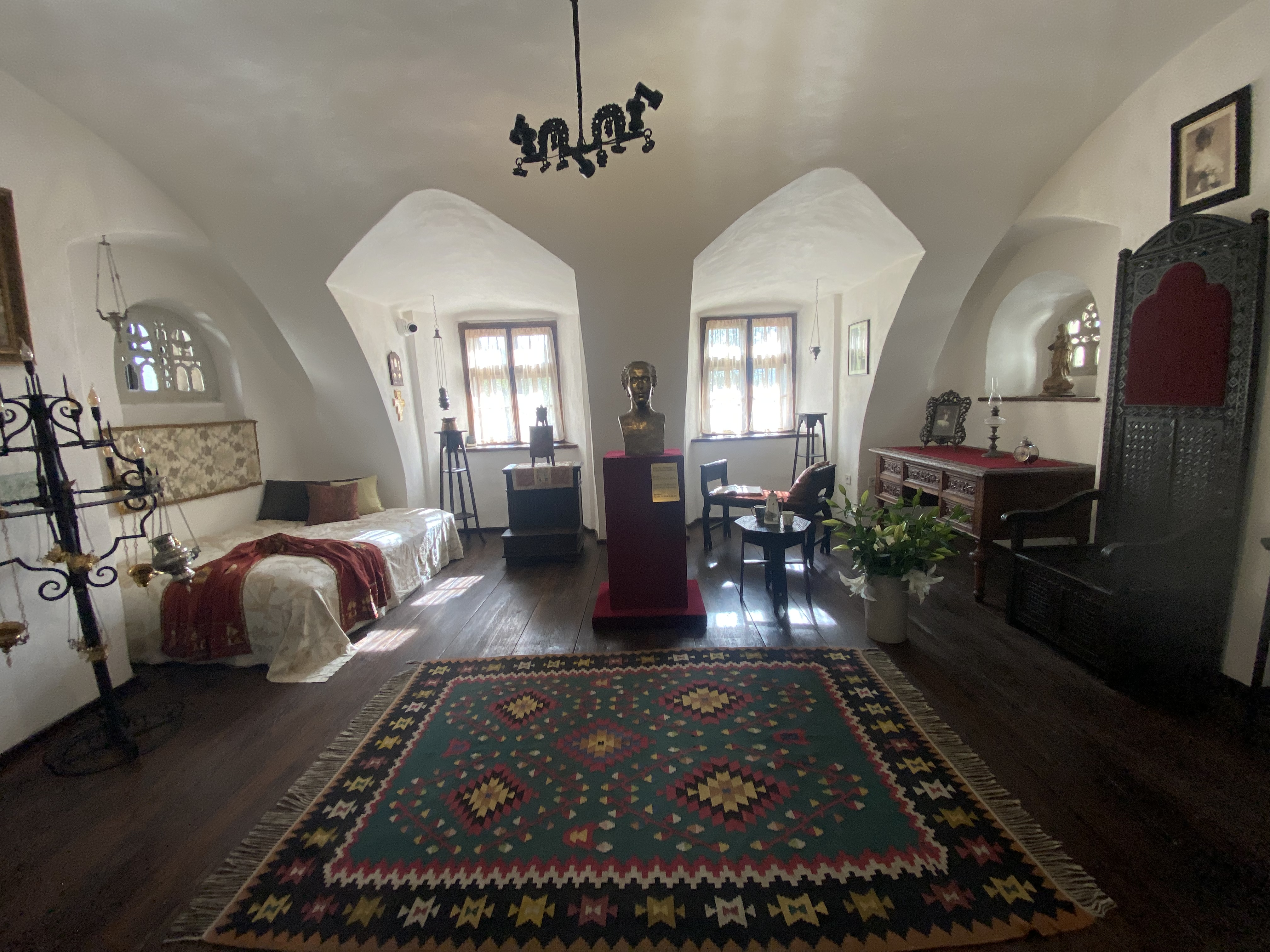
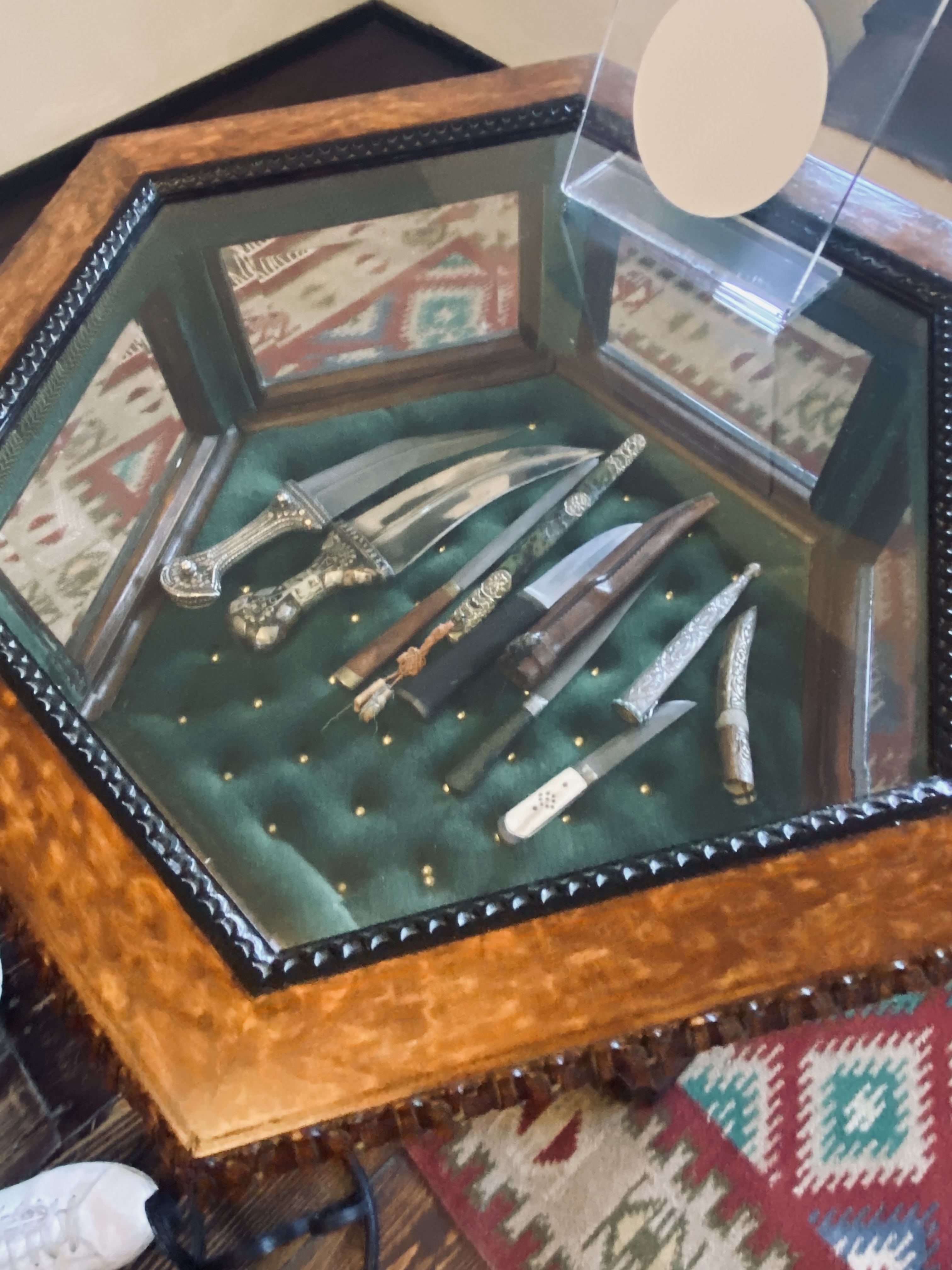
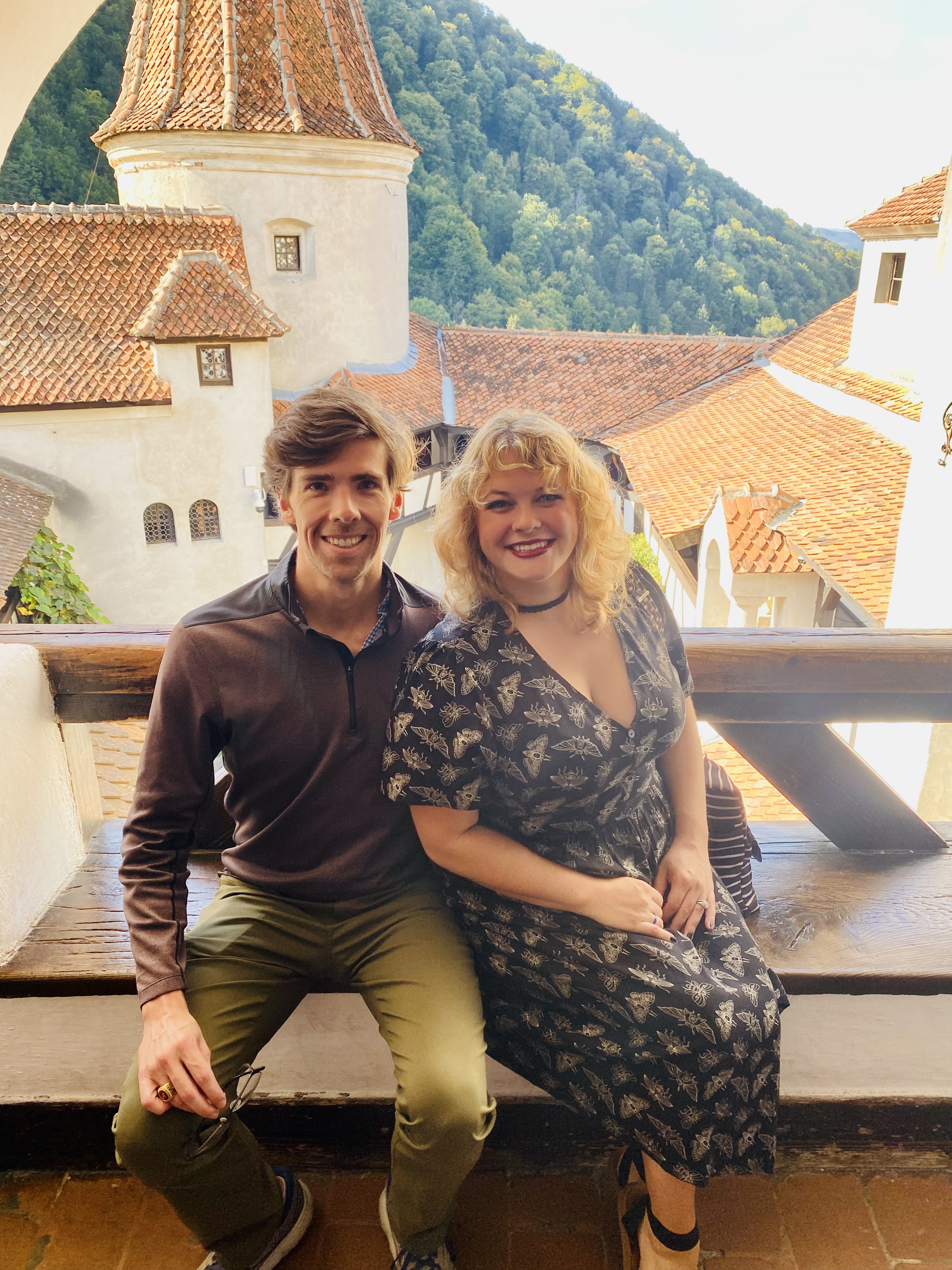
However, the folks who run Bran Castle know why you’re really there: ooky spooky vampires. The castle dedicates the top floor to ghoulish Romanian folklore, including vampires and werewolves. Alex and I like to say that there are three types of museums: Big Ol’, Artifacts, and Mannequins. The British Museum, the Louvre, the Met, the Smithsonian, etc. are Big Ol’ Museums. The Egyptian Museum in Cairo is an artifact museum–you can see mummies, King Tut’s burial items, and other historical artifacts because they’re pulling them right out of the ground. Mannequin museums have very few artifacts but still have value because, while there are a lot of mannequins wearing reproduction costumes, the history and insight they give is invaluable.
But Bran Castle’s beauty truly does come from within. Look at the courtyard!
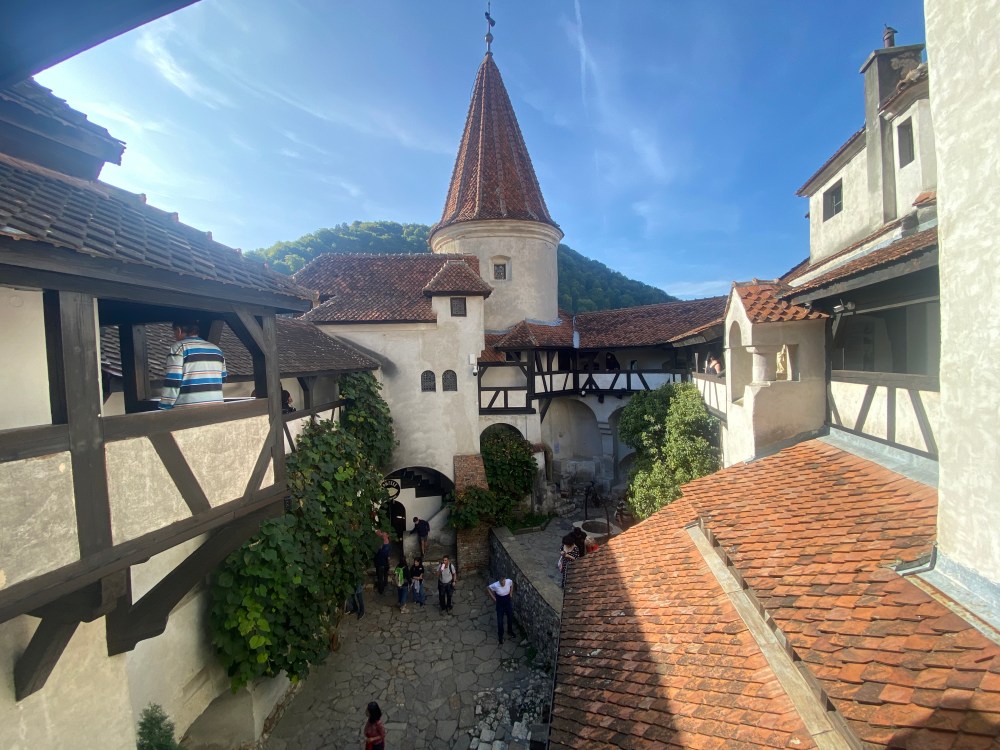
While there are tour buses that go from Brașov to Bran Castle, Ubers are cheap, plentiful, and private. An Uber ride will take about 30-45 minutes and will cost about $20.
By the way, Bran Castle hosts a vampire rave on Halloween. Romanians don’t really go all-out for Halloween (which makes sense) but they know Americans sure do, so come on over to Transylvania in October if ya freaky
Peleș Castle
Bran Castle might be more famous to Western tourists looking for Dracula, but Peleș Castle is the true diamond in the diadem. For real, this castle is up there with Neuschwanstein in Most Beautiful Castles I’ve Ever Seen. Part of this is because–like Neuschwanstein, the Biltmore, and Balintore–this castle was built in the 1800s. That means it’s newer, so the folks building it have lots of money (this is before WWI, which pretty much destroyed monarchy’s riches in empires) and access to almost anything to make it really, really opulent. So that’s why you go to Bran Castle and you’re like “why is there only one candle in here” well they had to individually make the candles out of hand-harvested beeswax and tallow so give them a break. Meanwhile, you go to Peleș Castle and oh my GOD look at that chandelier oh my GOD look at this BIGGER chandelier in this BIGGER room!
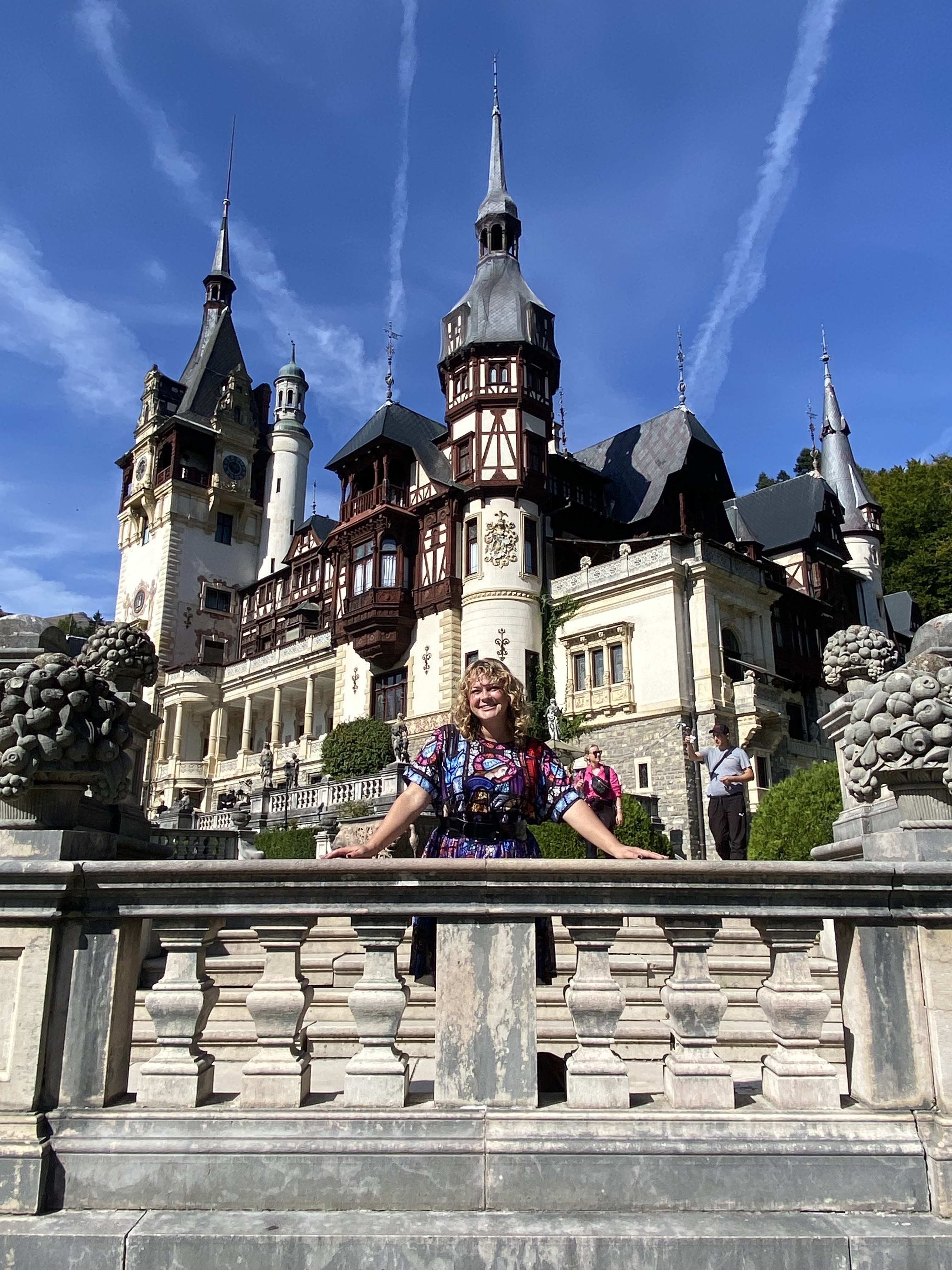


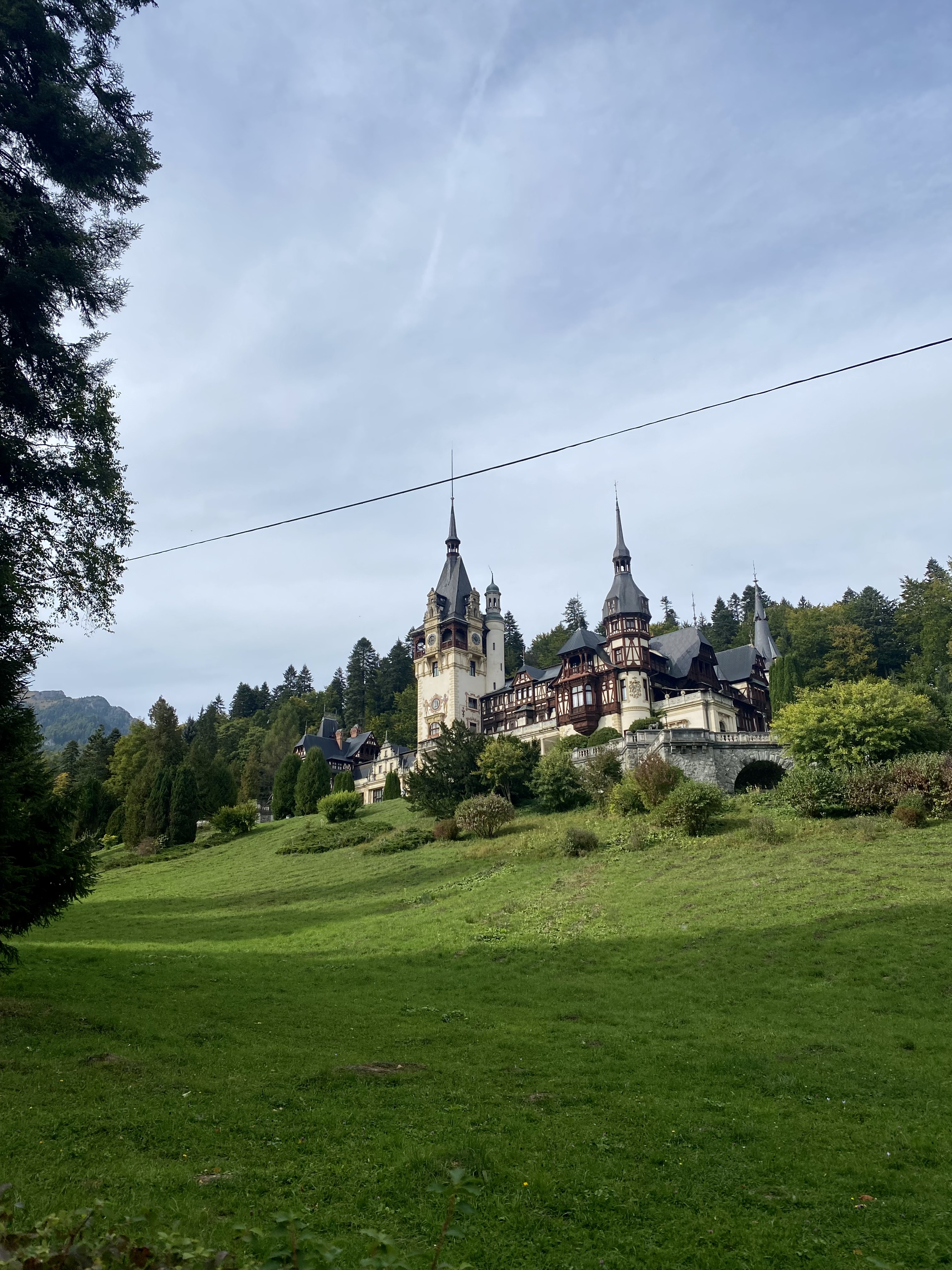
DO NOT MISS THIS CASTLE. Look, I know you’re going to look on GetYourGuide and see they have bear watching in the area, and you’re going to be tempted to go. You are an American. You have bears at home. GO SEE THE CASTLE, even if castles aren’t your thing.
From Brașov, you can get to Peleș Castle easily by train. In fact, you pass the village that Peleș Castle resides in on the way from Buchareșt, so depending on your schedule, you could go on the way there or back. It’s an easy half-day excursion.
Sighișoara
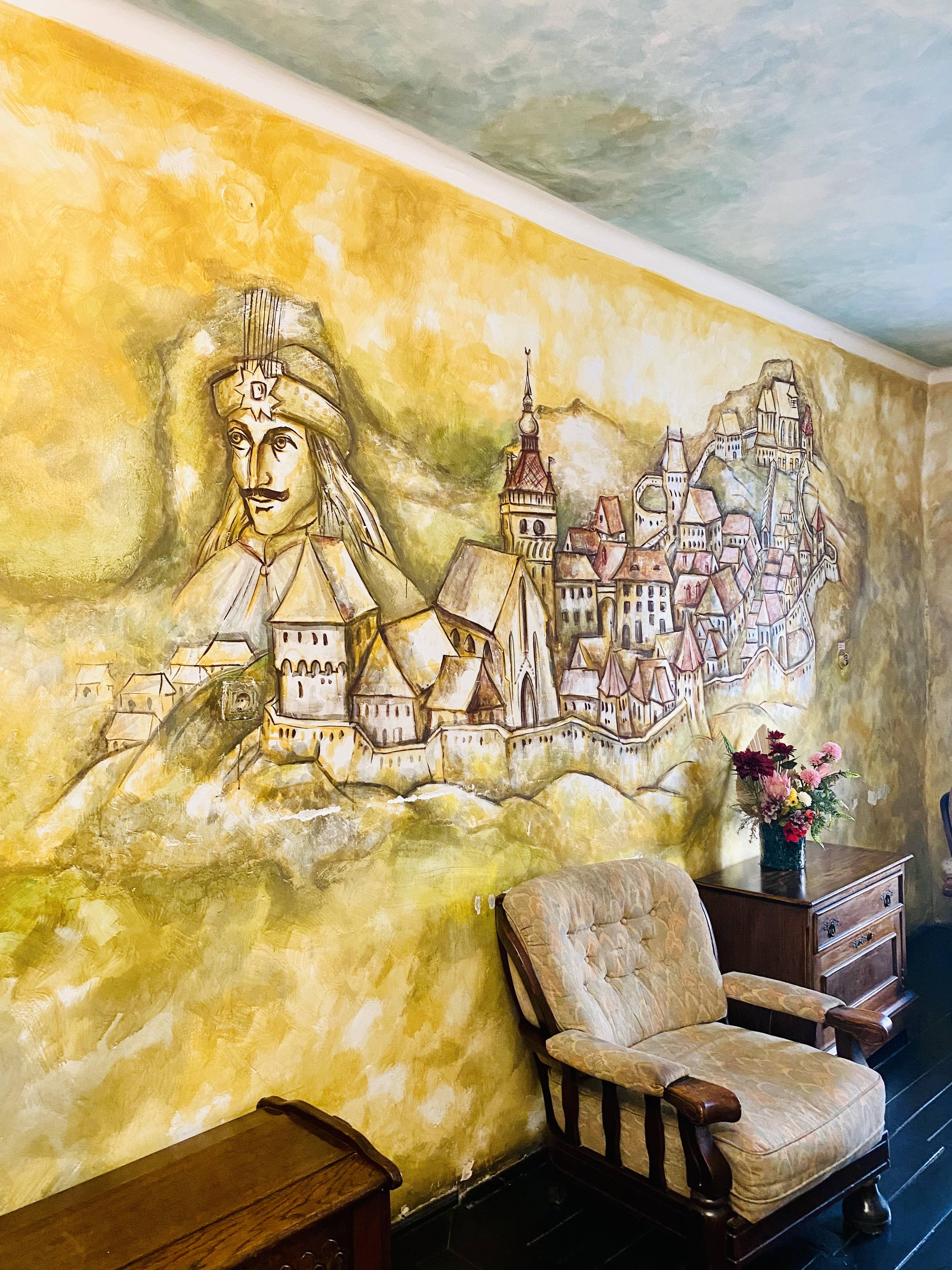
I would recommend a GetYourGuide tour for this one. The link I provided will get you a private driver who will take you to three little villages to give you a taste of Saxon Transylvania. Rupea is a medieval fortress (these people are nuts about castles), Viscri is a Saxon village (and summer home of King Charles and Queen Camilla!), and Sighișoara is the birthplace of Vlad the Impaler. You would expect the birthplace of Vlad Tepeș, quite literally translated as “Baby Devil Impaler”, to be pretty grim and dour, but ironically Sighișoara is a cute little village that is as sweet and colorful as a lollipop. Maybe he was compensating??

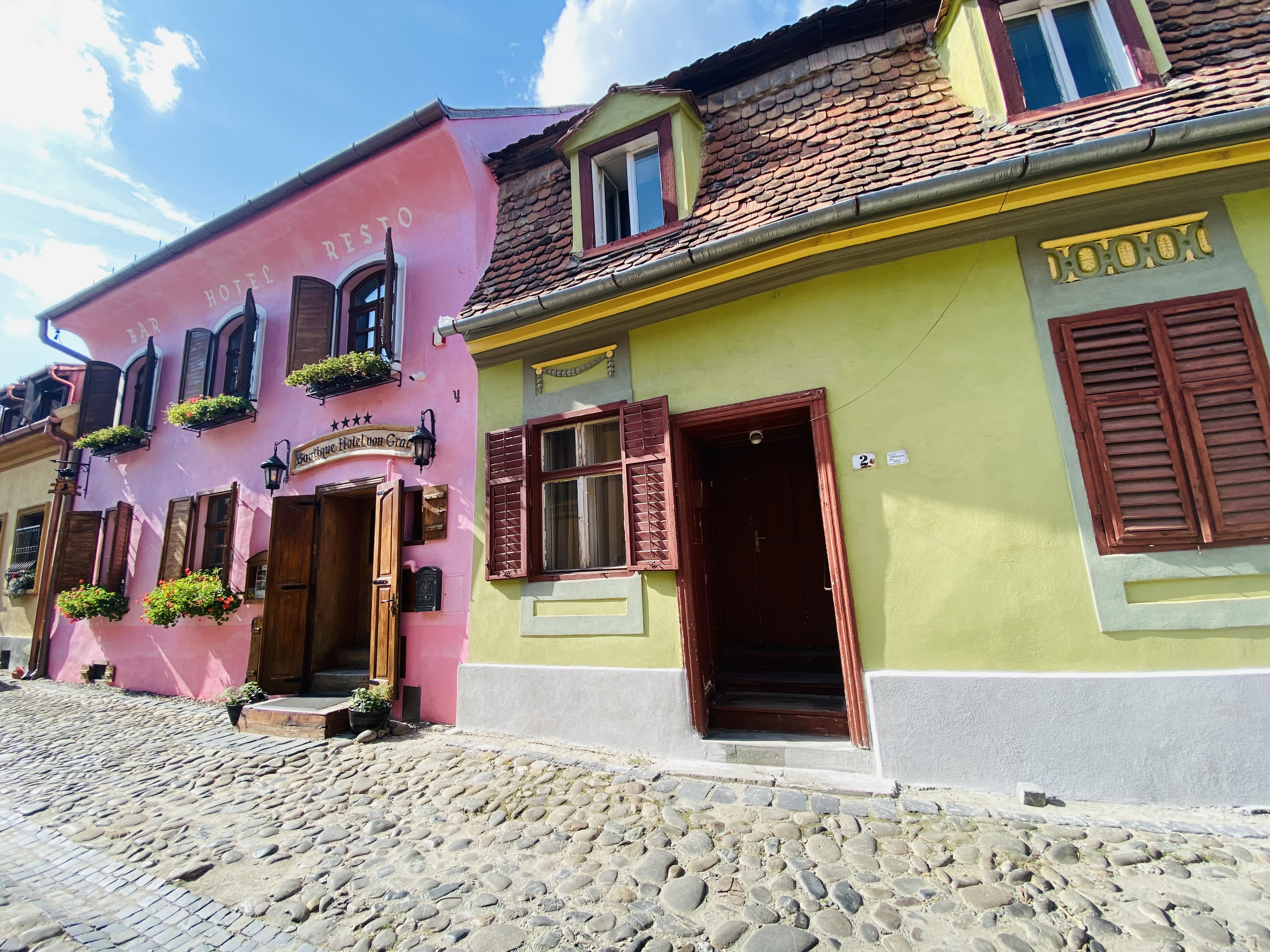


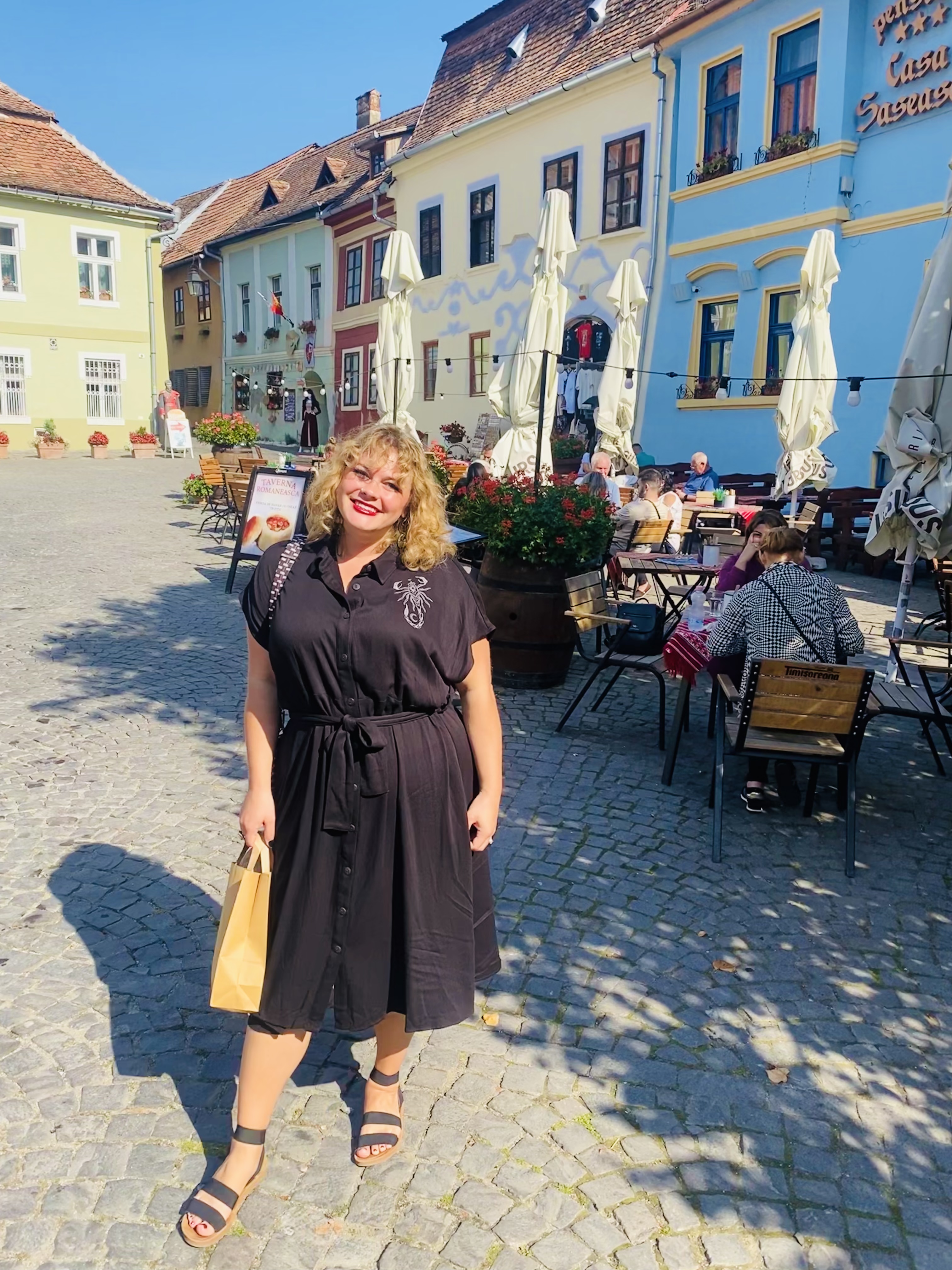
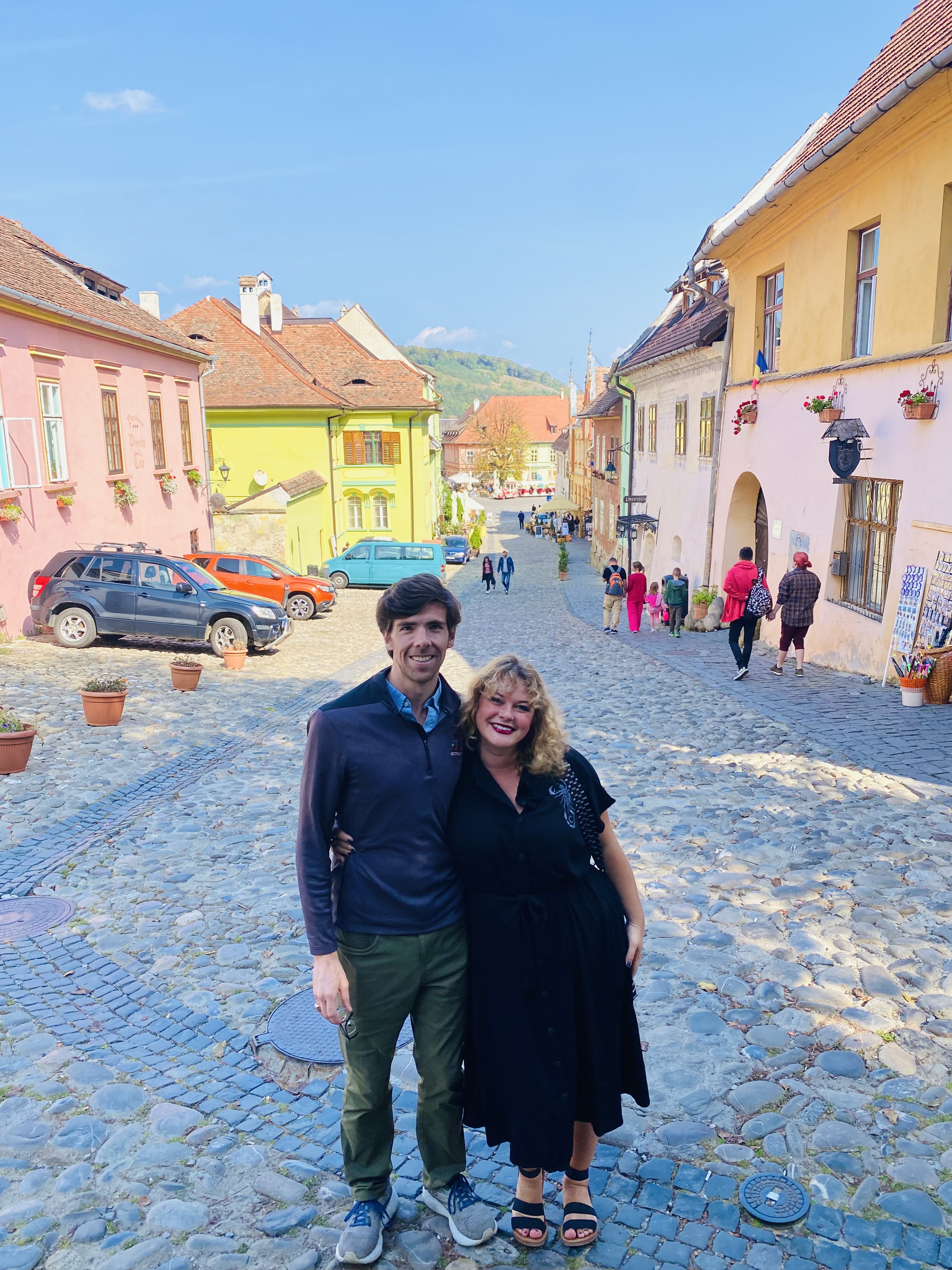
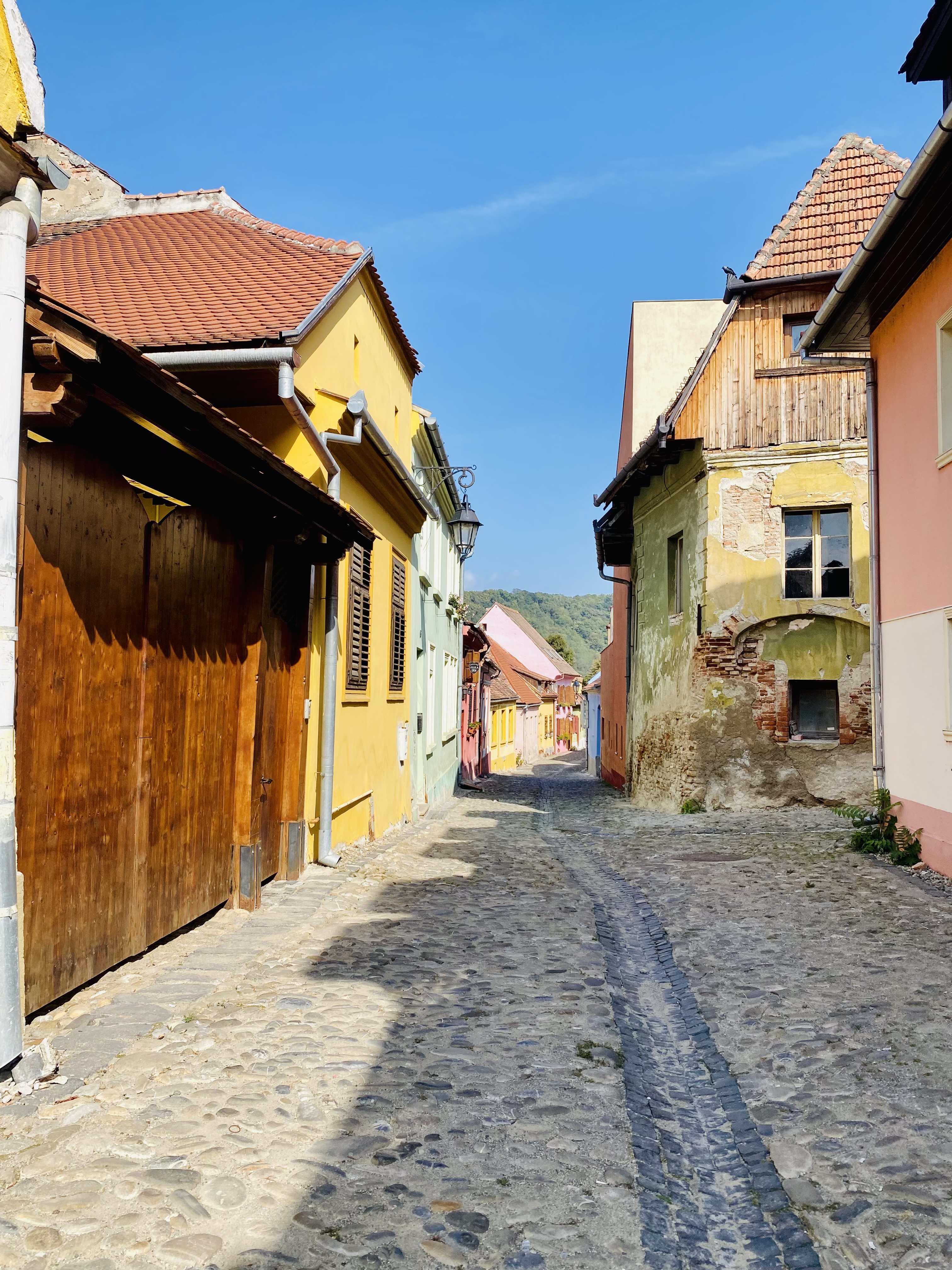
Sighișoara’s main tourist attraction is the Old Town, where there are fourteen towers. Each tower was run by a guild. I promise I won’t nerd out too long on history but this is really cool: in case the city was under attack, each guild was assigned to a different part of the city to defend, so each guild built a different tower. The tinsmith’s tower has a tin roof, the goldsmith’s tower is made of pure gold (just kidding), the stonemason’s tower is made of… you get it. The cool part about Sighișoara is most of these towers are still in use today. One of the towers is actually a radio station!
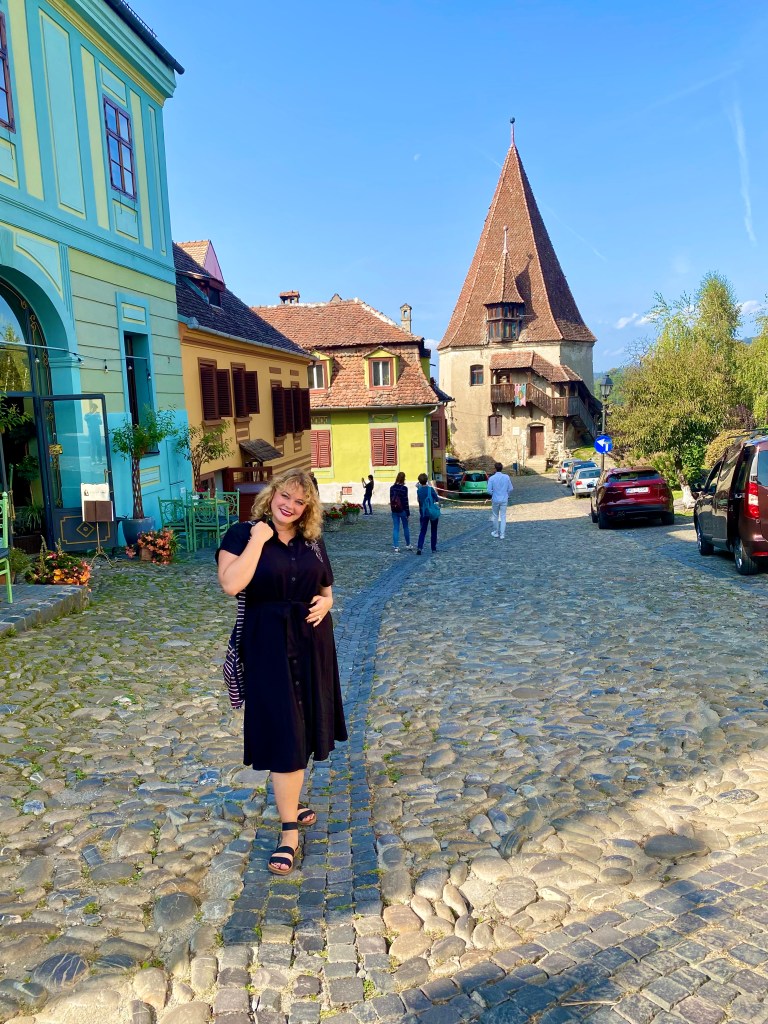
Another interesting sight within the walled citadel of Old Town is the clock tower. Remember that one scene in Shrek, where the singing puppets instruct Shrek and Donkey on the rules of Duloc? This clock tower operates under the same kind of principle. One side instructs people, with little puppets that come out and bang drums and bells, when it’s time to wake up, go to work, stop work, and go to bed. The other side is a calendar with different puppets for each month; it also intimidates visitors by reminding them that Sighișoara Citadel operates under capital punishment and they will execute you if you break the rules :)))))
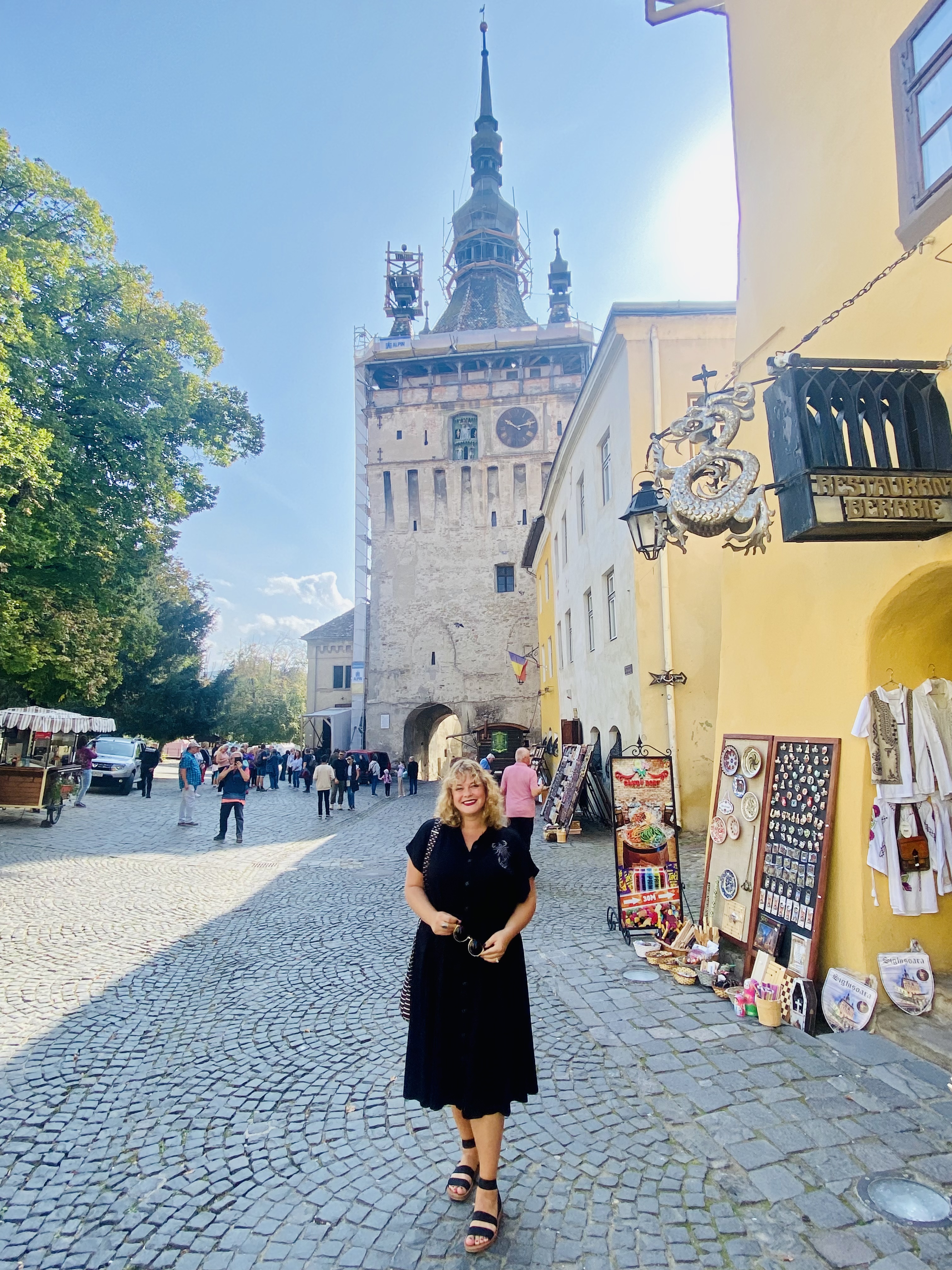

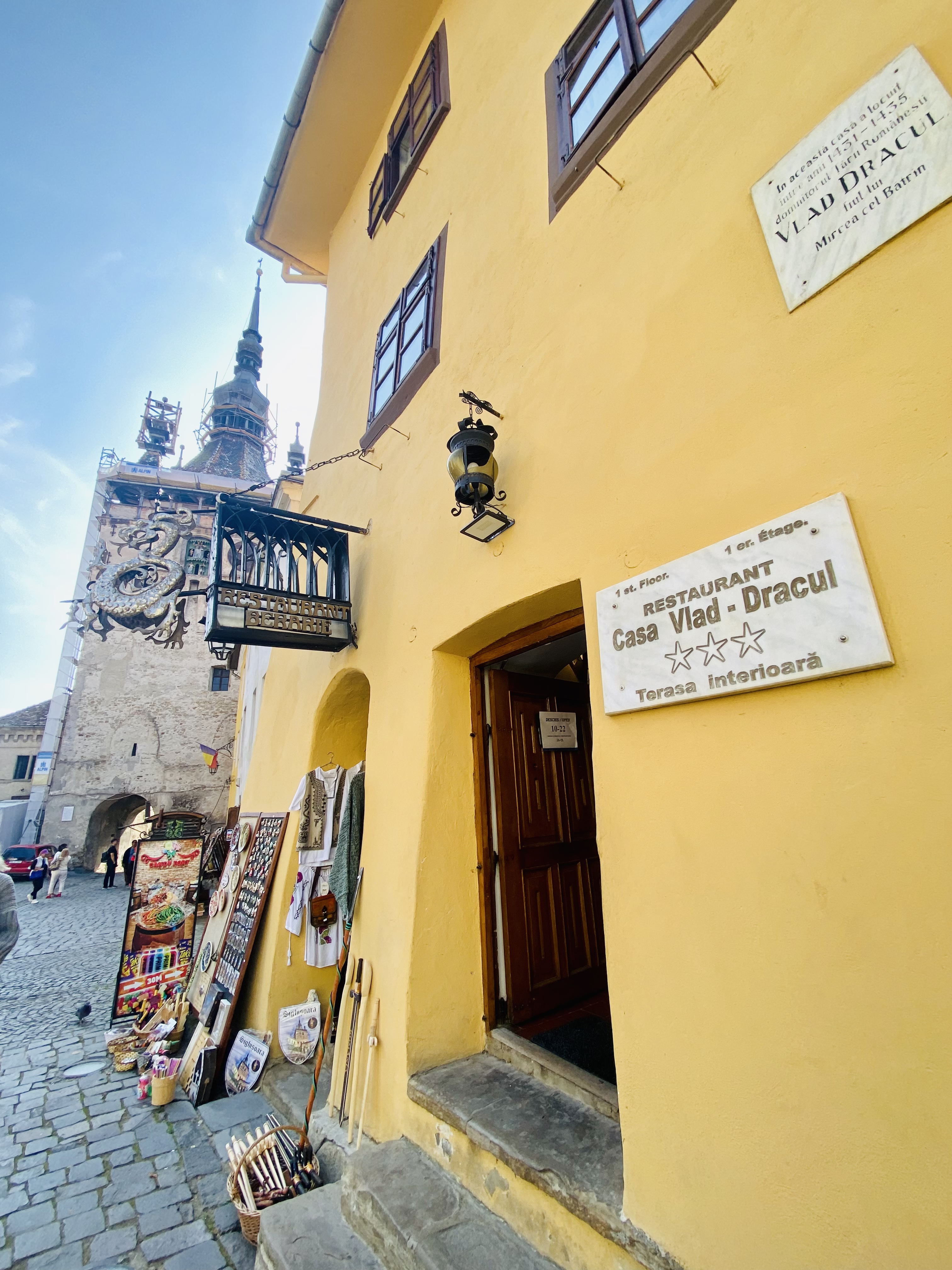
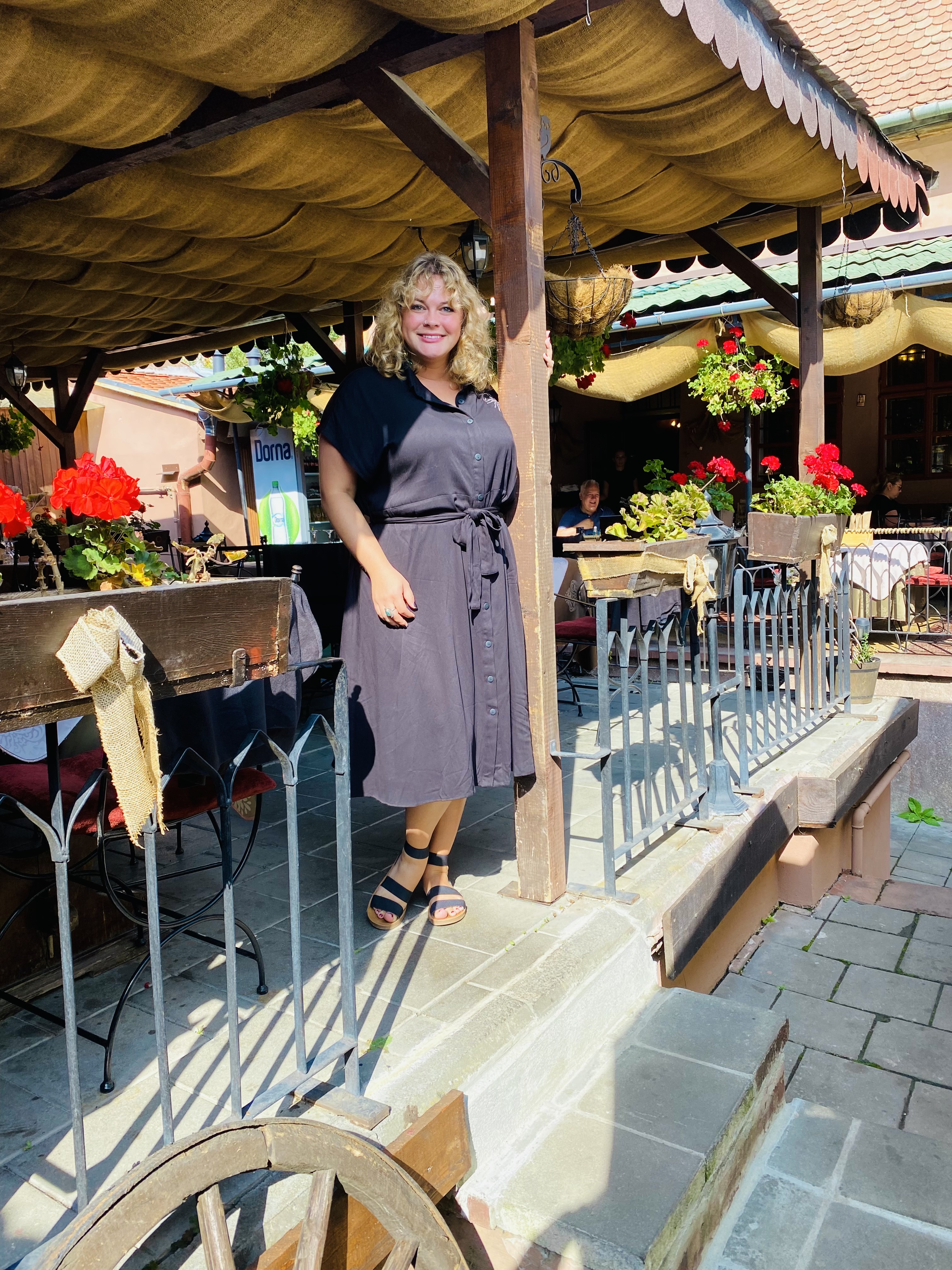
But the real reason why you, an American who loves Dracula, are going to Sighișoara is because Vlad the Impaler’s birthplace IS ALSO A RESTAURANT WITH A BEAUTIFUL TERRACE! And the staff was really friendly! And at one point, a man dressed as the puppet who bangs the drum asked if we spoke English, banged his drum, wished us a happy visit, and walked away. No asking for Euros, just spreading good vibes and sick beats. I thought Bran Castle was going to be the best day, but I think Sighișoara was my favorite.
Buchareșt
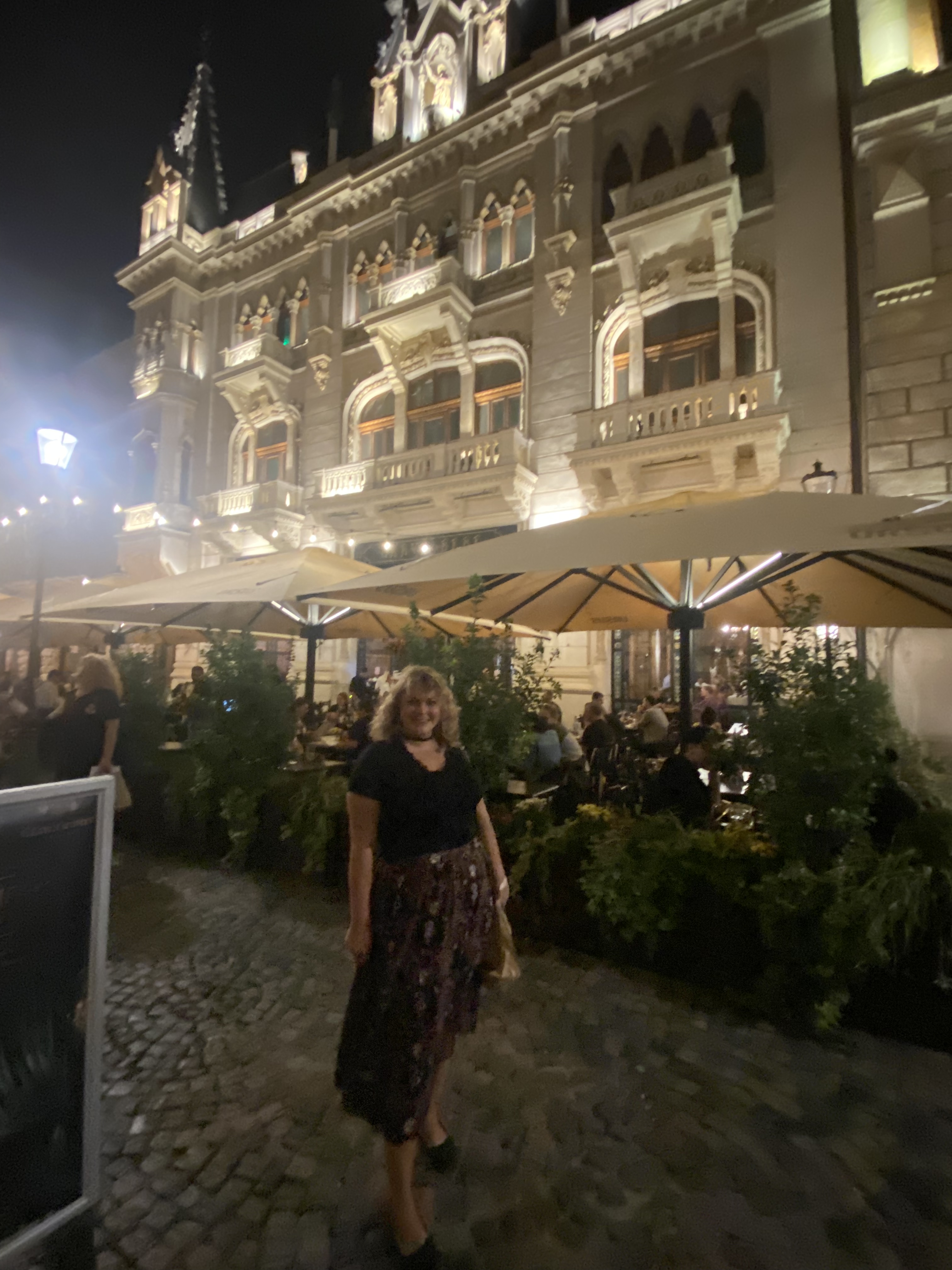
What an interesting city. Half of it is gross communist bloc buildings, half of it is run-down Parisian Beaux-Arts architecture. The architecture points to the history of the capital city: when half the city burned down, King Carol I (the guy who built the beautiful Peleș Castle) was like “Hey! Let’s make this place look like Paris! Everybody loves Paris!” So Buchareșt was nicknamed “The Paris of the East.” And Romanians really loved Parisian life (same) and did their best to copy la belle vie for about a century.
And then Communism rolled its way across Eastern Europe.
Nicolae Ceaușescu was the communist dictator of Romania. From 1965 to 1989, Ceaușescu tried his darndest to thwart Transylvanian villages, tear down any reminders of old Romanian culture and its mixed heritage, and forswear Western influences. But, in the tradition of all communist despots, he built a huge palace for himself. Upon visiting Pyongyang, Ceaușescu ordered the construction of the heaviest building in the world, the Palace of the Parliament. This building is HUGE at 3,930,000 square feet, and it’s made of cement, steel, and bronze. It sinks a quarter of an inch into the ground each year, so go see it while you can.
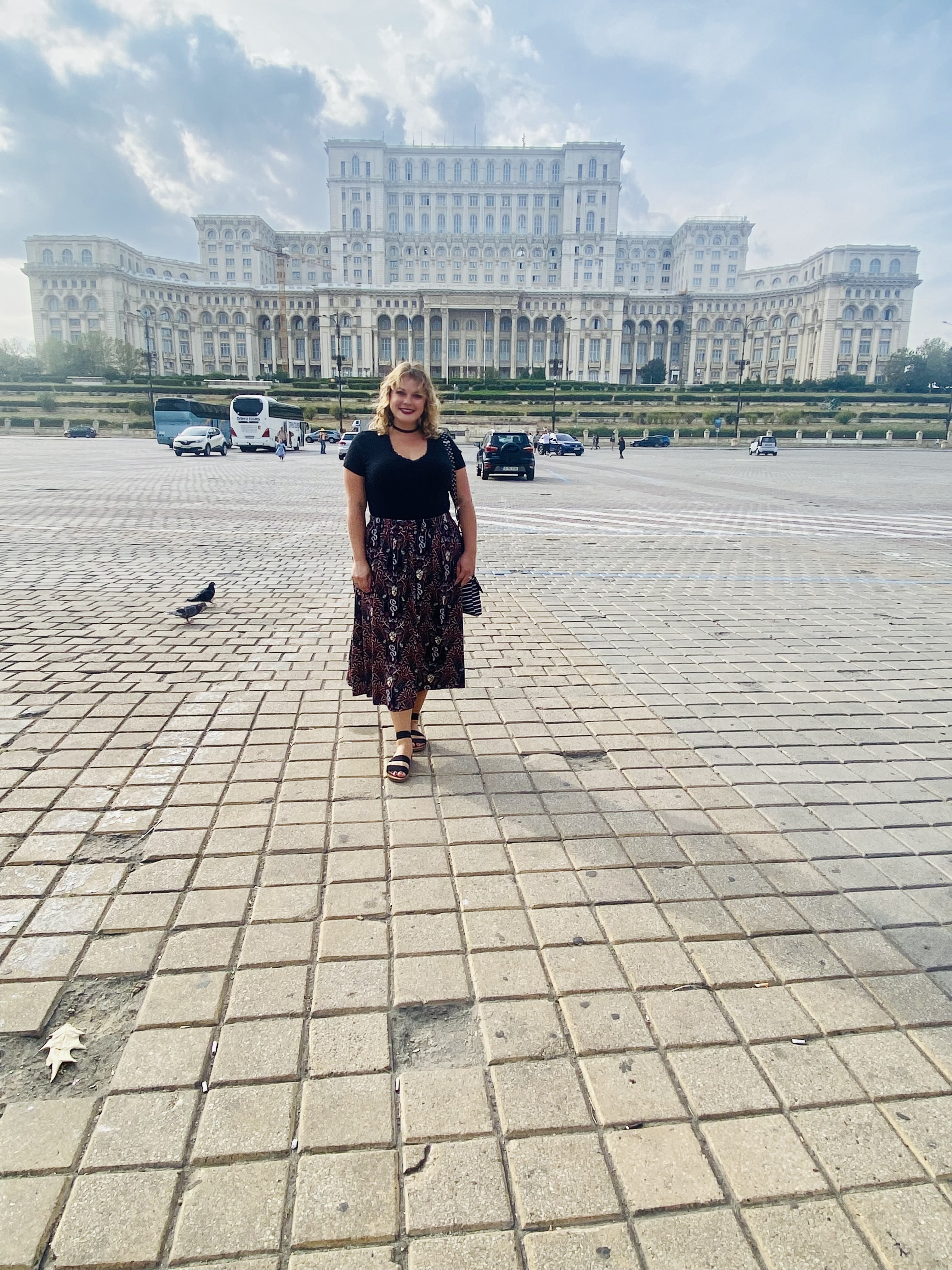
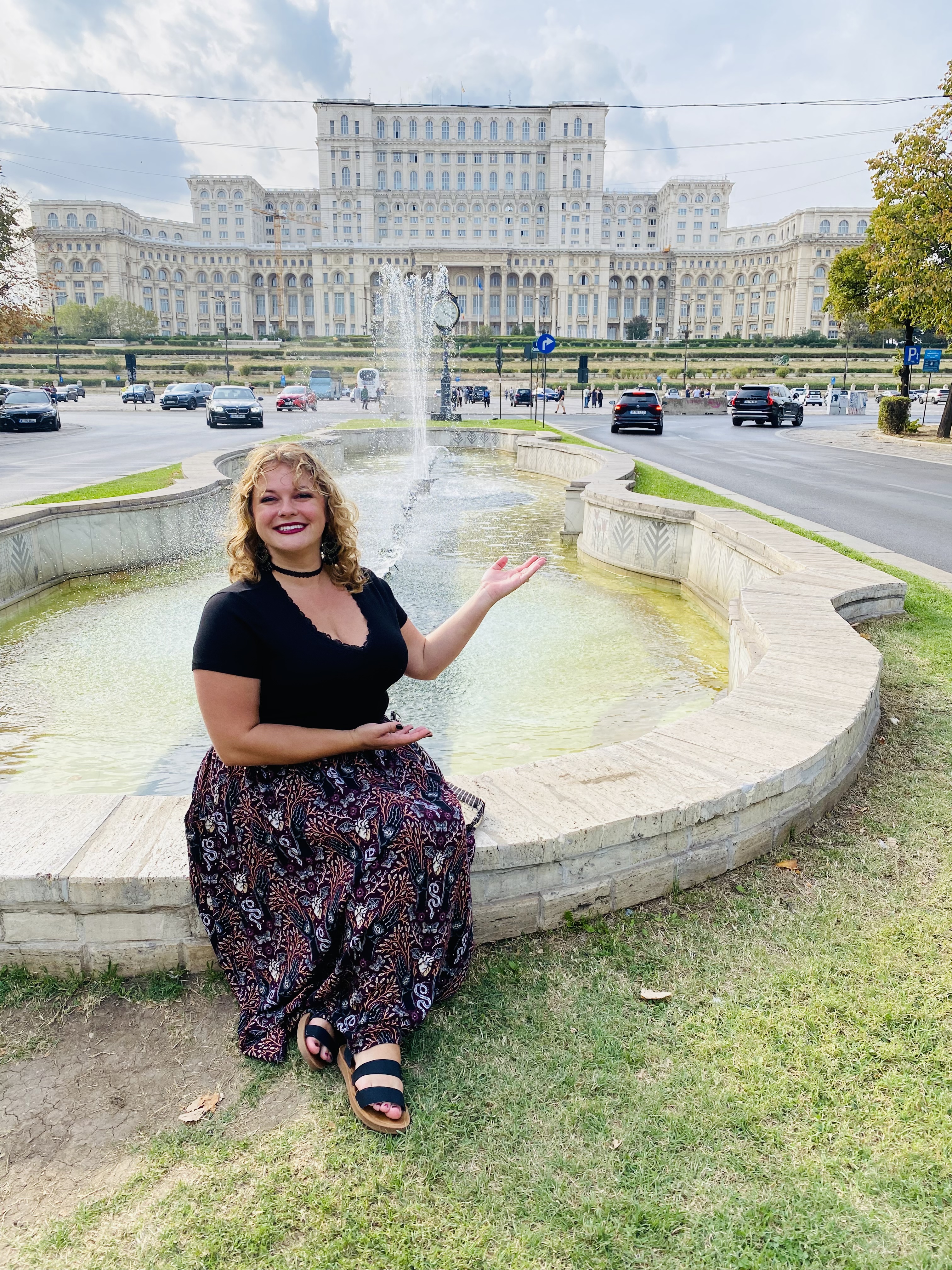
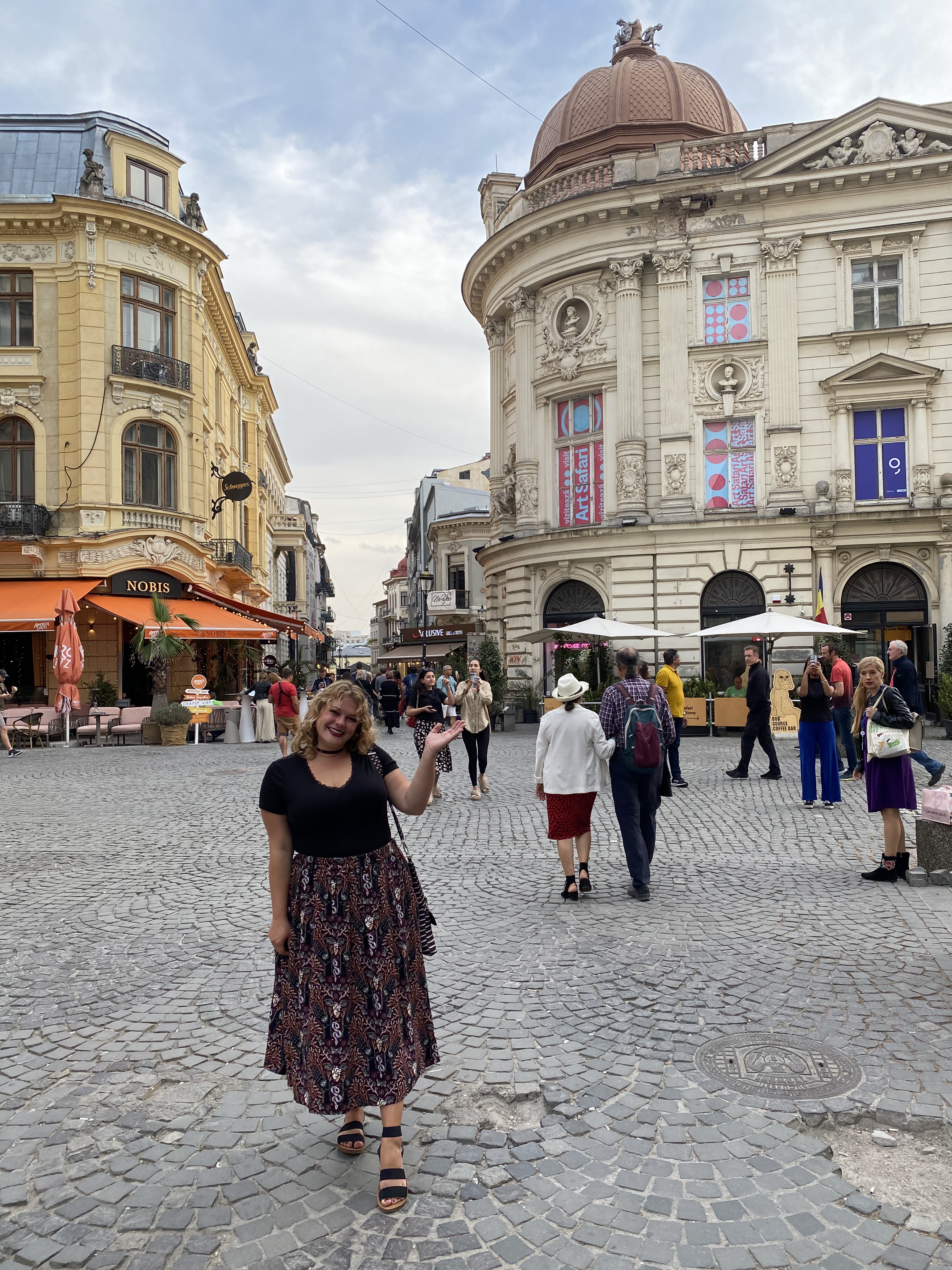
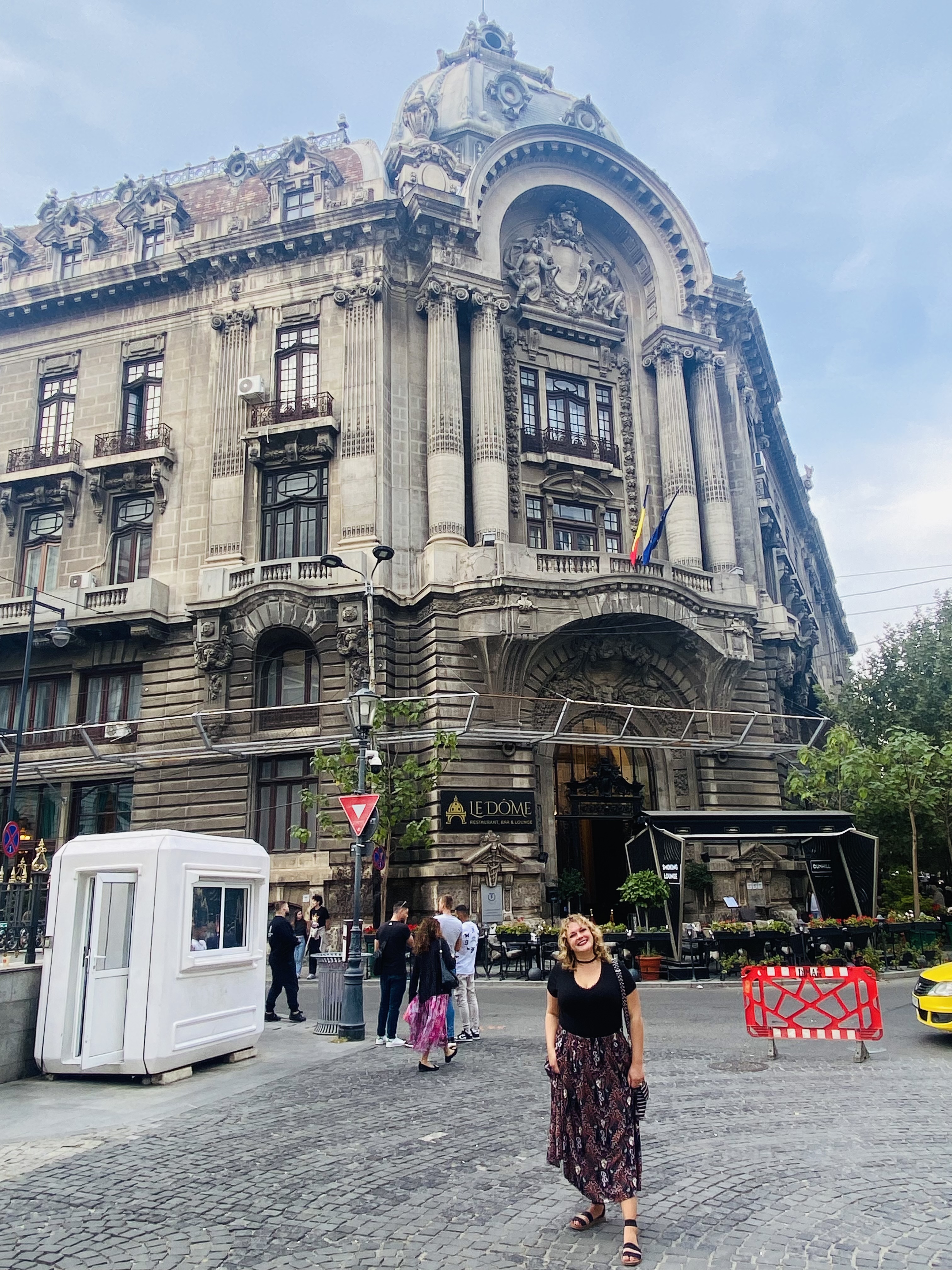
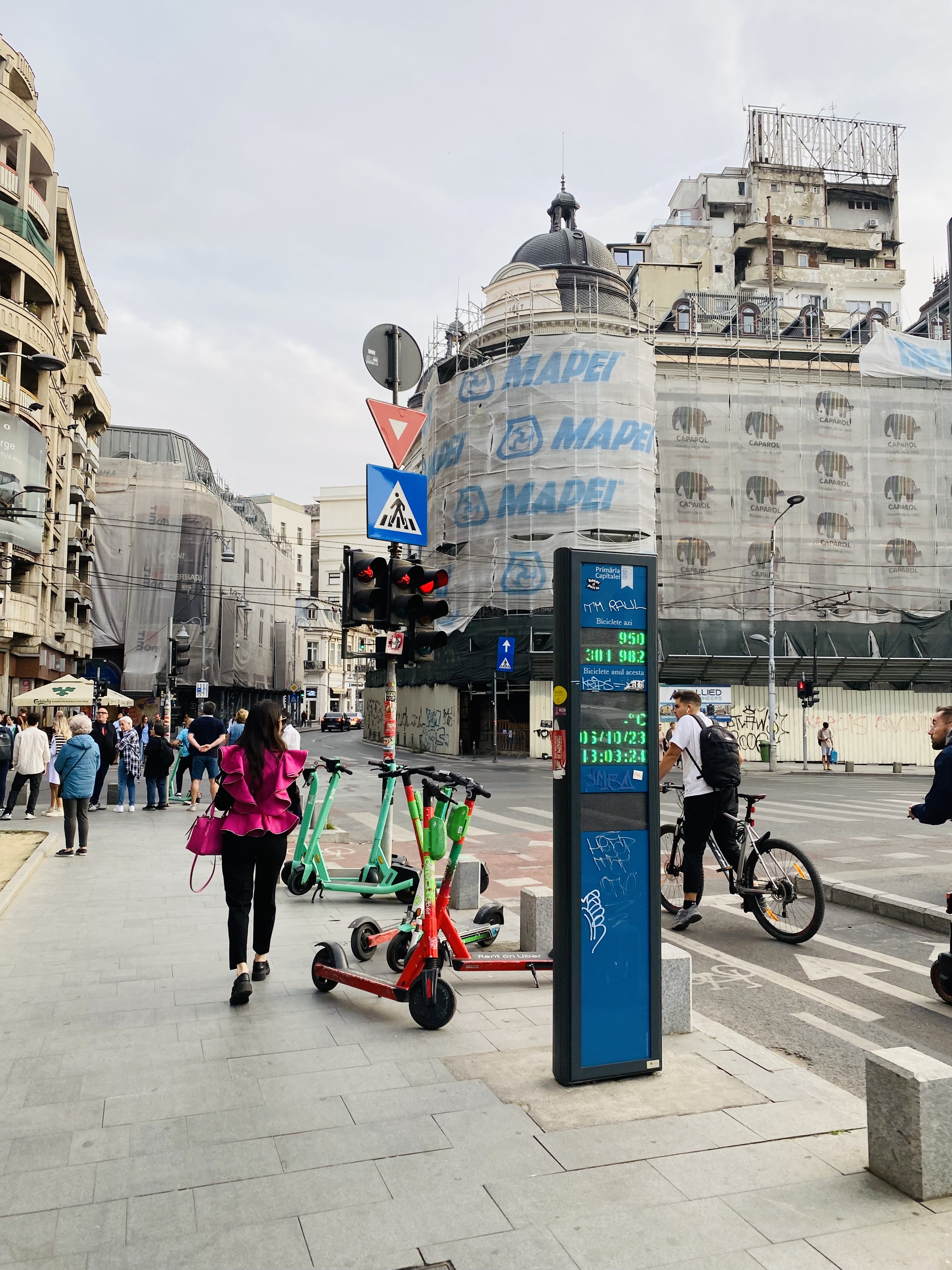
Buchareșt is the most expensive city in Romania. You’ll live like a king in Transylvania, where one Romanian leu currently equals an American quarter, but in Buchareșt, you’ll be paying American prices. All the more reason to spend one day there. And if you’re going to spend one day there, I would recommend spending your final day in Romania at the biggest spa in the world.
Therme București
If you have been reading my travel blog long enough, you know that I am a sucker for spas. I am a tired, sore-footed public school teacher, and while I won’t go out of my way to pay top prices at a day spa at home, I will absolutely hit up a sauna-steam-room-indoor-pool in Europe. I will go toe-to-toe with Donna Meagle and Tom Haverford any day of the week, for I am a firm believer in Treat Yo Self.
This spa is the Spa to End All Spas.

Even if you’re not a spa person, hear me out. Alex is not a spa person; he just gets dragged to various saunas across Europe because he’s legally bound to me. But Alex will back me up that Therme Day Spa is well worth a day of your Romanian vacation, especially the day before your long flight back.
Now, Google says that Therme Erding in Germany is the largest spa in the world, but Therme Bucharest is the largest of the Therme spas, so I’ll get back to you on this. (*stares Germanically at Alex*).
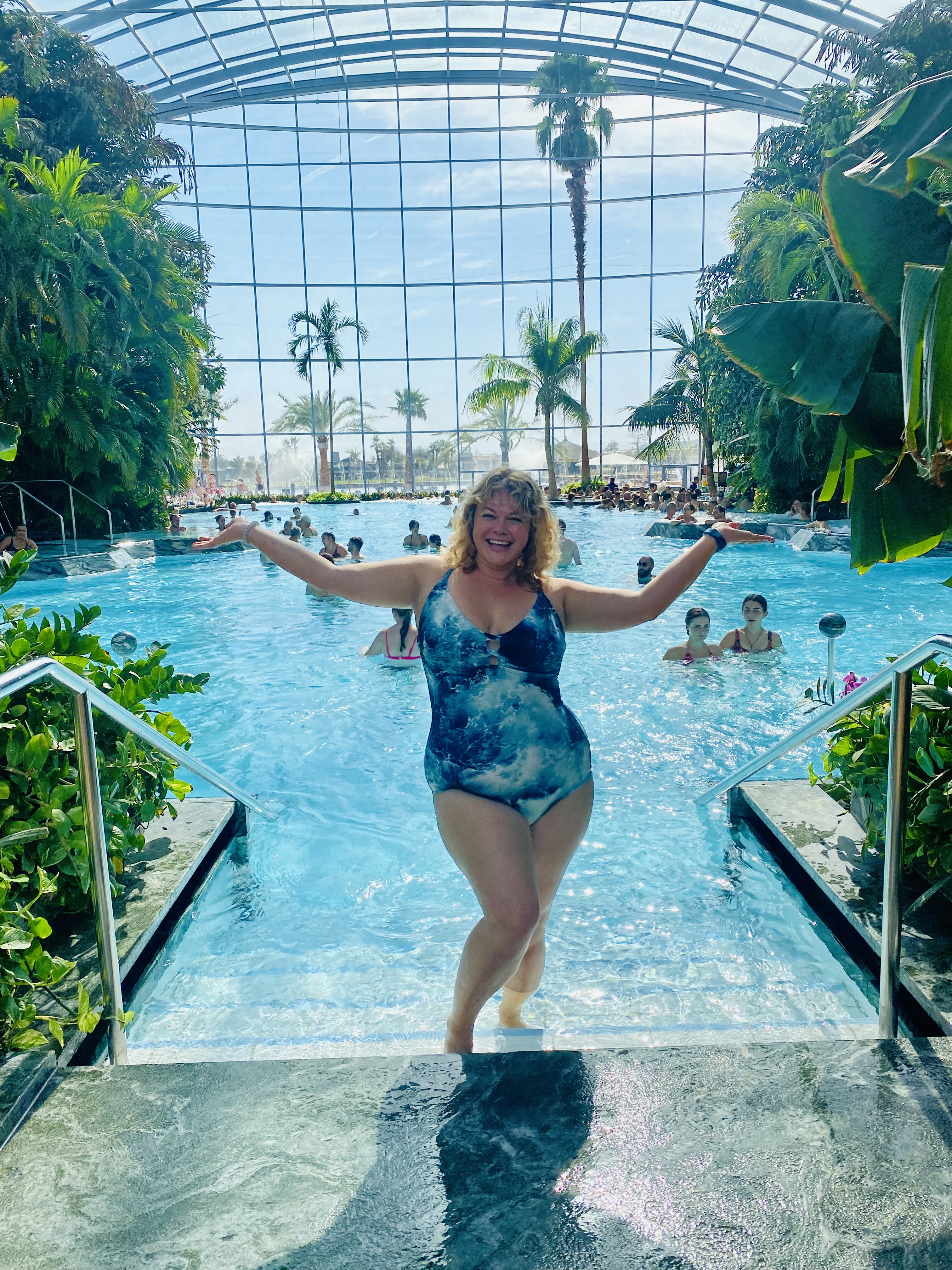
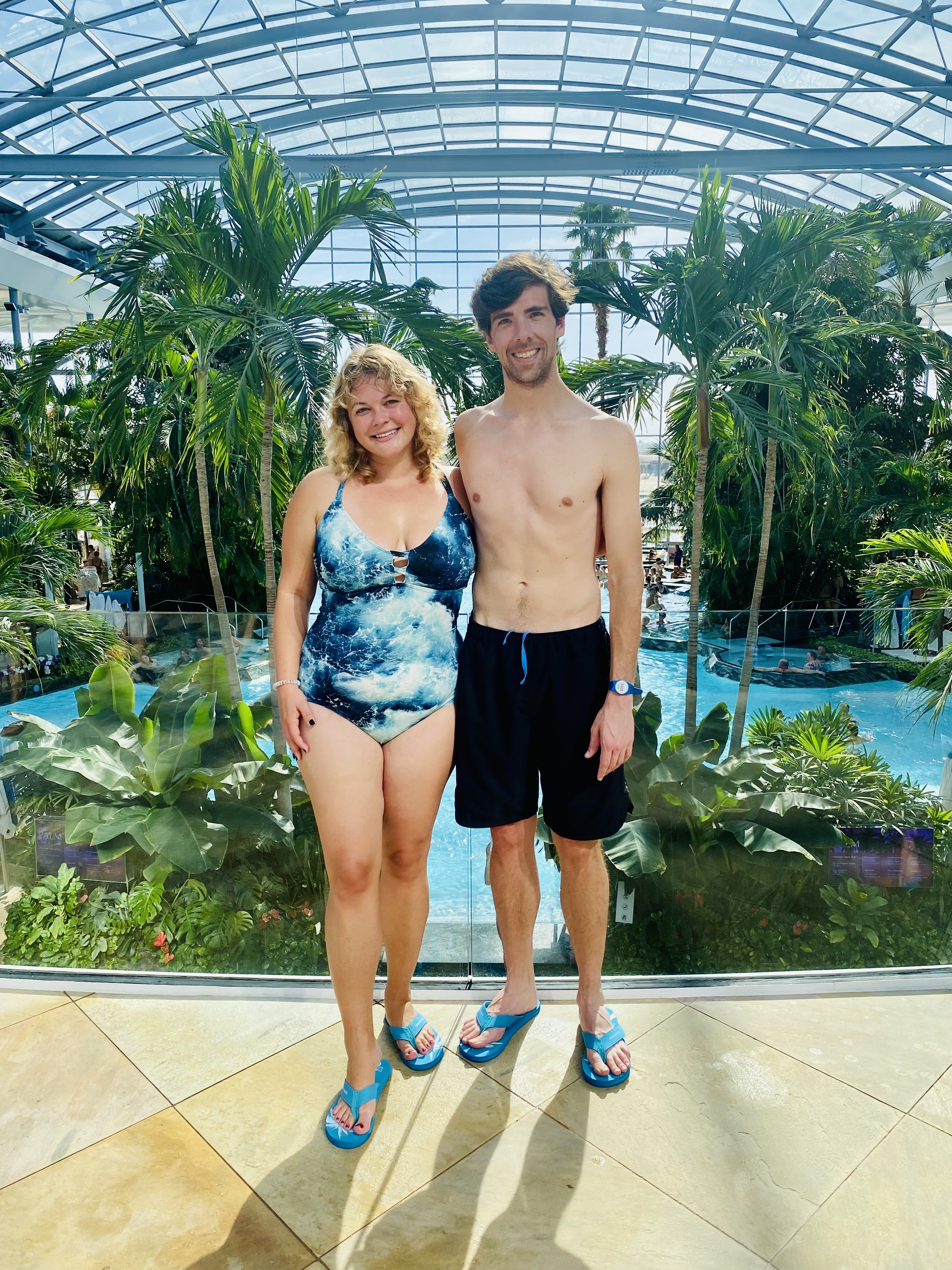
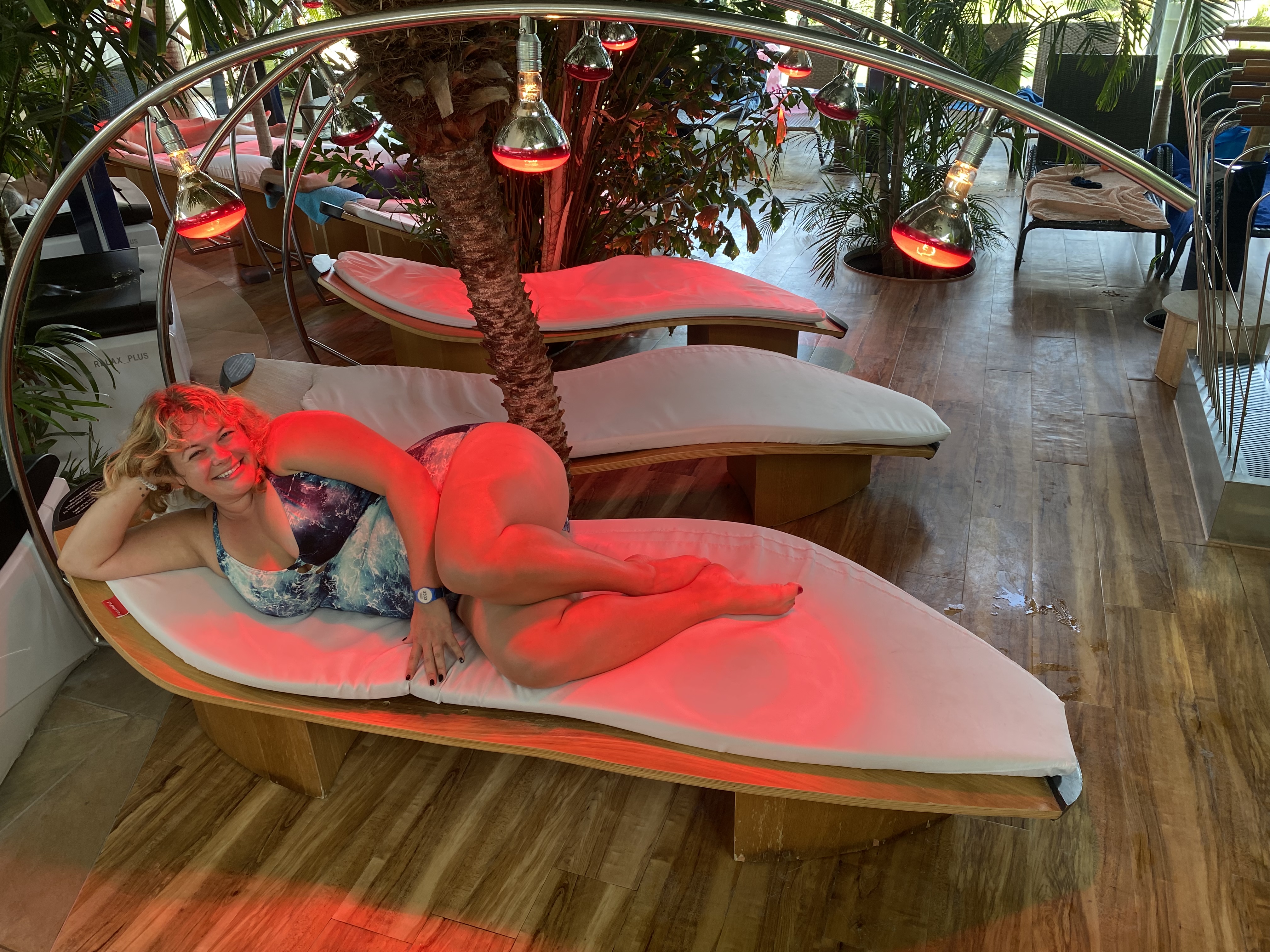

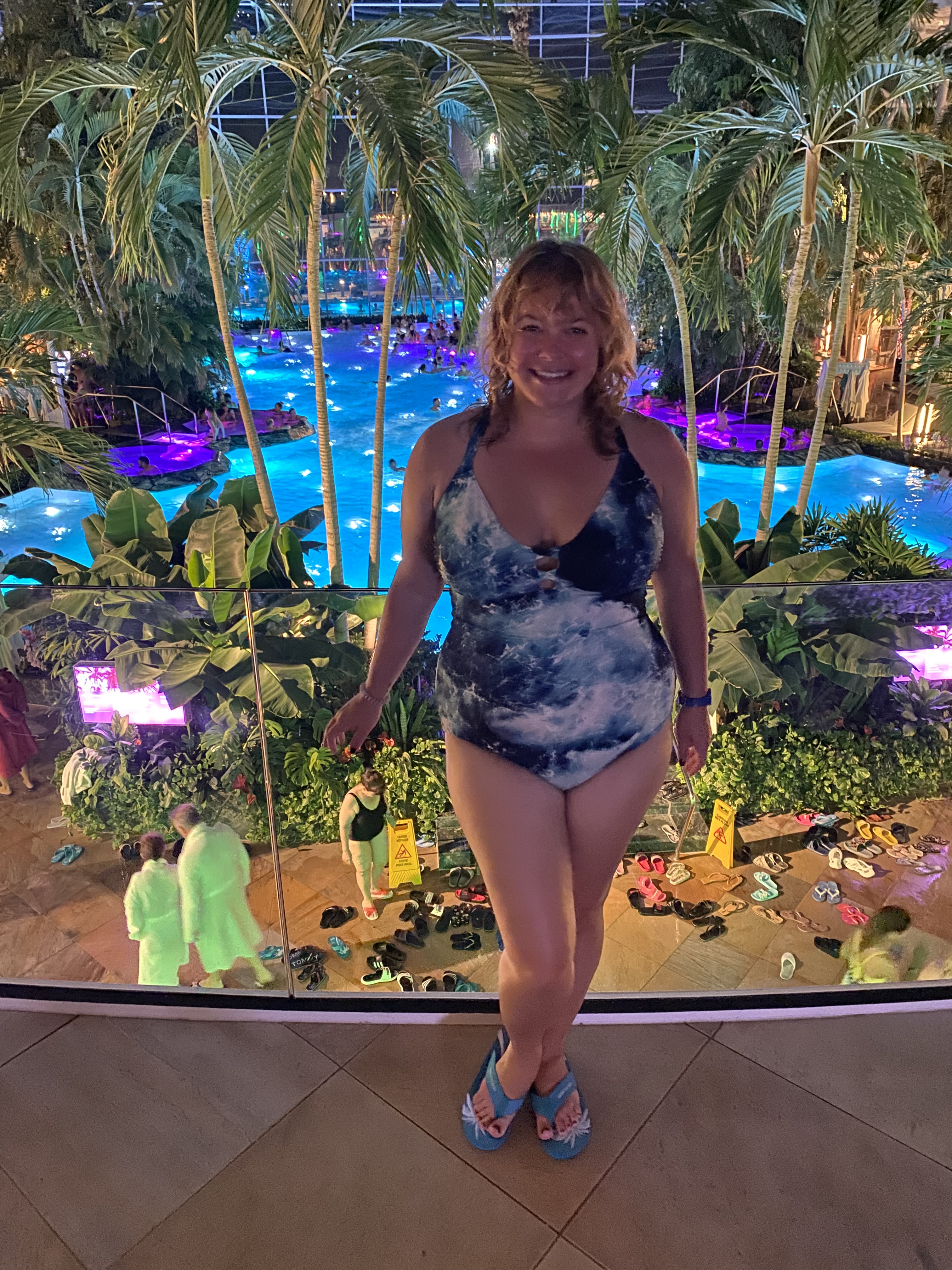
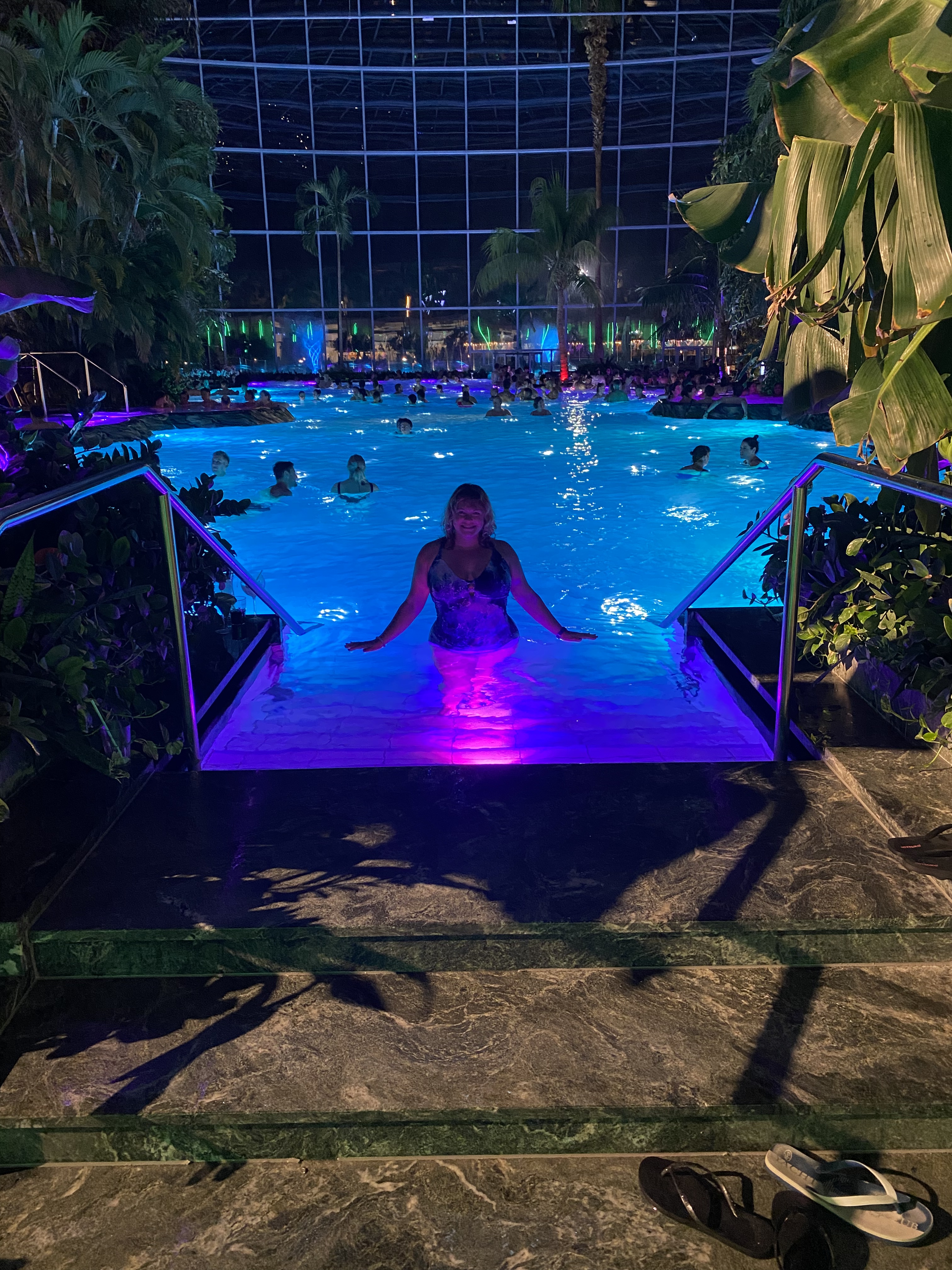

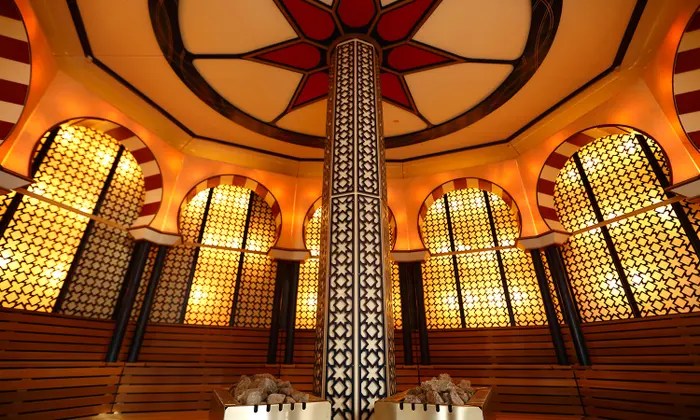
The best way to describe Therme București is that it’s like the Disneyworld of relaxation. (Including waterproof magic bands for cardless/cashless payment!) There are three “parks” within the complex, which is warmed by thermal water underground: Galaxy (the family-friendly area with tons of waterslides, wave pools, etc.), Palm (the glow-in-the-dark pool with swim-up bar, a heated outdoor pool with lazy river, hydromassage chairs, and a rainforest steam room with salt scrubs and mud masks), and Elysium (mineral jacuzzi, infrared light beds, and 6 saunas that are designed after different countries). A ticket to Elysium will grant you entrance to the other two parks. Elysium and Palm are ages 14 and up. Elysium’s saunas are based on other countries that are famous for relaxation: the Himalayan sauna has walls of pink salt, the Bavarian sauna is a classic cedar sauna, the Hollywood sauna shows movies (ugh), the Amazon sauna swelters amid the palm treetops, the Provence sauna smells like lavender and thyme, the Alhambra sauna smells of Spanish spice.
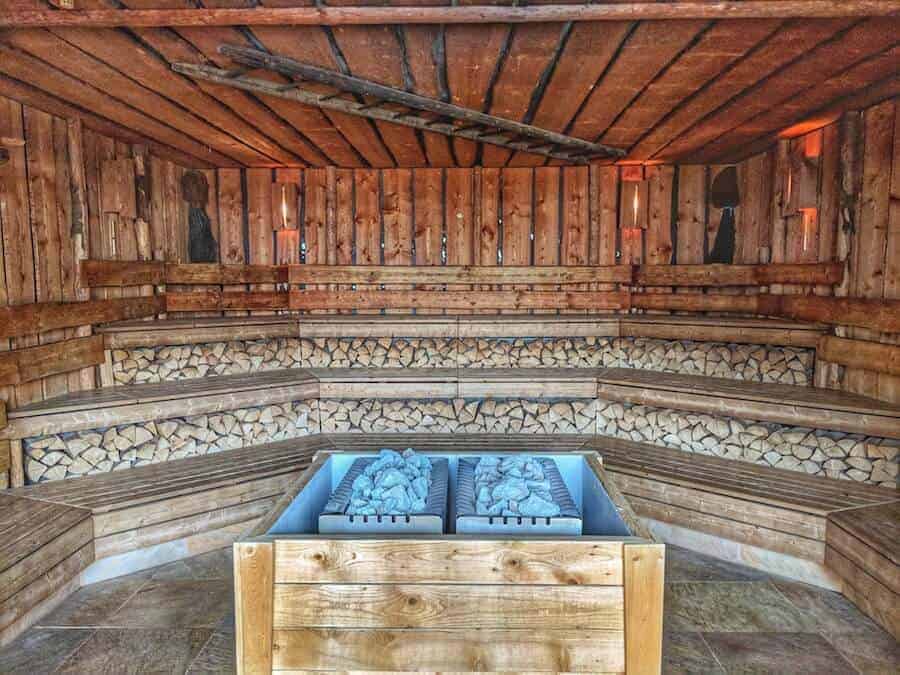

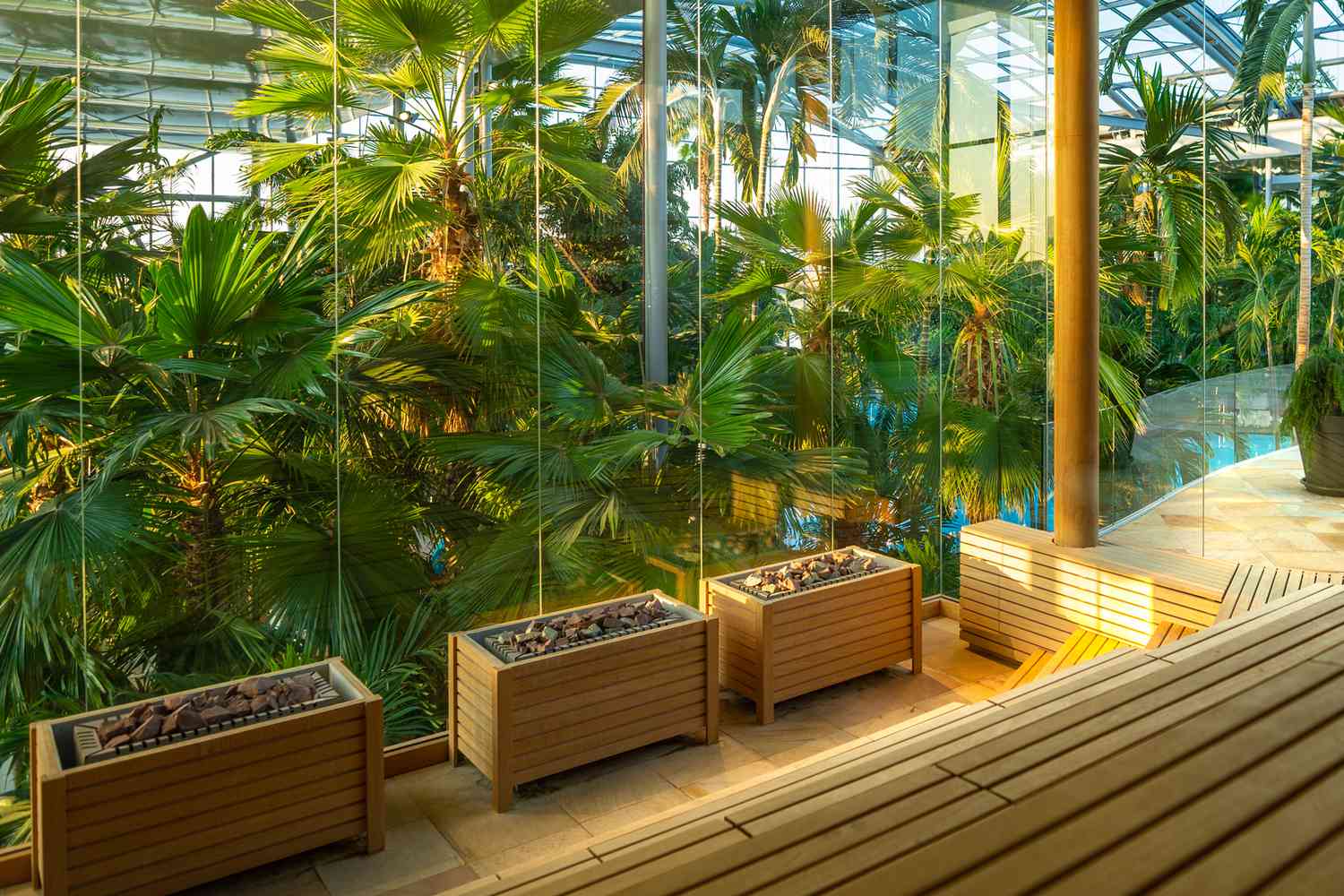
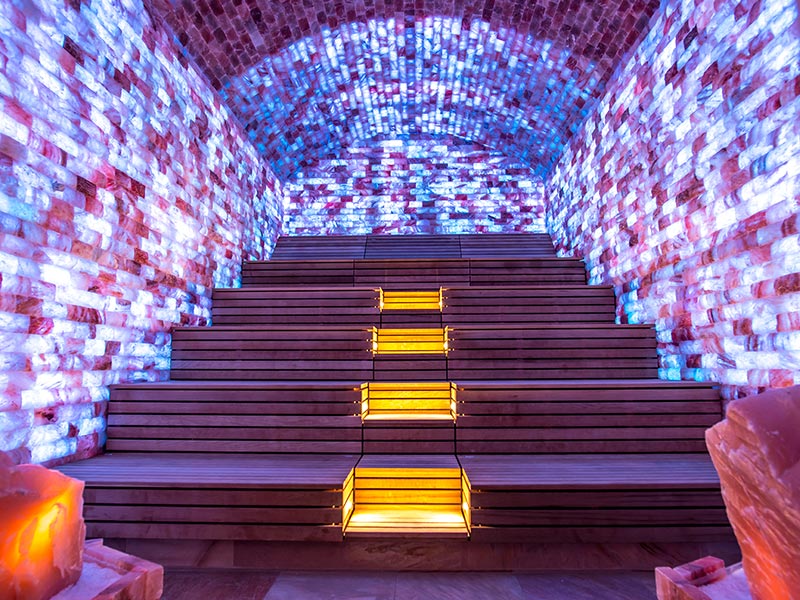
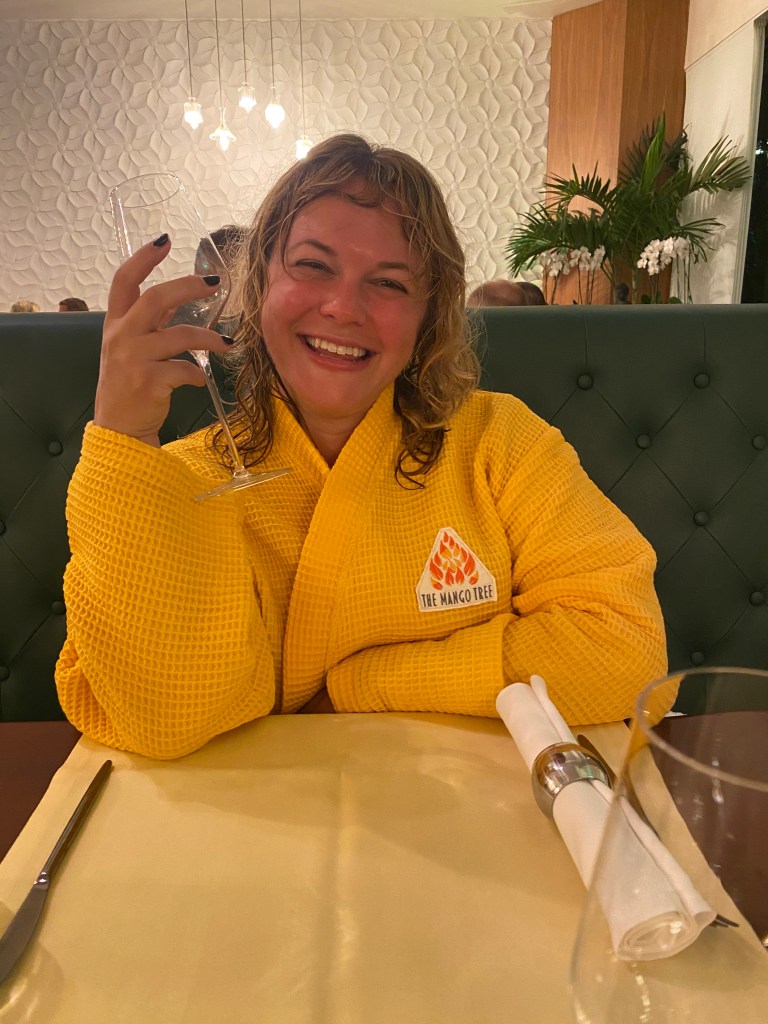
There’s a cafeteria in Galaxy, but my advice for childless travelers is to spend all day (and I do mean ALL day, you’ll be sorry you didn’t) at Therme, and eat dinner at Elysium’s upstairs Thai restaurant, The Mango Tree. You’ll drink fresh house-made lemonade and eat crispy duck and egg noodles in sunny-colored bathrobes. This is the one time I broke my “Only Eat Traditional Food of The Region You’re Visiting” Rule because of the sheer novelty.
WHAT I ATE
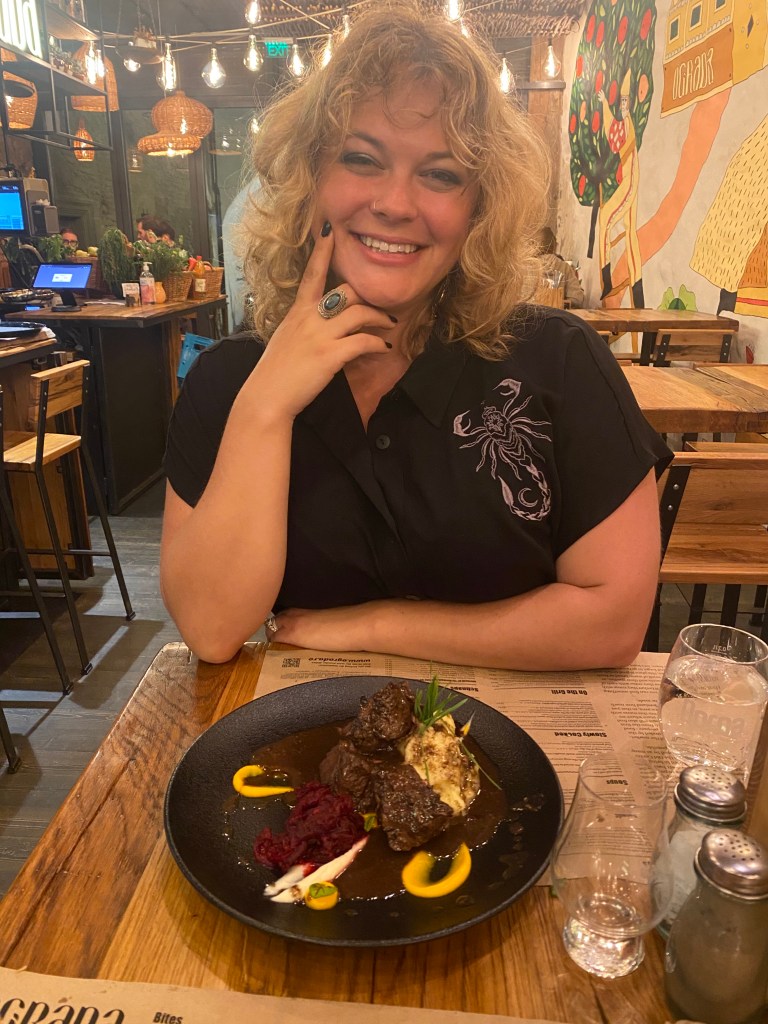
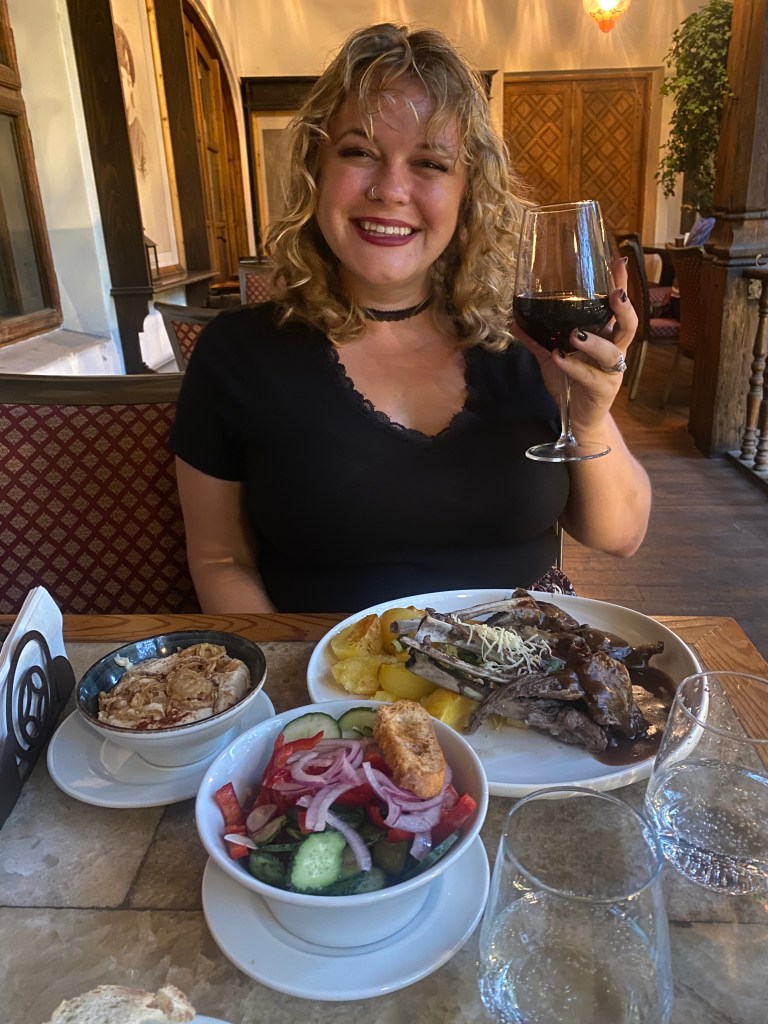
Pack some Immodium, because Romanian food combines the heavy German-Saxon cuisine with cholesterol-laden Eastern European stew-based dishes. You should also know that Romanians don’t skimp on portion sizes. Luckily, Romanian servers will be kind enough to stop you from ordering a gigantic smorgasbord charcuterie and a calf’s knuckle, which is the size of a small Honeybaked Ham. Here are some Romanian dishes that you shouldn’t miss (although you might have to unbuckle your belt a few notches when you’re done):
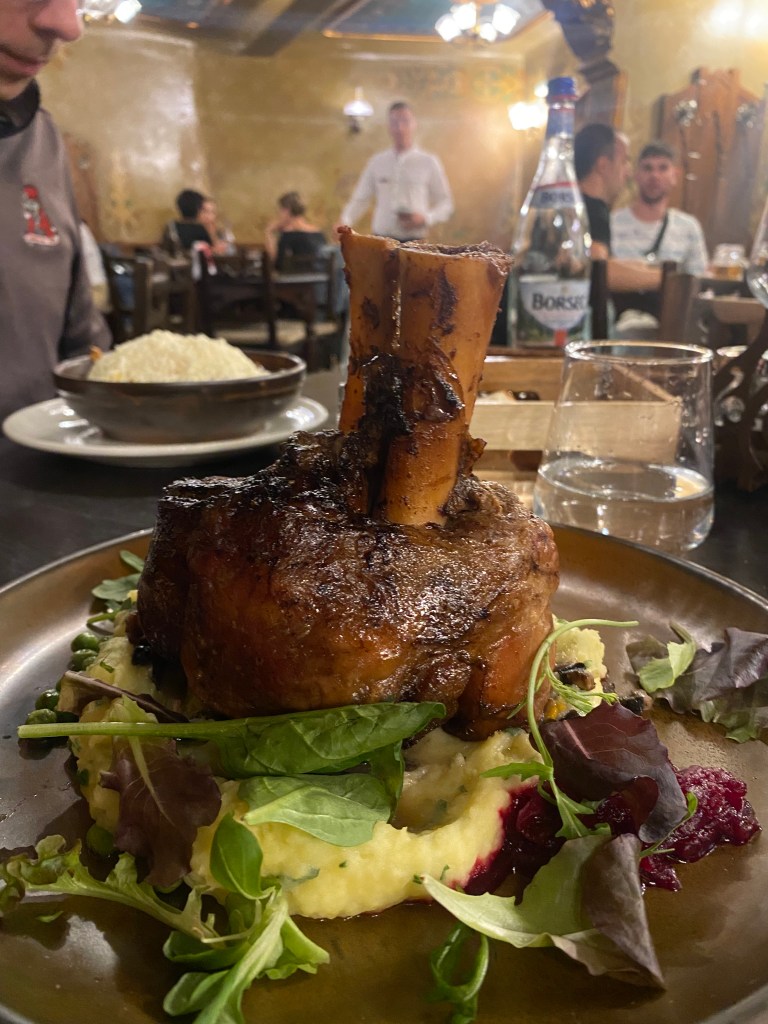

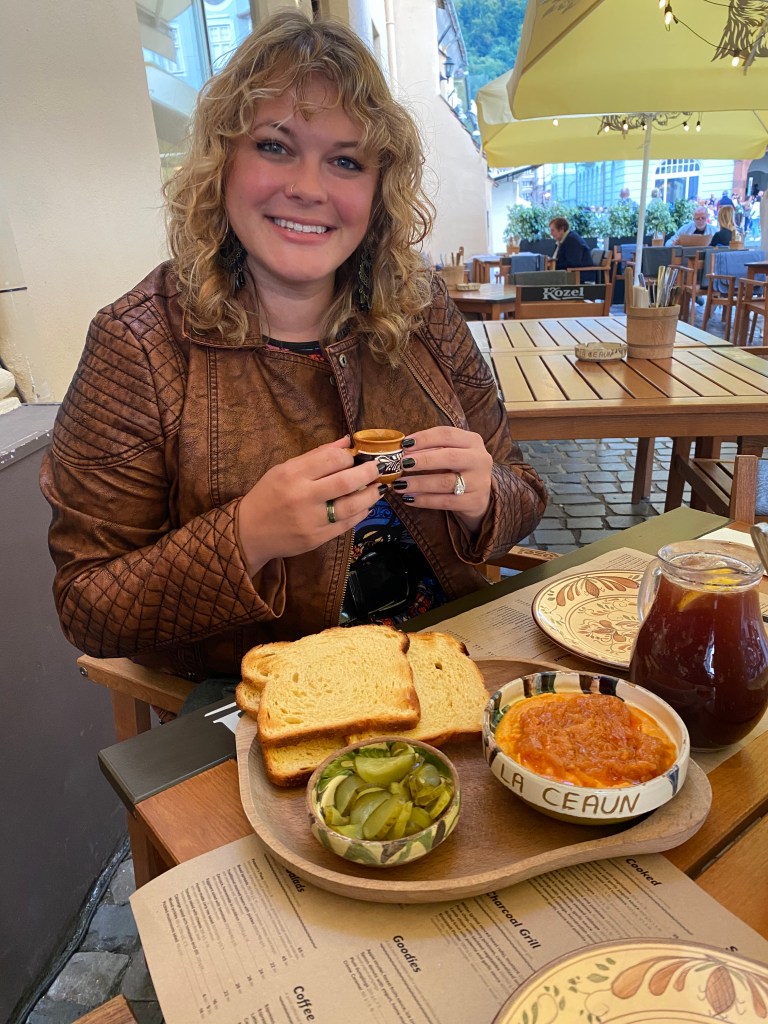


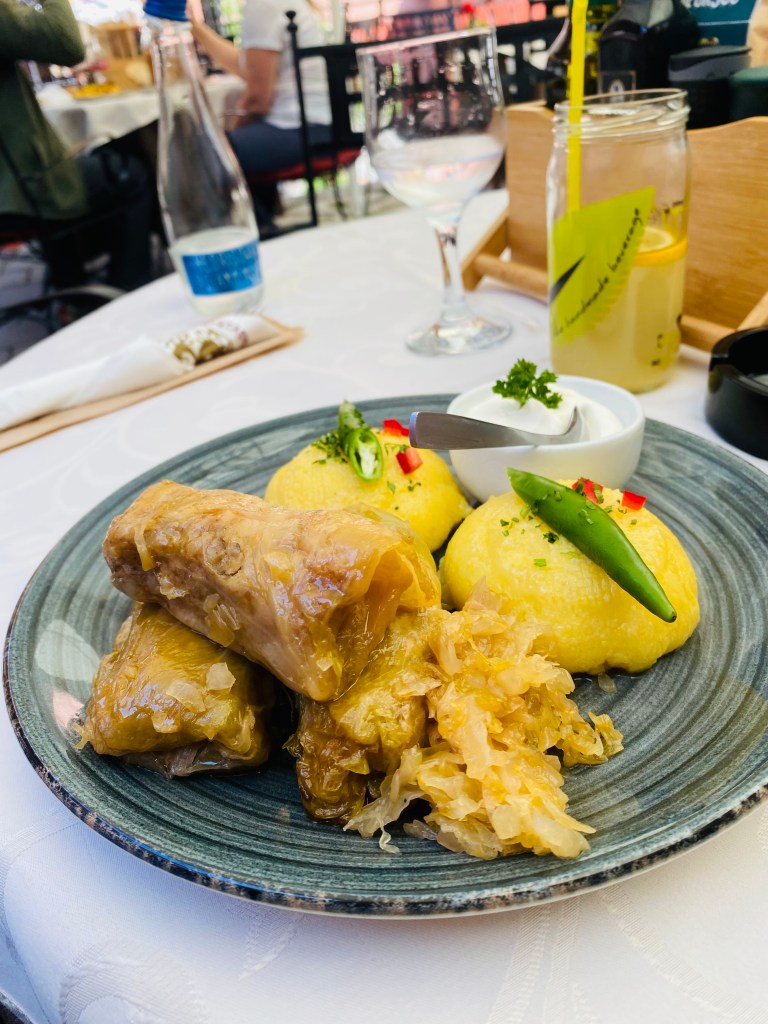
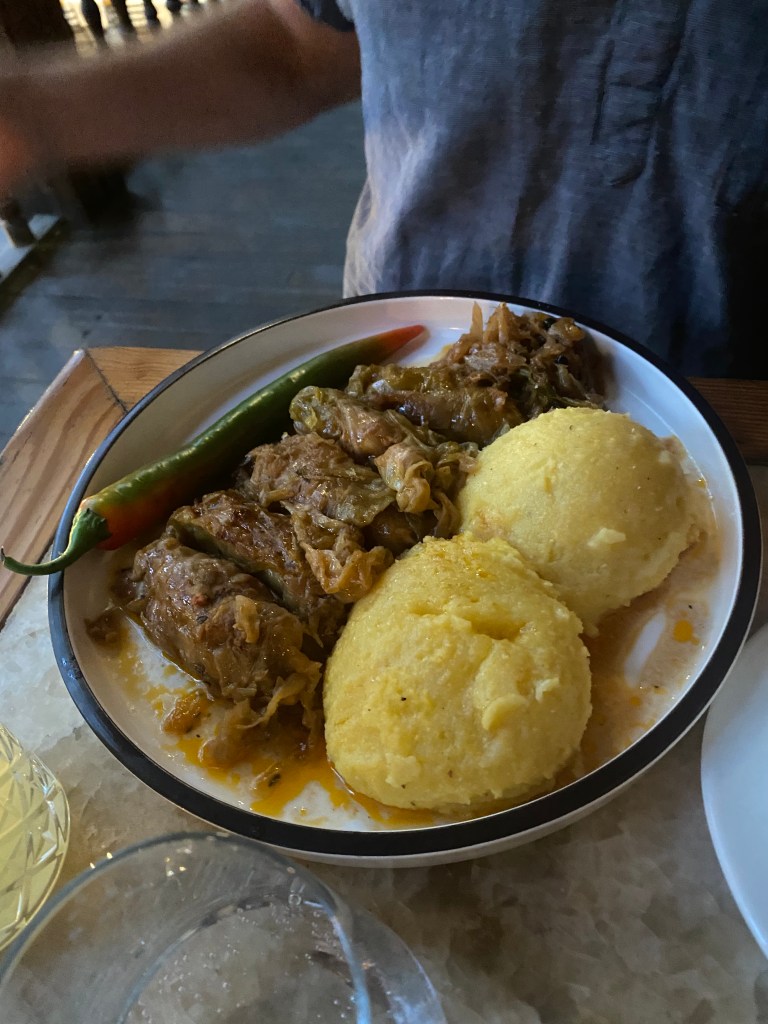
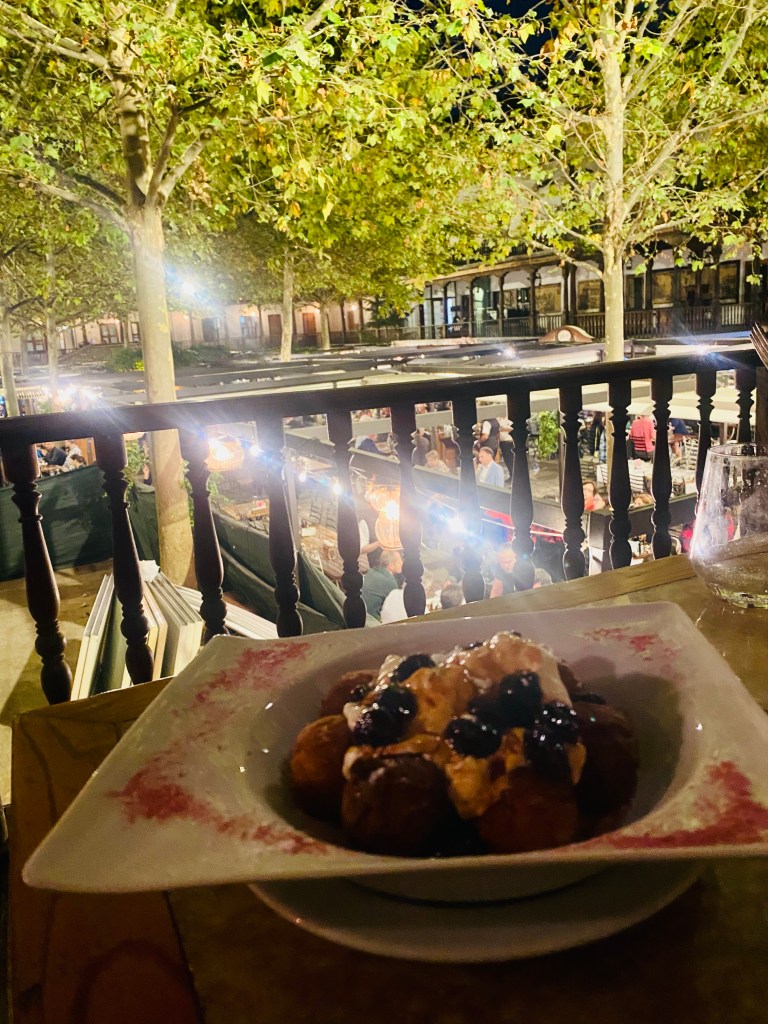
- Ciolan de Porc la Captor (slow-roasted pork knuckle)
- Sarmale (pork-stuffed cabbage rolls)
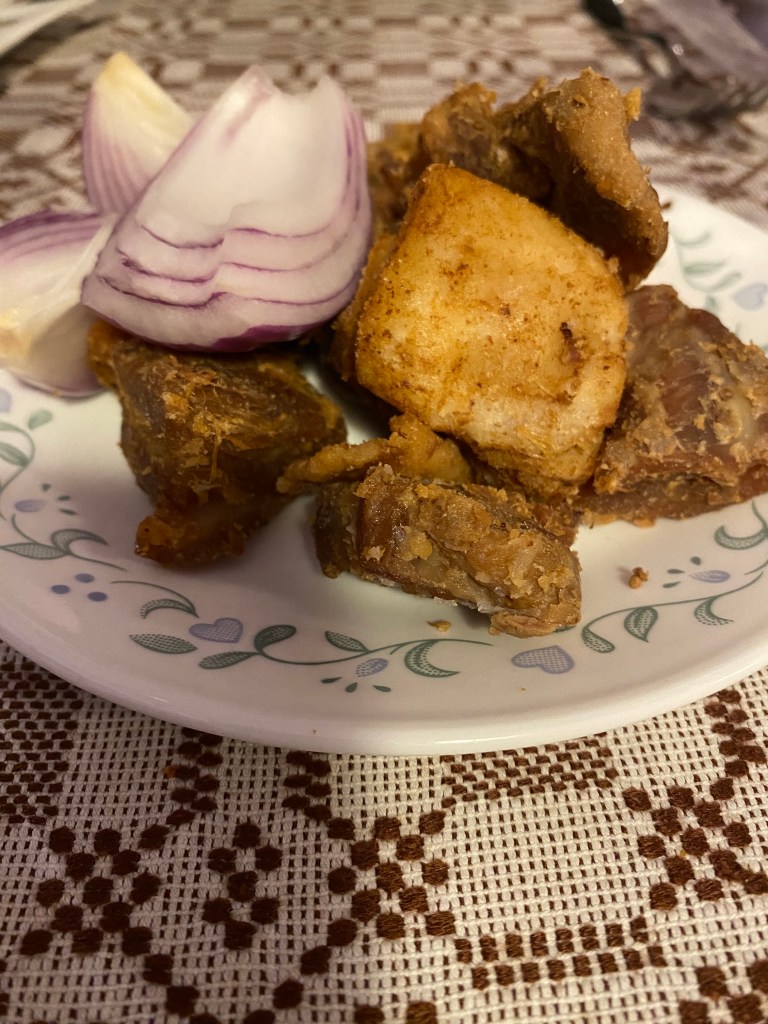
- Jumări (fried/smoked pork belly)
- Reindeer/venison
- Fasole batuta (Romanian hummus)
- Mamaligutā (polenta/grits)
- Ciorba de fasole (pork and bean soup in a bread bowl)
- Papanasi cu smîntînā (doughnut balls with sour cream and jam)
- Clătite (crepes just like Paris, but Romanian style!)
- Kürtőskalács (chimney cakes just like Poland, but filled and chopped)
- Tuica (schnapps) and Vișinată (cherry wine)
- Lemonade (I know that’s weird but pretty much all Romanian restaurants will offer a house-made lemonade and it is SO good)
Here are some restaurants I recommend that will probably serve all of those items:
- Brașov: Sergiana (underground traditional Romanian), Ograda (farm to table), La Ceaun (for soup, outside seating with cozy blankets), Belvedere (our hotel restaurant with a mountain view)
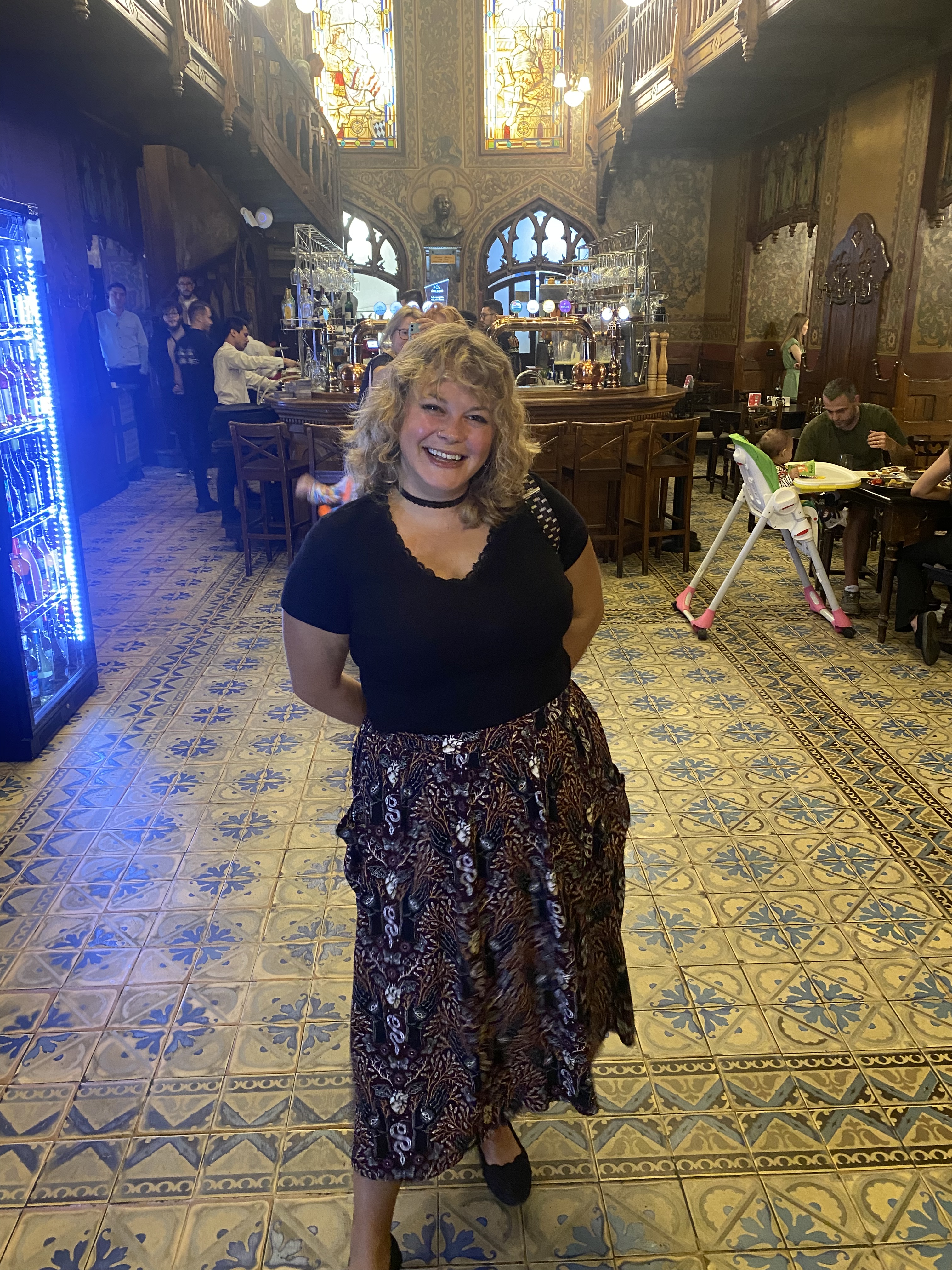
- Buchareșt: Caru’ cu bere (beautiful Art Nouveau mansion-turned-restaurant with traditional Romanian dancers and live music, kitschy but somehow authentic and classy, not a tourist trap but definitely go there if you’re a tourist) and Manuc’s Inn (one of the oldest restaurants in Buchareșt, haunted??)
- Sighișoara: there were so many cute cafes in Old Town, but Casa Vlad Dracul is a lot like Caru’ cu bere… you think it’s going to be a tourist trap but it’s really good food for a low price and great ambiance. I think Romania is just too homey to be tourist trappy, if that makes sense.

HOW I PACKED
I found a lot of Goth Girl Chic dresses on Disturbia to live my Mina Harker fantasy, and I was nervous that Transylvanian locals would roll their eyes at me, but it turns out they like Goth Girl Chic as well. A lot of young Gen Z/Millennial Romanians were walking around like they just stepped out of the Matrix: black leather, Doc Martens, smart-looking jackets. Of course, I think that might be the fashion a la mode. Older Romanians wore, like, sweatpants.


In Buchareșt, I noticed a lot of on-trend fashion. It’s much hotter in Buchareșt than mountainous Brașov, so make sure to not wear your heaviest leather duster with which to conceal your wooden stakes and silver bullets. Save that for Sighișoara.


 Ramblin' Reba
Leave a comment