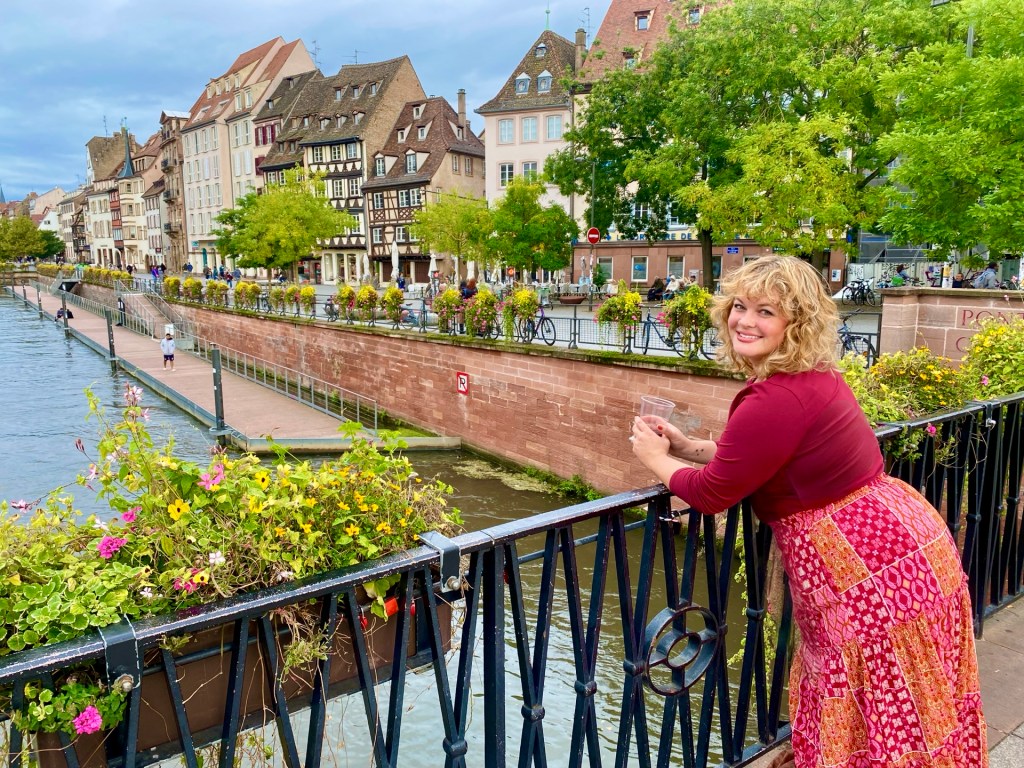
Alsace, the northeastern region in France that borders Germany, feels like a fairytale setting come to life.
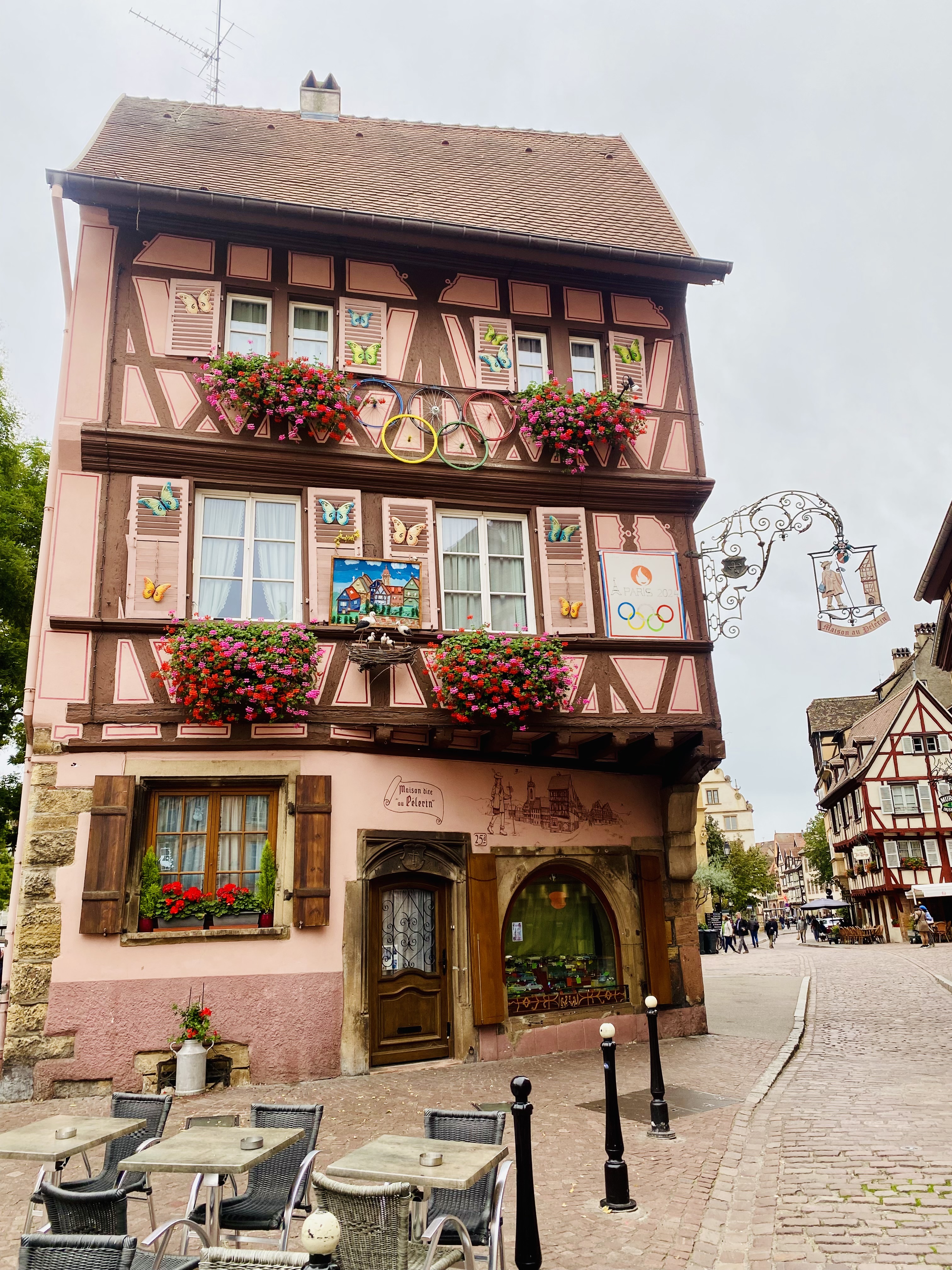
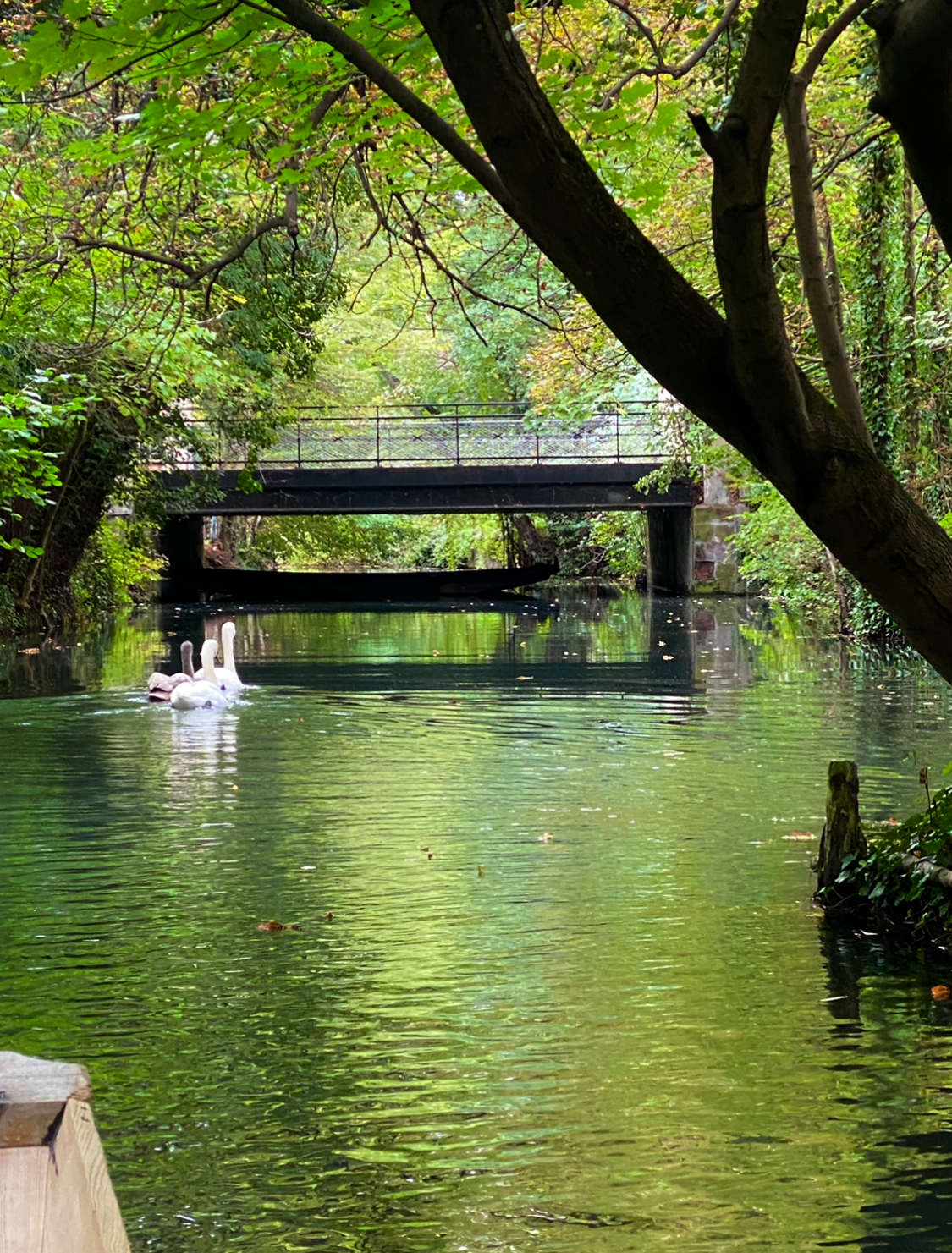
Literally.
Just over the border lies Germany’s mysterious Black Forest, where the Brothers Grimm collected a majority of the famous fairytales we know and love today. So when you think of the quaint half-timbered cottages, rolling hills, and magical forests of Rapunzel, Hansel and Gretel, Snow White, and Cinderella, you’re thinking of that region. In fact, Alsace is so perfectly picturesque and carefully preserved, it is still the setting for many fairy tale movies today. Disney’s Beauty and the Beast is based in Alsace, and the animators were inspired by Strasbourg, Colmar, and its surrounding towns for Belle’s village.
But fairytale cottages aren’t just what’s appealing about Alsace. This region is the perfect blend of French and German culture. If you’ve ever been to Germany and were like “gosh I love the look of southern Germany, the food is so hearty, and the people are so industrious, but I wish they would like chillax on the rules”, or if you’ve ever been to France and were like “gosh I love the people, this place is so romantic, but like why can’t people stand in a line correctly and why are they always on strike” boy have I got the perfect place for you. Alsatians have the conscientious Germanic desire for order, but plenty of French joie de vivre.
Alsace, or Elsàss in German, has changed hands between France and Germany several times in history. It went to France after the Thirty Years War in 1648, then flopped back over to Germany in 1871 after the Franco-Prussian War, then after World War I it was one of the territories that Germany had to give up to France, and then the Nazis yanked it back during World War II, and after they lost it was returned to France. You would think the people would have a hard time switching allegiances, like “are we French or are we German?” but it seems like they just consider themselves Alsatians. They even have their own German-sounding dialect of French. We get the term “smooch” from Alsatian!
WHAT TO SEE
Strasbourg
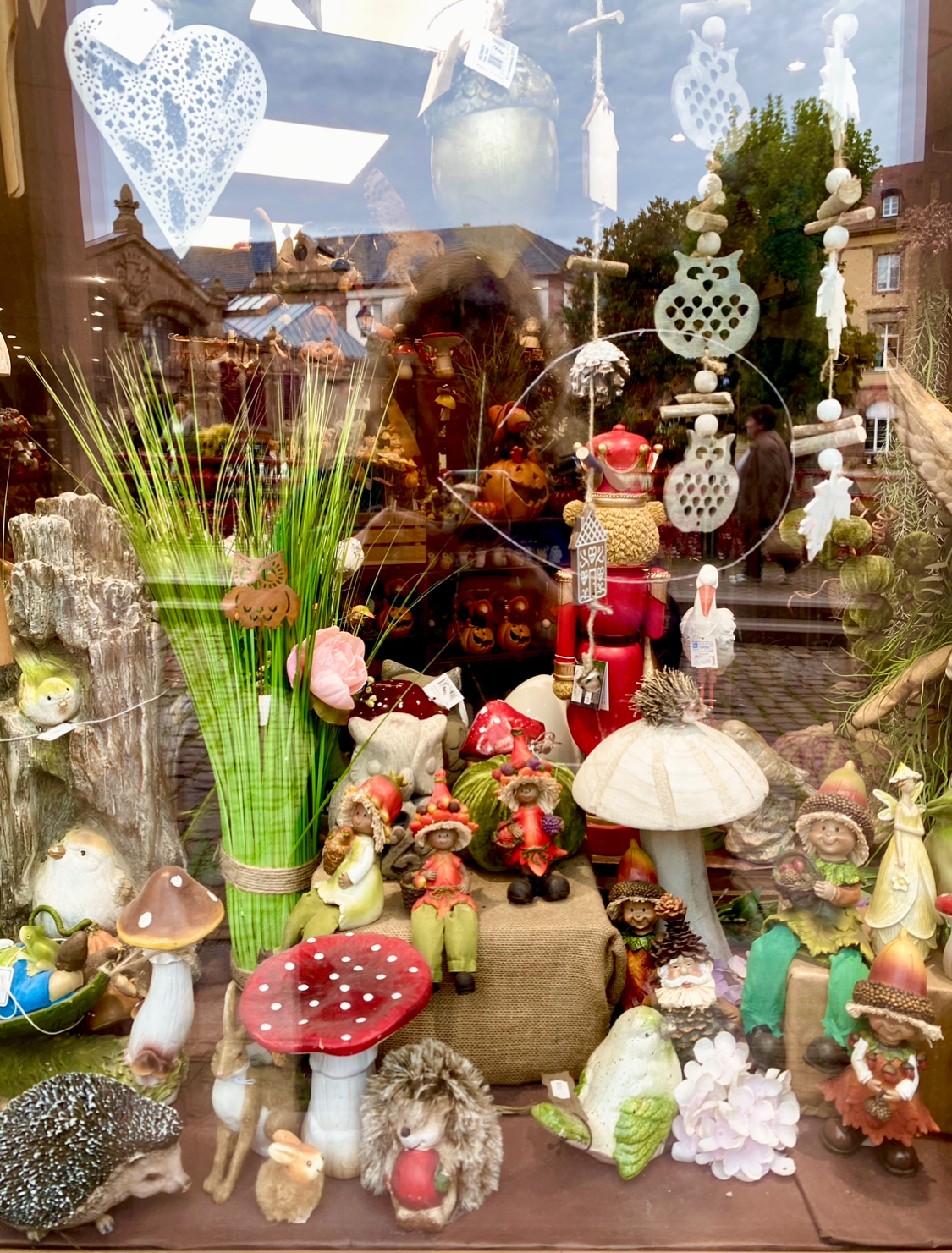
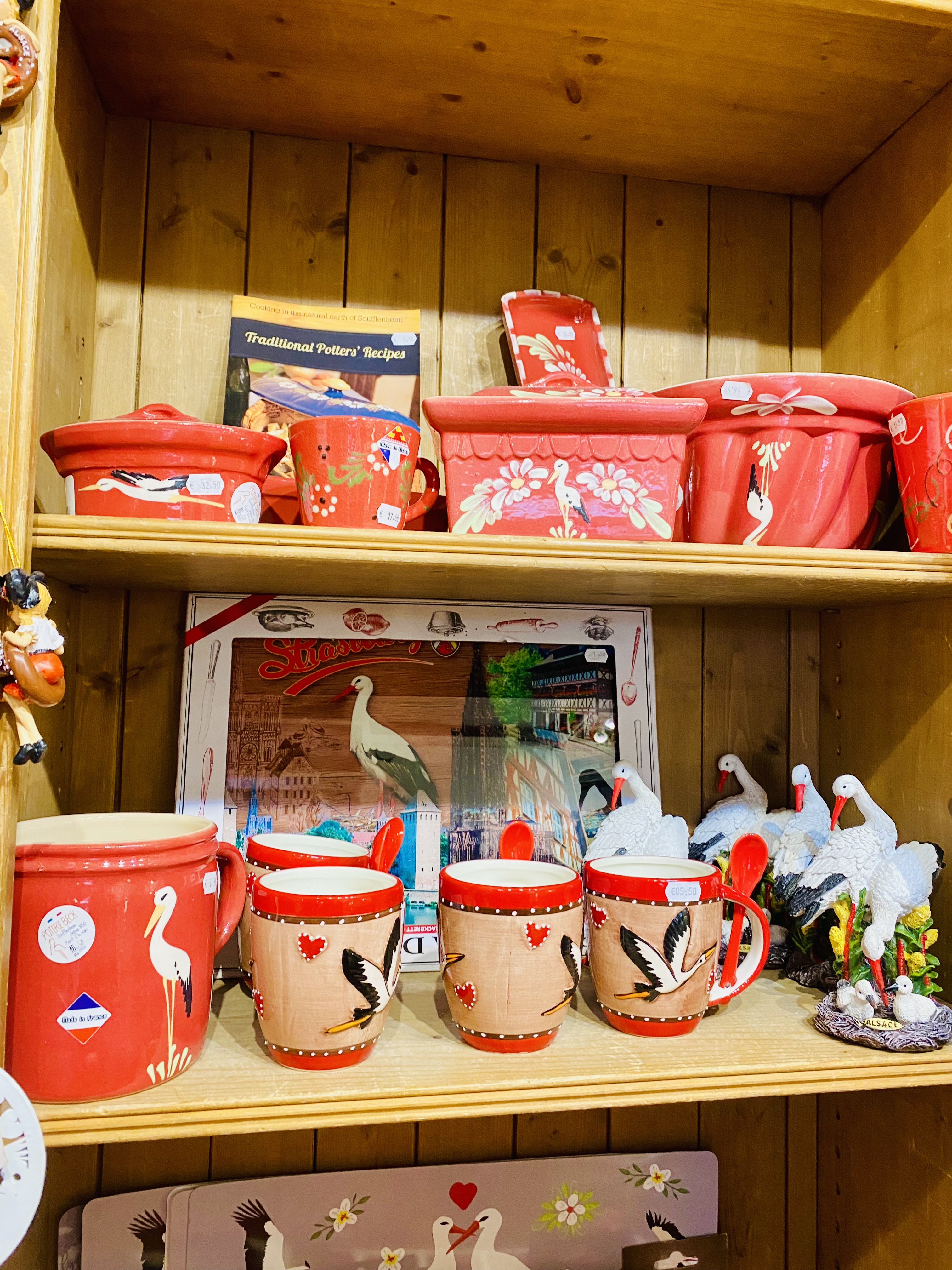
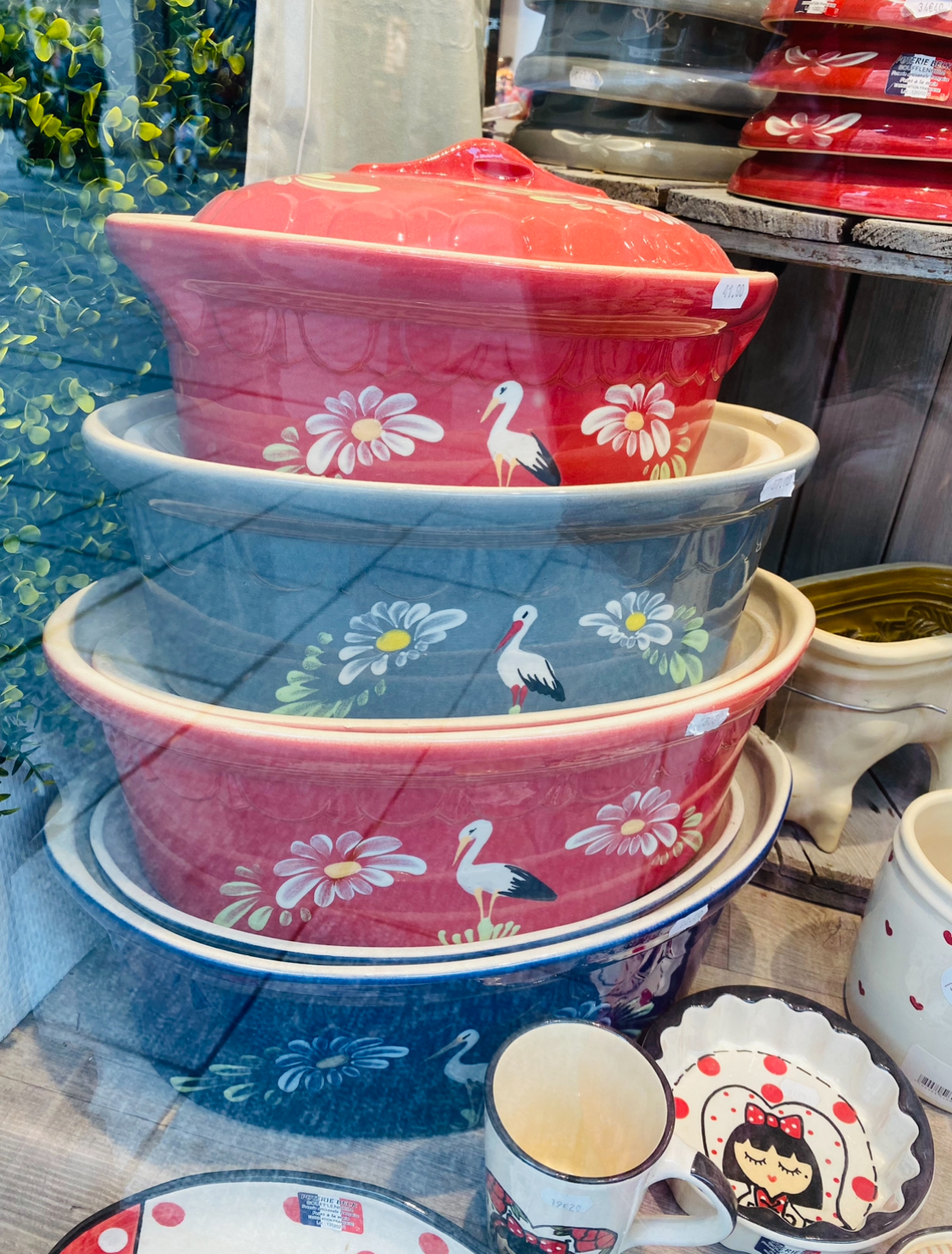
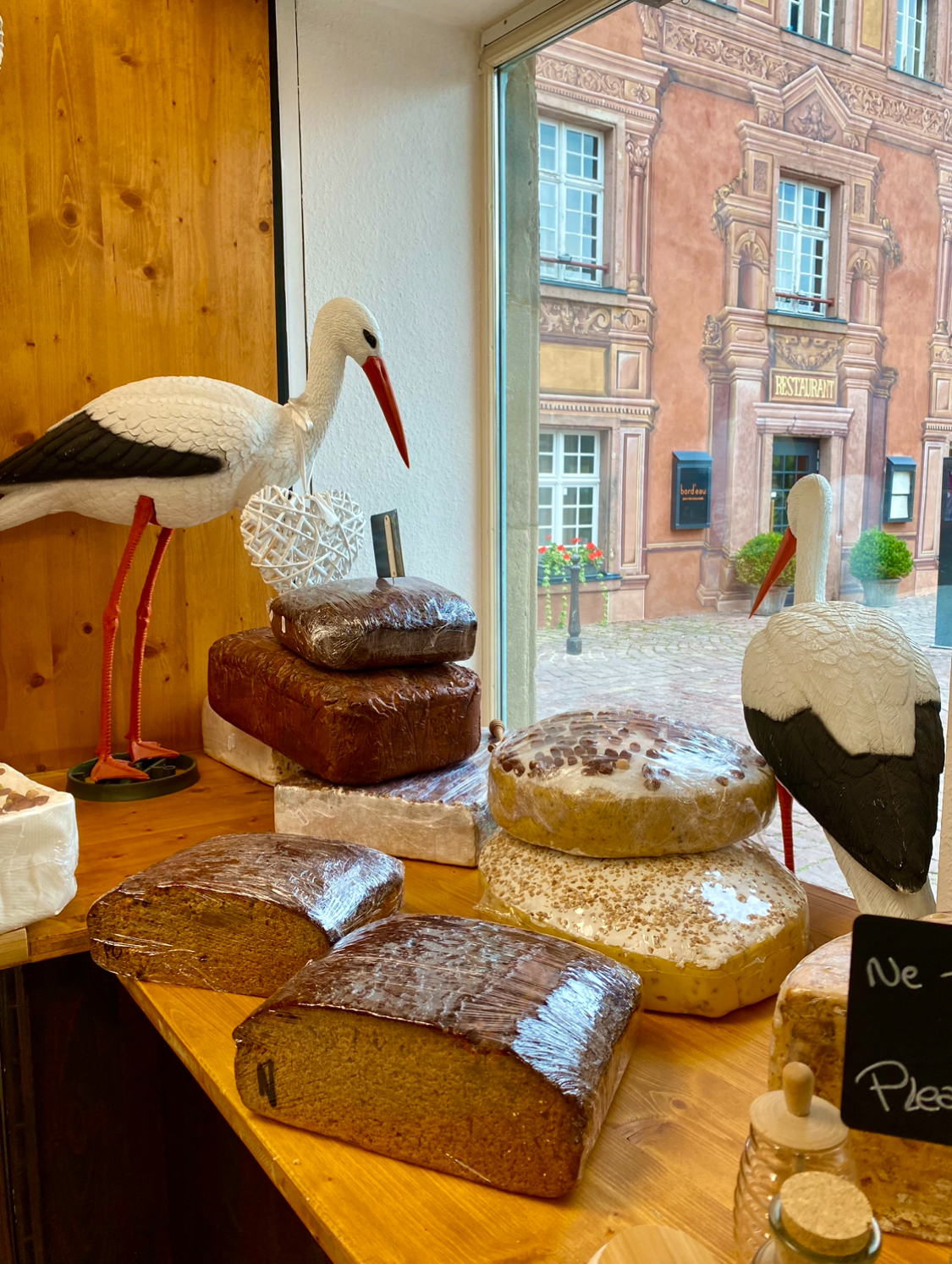
You know the old story about storks delivering babies to your front door? Where do the storks get the babies? In Strasbourg, they believe the storks get their babies from a secret well under the Strasbourg cathedral. The well connects to an underground lake that grows babies. (The ancient Germanic peoples believed that Holda, Goddess of Birth and Death, collected the souls of the dead in the air and sent them back to earth in the form of rain, which pooled up in the underground lake.) Back in olden times, women would go to the well and wish for a baby. A gnome would hear the wish, go underground to get a baby, and pass it back up the well for a stork to retrieve and drop off. Leaving a little treat on your windowsill would encourage the stork to drop by. Which is why if you go to Strasbourg, everywhere you’ll see pottery, stuffed animals, magnets, and every kind of souvenir bearing the image of a stork, usually with a pretzel or gingerbread cookie in its beak.
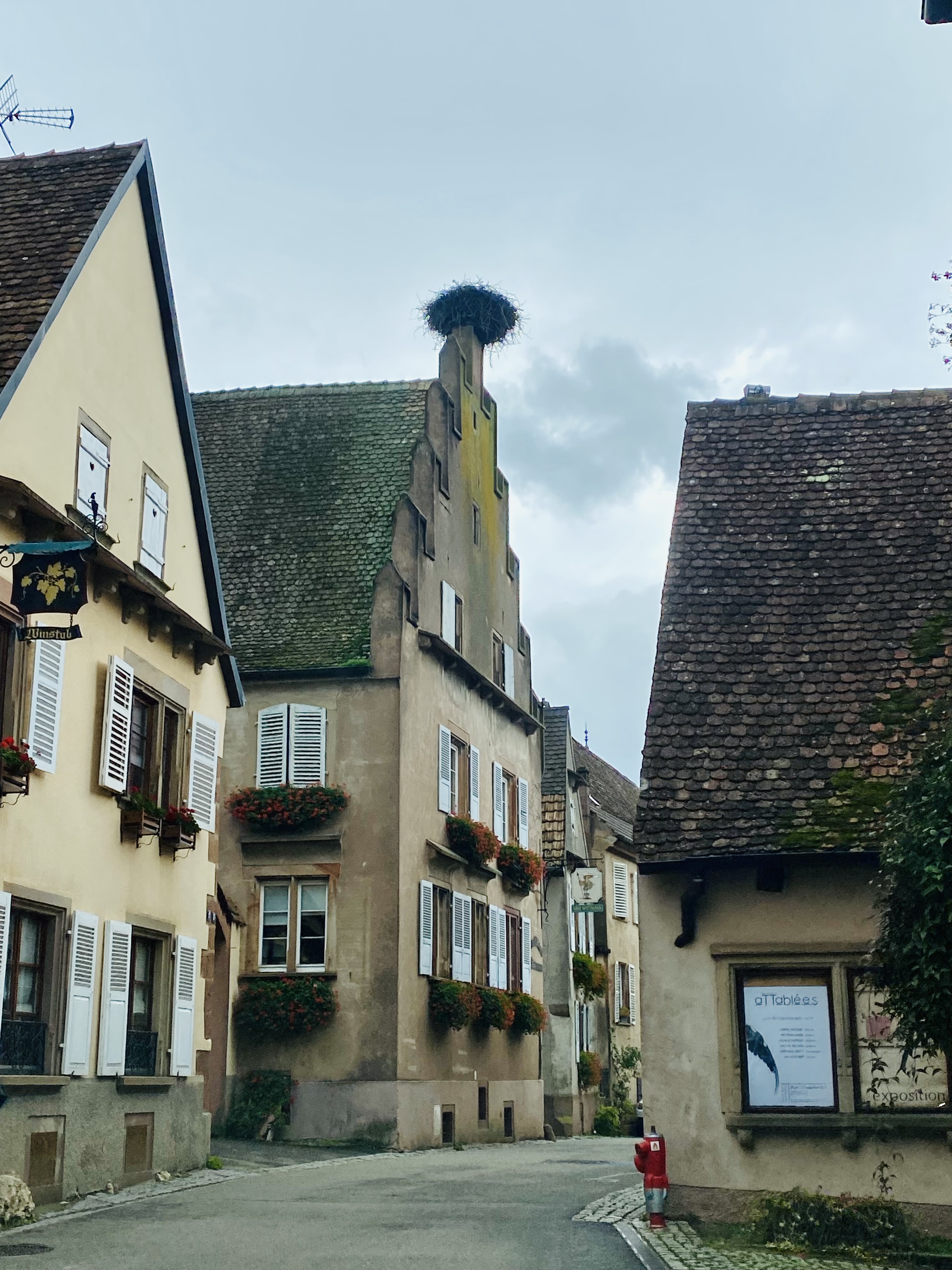
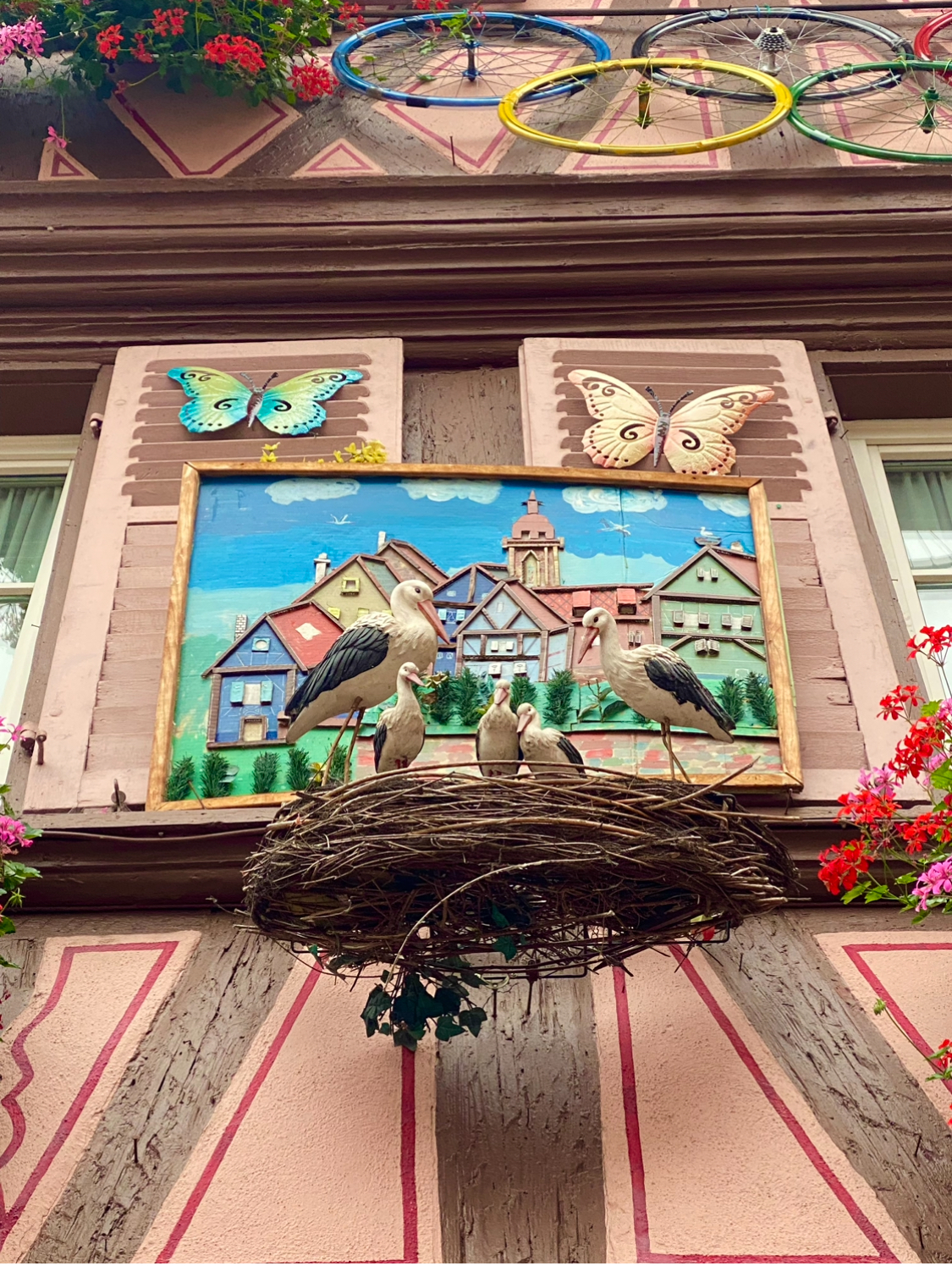
You can see actual storks in Alsace! Keep an eye out for their gigantic nests, like in the picture above.
Strasbourg is also the site of the Dancing Plague of 1518. A woman named Frau Troffea just randomly started dancing one day, no music, just busting a move. Then, people around her inexplicably started jerking, twerking, and beserking. They called for help, only to find the people who came to their aid were also caught up with Boogie Fever. The plague claimed 400 victims. Many people died of a stroke or a heart attack, their feet swollen and bloody. Local authorities were like “okay let’s just have a dance off” and cleared out a guild hall, hiring musicians so the perilous people of Strasbourg could find a beat. When pon de replay didn’t work, the local authorities banned music altogether, like Mama Imelda in Coco. But YOU CAN’T STOP THE BEAT, Strasbourg! Haven’t you ever seen Footloose?
Luckily, ole Saint Vitus, Patron Saint of Dancing, came to the rescue. The victims of the dancing plague were doused in Holy Water, given some very holy shoes, and sent to the Shrine of Saint Vitus, where “Last Night a DJ Saved My Life” was chanted over them. And voilà, the Dancing Plague of 1518 ended. The lights came on at the club, and the bedraggled people of Strasbourg wobbled outside to find an über.
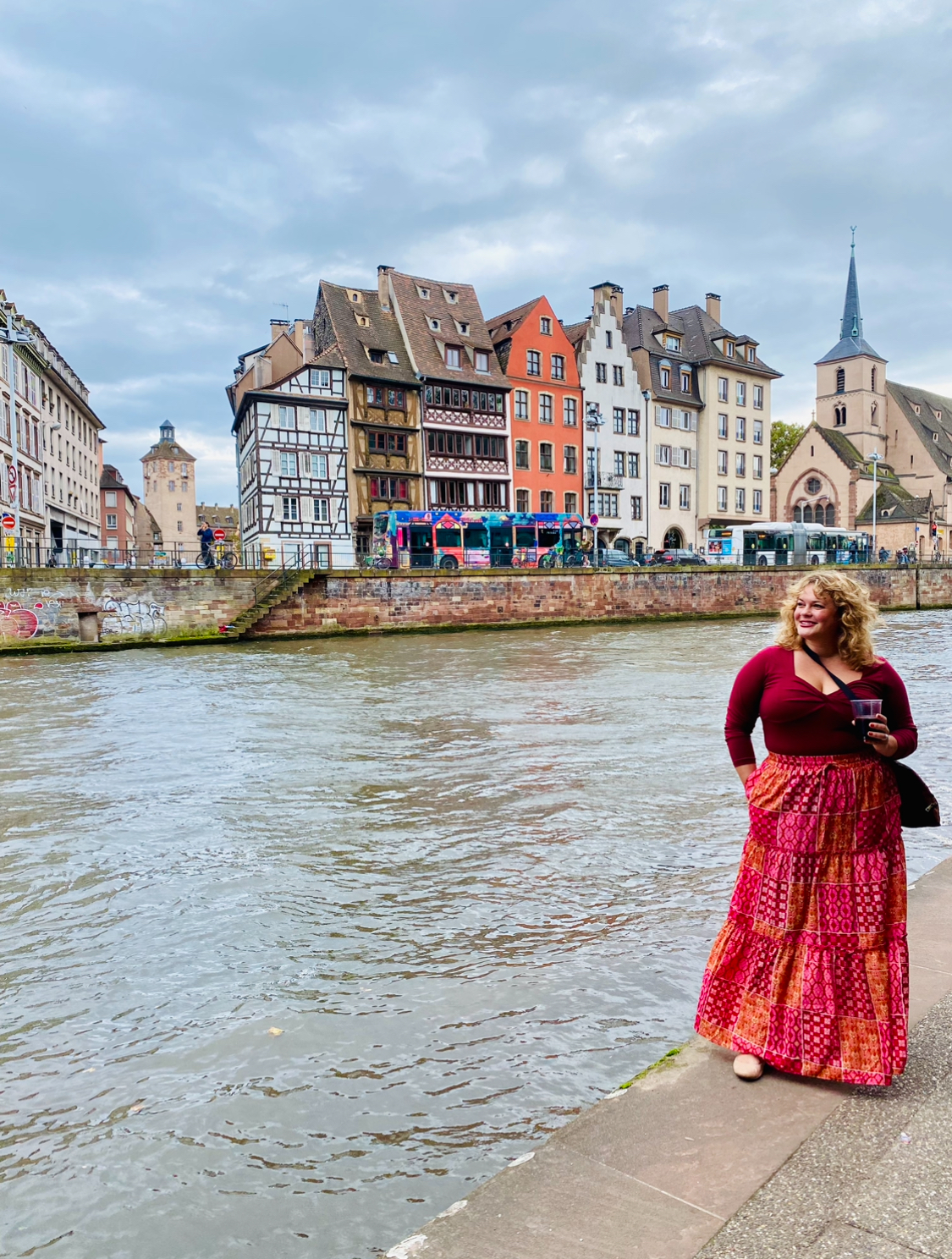
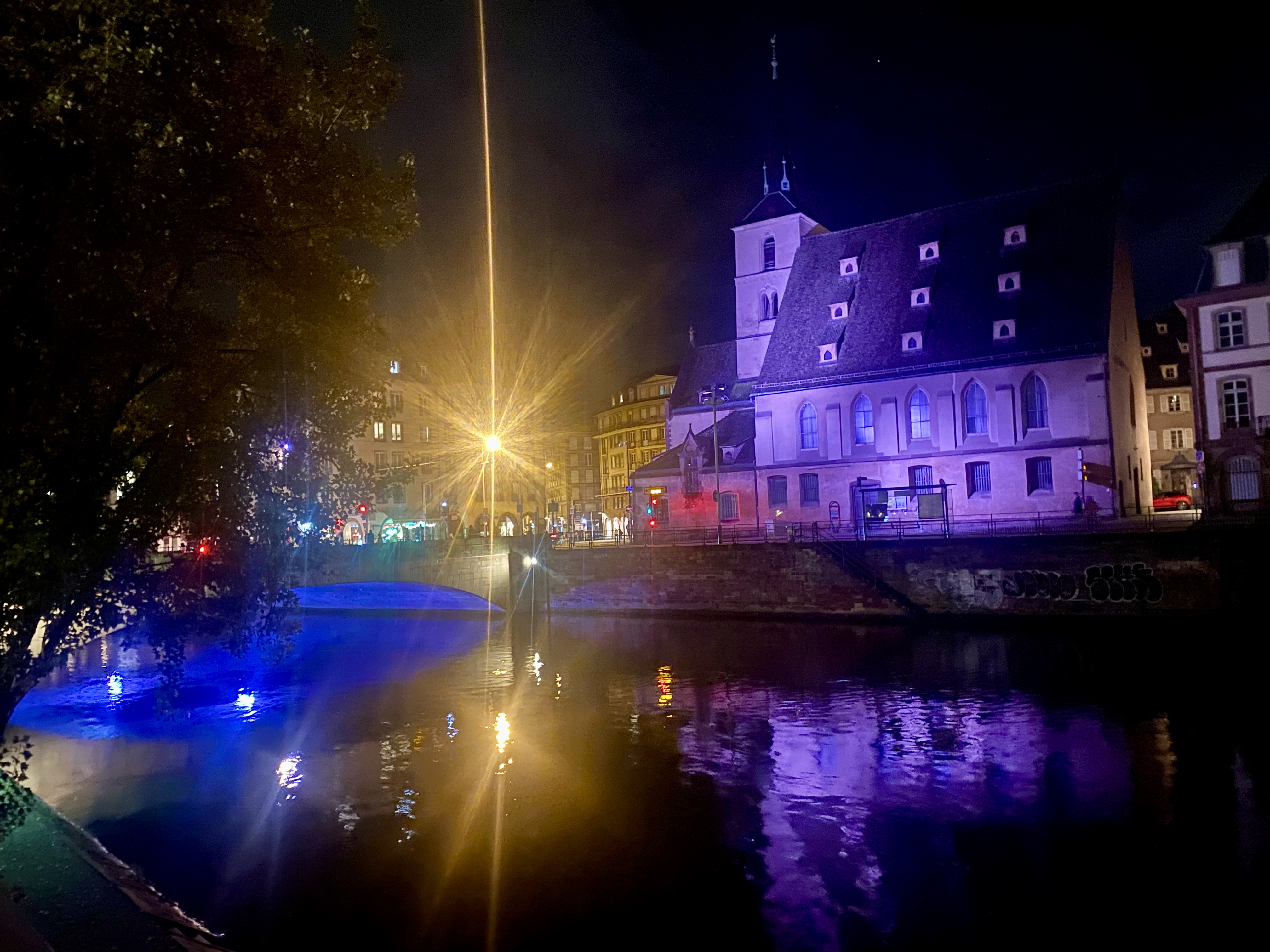
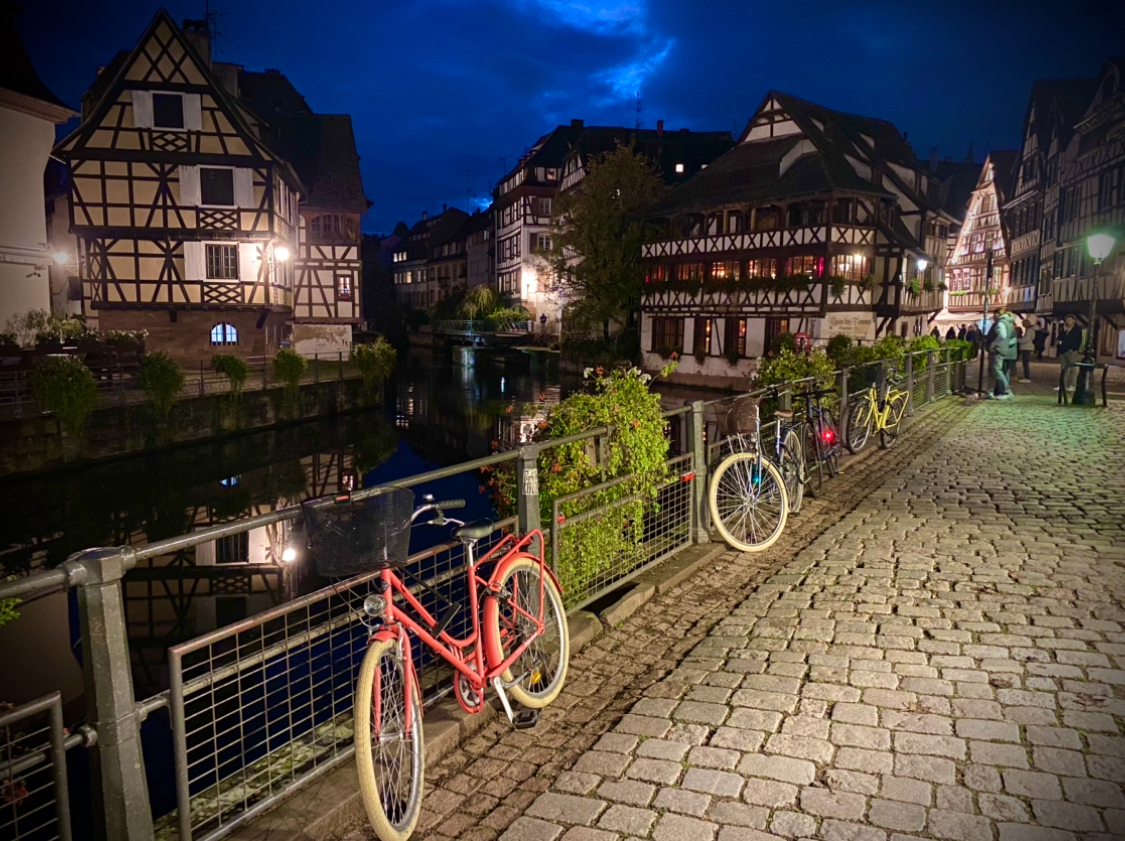
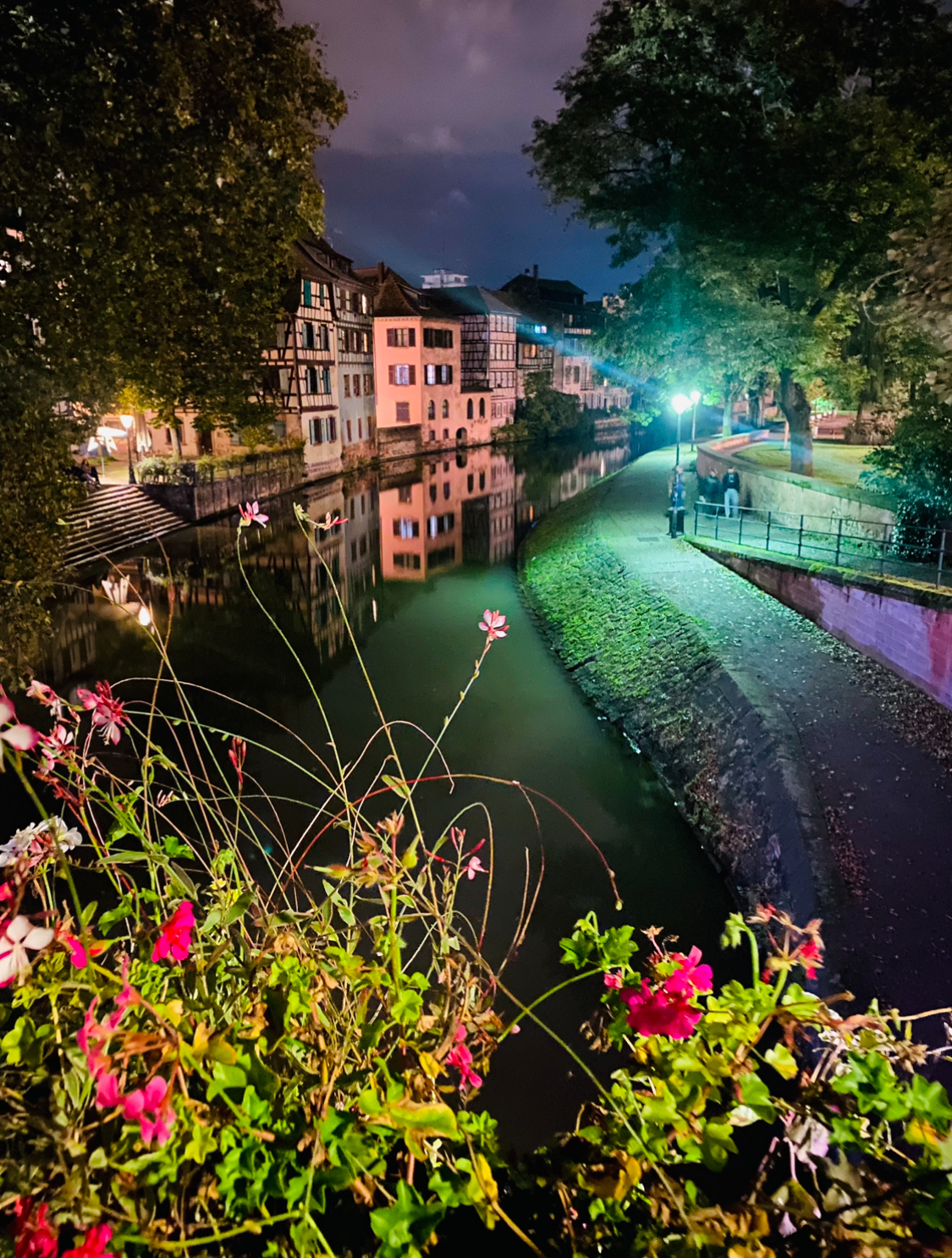
I would make Strasbourg your home base as you visit the rest of Alsace. Make sure to stay on the Grande Île de Strasbourg, which is where the old town is. It’s very similar to the Île de la Cité in Paris where the Notre-Dame is located—this is also the location of Petit France, a district replete with cute half-timbered houses and taverns. Strasbourg is very safe, so if you stay on the Grande Île de Strasbourg, you can stroll around the island at night and look at the storybook buildings that sit right on the water.
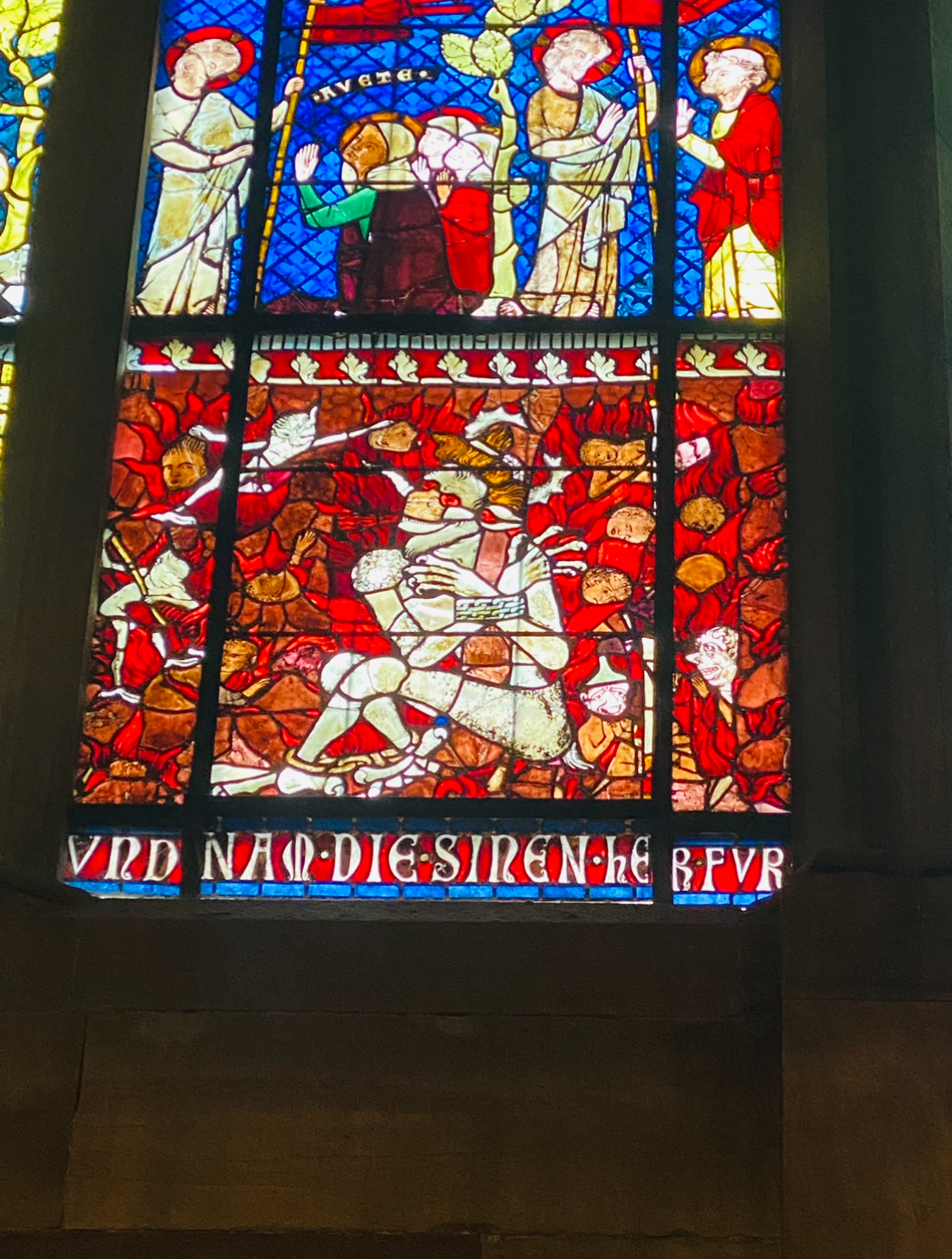
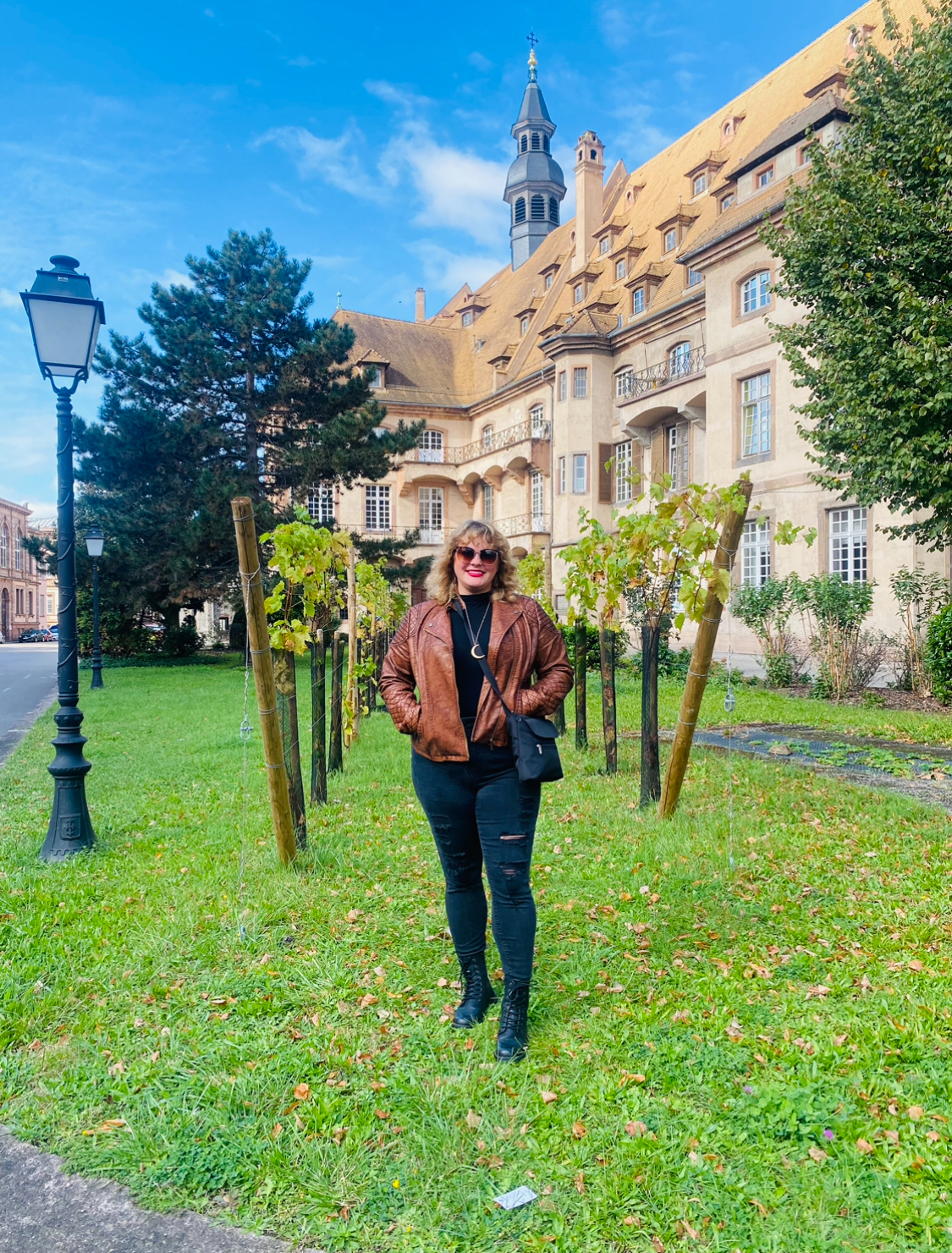
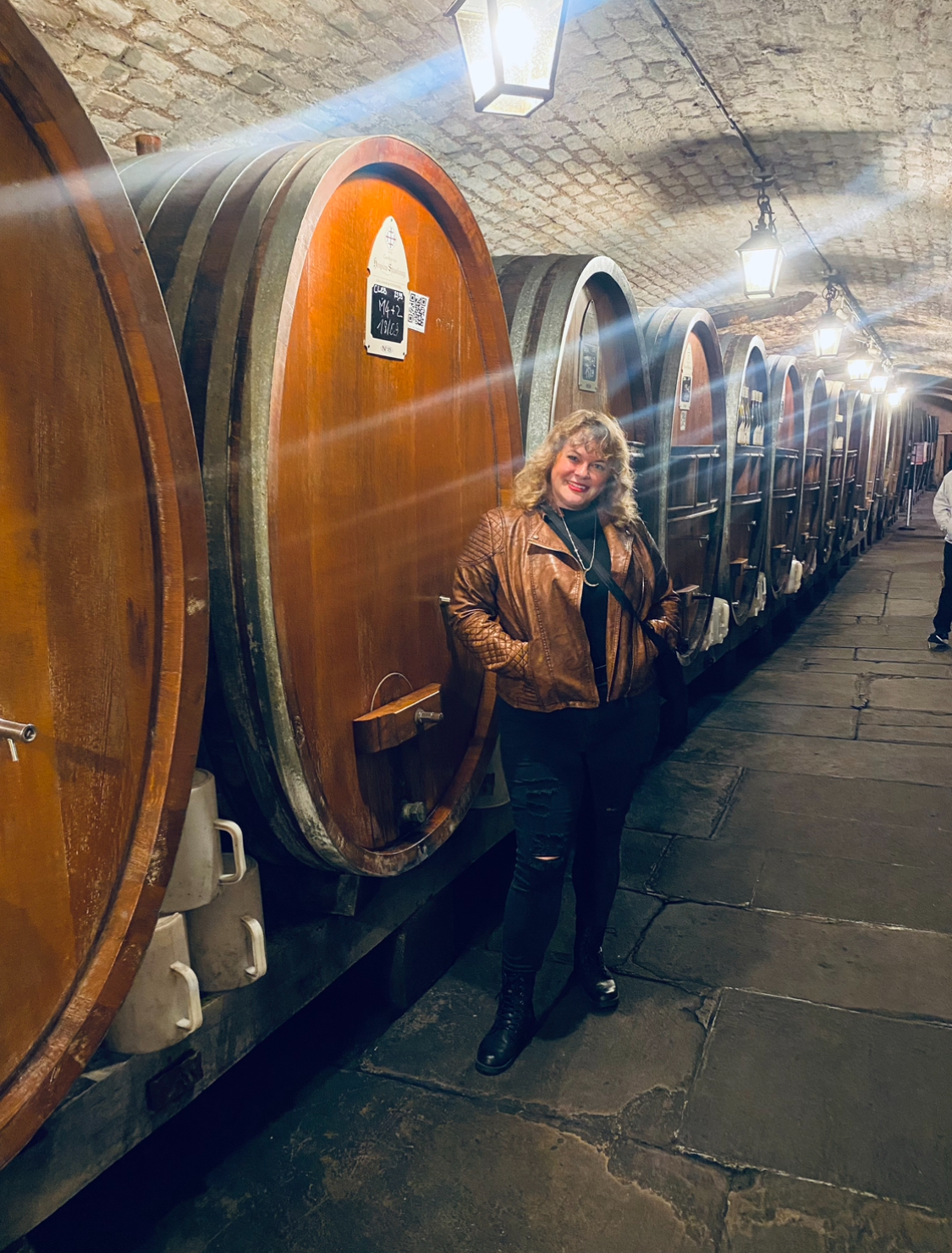
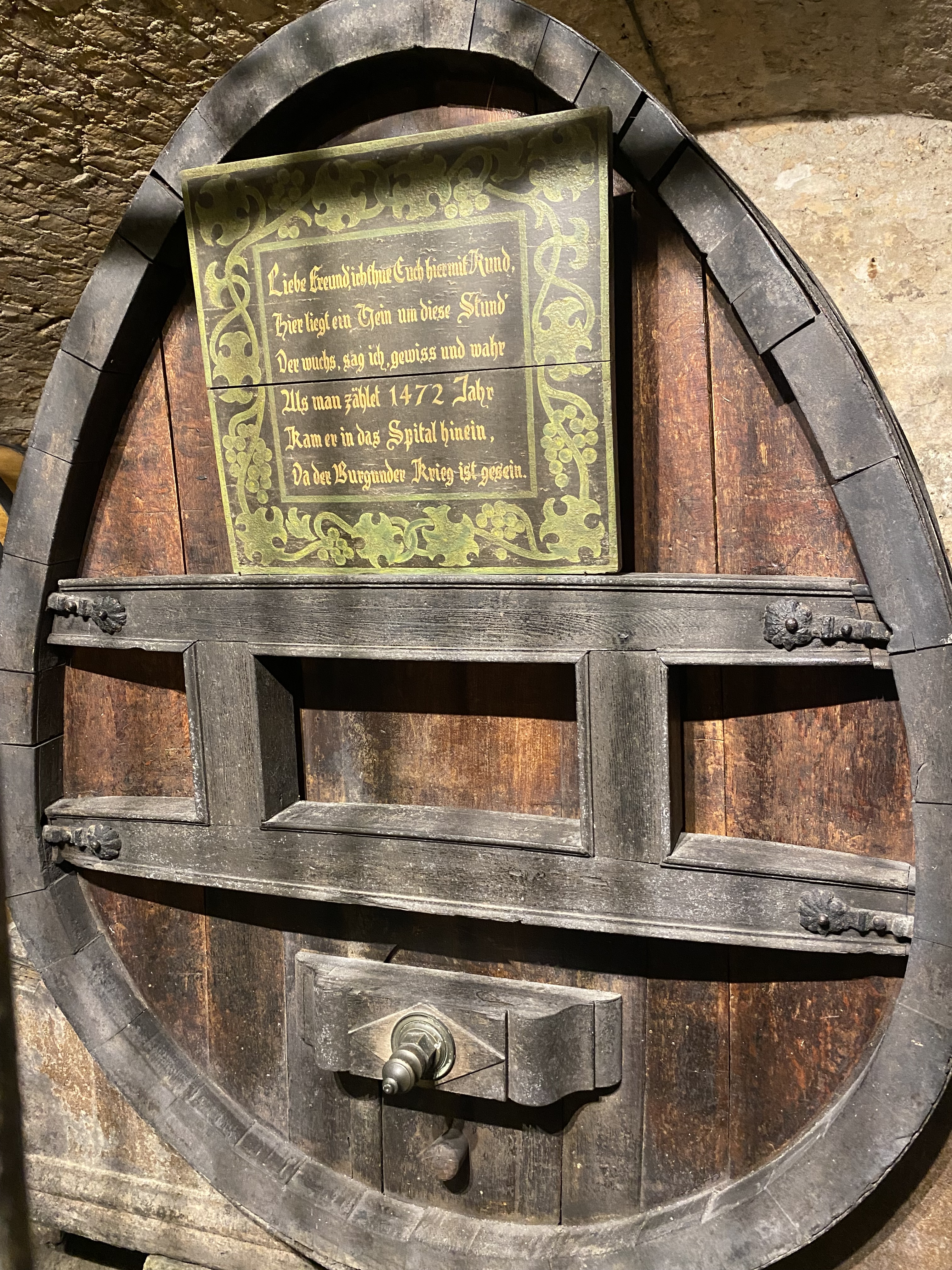
Two important historic buildings to visit: 1) The Strasbourg Cathedral, which was at one point the tallest structure in the world and is apparently the ceiling of an underground lake of babies, and 2) Hôpital Civil de Strasbourg, one of the oldest hospitals in France. Wine is very important to the French, especially so in Alsace. The doctors in the Hôpital Civil used to prescribe two liters of wine a day to patients! And in return, patients would pay with bottles of wine or sections of their vineyard. So, underneath the hospital, there is a vast wine cellar. The hospital actually produces its own wine! Its claim to fame is a barrel from 1492 that holds the oldest wine on earth!
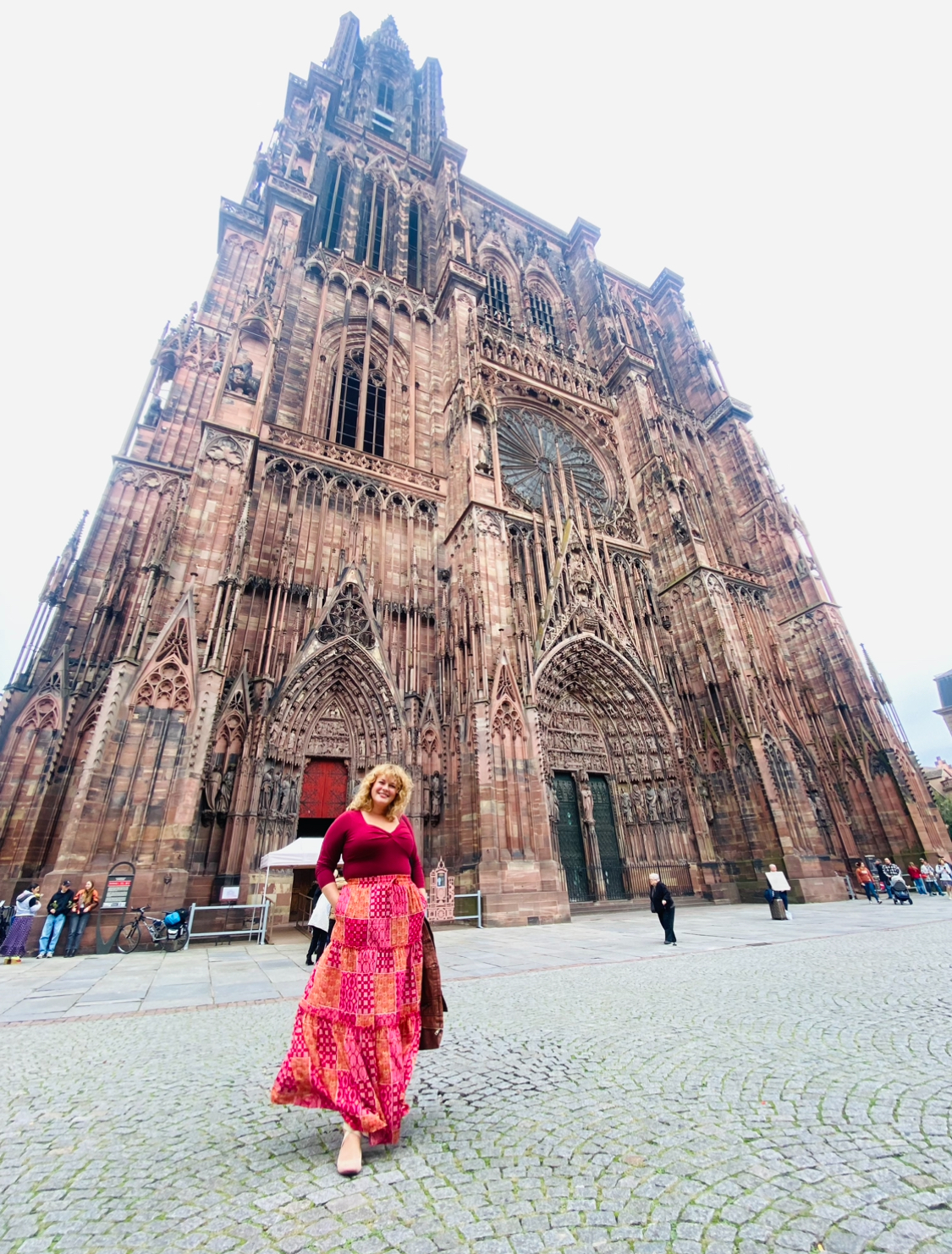
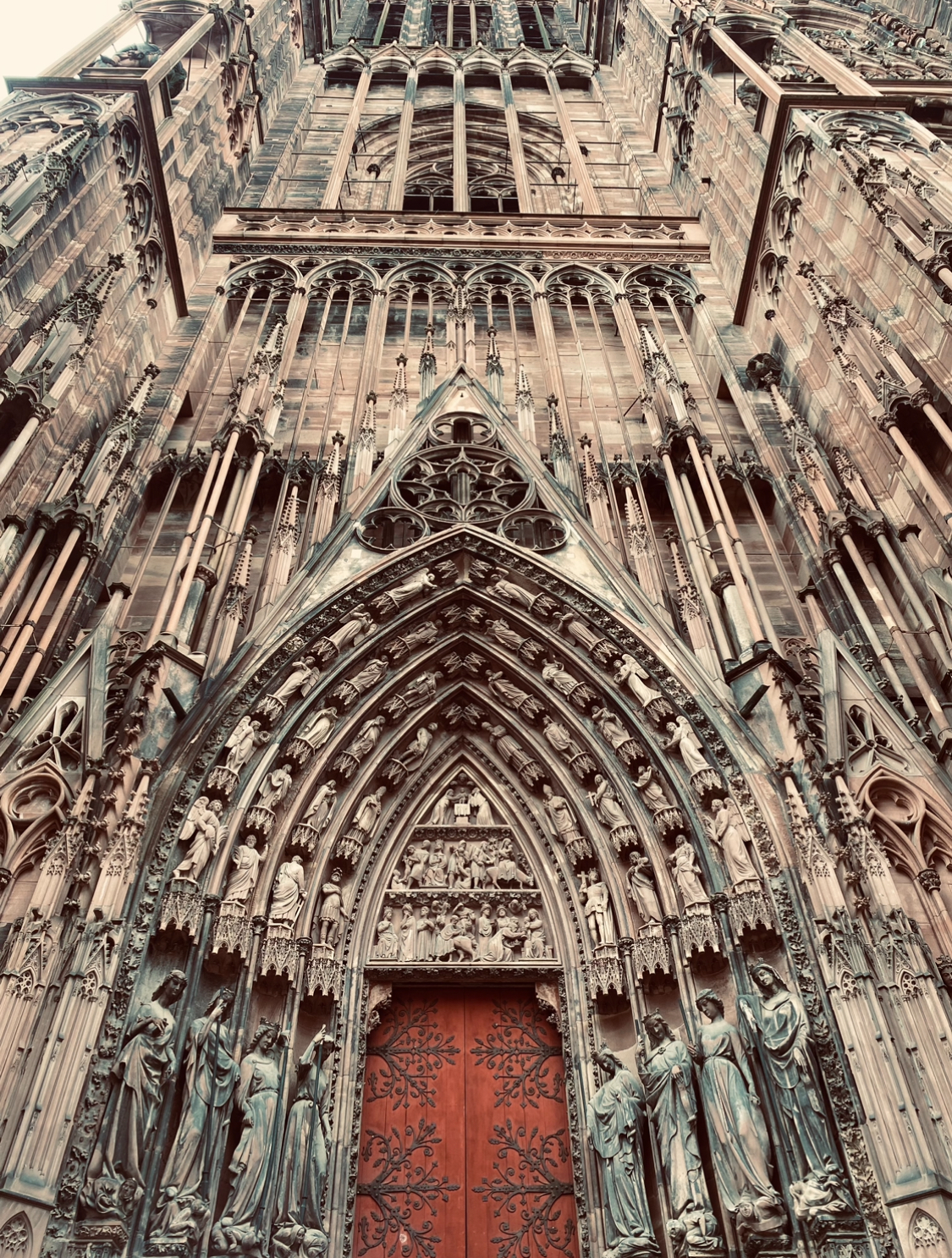
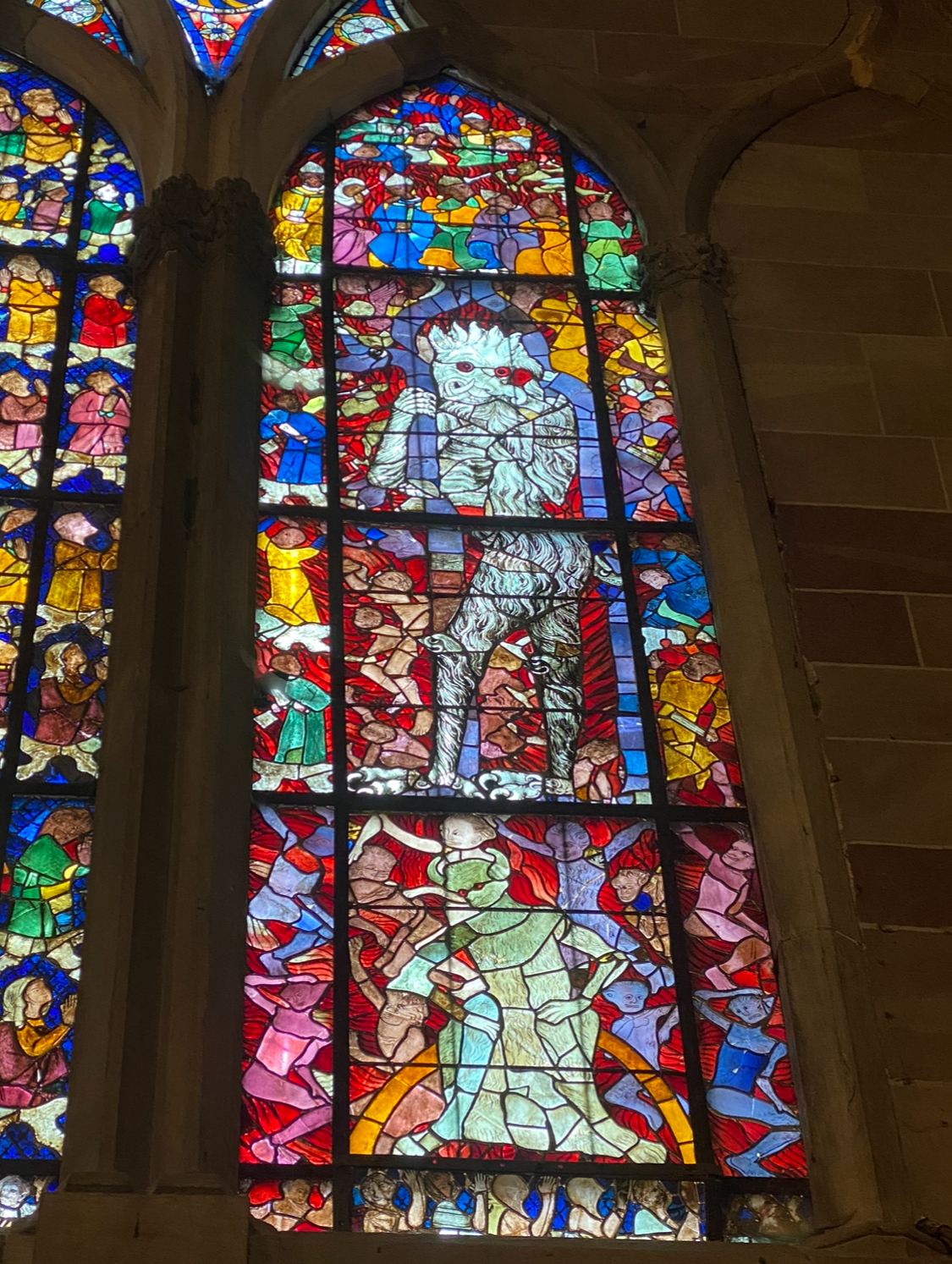
I would be remiss if I didn’t mention the Strasbourg Christmas Market. This is one of the biggest Christkindlmarkts in the world, and with Strasbourg’s beautiful buildings and charming culture, it’s easy to see why.
Colmar
I think this might be the most beautiful town I’ve ever seen. I mean, I’m really thinking about this. I’m not saying it lightly.
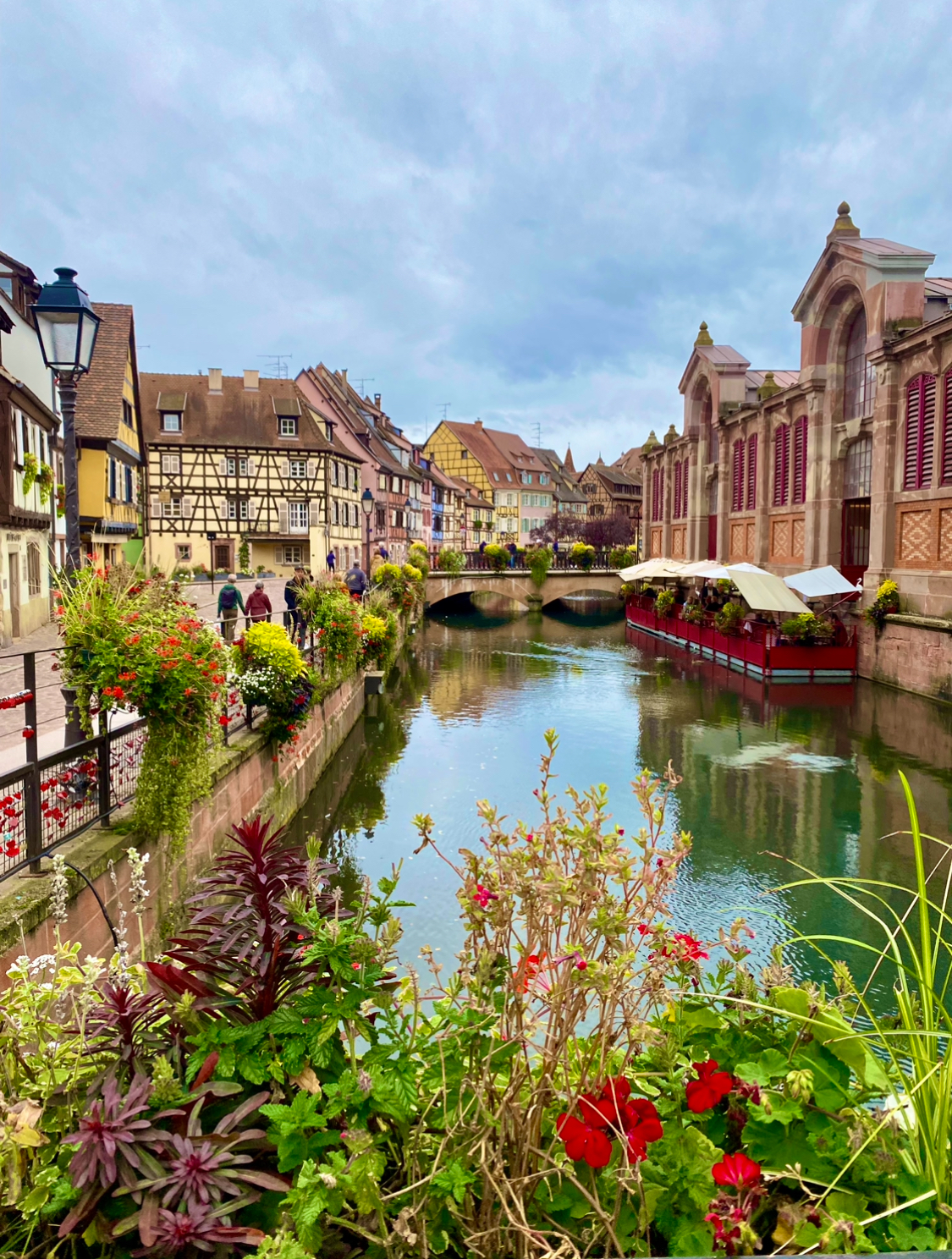
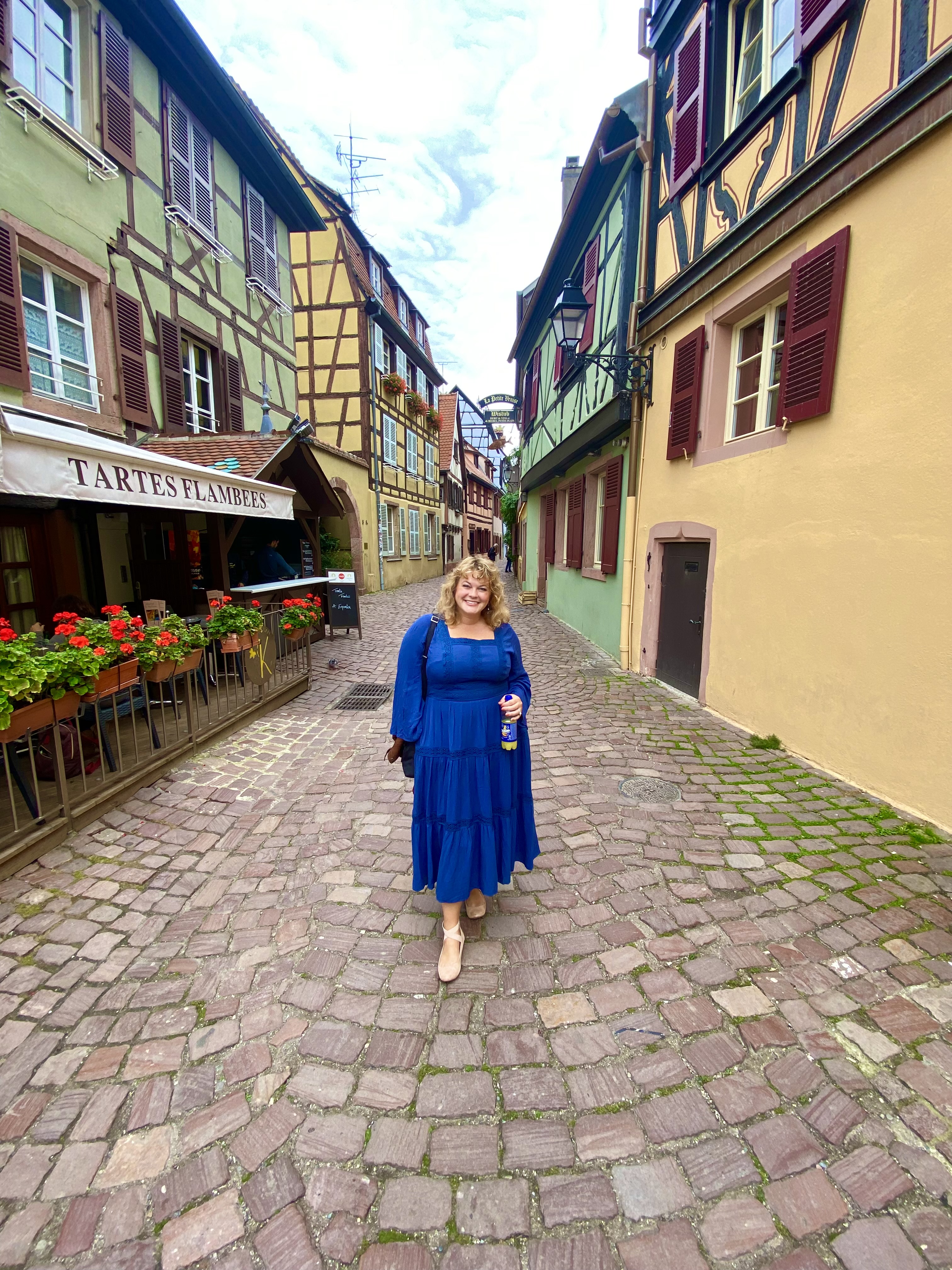
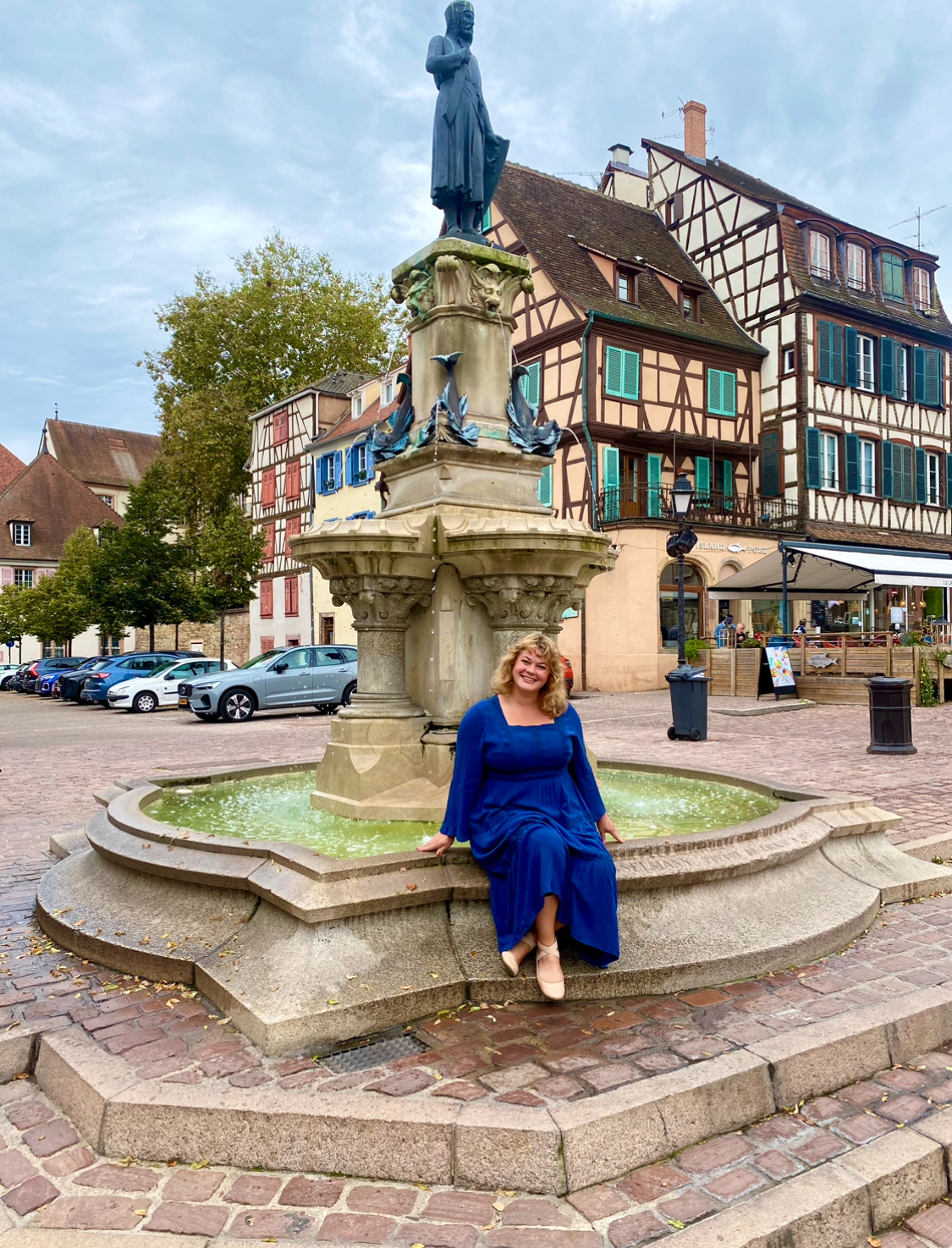
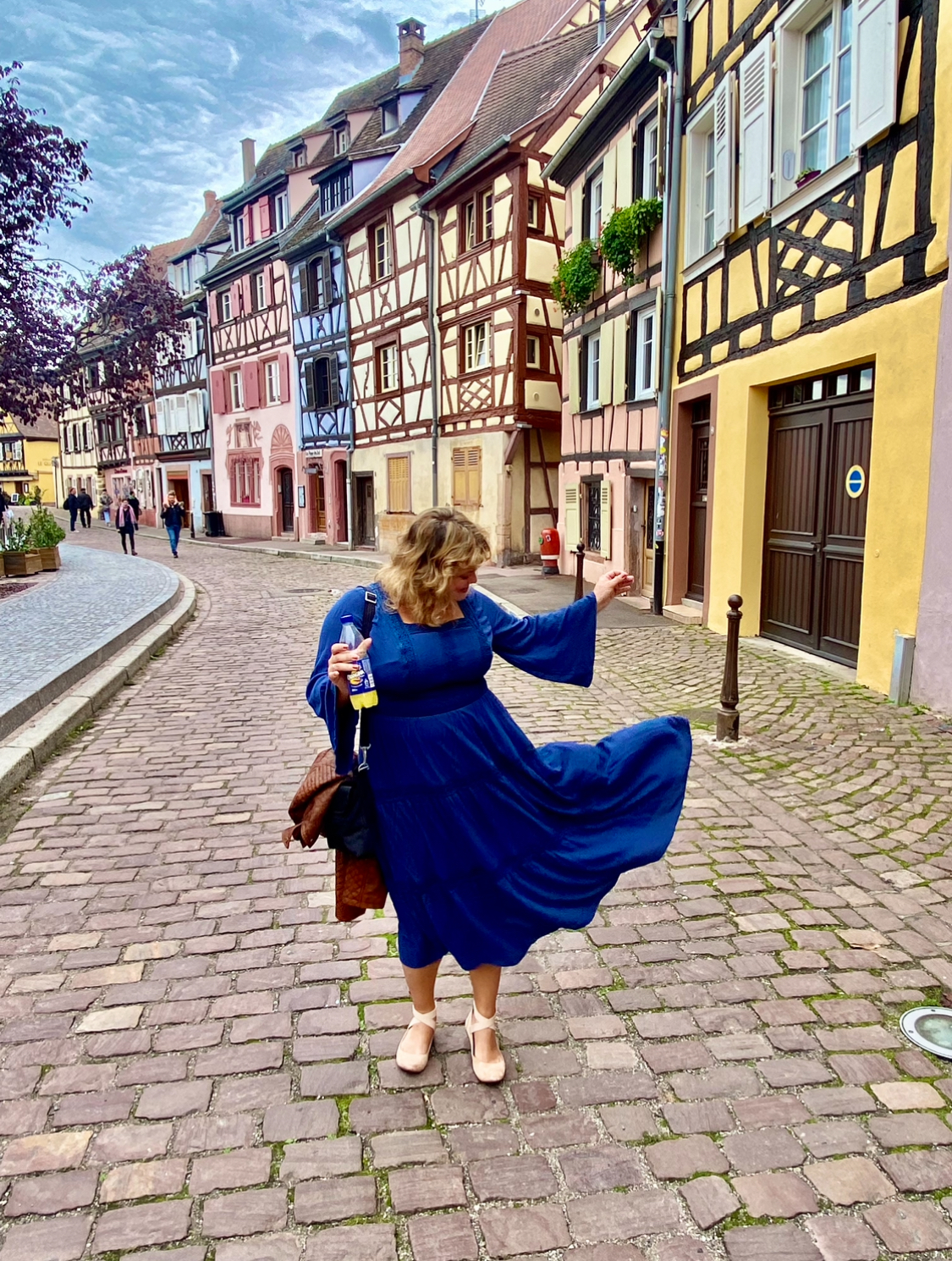
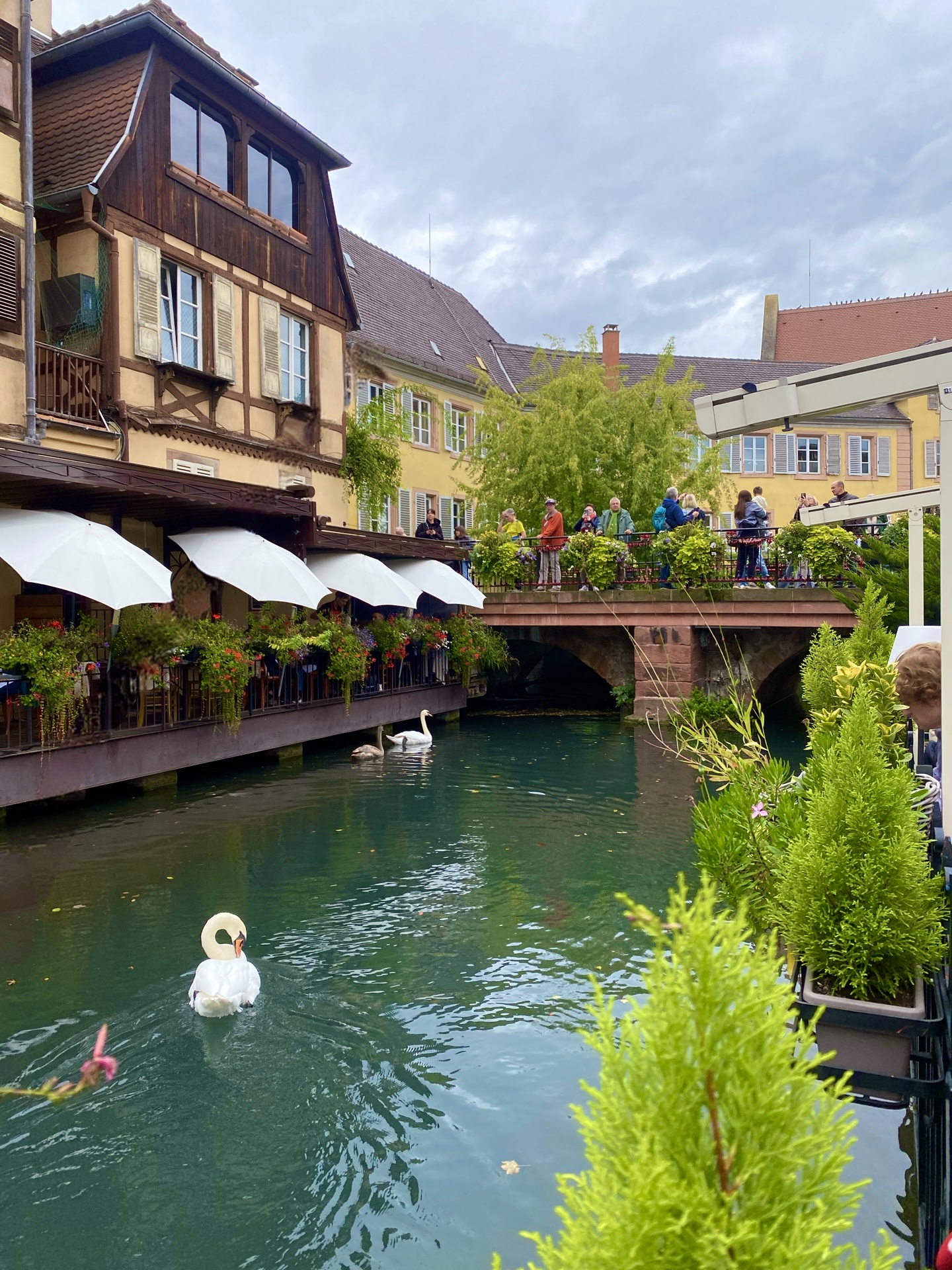
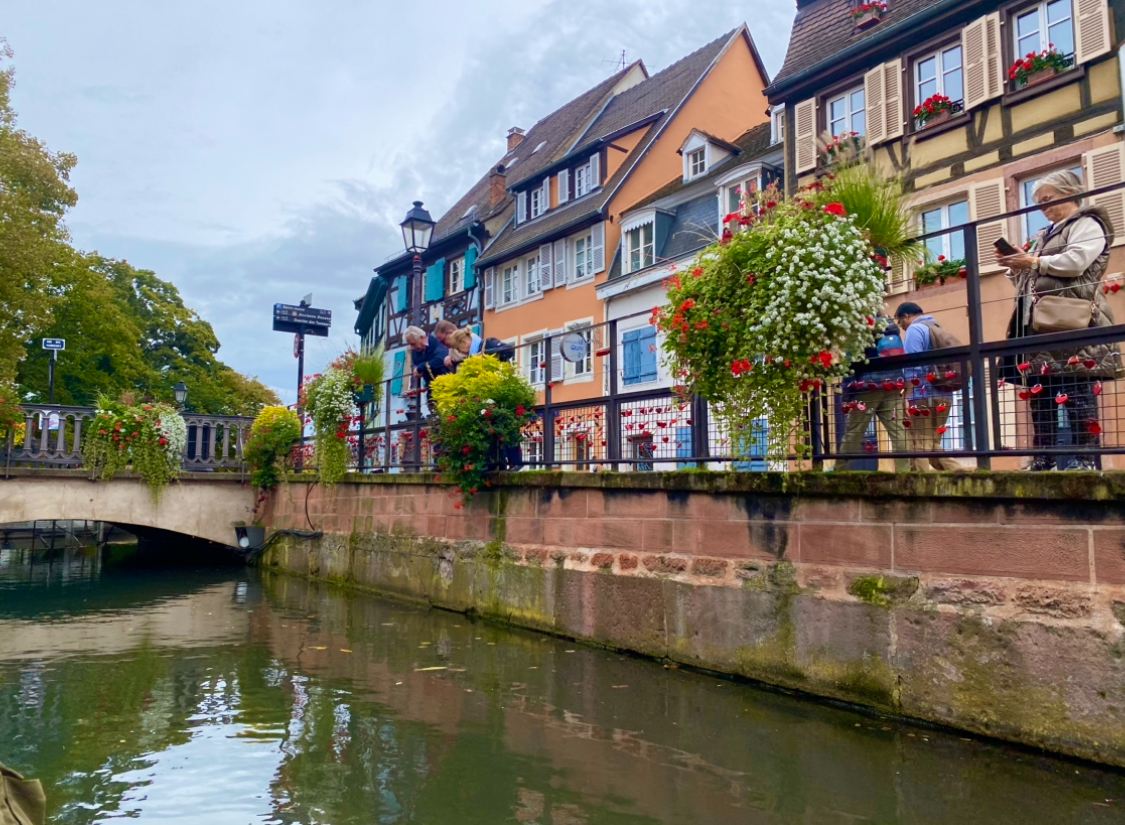
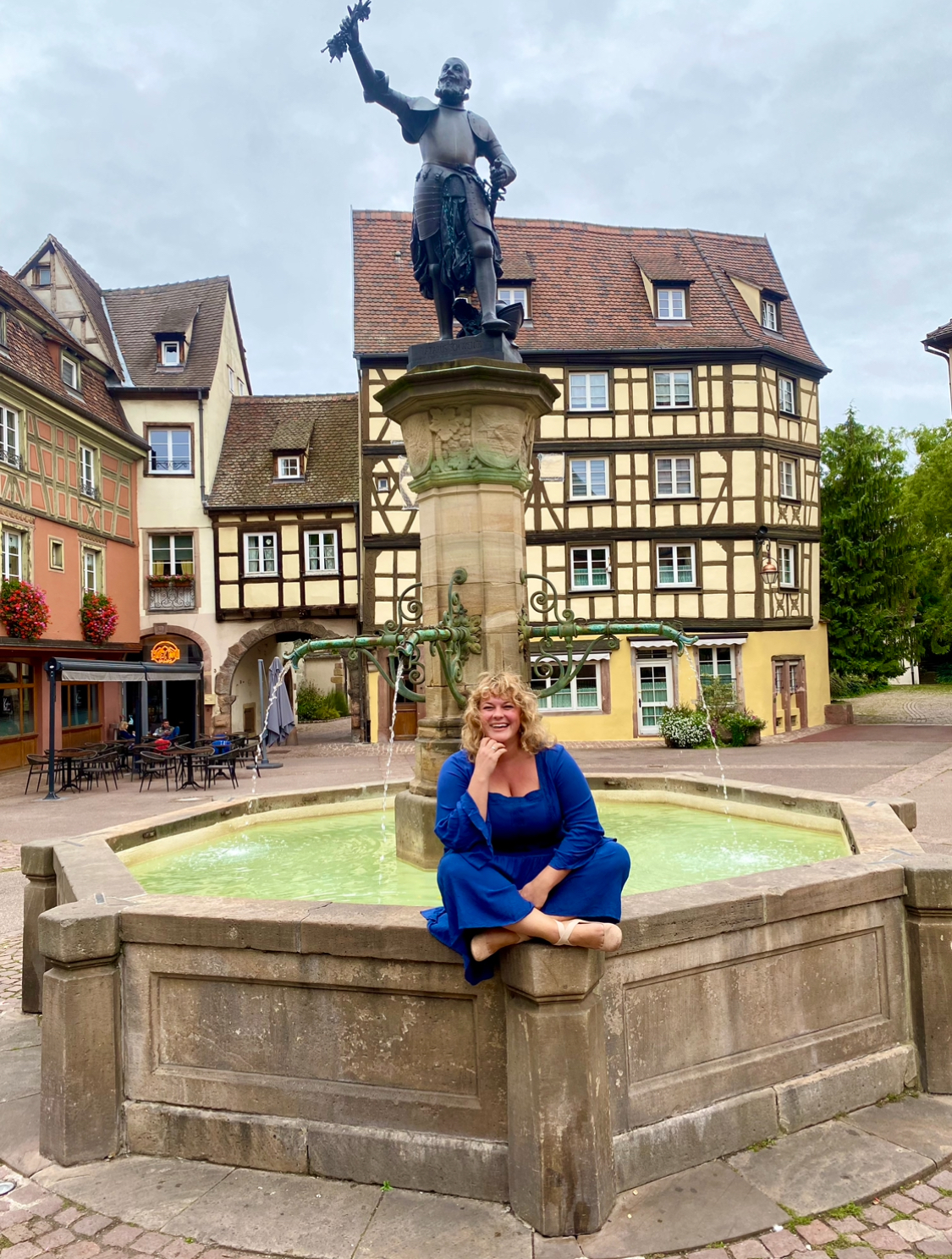
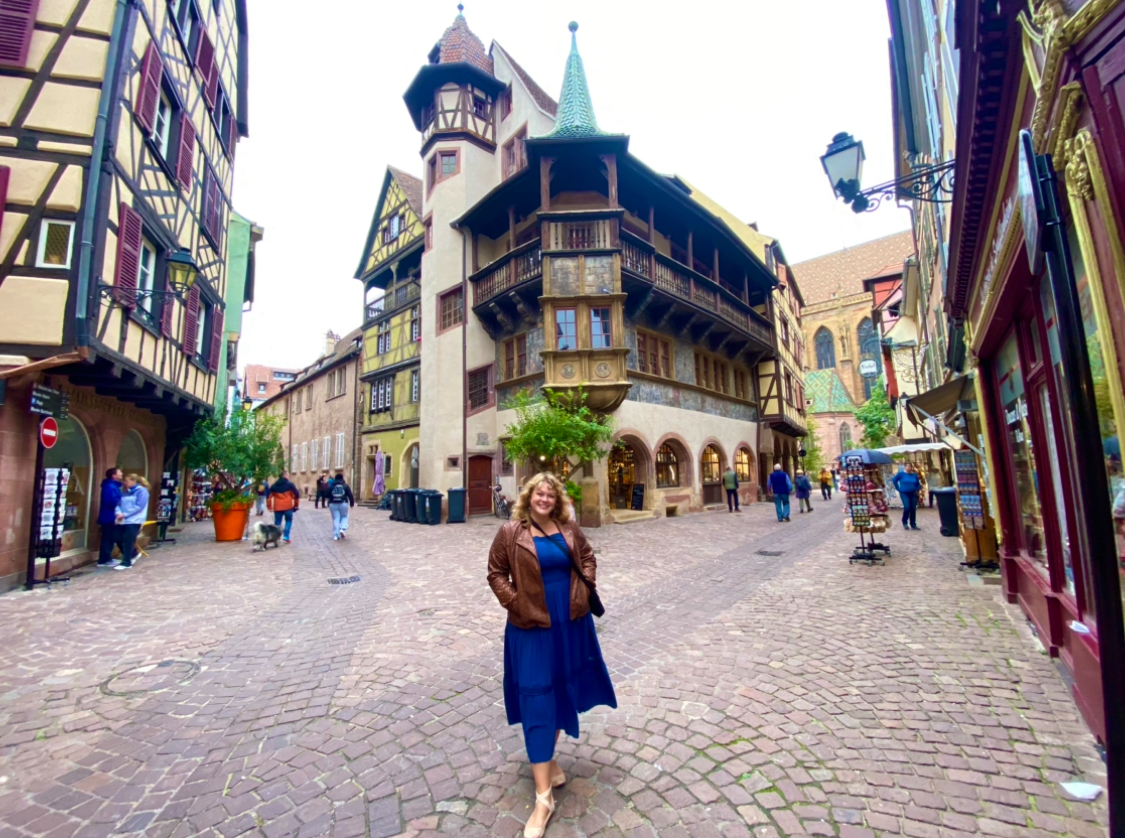
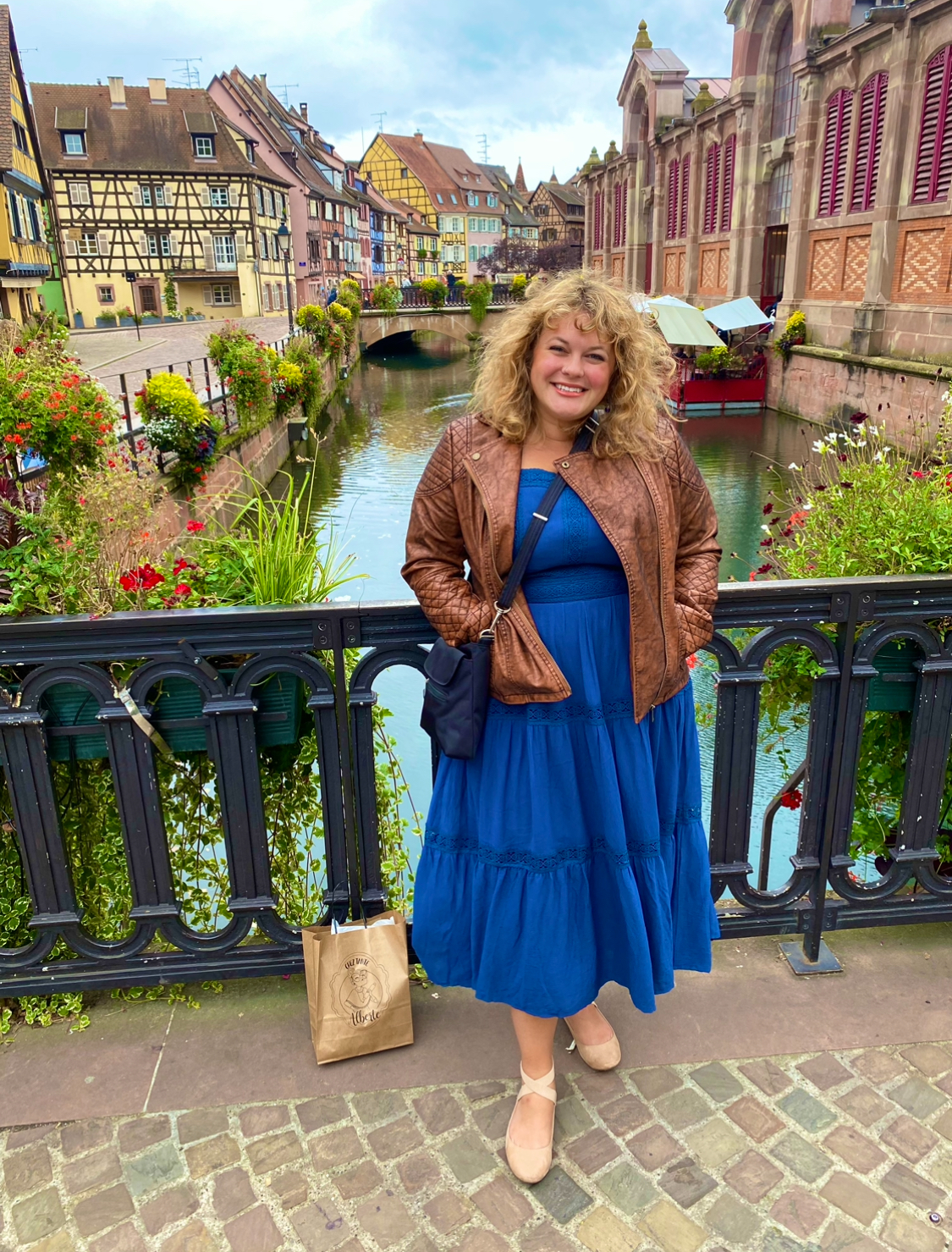
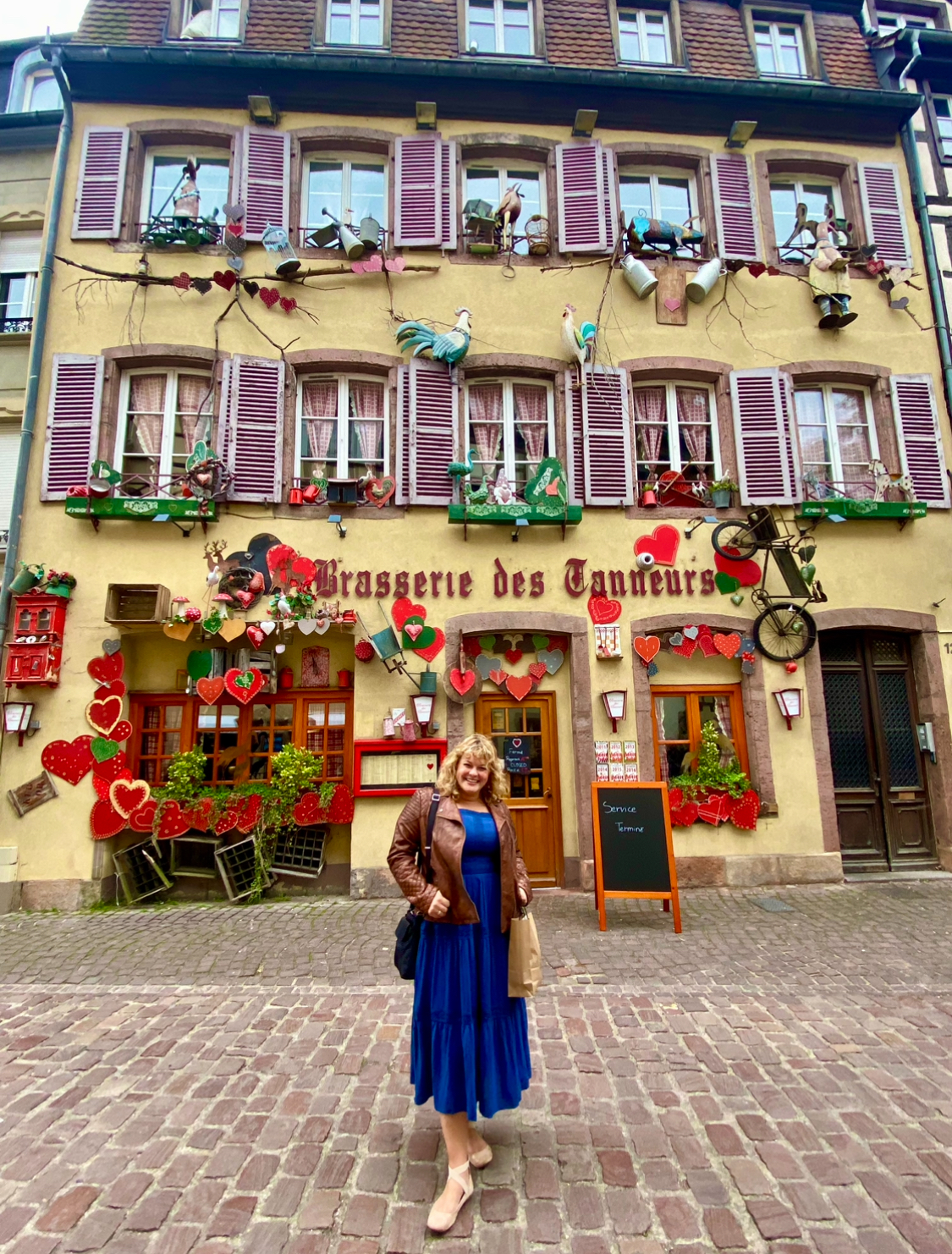
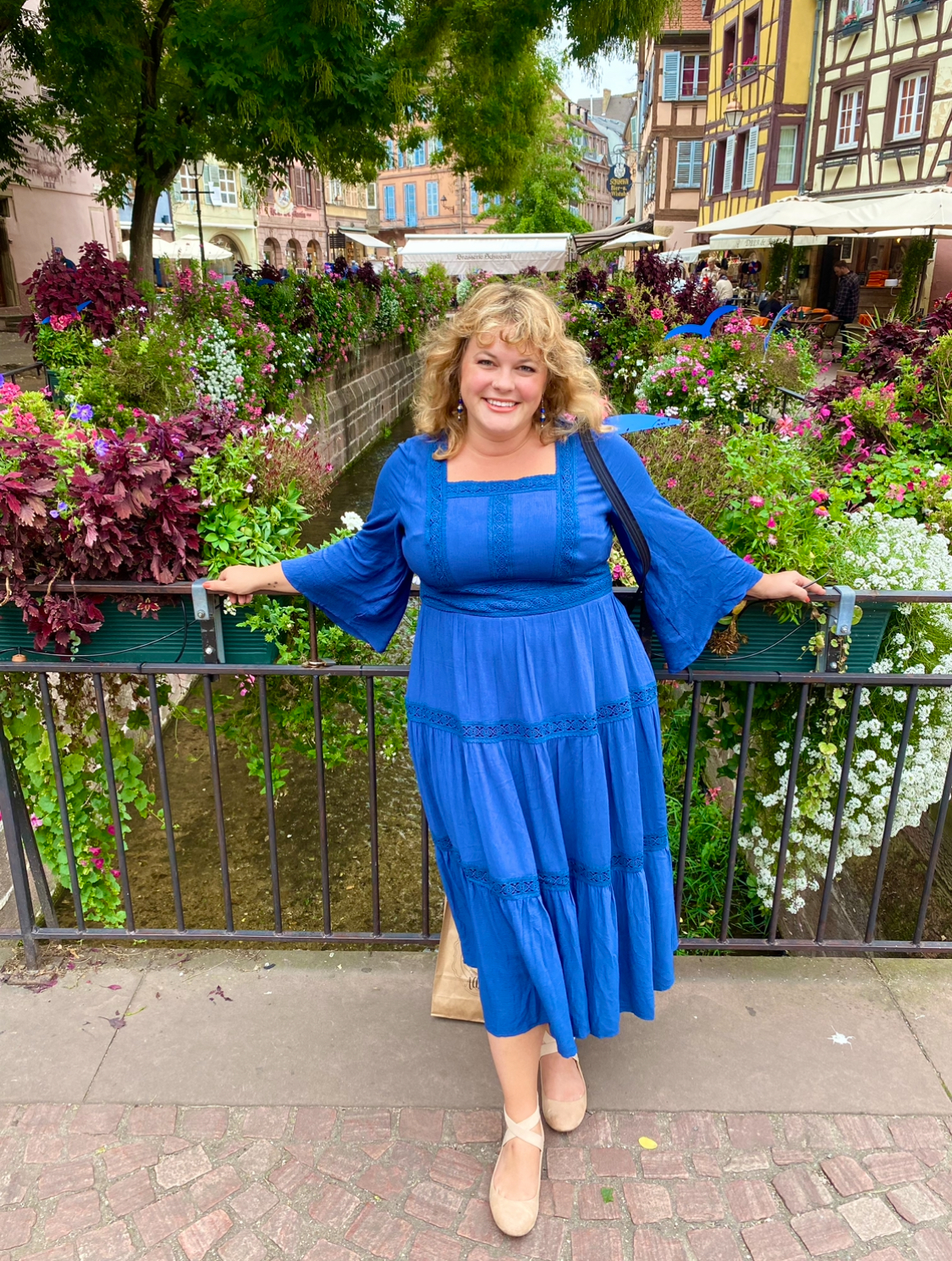
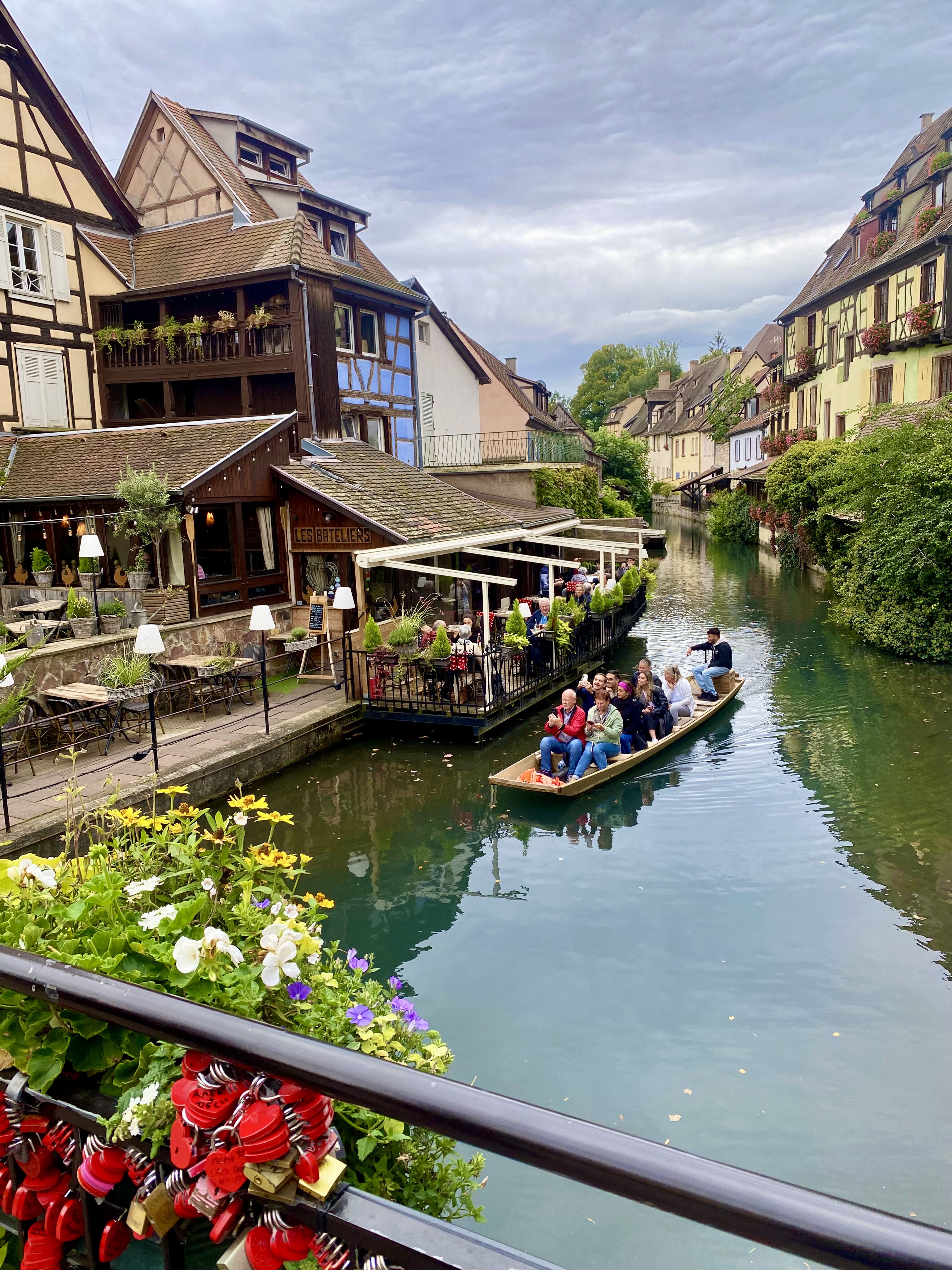
I’ll say this: if I had to leave my country and live abroad, Colmar is where I’d want to move. The people were so friendly, the food was so delicious, and oh my LORD it was so beautiful. The city in Howl’s Moving Castle was inspired by Colmar, and apparently so was the fountain scene where Belle is reading to the sheep. Colmar is so beautiful, when Hitler was stomping on through the Maginot Line during WWII, he was like “ehhhhh maybe don’t bomb this one; it would be a shame to destroy such beauty.” Make sure to take a boat ride on the canal in Little Venice!
Alsatian Wine Route Villages
So there’s this mountain range called the Vosges, and it’s kind of like the spine for Le Grand Est: on the right side of the Vosges sits Alsace, and on the left side sits Lorraine. (As in Quiche Lorraine, which I highly recommend you try in Alsace.) Thunderclouds cross from the Atlantic Ocean all the way east, but are cut off by the Vosges. So Lorraine gets all the storms, and Alsace gets just enough rain to make the soil nice and hydrated. The combination of these meteorological factors makes Alsace a perfect region to grow wine grapes. Pretty much the whole region of Alsace, with the exception of Colmar and Strasbourg, is a series of interconnecting villages and vineyards. Seeing these villages along the Alsace Wine Route can easily be accomplished in a day, and will give you a real sense of local flavor. If you love French wine as much as I do, I would recommend this tour on GetYourGuide. You’ll get to see several Alsatian wine villages, including Riquewehr, which was the inspiration for Belle’s village!
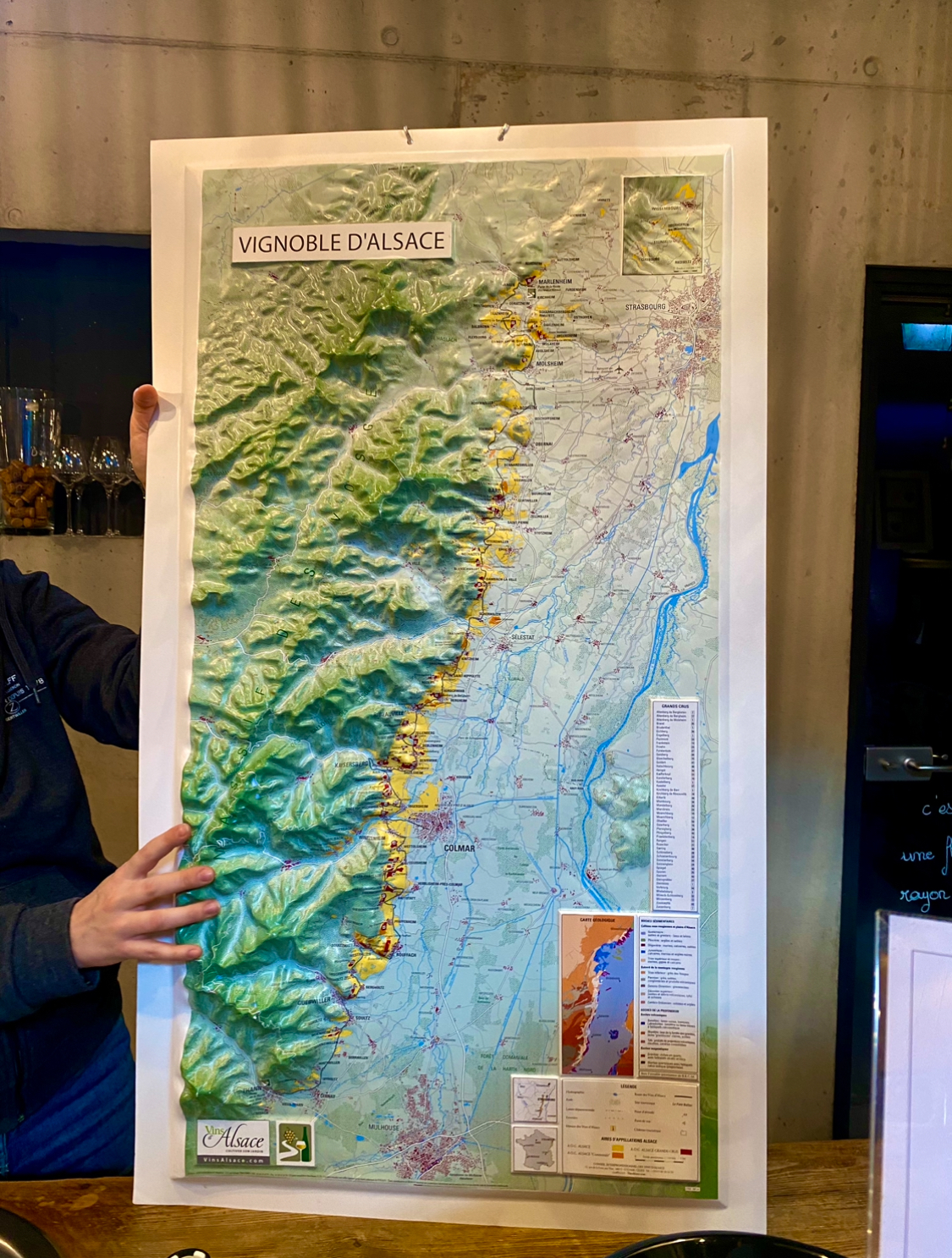
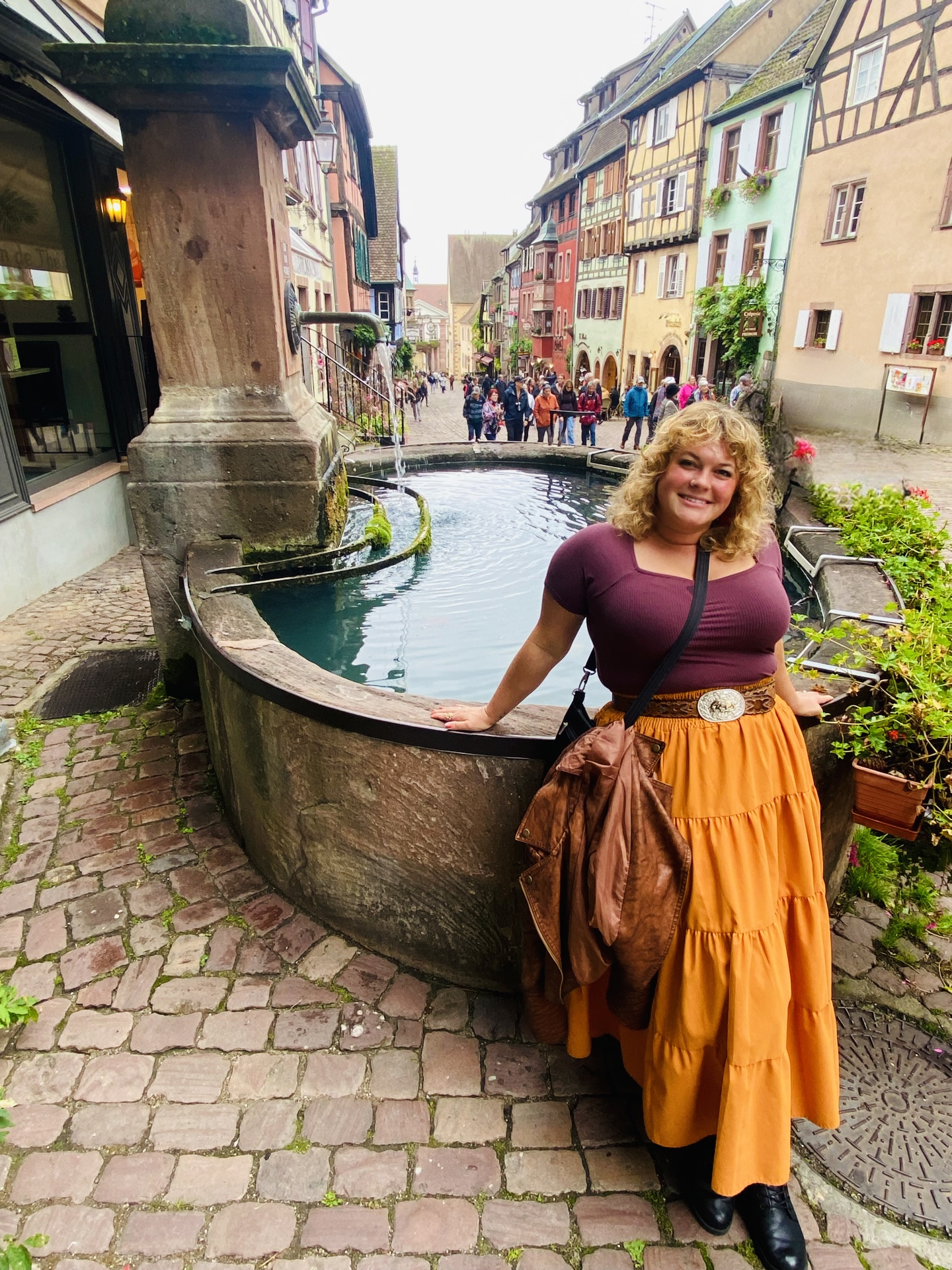
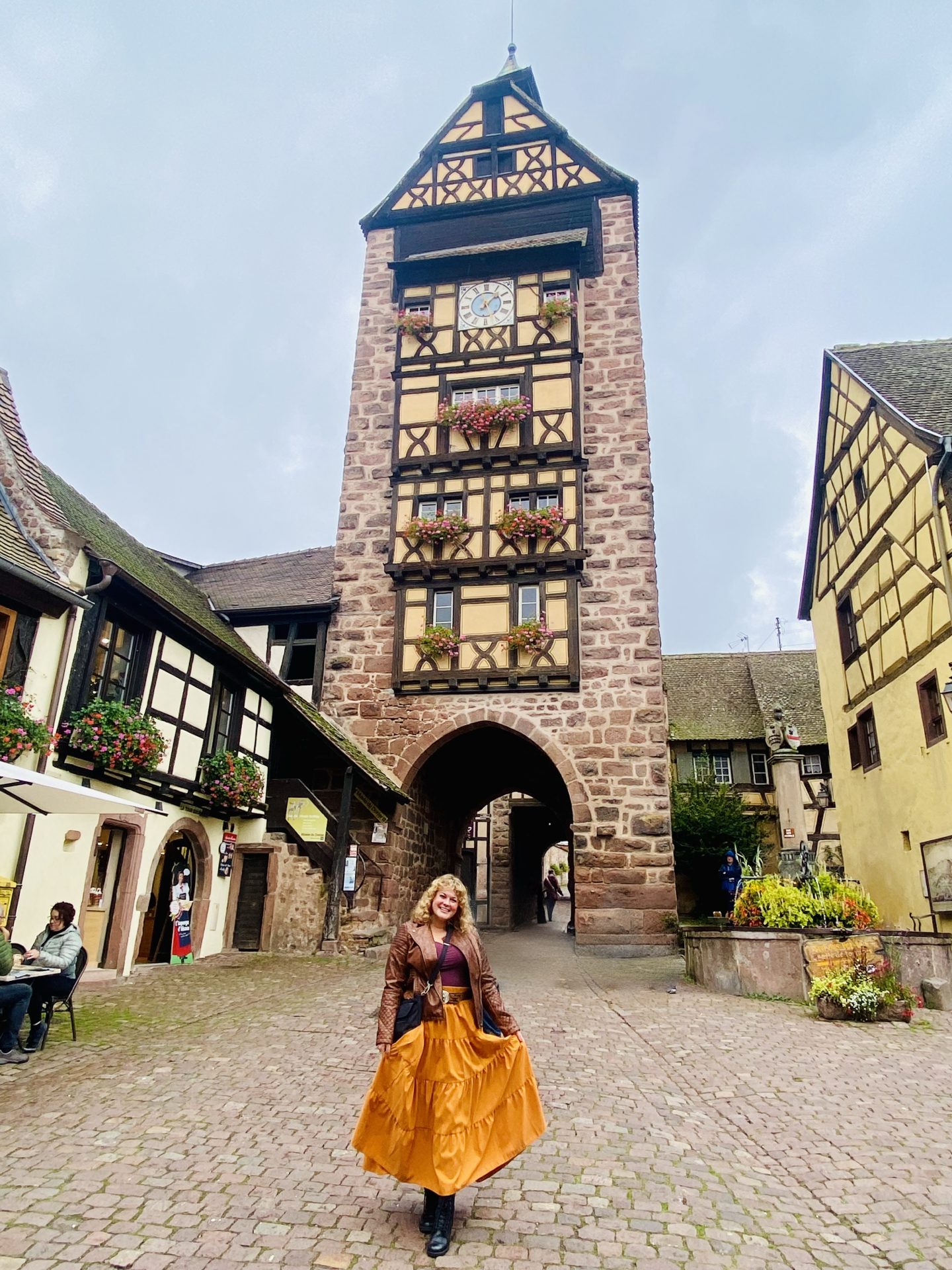
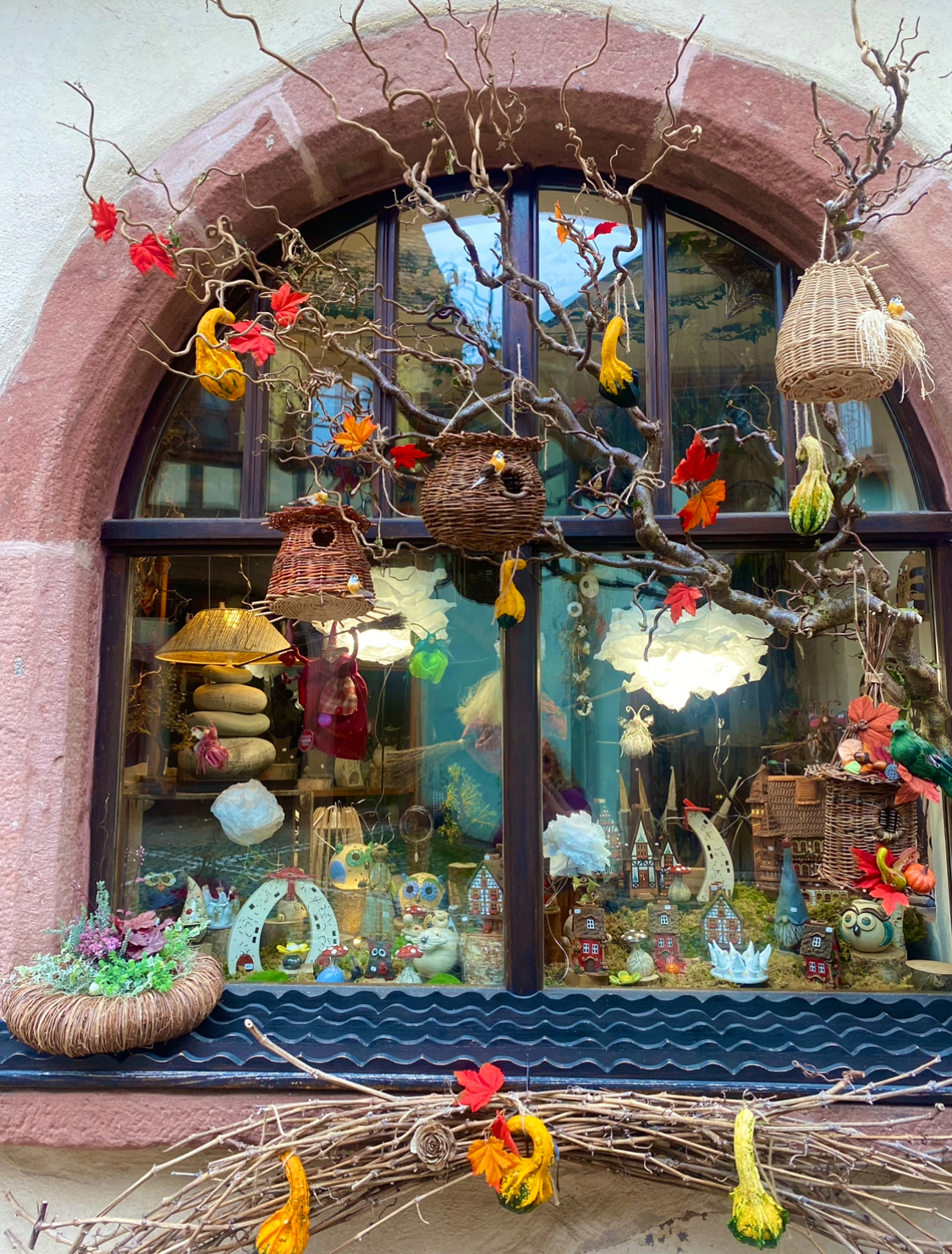
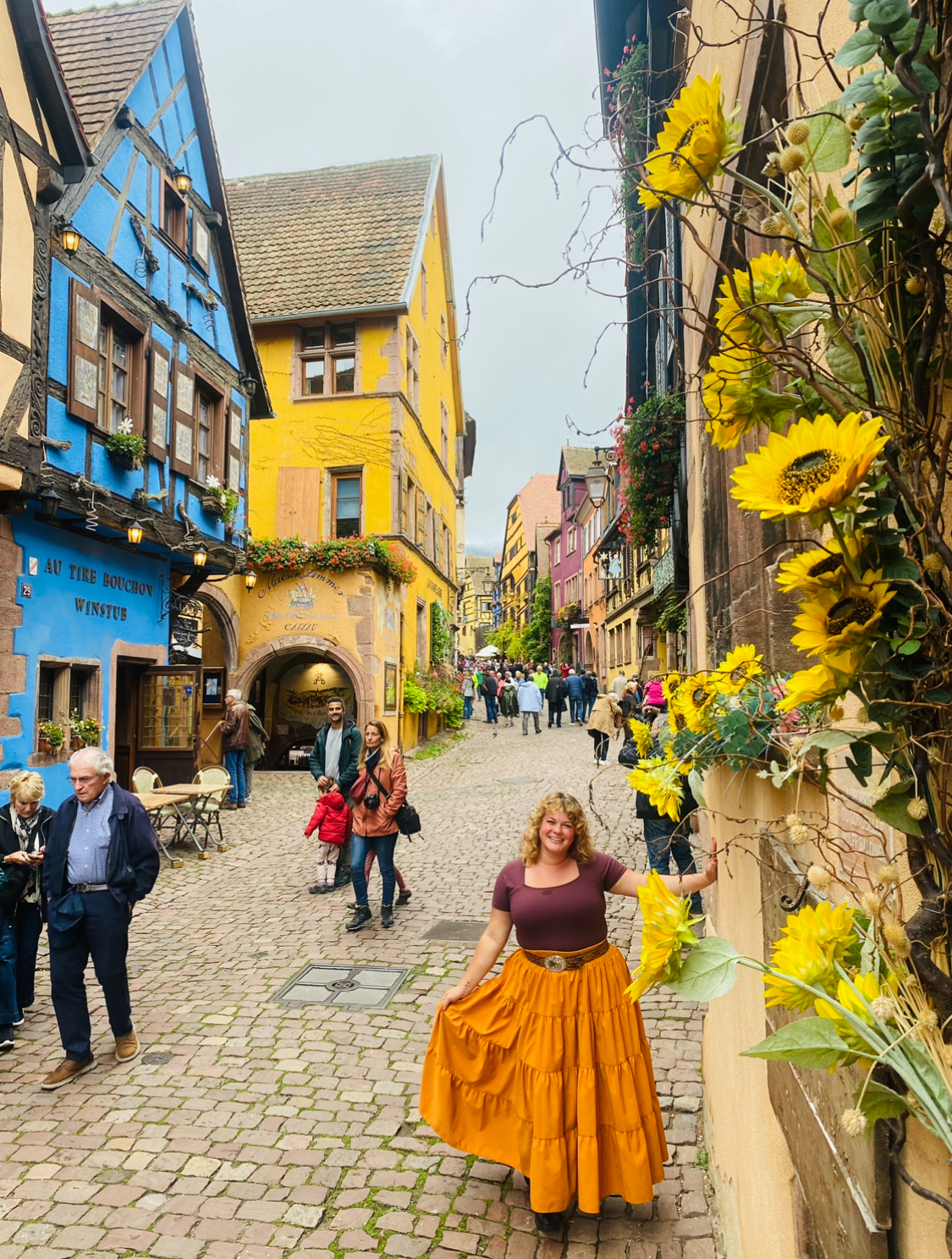
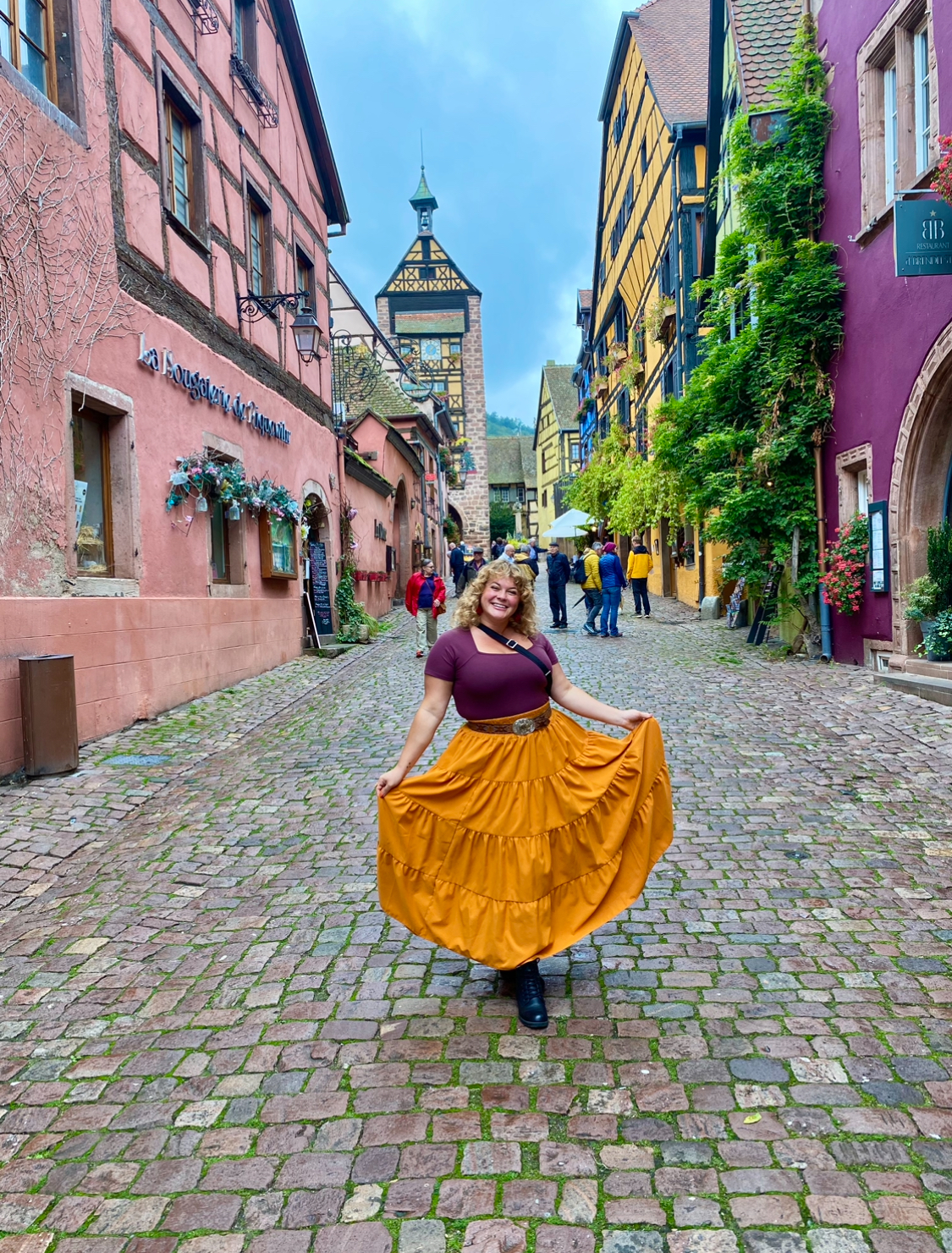
I was looking forward to drinking wine and seeing cute villages, but honestly, Alsatian wine culture has given me such a perspective on what’s missing in my life. The people who live in these villages have little plots of land where they produce perfect grapes. If the grapes are REALLY good, they’re Grand Cru grapes. The wineries are all crowded together in these quaint little villages: oftentimes, the family will live in the rooms above, the wine cellars will be down below, and the tasting rooms and wine presses will be in the courtyard. This isn’t Napa Valley—everybody’s cousin and uncle and brother has a wine company, and they all help each other out during harvest season. Seriously, we passed by vineyard after vineyard, and neighbors were just parked on the side of the road, clustered together, cutting grapes and tossing them into produce trucks. We went to a winery run by the same family for 300 years, which isn’t unusual for the region.
Okay, I don’t think I’m making myself clear. Right now, you are reading this from I’m assuming your phone. You and I have to get up, slog down our coffee, drive through traffic, take a ten minute lunch, and work all day in a 9-to-5 like a couple of schlemiels. But right now, RIGHT NOW, there’s a village in France where folks are getting up to go spend a lovely day just cutting grapes for wine. That’s all they’ve got to do today. They’re going to go home and take a two-hour lunch break, where they will get a fresh-baked baguette from the local boulangerie on main street. And a glass of wine is like $3.50. I don’t think the Sunday Scaries exist in Alsace.
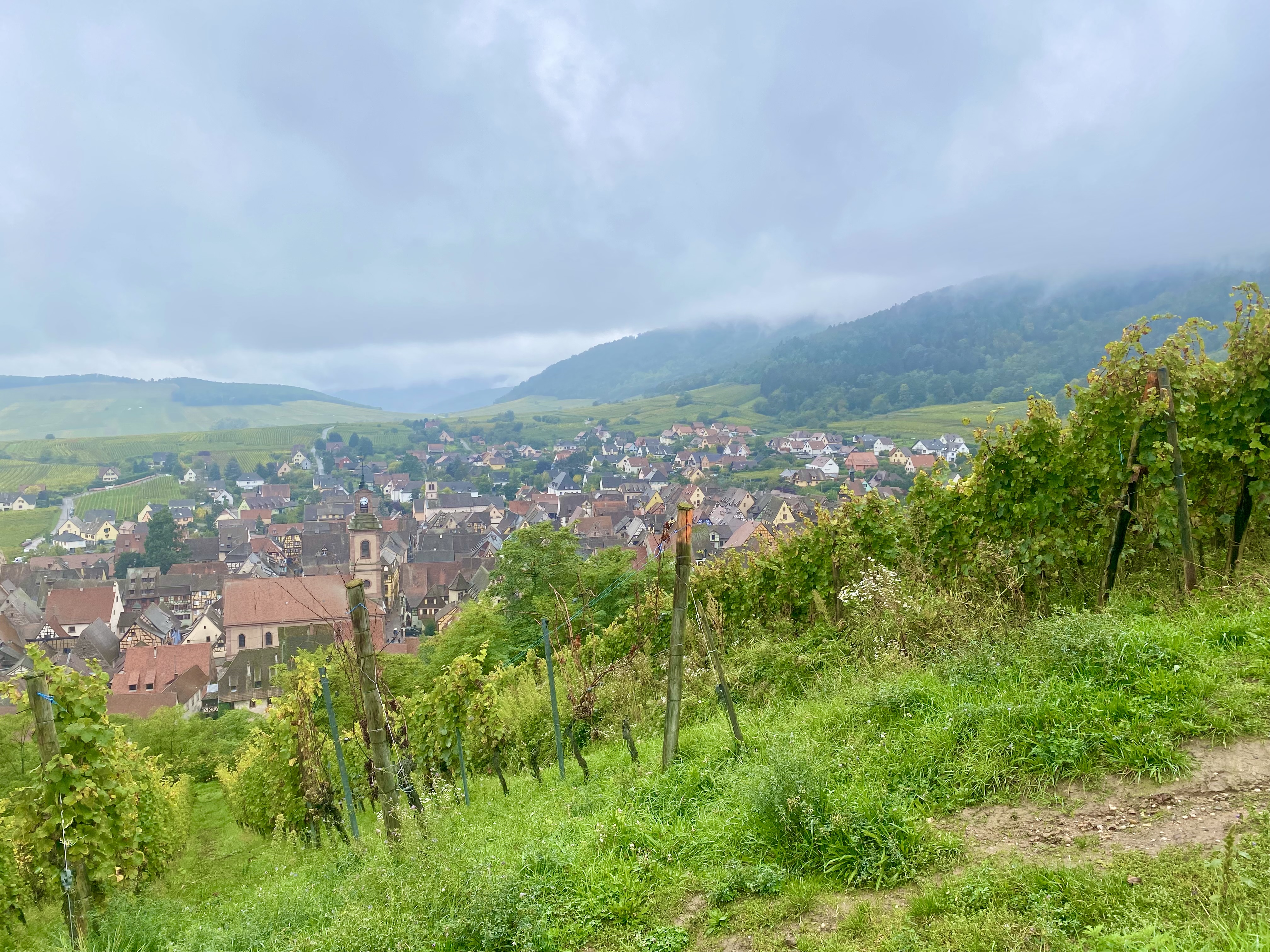
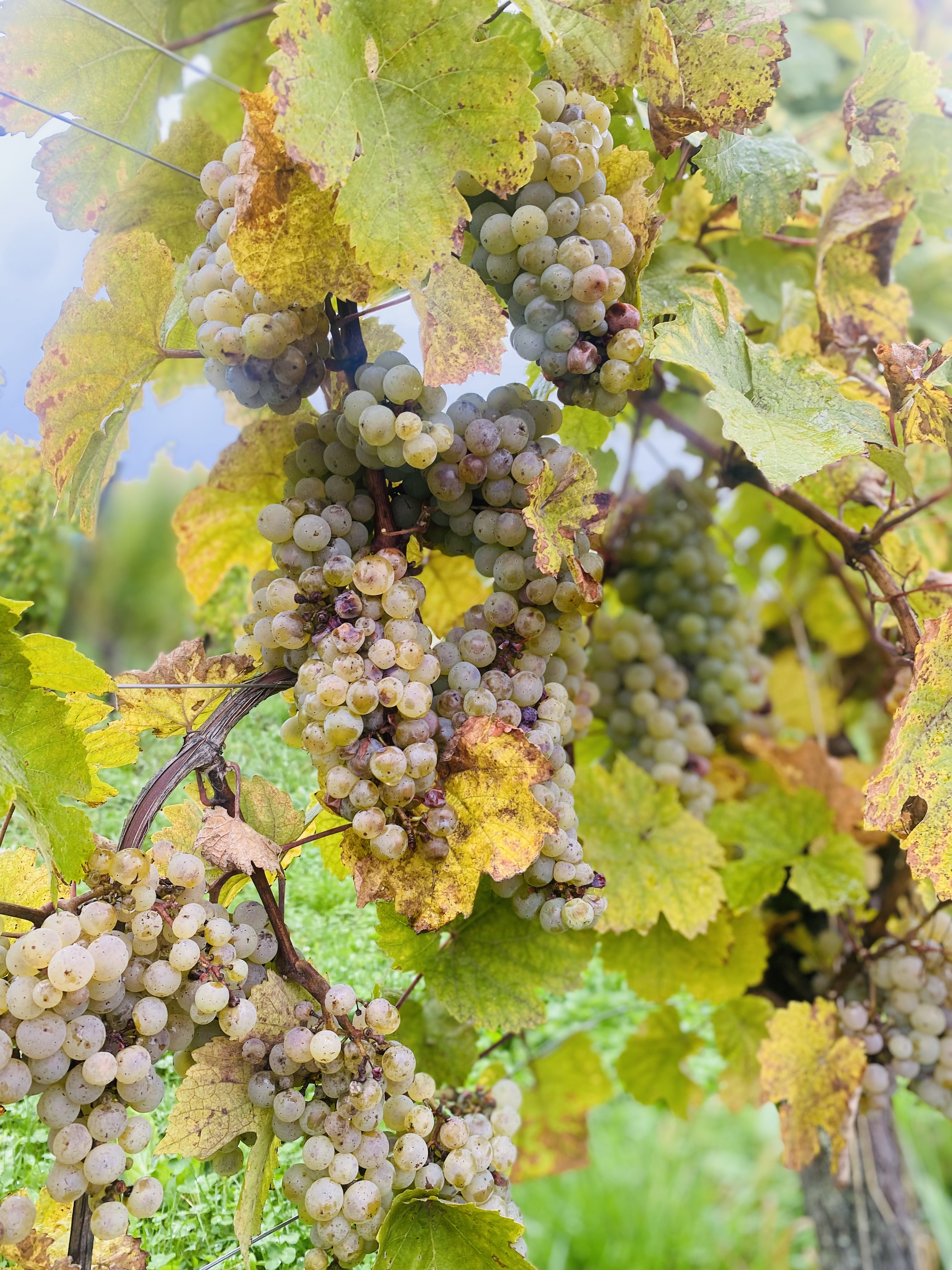
Riesling is the specialty of Alsace, as well as Gewürztraminer. You’ll see mostly sweet white wines in Alsace: the most common grapes that are grown in the region are Riesling, Gewürztraminer, Pinot Gris, and Pinot Blanc. Two local wines you should try are Klevener, which is minerally and not too sweet, and Crémant d’Alsace, which is the regional sparkling wine. (Remember, you can only call it champagne if it’s from Champagne, France, which is in the Grand Est administrative region, but a different province.) Frankly, I love sparkling wine and would be perfectly happy drinking it with every meal, but in Alsace, Crémant will usually be served before the meal as an aperitif. All for a blissfully low price.
WHAT TO EAT
The regional specialties of Alsace are going to be pretty similar to German food. Pretzels, mulled wine (vin chaud) if it’s cold, trout and potatoes, etc. While you’re in the region, make sure to try:
- Quiche Lorraine—okay, okay, technically you could cross the Vosges and go to actual Lorraine to try this, but I tried this quiche in both regions and honestly I liked it better in Alsace. It was creamier than the bacon-egg-and-cheese pies we serve at home.
- Tarte flambée, or Flammekueche—this is basically a Quiche Lorraine-flavored thin crust white pizza. Creamy white crème fraîche takes the place of pizza sauce, and traditionally it’s covered in sauteed onions and lardons (bacon). Locals will tell you it’s best with salmon, but I think the bacon and cheese is yummy enough.
- Käsespätzle—you could make an argument that this is the German version of mac and cheese, it’s not quite the same. Spätzle are yummy, wriggly, hand-rolled egg noodles. Where I grew up in Germany, spätzle are traditionally served with gravy alongside a gravy-based meat. In Alsace, the spätzle are baked in a casserole dish with a creamy cheese sauce. There might be some onions in there, too. (You can’t run from the bacon-onion-and-cheese combo in Alsace.) This dish, like bouillabaisse in the south of France, is a trap. You will not be able to eat all of this, and then your French waiter will troll you and be like “Oh, alors! You did not like it! But you did not eat it all! Oh la la and you’re American??”
- Choucroute garnie—the French call sauerkraut ‘choucroute’. Traditional choucroute garnie is a mountain of sauerkraut topped with potatoes and five types of pork. Four types of them are going to look like ham, and one will look like a hot dog. AND you get a potato. It’s… uh… a lot.
- Baeckeoffe—this is a thin-sliced potato and carrot casserole baked low and slow overnight with some kind of meat, depending on the season. I had duck.
- Coq au riesling—honestly I liked this better than the traditional coq au vin. As I’ve stated in other blogs, chicken is the national dish of France. Other than wine/cheese/baguettes/croissants/strong little coffees, there’s nothing the French love more than a good slow-roasted chicken. This dish features chicken slow-roasted in a creamy wine sauce with shallots and buttery chanterelle mushrooms.
- Pain d’épices—this is French gingerbread, or ‘spiced bread’. You’ll see cute gingerbread factories all over Strasbourg, Colmar, and along the Alsace Wine Route. (I even saw one painted to look like the witch’s gingerbread house in Hansel and Gretel!) Alsatian restaurants will sell Black Forest Cake because they’re so close to southwestern Germany, but take my advice and go for gingerbread crème brûlée. It’s delightful!
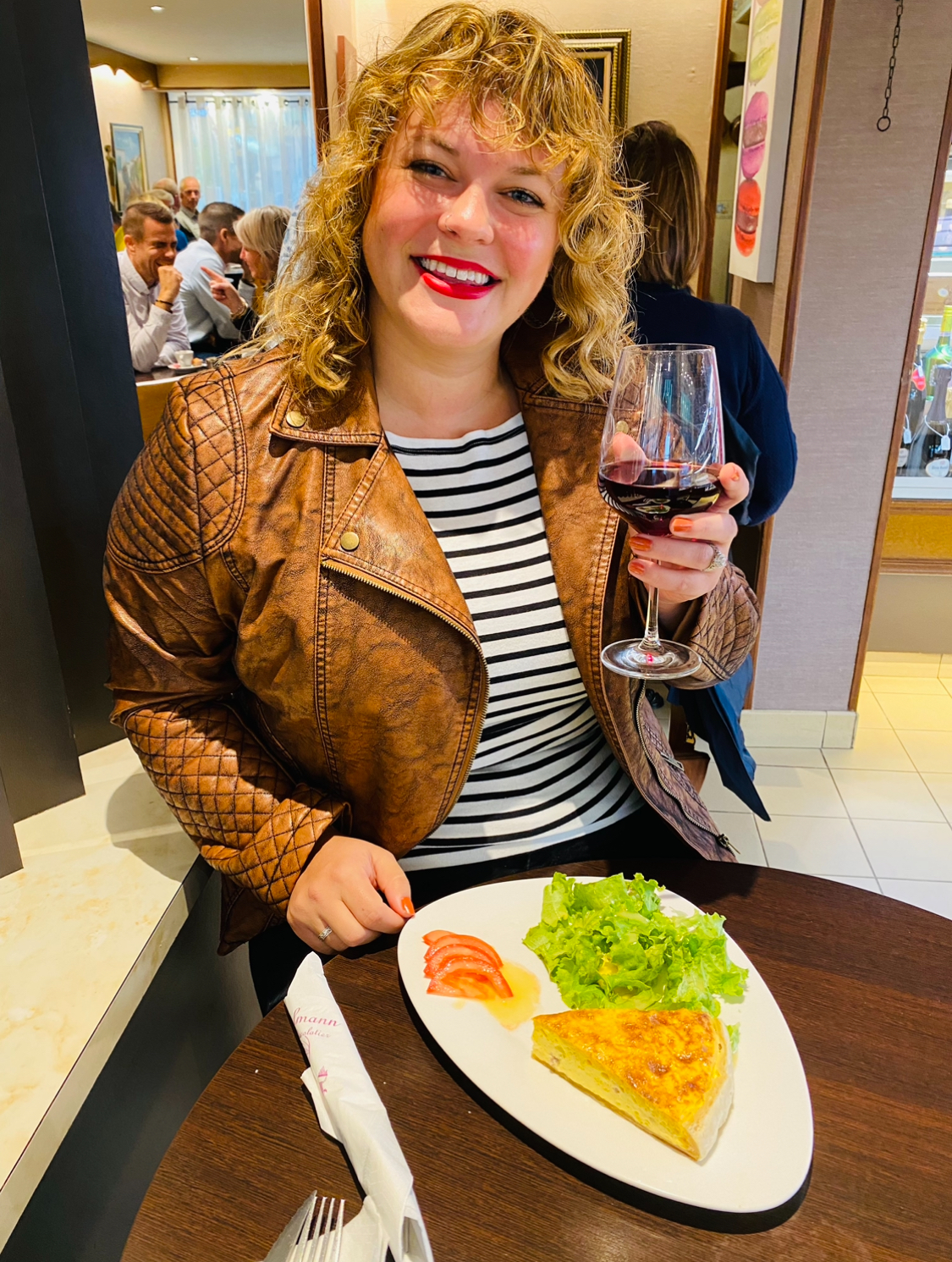
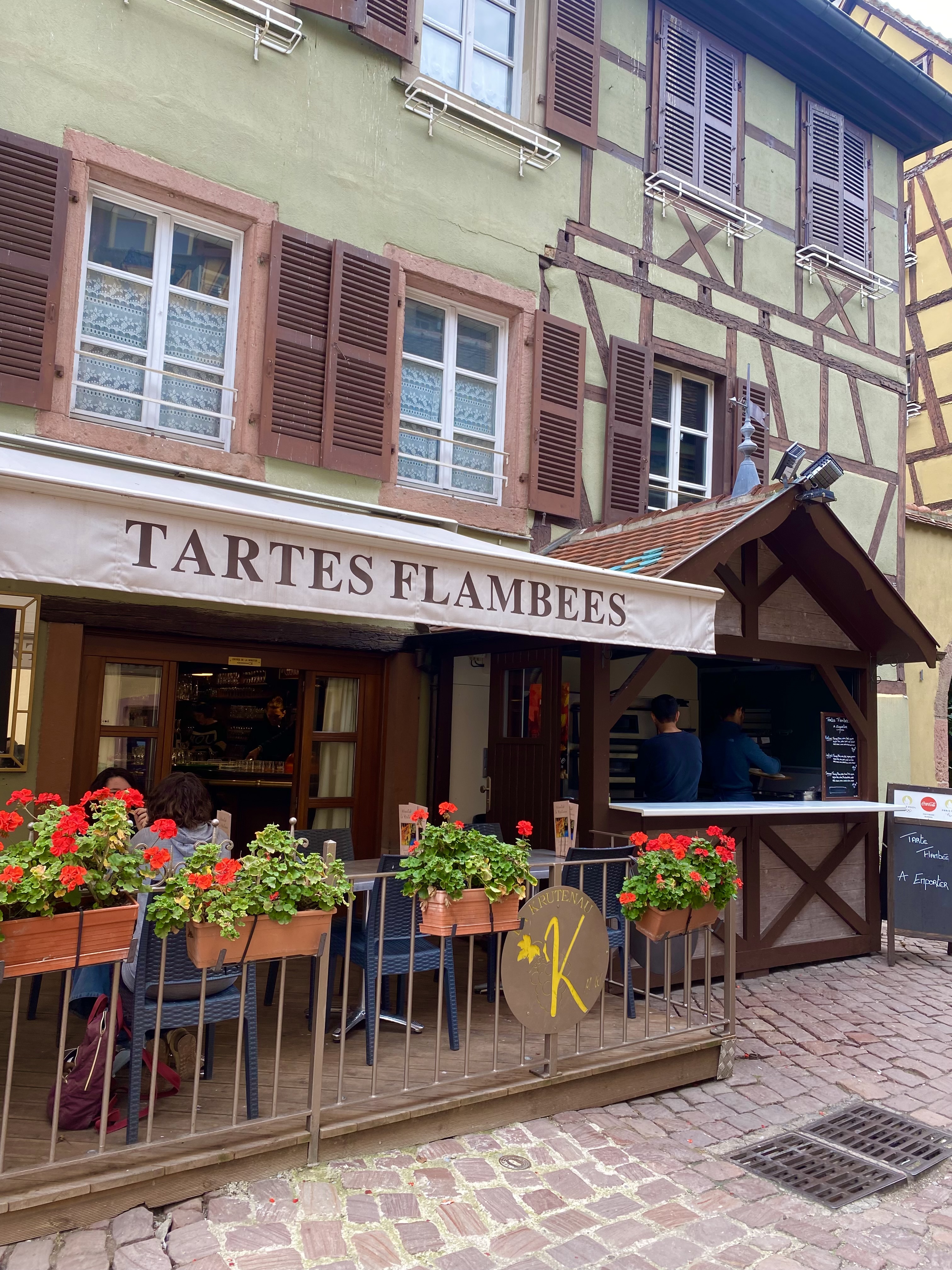
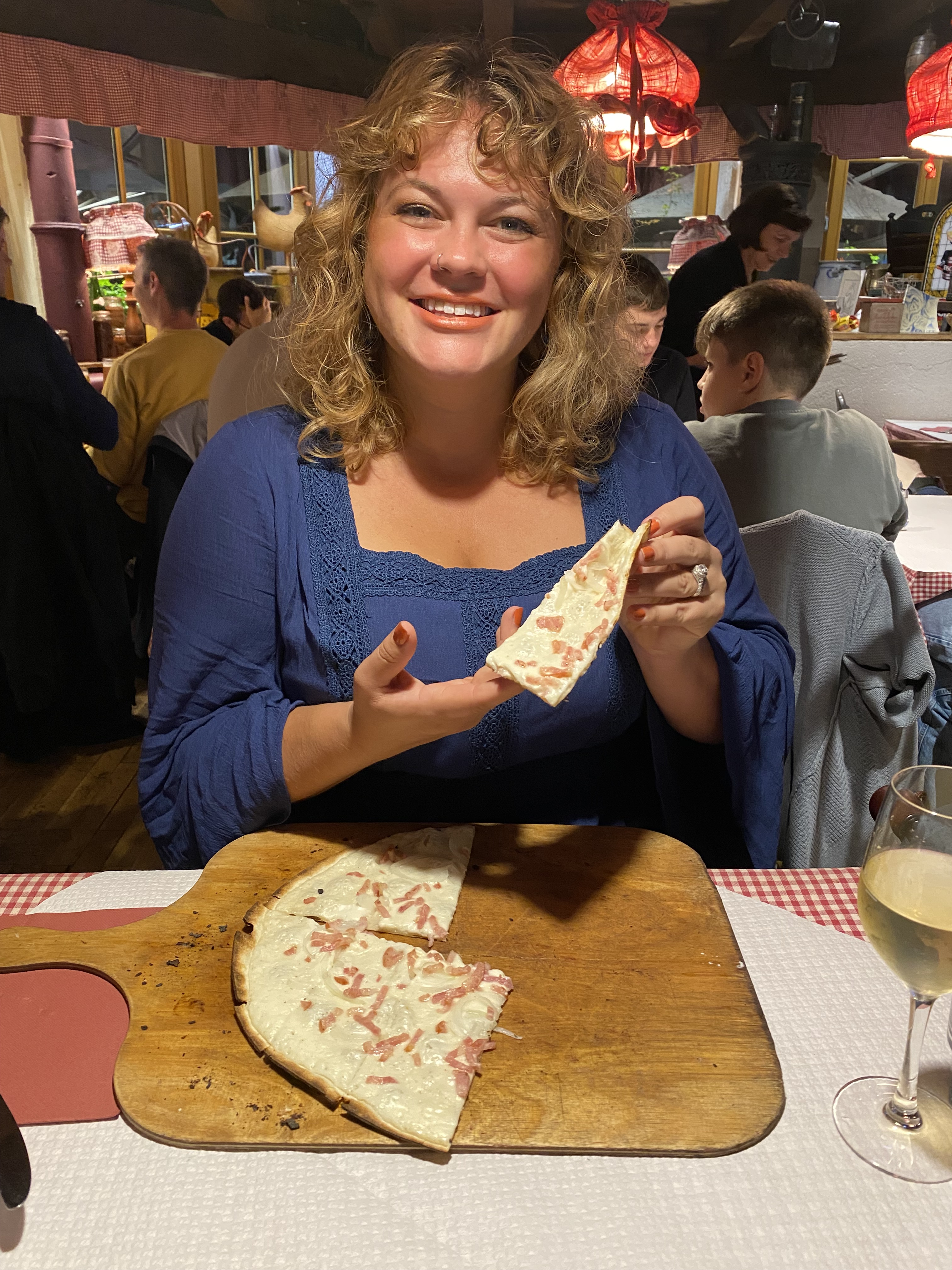
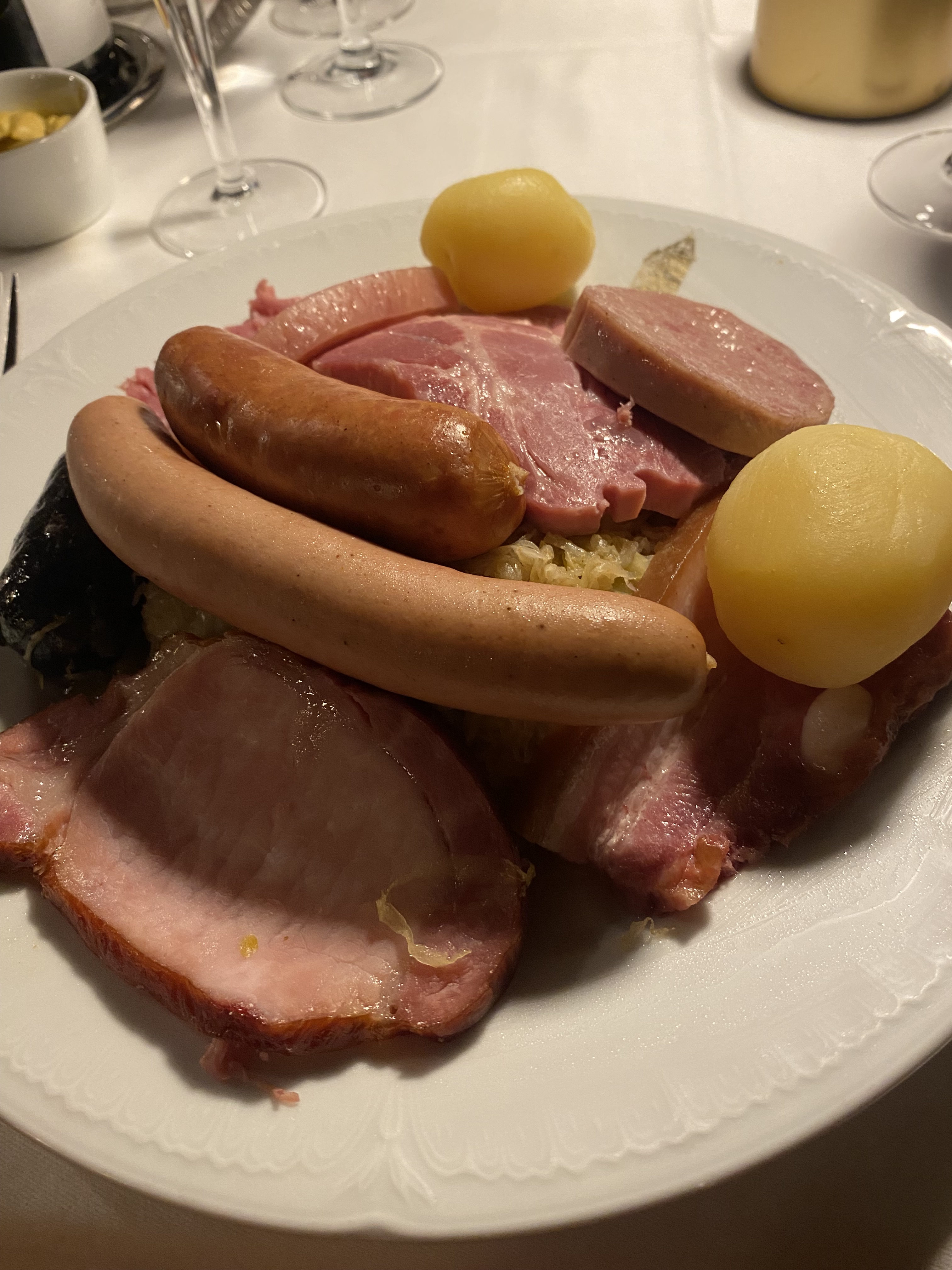
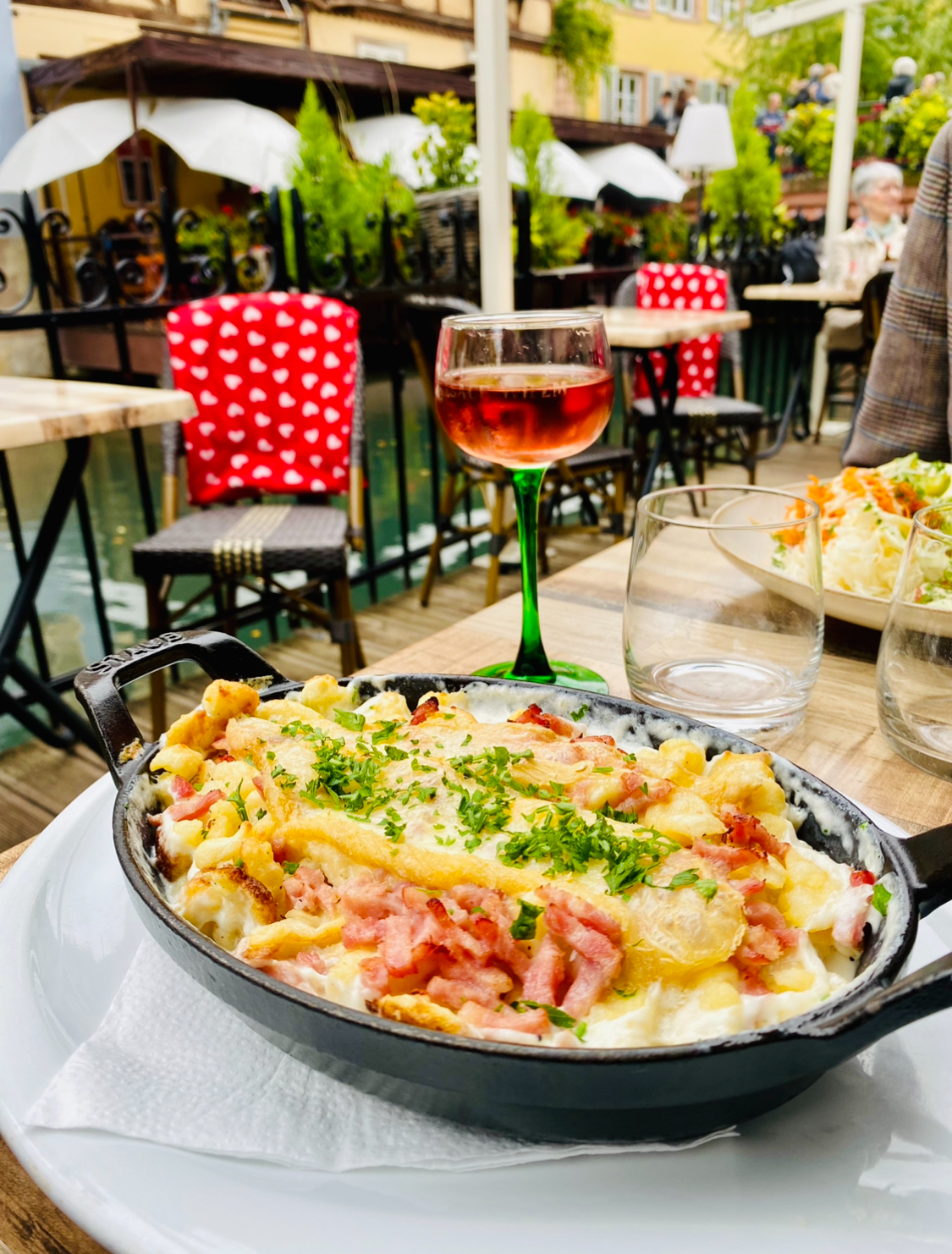
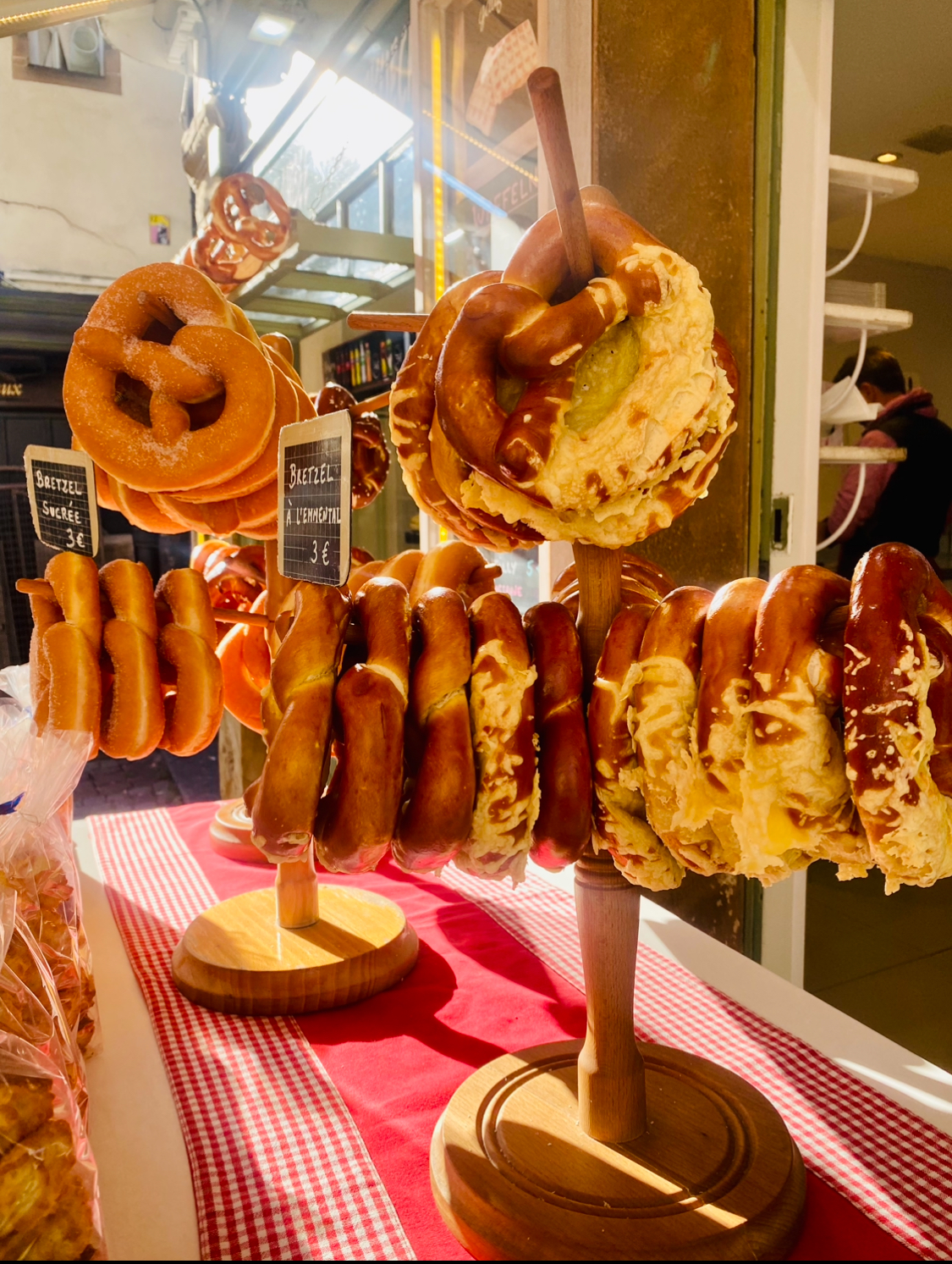
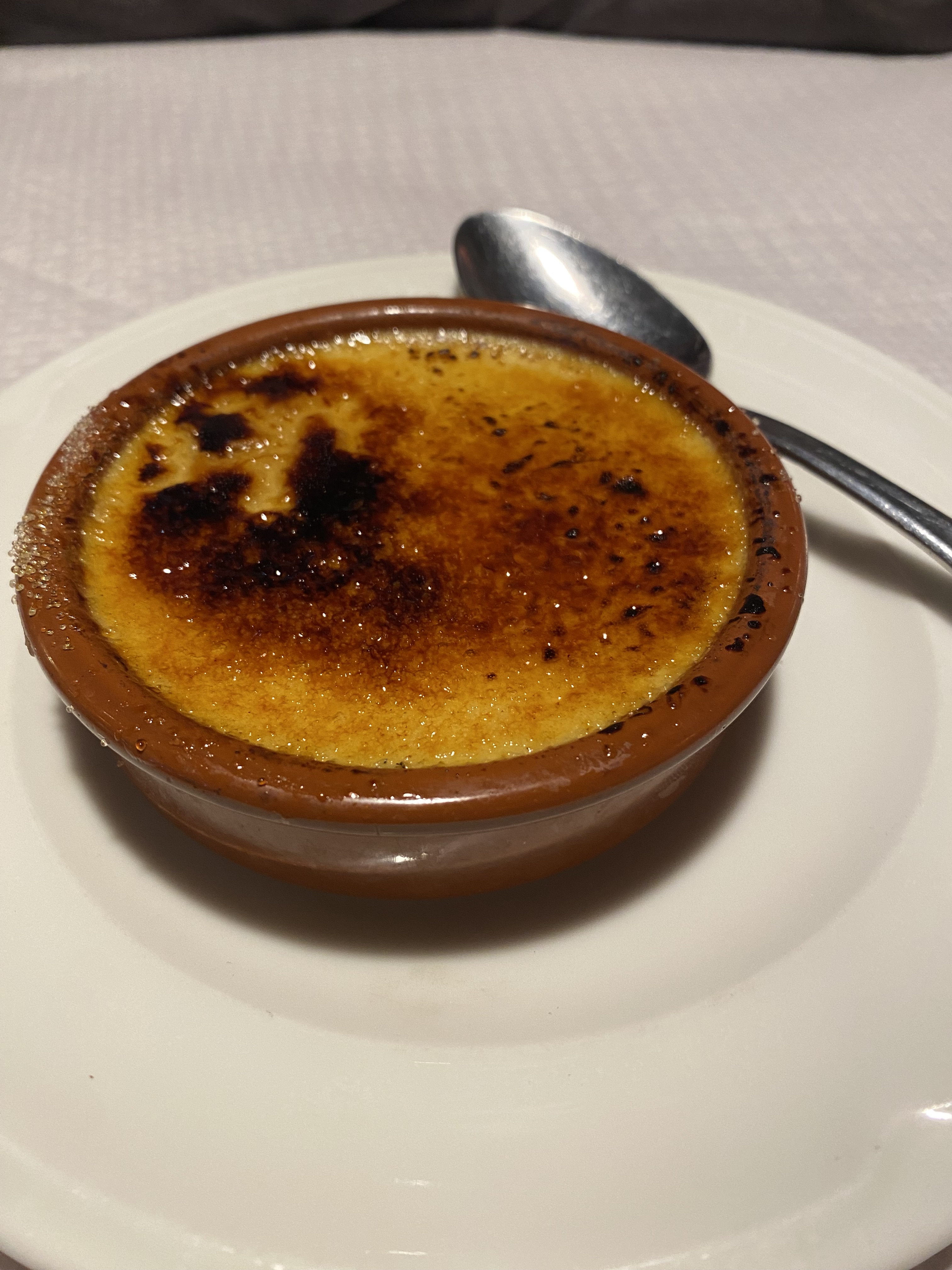
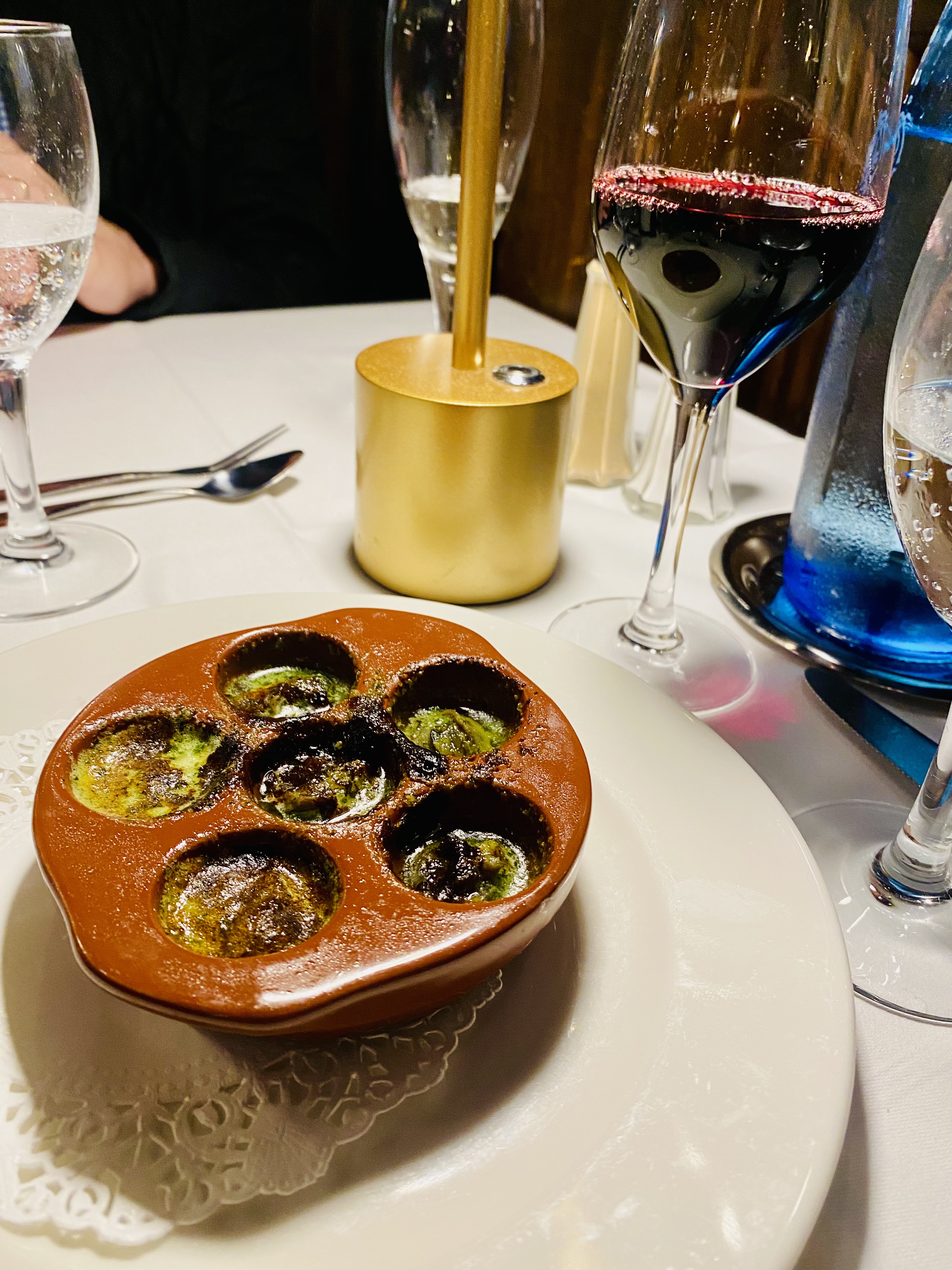
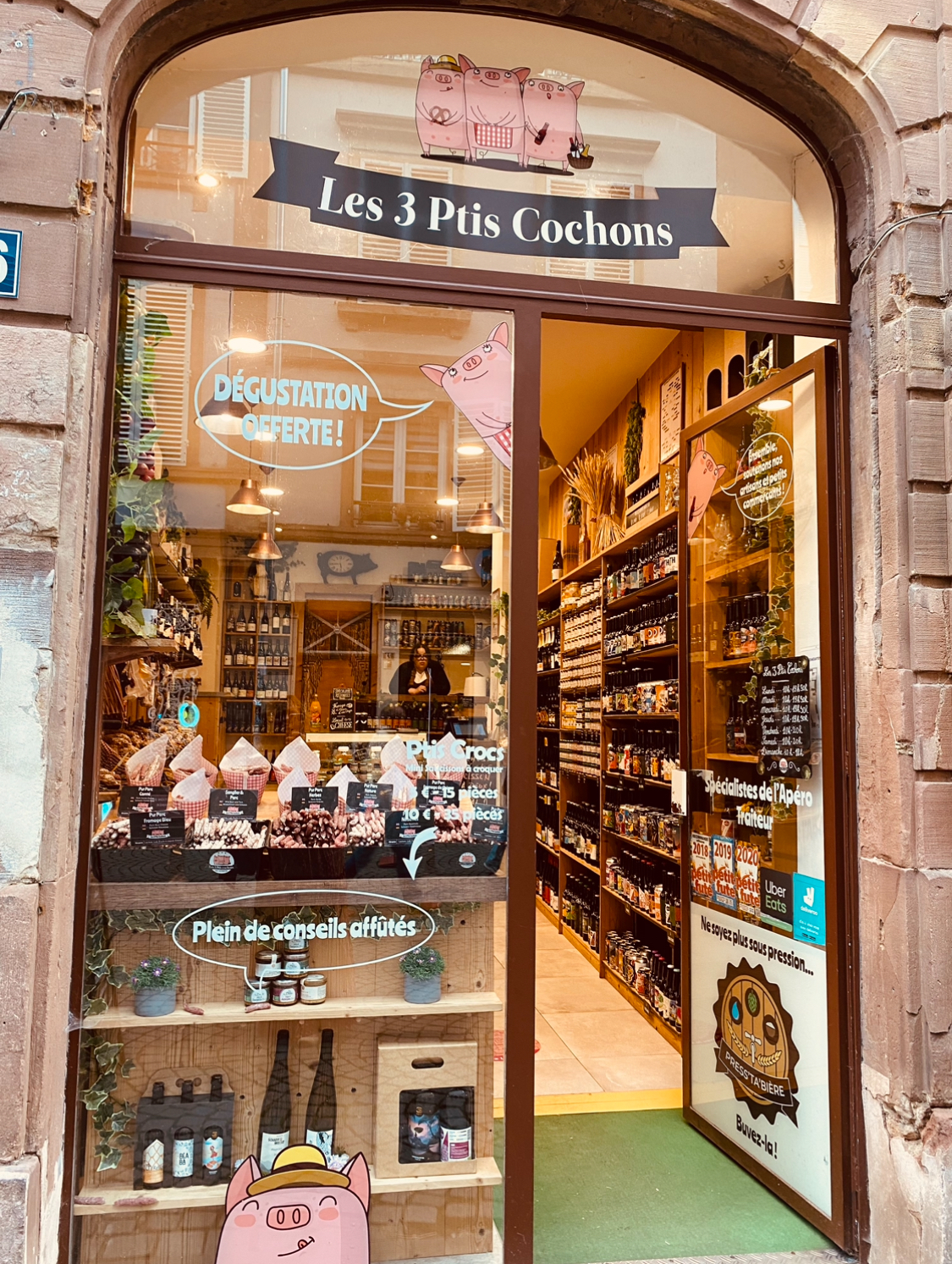
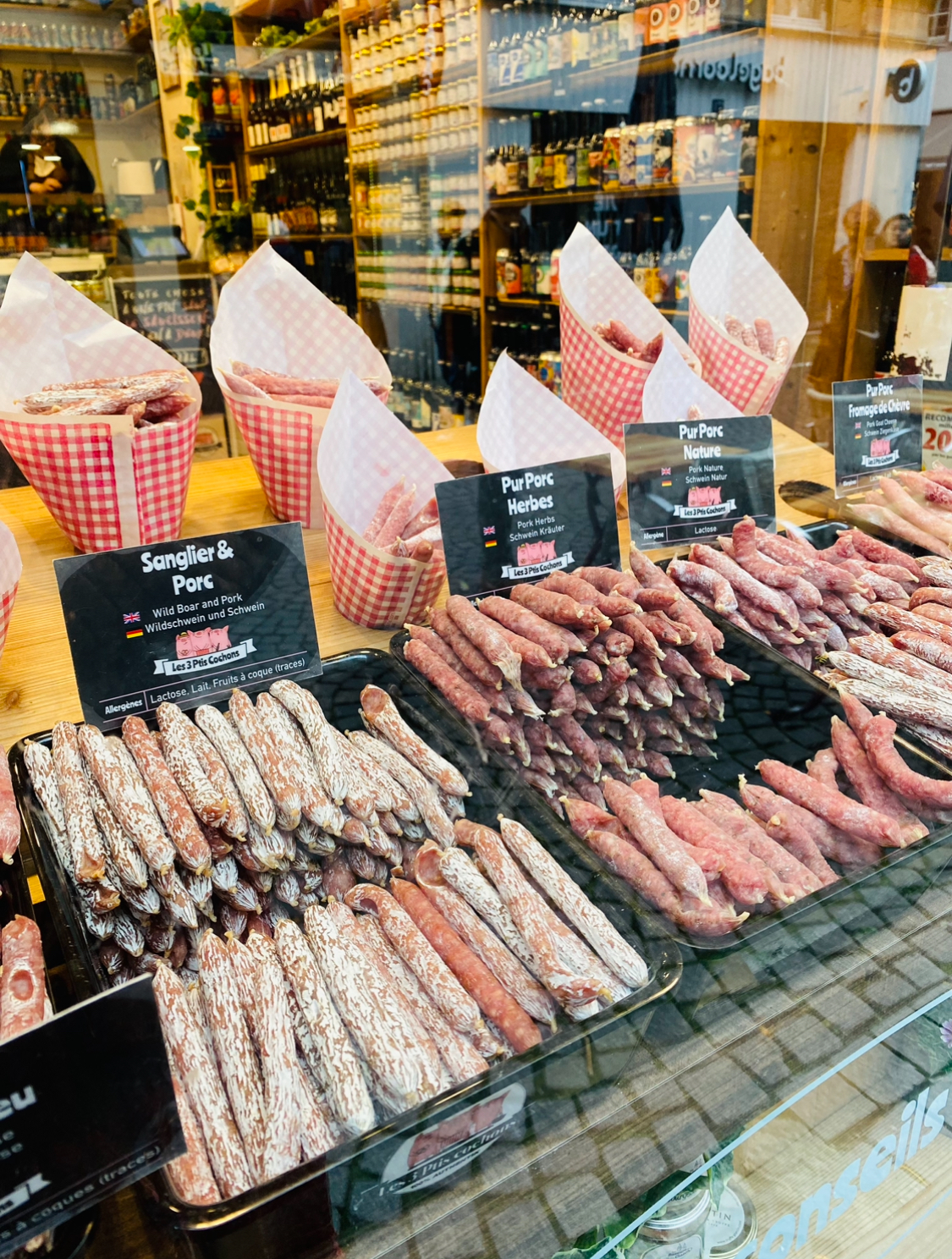
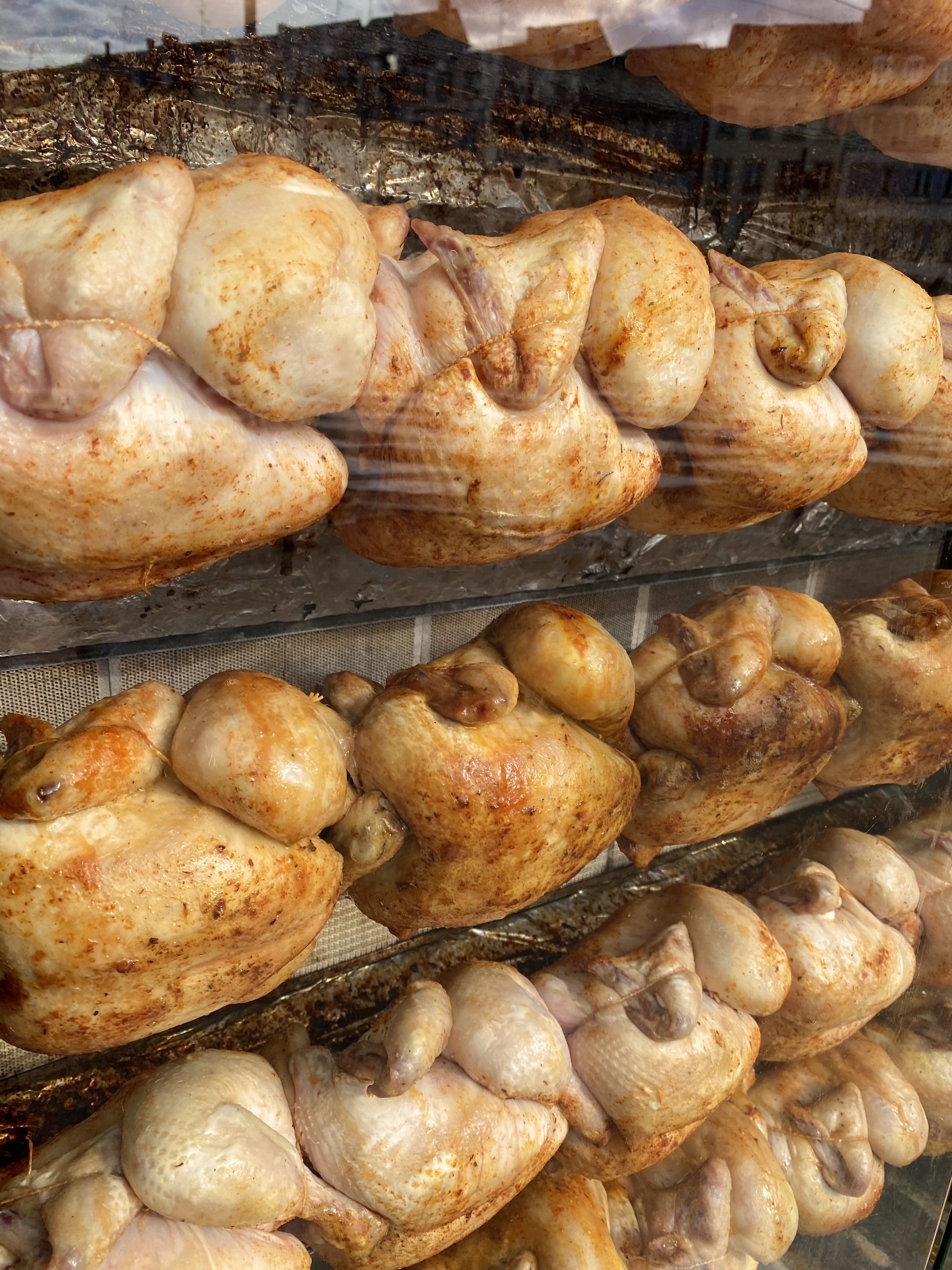
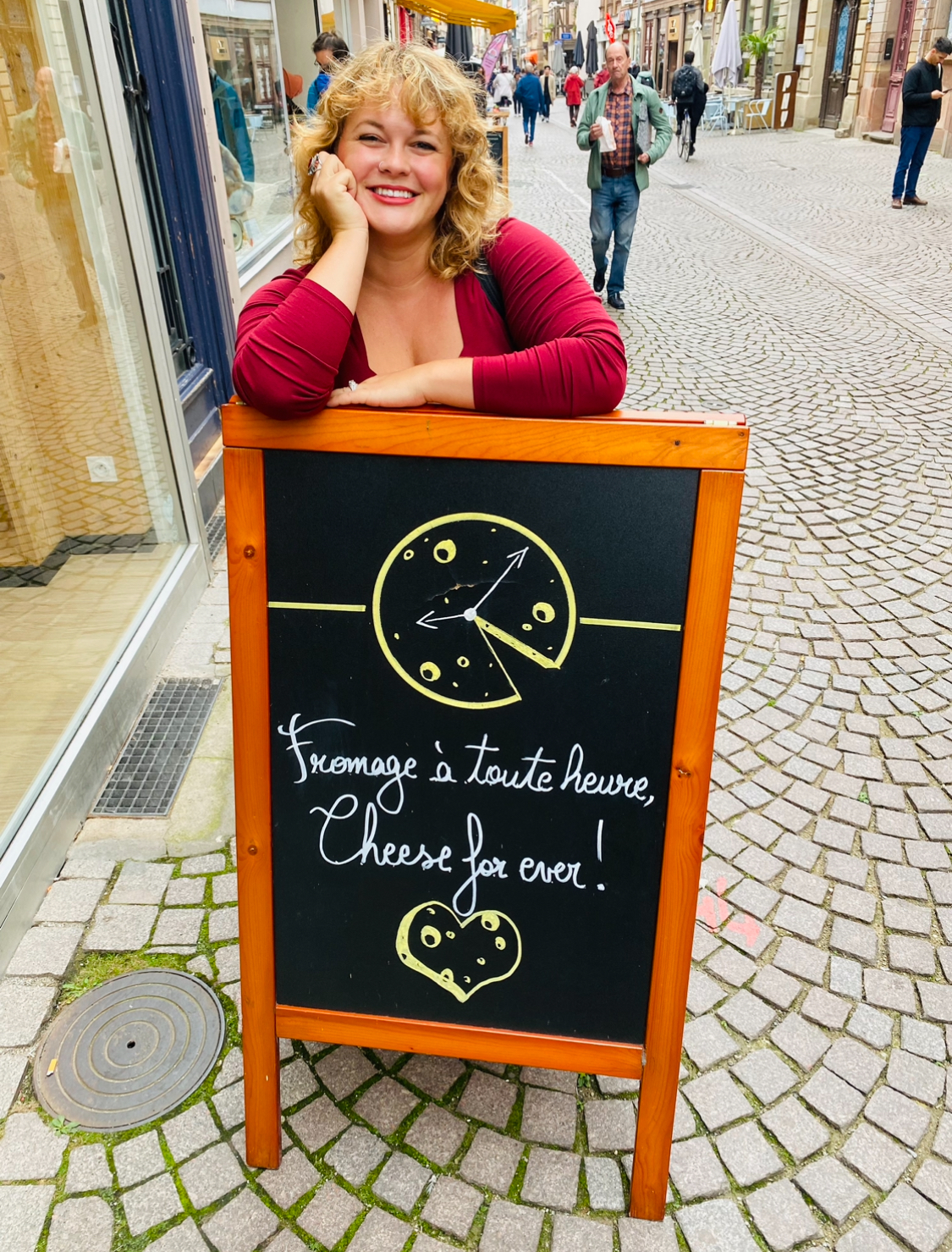
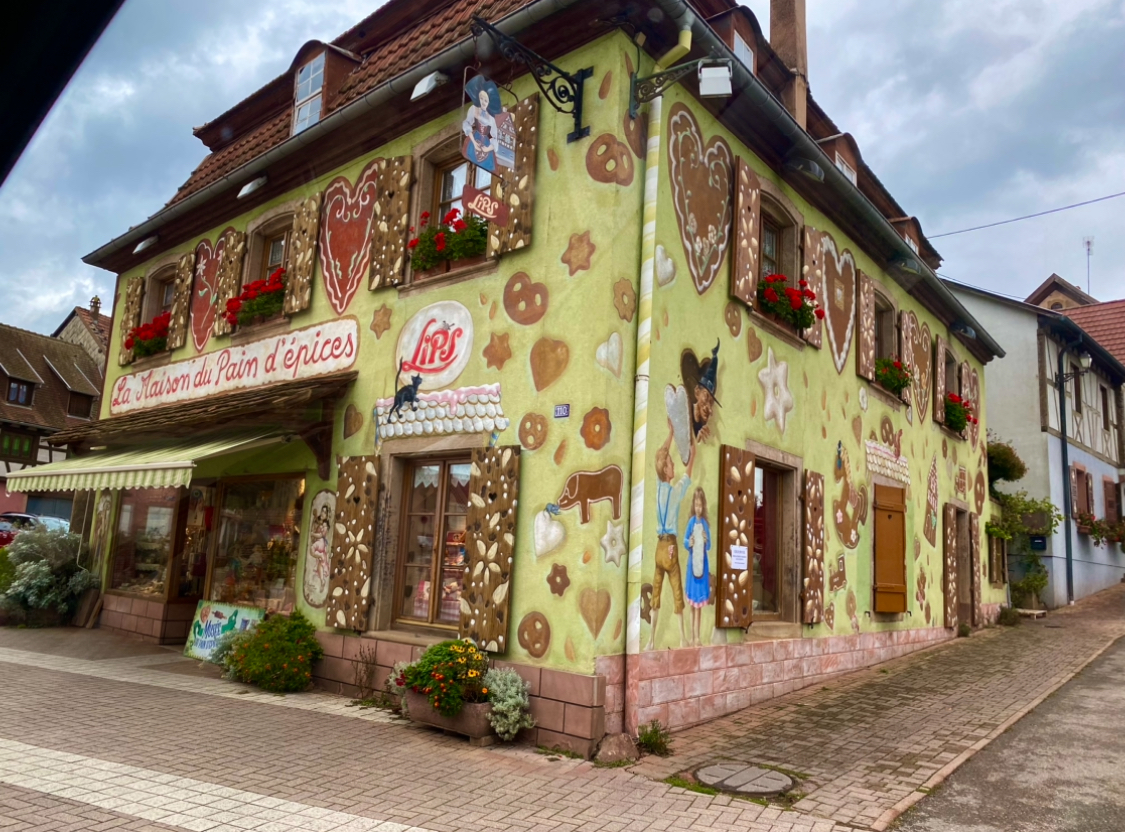
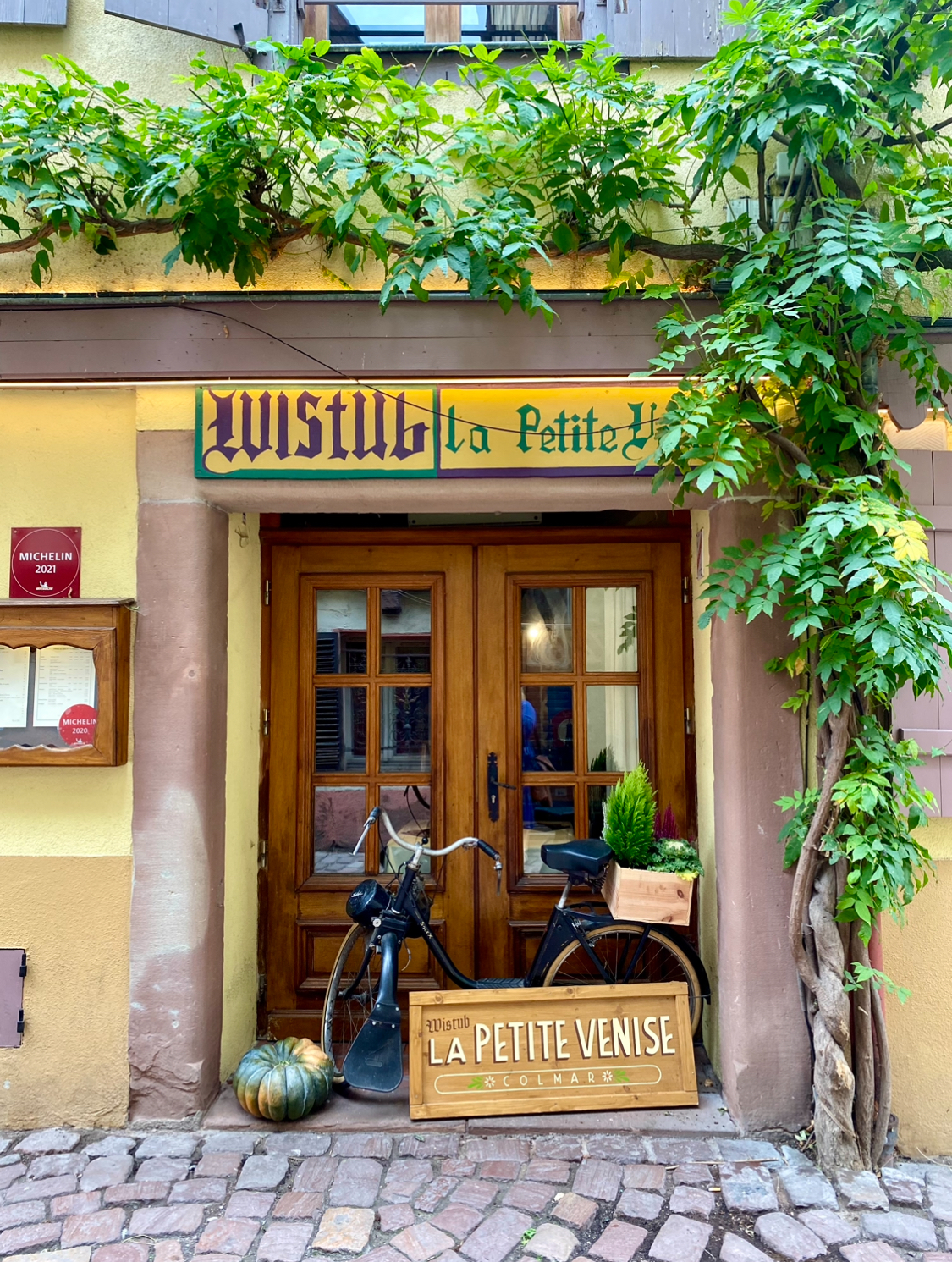
Most traditional Alsatian restaurants (winstubs) will serve a three-course meal so you can sample as many of these regional dishes as possible. You might get half a tarte flambee for an appetizer, Baeckeoffe or coq au riesling for a main (which in France is called an entree), and Black Forest cake or pain d’epices for dessert.
Here are a few restaurants I recommend in Strasbourg. As always, make sure you have a reservation!
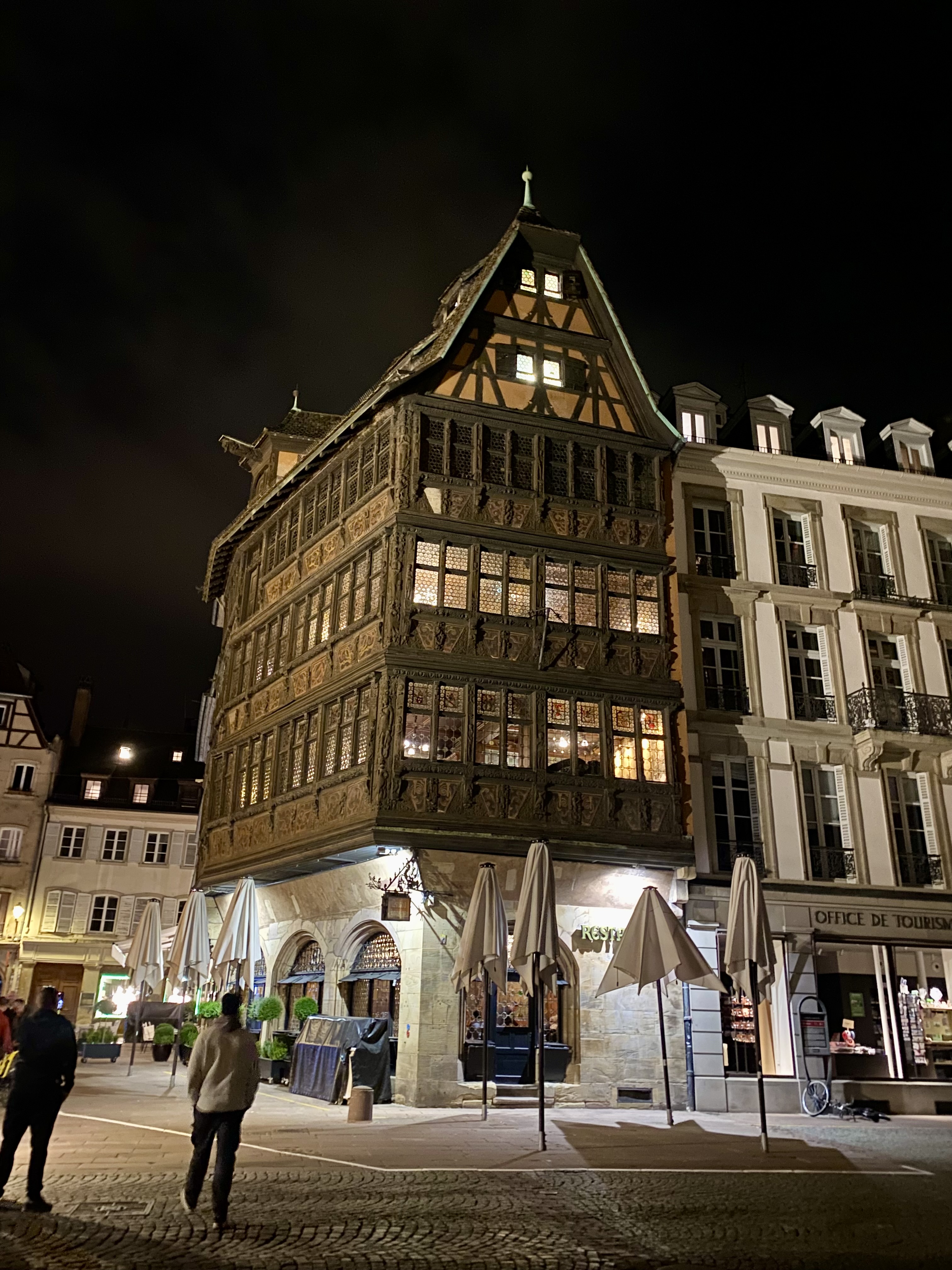
- Maison Kammerzell: Certainly Strasbourg’s most beautiful restaurant, Maison Kammerzell was built in 1427 and is a stunning example of Gothic architecture. With a view of the cathedral through the stained-glass windows and century-old frescoes that decorate all four floors, Maison Kammerzell is the place to go if you want the best choucroute.
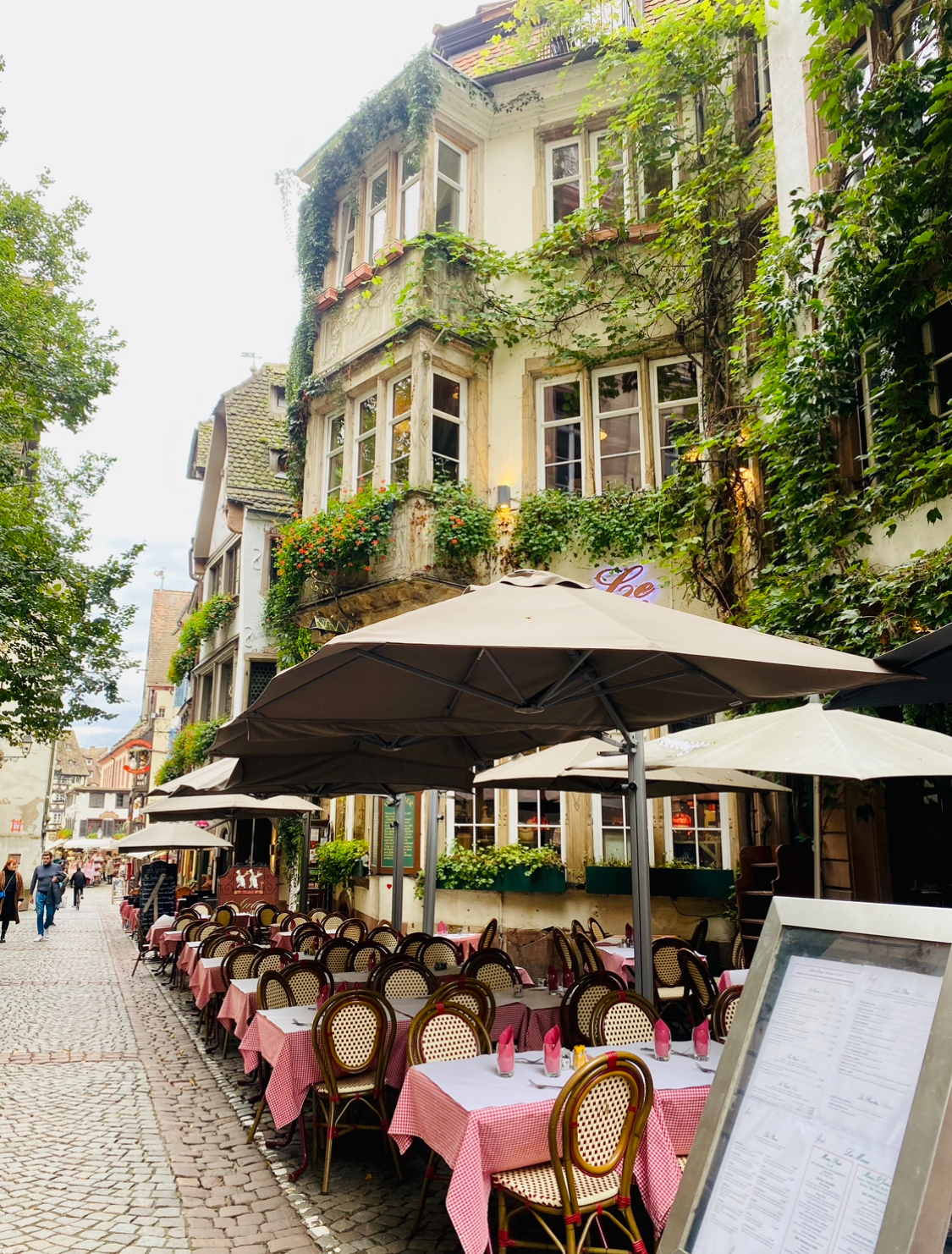
- Le Gruber: My favorite restaurant in Strasbourg, Le Gruber is also near the cathedral. Snugly embedded on Rue du Maroquin with other touristy winstubs, you’ll be able to find a three-course menu of traditional Alsatian cuisine here.
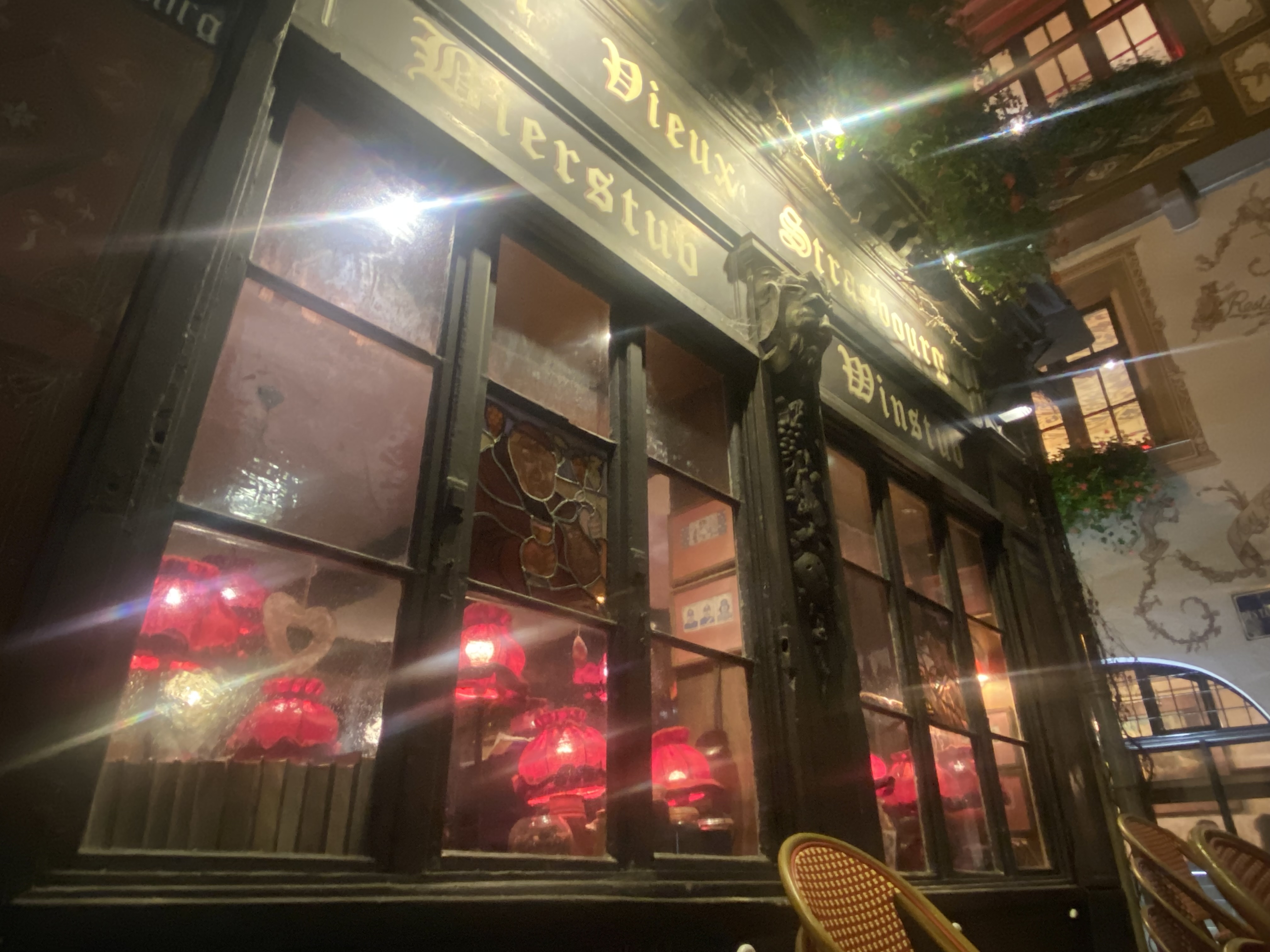
- Au Vieux Strasbourg: Right next door, literally the same exact thing. I would stick to Rue du Maroquin for dinner if you want something cozy and traditional.
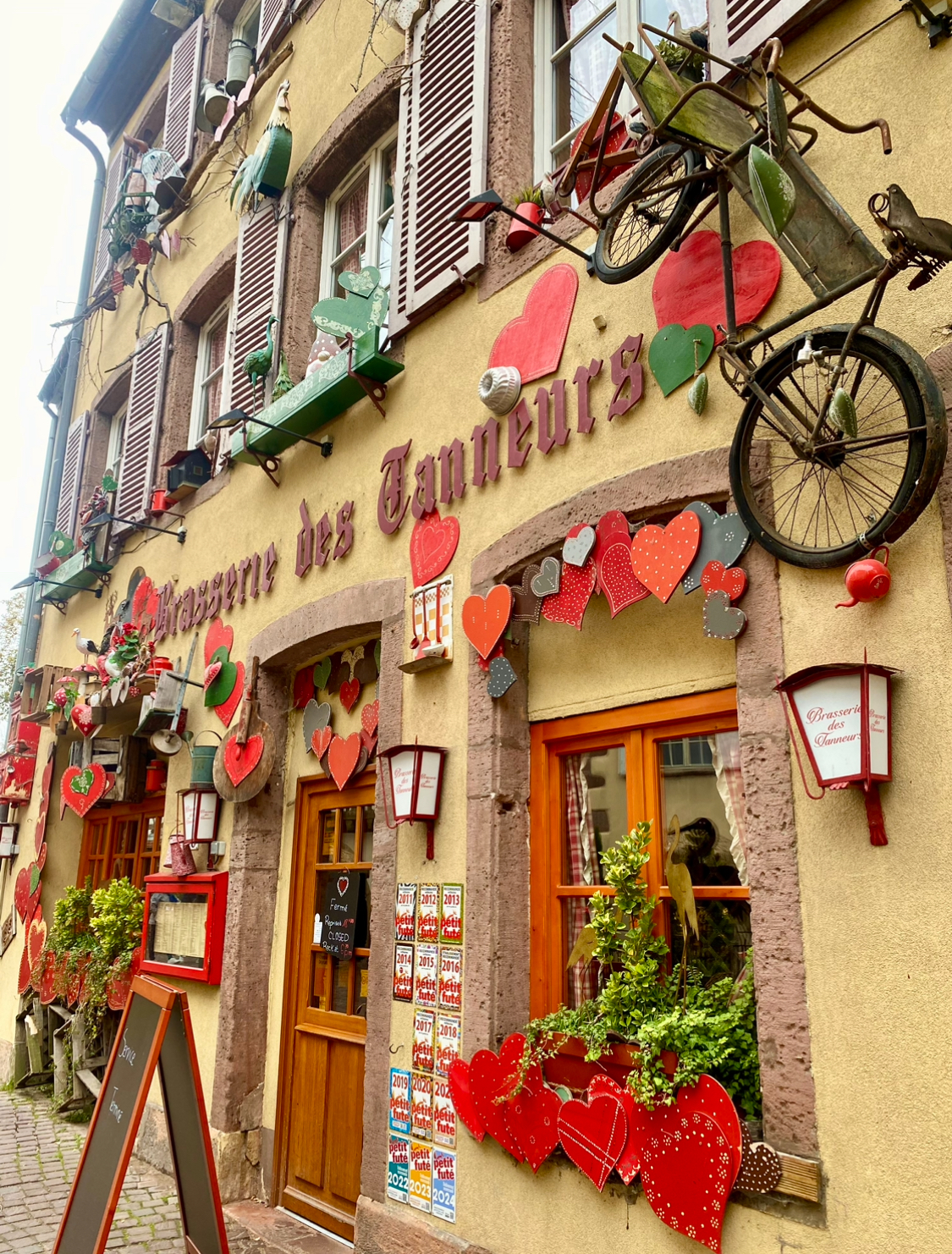
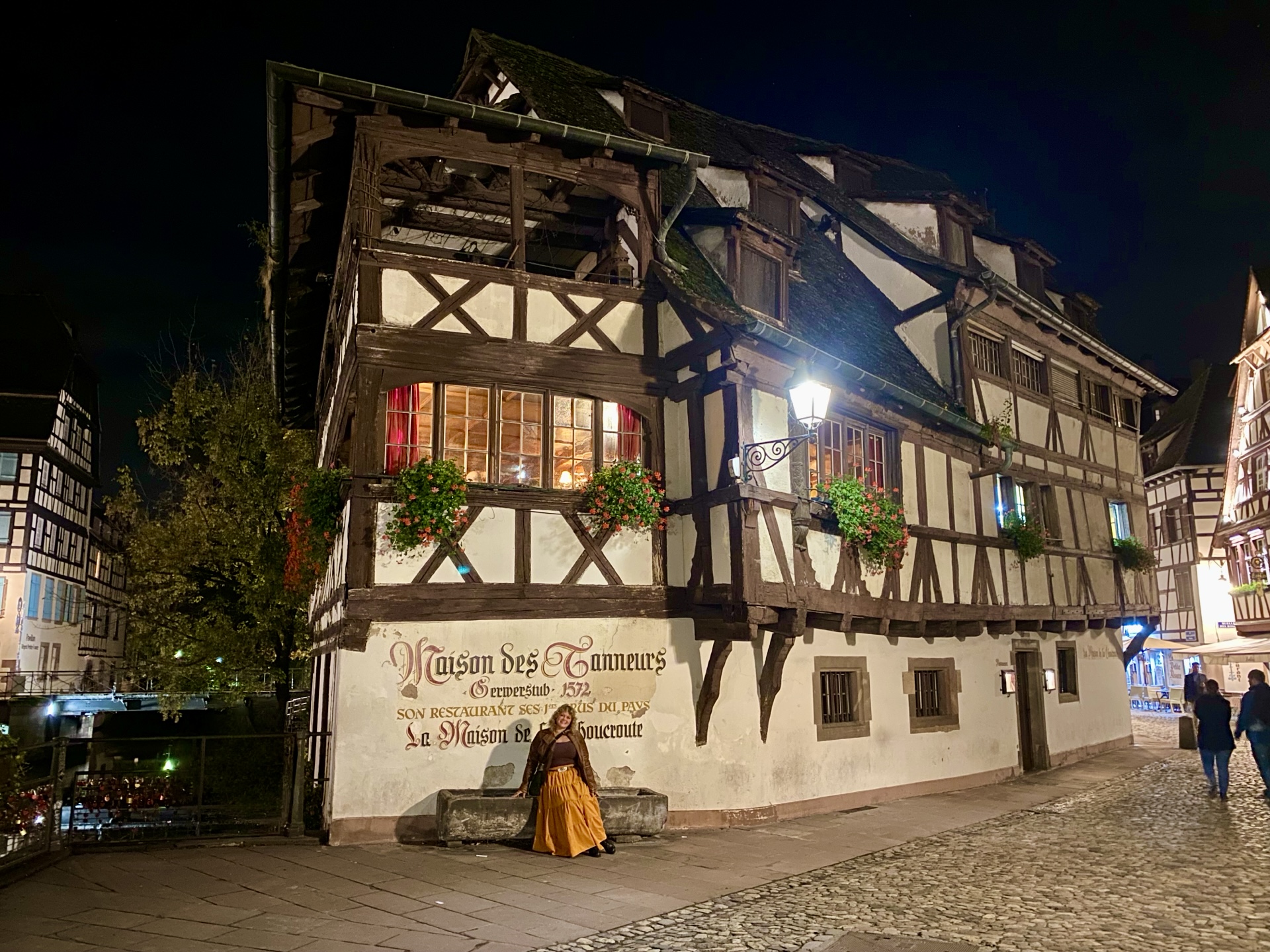
- Maison des Tanneurs: This restaurant is the grandest of the half-timbered houses in Petit France. Originally a leather tanner’s house in 1572, Maison des Tanneurs has been a family restaurant for about 70 years. You absolutely need a reservation well in advance to go here. You can get escargots, foie gras, duck breast, and choucroute for about $20 each. Honestly, I would stay close to the cathedral for dinner because I felt that the other restaurants in Petit France were more tourist-trappy.
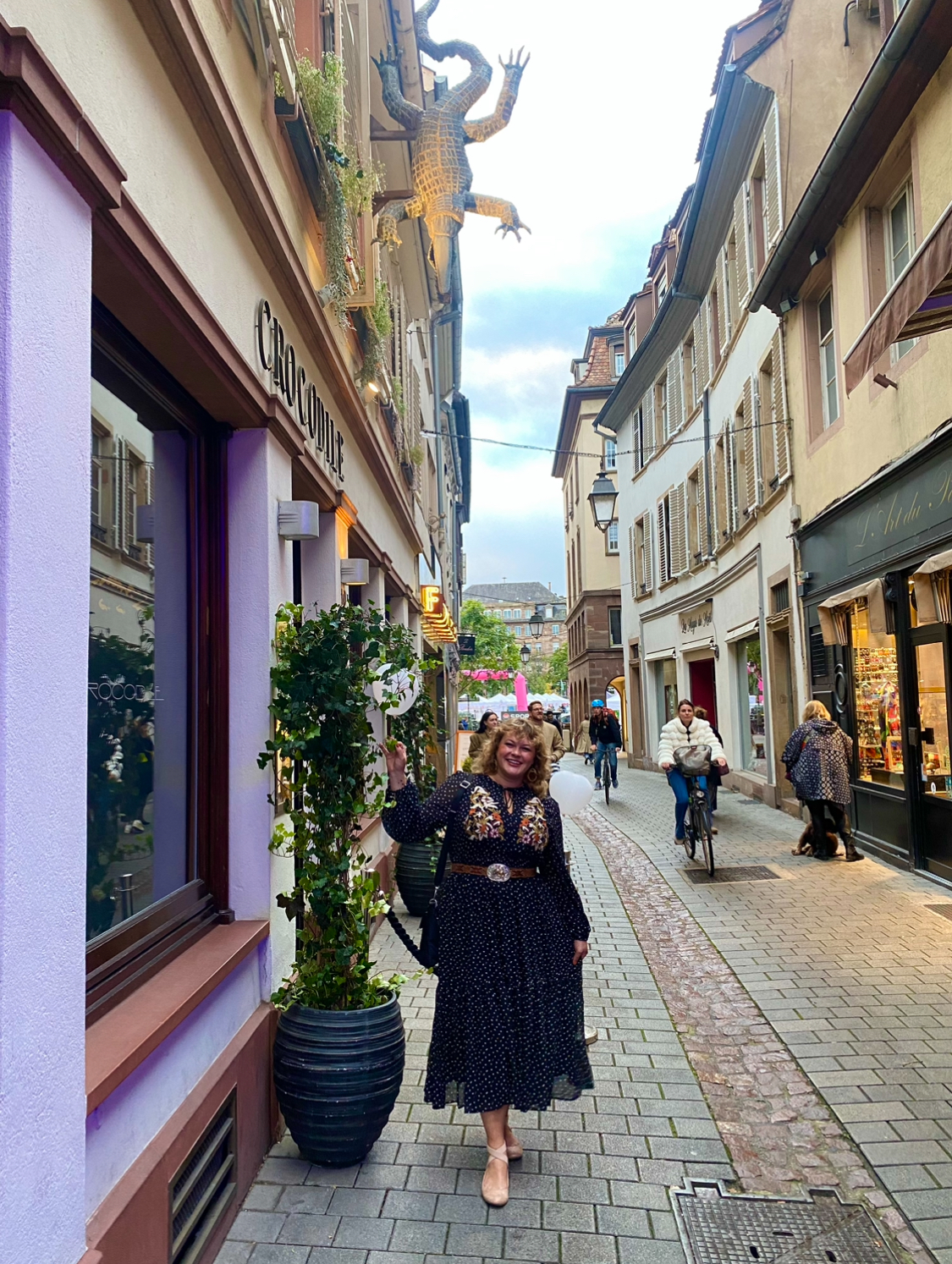
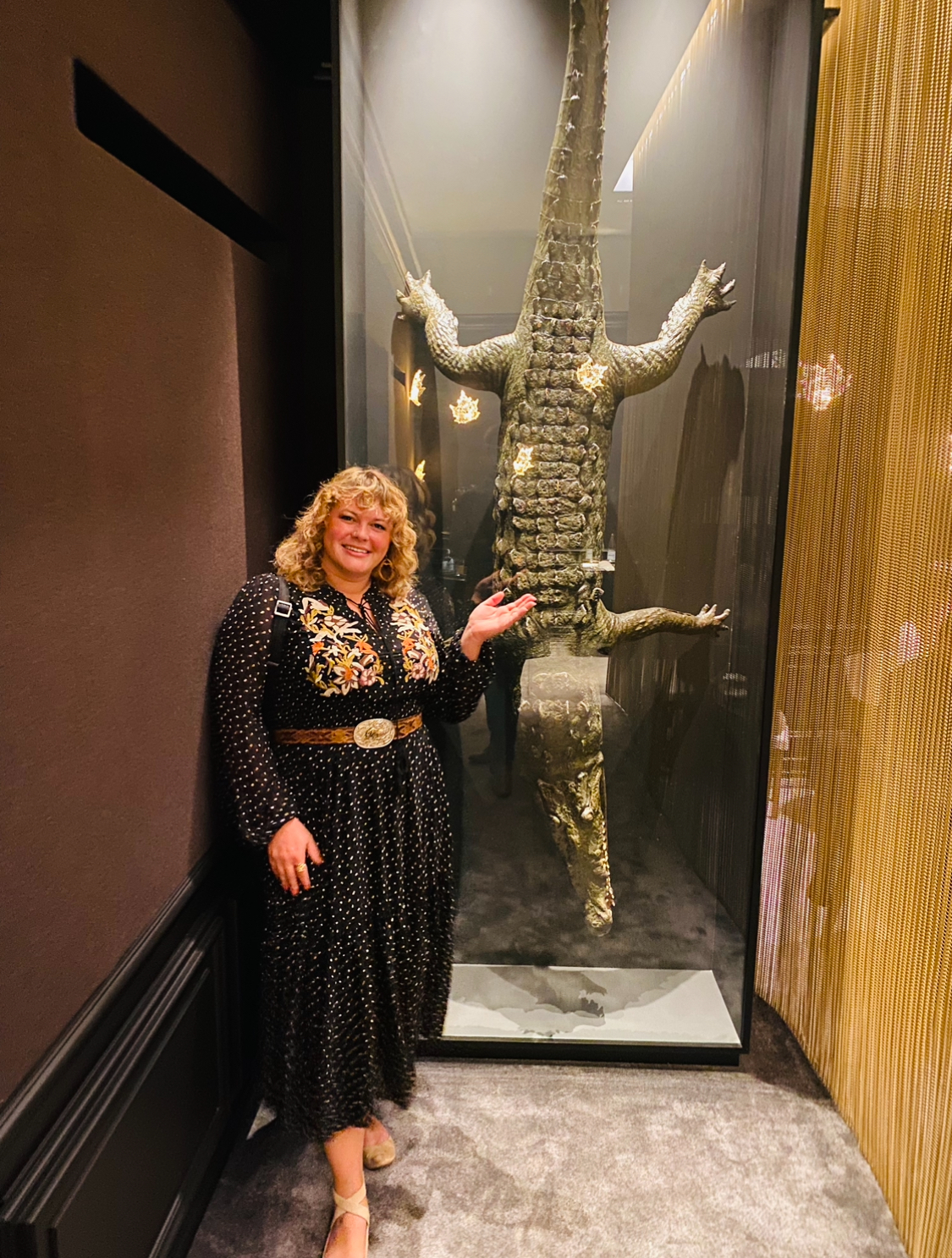
- Au Crocodile: If you’re in the mood for a Michelin restaurant, Au Crocodile has an interesting history. It’s located in the former home of one of Napoleon’s generals. During the invasion of Egypt, the general had a crocodile stuffed and brought back to his home in Strasbourg, where it hangs in the restaurant to this day.
HOW TO PACK
If you’re traveling to France, you always want to bring a raincoat or little umbrella. You might have scattered showers once or twice during the day, and your weather app may not report while you’re prepping your suitcase.

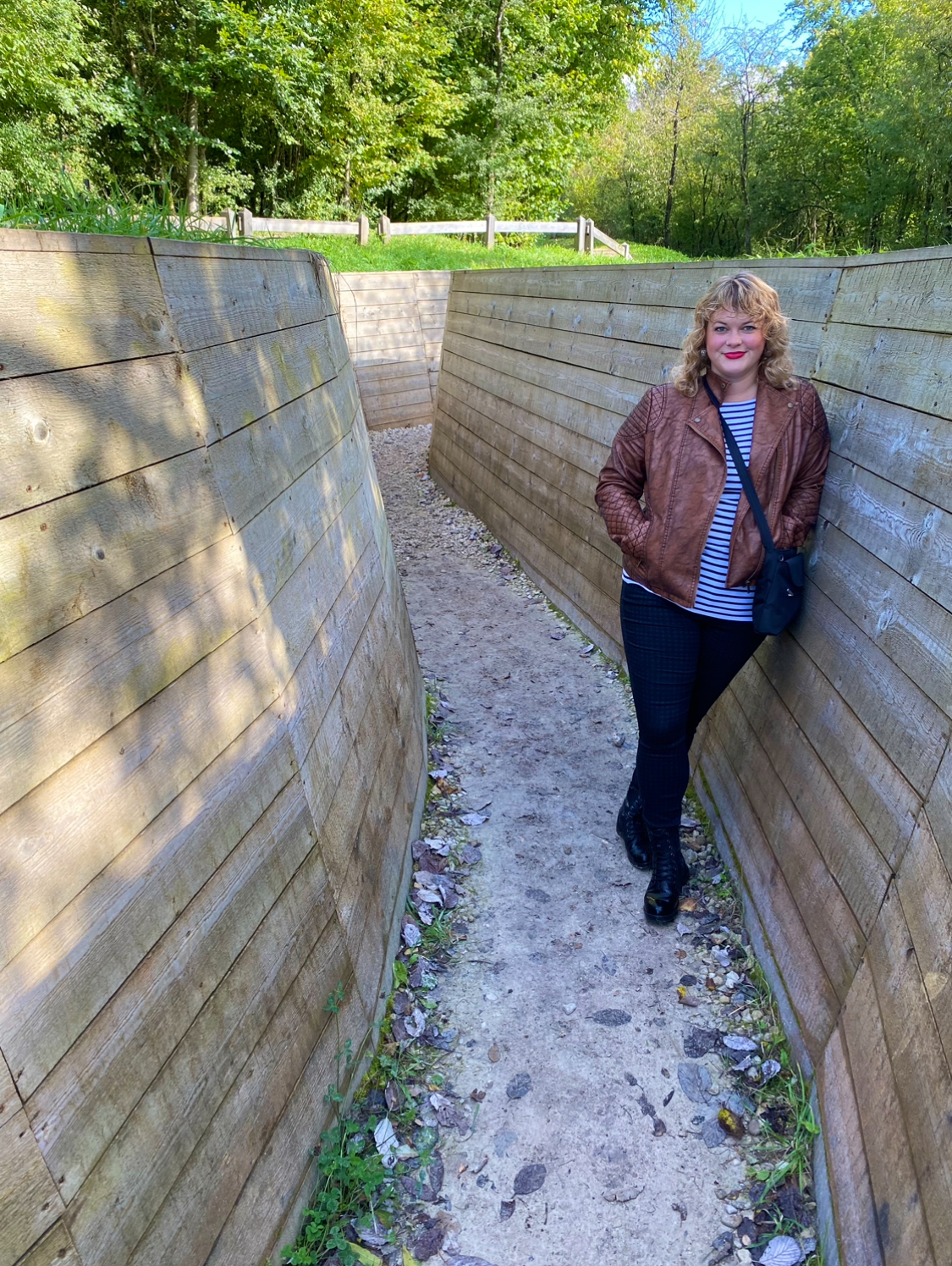
We did two side quests while vacationing in Alsace: I wanted to spend a day at one of the many spas in the Black Forest area around Lake Titisee (aptly named because Germans very strictly follow a no-clothes rule in saunas), and Alex wanted to see the Verdun World War I Museum in Lorraine. So if you’re in the mood to spread mineral-rich thermal mud on your face or get mud all over your cute boots while tromping through trenches in Verdun, I would recommend packing a swimsuit/thin towels/flip flops or a leather jacket/durable weatherproof boots.


 Ramblin' Reba
Leave a reply to Miss Posabule Cancel reply